Showing posts with label The Quran. Show all posts

Thursday, March 8, 2018

Carpe Diem #1385 Mary, Mother of Jesus


Dear Haijin, visitors and travelers,

Welcome at a new episode of our wonderful Kai. This month we are exploring the Quran as a book of wisdom. Today I love to share a quote in which we can read (almost) the same thing as we can read in the Bible. The announcement that Mary will become the Mother of the Son of God, Jesus Christ. Christians believe that Jesus is the Son of God, but in the Quran Jesus is seen as a righteous man, a prophet. A Man of pure love.

Let me give you the quote taken from Surah 19, Maryam:

[...] "And mention in the Scripture Mary, when she withdrew from her people to an eastern
location. She screened herself away from them, and We sent to her Our spirit, and He appeared to her as an immaculate human. She said, “I take refuge from you in the Most Merciful, should you be righteous.” He said, “I am only the messenger of your Lord, to give you the gift of a pure son.”  She said, “How can I have a son, when no man has touched me, and I was never unchaste?” He said, “Thus said your Lord, `It is easy for Me, and We will make him a sign for humanity, and a mercy from Us. It is a matter already decided.'" [...] (Source: Surah 19, Maryam, Ayah 16-21)

The Angel Gabriel announces to Mary her pregnancy with Jesus (17th century)

And I also love to share the same words taken from the Bible:

[...] "God sent the angel Gabriel to Nazareth, a town in Galilee, to a virgin pledged to be married to a man named Joseph, a descendant of David. The virgin’s name was Mary. The angel went to her and said, “Greetings, you who are highly favored! The Lord is with you.” Mary was greatly troubled at his words and wondered what kind of greeting this might be. But the angel said to her, “Do not be afraid, Mary; you have found favor with God. You will conceive and give birth to a son, and you are to call him Jesus. He will be great and will be called the Son of the Most High. The Lord God will give him the throne of his father David, and he will reign over Jacob’s descendants forever; his kingdom will never end.”  “How will this be,” Mary asked the angel, “since I am a virgin?” The angel answered, “The Holy Spirit will come on you, and the power of the Most High will overshadow you. So the holy one to be born will be called[b] the Son of God. Even Elizabeth your relative is going to have a child in her old age, and she who was said to be unable to conceive is in her sixth month. For no word from God will ever fail.” “I am the Lord’s servant,” Mary answered. “May your word to me be fulfilled.” Then the angel left her." [...] (The Gospel of Luke 1: 26-38 NIV)

Statue of the Virgin Mother Mary in Karachi were she is known as Our Lady of Valenkanni

The Quran is given to the people by God through Muhammed, a very wise man. 

blessed Mother
brings together all devotees
bridging the gap

© Chèvrefeuille

Well I hope you did like this episode. I was excited to read that Mary also is part of Hinduism and  Zoroastrian. Again Hinduism is mentioned ... isn't that the oldest religion on earth? Is this another reference that the Quran was compiled after a spiritual journey by Muhammed? I respect the idea that the Quran was given by God to Muhammed, but I think we may ask questions ...

This episode is NOW OPEN for your submissions and will remain open until March 15th at noon (CET). I will try to publish our new weekend-meditation later on. For now ... be inspired.


Wednesday, March 7, 2018

Carpe Diem #1384 Afterlife ...?


Dear Haijin, visitors and travelers,

If I had known how difficult it would be to create this month than I had given it a thought again, because it's difficult to create this month. I have read the Quran, as a wonderful book of wisdom, but I also experience a kind of doubtfulness, because I am a little sceptic about the idea that the Quran was given to Muhammed by God the Almighty. I for sure have doubts on that idea, because Islam is a very young religion (born in the 7th century CE) and there are to much similarities between the Quran and other holy books. But as I stated in earlier posts I respect the idea that the Quran was given to Muhammed.

Because of my doubts its very difficult to write these posts, but on the other hand I enjoy writing them. I think we have all the opportunity to question the things we experience or the books we read, or the believes around the globe. I am a spiritual being and I love everyone and everything unconditional, but sometimes ... well I think you all understand what I mean.


Today's episode is about the so called "afterlife". I ran through the Quran and found a few wonderful Ayah in several Surah about the idea of "afterlife". Maybe you can remember our special Theme Week about the "Tibetan Book of Living and Dying", or maybe you can remember what I wrote back in 2013 in that beautiful month about the Tarot. In those posts I already mentioned "afterlife" and "reincarnation". And I was a little bit surprised to read about the "afterlife" in the Quran. The ideas about "afterlife" are almost the same as I know them from the Bible, or from the Hindu and Buddhism ideas I have read about. So there is a source, a well, from which all those ideas flow and that makes the idea that Muhammed compiled the Quran from all other religions and philosophies a bit stronger. I even think that all known and unknown religions have the same roots ... nature and how mankind looked at it and learned from it. How mankind was honoring and praising nature, because isn't that the true religion ... nature?

Nature ... source of all religions
Well ... that was my introduction, let me now share the verses of the Quran that I mentioned above.

[...] "Until, when death comes to one of them, he says, “My Lord, send me back. That I may do right in what I have neglected.” By no means! It is just a word that he utters. And behind them is a barrier, until the Day they are resurrected. When the Horn is blown, no relations between them will exist on that Day, and they will not ask after one another. Those whose scales are heavy—those are the successful. But those whose scales are light—those are they who have lost their souls; in Hell they will dwell forever." [...](Source: Surah 23: Ayah 99-103)

What does this mean, I found a wonderful website that gave a nice explanation of these verses.

[...] "This ayah describes the end of worldly life as we know it and the immediate thing that will happen afterwards. The end of this life will begin with the blowing of Horn. Once the Horn is blown, it will stand as a signal for the start of Judgment procedure and what happens afterwards is the weighing of the deeds of a person. The ones who have deeds heavy than their sins are the ones who are successful and will go on to the heaven and the ones who are on the contrary will go to hell. It is the latter, who will then beg to Allah to send them back to world so that they could do good deeds, but by then it will be too late for them and they will have nothing but the eternal life of damnation." [...] (Source: Qurantutor)

Higher Self
In addition to the life after death that each and everyone of us will have, there is an exception as well. It is of the people who die in the name of God. Such Muslims are called ‘Martyrs’ and as per Islamic doctrines the martyrs don’t die once their worldly body ceases to breathe, rather they are the ones who keep on living even before the Judgment day forever. Regarding them, God says in Quran:

[...] "Do not consider those killed in the cause of God as dead. In fact, they are alive, at their Lord, well provided for."[...] (Source: Surah 4: Ayah 169)

[...] "The belief in the life of martyrs soon after death is another example that ascertains the belief of a Muslim that with the end of this life the life does not end, rather, we go into the next life and start living it. Therefore, a Muslim is never to grow skeptic of the life that comes after death, rather one needs to prepare for it and spend the hours and minutes of this life in performing good deeds so that when the Day of Judgment comes, the scale stays heavier on the good deeds and consequently Jannah (or paradise) is awarded to the Muslim.

The problem of what happens after the tomb is one of the absolute problems that has been haunting mankind since its existence. In this regard, perhaps the most satisfying answer is provided by Islam where it tells people that life does not end, rather a new life begins and that is the life that is in the environment which man is destined to live in, however, to achieve that a person has to do good with this life and spend it in the right way." [...] (Source: qurantutor)

Jannah (Paradise) (Persian miniature)

In these verses we can read that in Islam there is an idea about reincarnation, as we know it from Buddhism or Hinduism, when you didn't reach your life's goal as given to you by God, Spirit, Higher Self or what ever you call it. In the idea of "afterlife" I think all religions find eachother. Isn't that a great idea? Maybe ... just maybe all the religions and philosophies will once see that and will leave their differences and find eachother in the love of God.

fountain of life
eternal river of youth
paradise

© Chèvrefeuille

phoenix spreads its wings
after the dark cold winter night
finally spring

© Chèvrefeuille (2017-06)

This episode is NOW OPEN for your submissions and will remain open until March 14th at noon (CET). I will try to publish our new episode later on.


Tuesday, March 6, 2018

Carpe Diem #1383 Moses (Musa)


Dear Haijin, visitors and travelers,

Welcome at a new episode of our wonderful Kai in which we are exploring the holy scripture of Islam, the Quran. I have said it several times this month ... there are a lot of similarities between the Quran and other holy scriptures, especially the Bible.
Today I love to look at a very important prophet in the Quran and in the Bible, Moses. You all will (maybe) know the story of Moses, the jewish boy who was placed in the river and became a prince of Egypt. He became the "voice of God" as God decided to free his people from the slavery in Egypt. This same story we find in the Quran, another clue that the Quran is written through the wisdom and knowledge of Muhammed as I stated yesterday in our post, but as I also have said often this month of course I respect the idea that the Quran was given by God to Muhammed, but I also think that everyone has the right to have his / her ideas and thoughts.

Moses (Musa) Persian miniature 15th century

Let me give you the verses for today's inspiration:

[...] "When Moses said to his people: “O my people! Remember the favor of God on you when He made prophets among you and made you kings and gave you what He has not given to any of the other peoples. O my people! Enter the holy land which God has decreed for you and do not turn back, otherwise you would turn about losers”. They said: “O Moses! There is a mighty people in it; we will not enter it until they go out of it. If they go out, we will enter it”. Then two men who fear [God] whom God has given favor to said: “Enter on them by the gate. Once you have entered you will be victorious. Put your trust in God if you are believers”. They said: “O Moses! We will never enter it as long as they are in it. Go you and your Lord and fight. We will sit here”. He said: “My Lord! I do not control other than myself and my brother, so separate between us and the rebellious people”. He said: “It shall then be forbidden for them for forty years in which they shall wander in the earth, so do not grieve for the rebellious people”. [...] (The Chapter of al-Ma’ida (The Table) (5.20-26)

The above verses could have been taken directly from the Bible, because in almost the same words, you find this story in the Bible.

clouds fighting
a spring wind is raging
through nature

© Chèvrefeuille

With this verse I conclude this episode, a short one, just because of lack of time. 

This episode is NOW OPEN for your submissions and will remain open until March 13th at noon (CET). I will try to publish our new episode later on.


Sunday, March 4, 2018

Carpe Diem #1381 Thunder and Lightning


Dear Haijin, visitors and travelers,

I have said it in earlier posts this month, but there are several similarities between the Quran and The Bible. One of those similarities is the story about the Creation. In the Quran and The Bible the creation stories are completly the same. What does that mean?
We all know that Islam is a young religion (7th century CE) and the story is the same as in the Bible. Of course we know that the Quran was reveealed to Muhammed the Prophet, but can Muhammed be the Prophet of the Christian God? Or is he really a prophet of Allah, I think we have to respect that idea, but I also think we can ask us these questions too.

Did Muhammed knew about the Bible? And was he just another interpreter of the Holy Bible? This could be an explanation of the similarities between the Quran and the Bible. Both holy books tell the story of the Creation.

The Beauty of Nature
 The following verses are from the Surah ar-Ra'd or thunder. Thunder and Lightning is the title of this episode and I have chosen that title, because thunder and lightning are energies "used" by God. Maybe He used it as He was creating the flood that re-created Earth (the story of Noah). The Quran mentions thunder and lightning as a kind of punishment for Earth and its inhabitants.

[...] "It is He who shows you the lightning, causing fear and hope. And He produces the heavy clouds. The thunder praises His glory, and so do the angels, in awe of Him. And He sends the thunderbolts, striking with them whomever He wills. Yet they argue about God, while He is Tremendous in might." [...] (Surah 13: 12-13)

A similar verse we find in the book of Exodus:

[...] "And all the people were watching the thunderings and the flames and the sound of the horn and the mountain smoking; and when they saw it, they kept far off, shaking with fear. And they said to Moses, To your words we will give ear, but let not the voice of God come to our ears, for fear death may come on us." [...](Exodus 20: 18-19)

In both examples we see that the voice of God is heard as thunder and lightning, and that's very similar to the Scandinavian idea of Thor, God of Thunder. Or in that wonderful Hindu book Mahabharata you can find several verses in the same tone with the same idea and emotion.

[...] "Even as he said this, the clouds above thundered and everyone knew that the god of the thunderbolt was coming, and trembled in fear.' [...] (Source: Mahabharata)

Raijin Shinto god of thunder (wooden sculpture)

The same idea is also mentioned in several Shinto scriptures. Often the Shinto god of thunder and lightning is named Raijin (His name is derived from the Japanese words rai ("thunder") and "god" or "kami" (shin). He is typically depicted as a demon-looking spirit beating drums to create thunder, usually with the symbol tomoe drawn on the drums. During a thunderstorm parents say to their children to hide their belly bottoms (navel), because the god of thunder will eat their belly bottom.

All wonderful ideas and thoughts I think, all can be a source for the Quran, but we have to respect the idea that the Quran was given to Muhammed by God.

frogs jump in -
the sound of rain far away
thunder and lightning

© Chèvrefeuille

The Beauty of Nature

Another one also from my archives:

rolling thunder
between green banks
clear waterfall

© Chèvrefeuille

And here is a new one, a tanka this time:

rolling thunder
my heart jumps of love
embracing her
she the one I love so dearly
cries in fear of lightning

© Chèvrefeuille

Well ... I hope you did like this episode and that it will inspire you to create haiku, tanka or other Japanese poetry form.

This episode is open for your submissions tonight at 7:00 PM (CET) and will remain open until March 11th at noon (CET). I will try to publish our new episode later on.


Thursday, March 1, 2018

Carpe Diem #1380 present life


Dear Haijin, visitors and travelers,
Welcome at a new episode of Carpe Diem Haiku Kai. this month we are exploring the Quran as a book of wisdom and as a source for inspiration. Today I have a nice quote from the Quran for your inspiration.
[...] "And cite for them the parable of the present life: it is like water that We send down from the sky; the plants of the earth absorb it; but then it becomes debris, scattered by the wind. God has absolute power over everything.  Wealth and children are the adornments of the present life. But the things that last, the virtuous deeds, are better with your Lord for reward, and better for hope." [...] (Surah 18: Ayah 45 & 46)
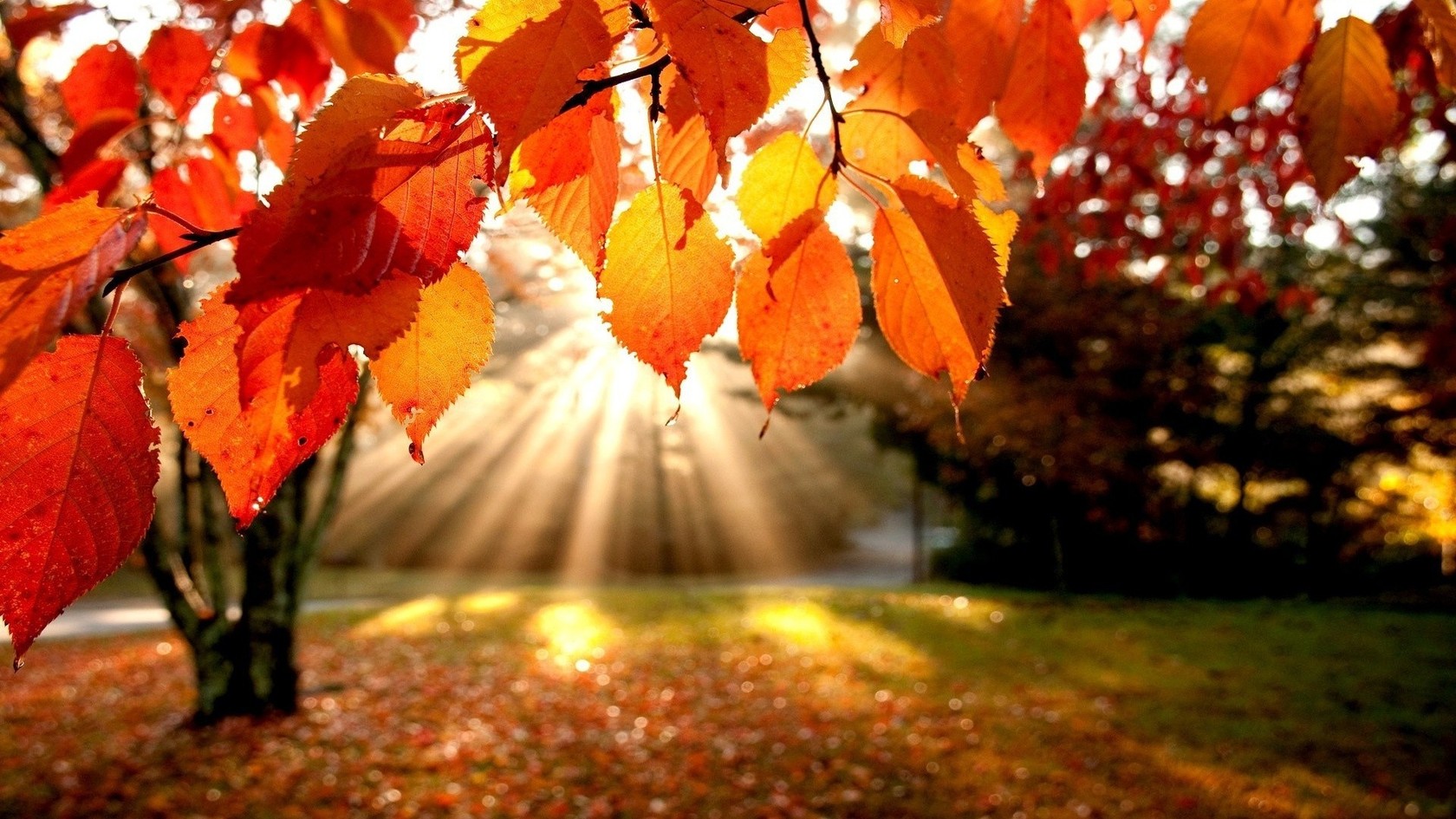
autumn leaves in early sunlight

What does this mean? What kind of similarities we can see with other spiritual literature?

Let us take a look at the first Ayah in this quote: It sounds like what Jesus said "I am the water of life" and I think that's what this part of the quote means. God sends us rain to water our crops, without rain it will not grow. And of course we know that the crops will absorb it, but during the seasons it will grow, it will give fruits and finally it will die. In this Ayah we can see the whole circle of life in a few words.
In the second Ayah we can read about how we have to look at life ... like we were children. Isn't that also what is said "Let the children come to me, because Paradise is for those who are like children". Wealth is nice, but it cannot be the ultimate goal. The ultimate goal is what we have done in our life, did we reach the goals imprinted in our soul by the Creator. In this we can also see the idea of reincarnation as is part of Buddhism and Hinduism.
Isn't it a wonder to look at the Quran and try to understand the words, but also the depth in the words? The Quran is a wonderful book full of ancient knowledge ... knowledge we see in other religions and philosophies too, maybe not in the same words, but for sure in the same idea, the same spirit.

departure
following the winding road
circle of life
© Chèvrefeuille
This episode is open for your submissions tonight at 7:00 PM (CET) and will remain open until March 8th at noon (CET). I will try to publish our new episode later on. For now ... have fun!


Wednesday, February 28, 2018

Carpe Diem #1379 Rise of Islam along the Silk Road (final episode February 2018; introductory episode March 2018)


Dear Haijin, visitors and travelers,

Welcome at this (delayed) episode of our beloved Carpe Diem Haiku Kai. As I already told you in an earlier post (yesterday "post delayed") I have decided to combine the last episode of February with the first episode of March. Why? Well in March we will read the Quran together, not as a book of religiosity, but as a book of wisdom. And I can say that the Quran is a wonderful book to read, but there are a lot of similarities with for example The Bible and that "triggered" me to create this special month about the Quran.

As I told you in earlier post last month (February) Islam also was spread along the Silk Road. After Buddhism, Islam beacme the religion of this part of the world. Islam, a very young religion that was "born" in the 7th century CE in Mecca.


Islam along the Silk Road:

The Islamic world was expanded into Central Asia during the 8th century, under the Umayyad Caliphate, while its successor the Abbasid Caliphate put a halt to Chinese westward expansion at the Battle of Talas in 751 (near the Talas River in modern-day Kyrgyzstan). However, following the disastrous An Lushan Rebellion (755–763) and the conquest of the Western Regions by the Tibetan Empire, the Tang Empire was unable to reassert its control over Central Asia. Contemporary Tang authors noted how the dynasty had gone into decline after this point. In 848 the Tang Chinese, led by the commander Zhang Yichao, were only able to reclaim the Hexi Corridor and Dunhuang in Gansu from the Tibetans. The Persian Samanid Empire (819–999) centered in Bukhara (Uzbekistan) continued the trade legacy of the Sogdians. The disruptions of trade were curtailed in that part of the world by the end of the 10th century and conquests of Central Asia by the Turkic Islamic Kara-Khanid Khanate, yet Nestorian Christianity, Zoroastrianism, Manichaeism, and Buddhism in Central Asia virtually disappeared.

During the early 13th century Khwarezmia was invaded by the early Mongol Empire. The Mongol ruler Genghis Khan had the once vibrant cities of Bukhara and Samarkand burned to the ground after besieging them.  However, in 1370 Samarkand saw a revival as the capital of the new Timurid Empire. The Turko-Mongol ruler Timur forcefully moved artisans and intellectuals from across Asia to Samarkand, making it one of the most important trade centers and cultural entrepôts of the Islamic world. (Source: Wikipedia)
Somewhere in Mecca ... birthplace of Islam
Now we know a little bit more about how Islam was spread along the Silk Road and how Islam became the religion of Central Asia.
new born
winter has gone
first crocuses bloom
© Chèvrefeuille
0-0-0-0-0-0-0-0-0-0-0-0-0
Here starts our new month of CDHK "No human speech can match". This month, March, we will read the Quran, not as a book of religion, but as a book of wisdom. And sometimes I will tell you a little background and sometimes I only will share a verse from the Quran (or several verses) for your inspiration. In this first episode I love to share a nice quote from the Quran (44:51-56) to inspire you:
[...] "As for the righteous, they will be in a secure place. Amidst gardens and springs. Dressed in silk and brocade, facing one another. So it is, and We will wed them to lovely companions. They will call therein for every kind of fruit, in peace and security. Therein they will not taste death, beyond the first death; and He will protect them from the torment of Hell. A favor from your Lord. That is the supreme salvation" [...] (Source: Quran, English translation by Talal Itani)
As I read this verse (Surah 44: Ayah 51-57) than I immediately had a revelation. In this Ayah I see the Holy City, the New Jersalem as is spoken about in the last book of The Bible, Revelations of John.
Or in that first Ayah "Amidst gardens and springs", those that point also to the New Jersulam or to the Garden of Eden? And what do you think of this idea: "We will wed them", isn't that the same what God said?
Paradise
Another thing that came in mind was the following: In Ayah 56 "Therein they will not taste death, beyond the first death; and He will protect them from the torment of Hell" this can point to the Tibetan idea of Bardo as described in the Tibetan Book of Living and Dying. Or maybe to reincarnation?
As you look at these Ayah in this way than you can almost think that the Quran is created from several other religious books and other ancient knowledge. But I think we have to respect the idea that the Quran was given by God to Muhammed the Prophet.
words of beauty
no human speech can match
the song of birds
© Chèvrefeuille
What a wonderful start this was ... I hope you liked the read as much as I did to create it.
This episode is open for your submissions tonight at 7:00 PM (CET) and will remain open until March 7th at noon (CET). I will try to publish our new episode later on.