Showing posts with label midsummer feeling. Show all posts

Thursday, July 30, 2015

Carpe Diem #786 buruu muun (blue moon)


Dear Haijin, visitors and travelers,

First this: I am hopelessly behind with commenting and I don't think I can catch up, so if I didn't visit or comment your response than please forgive me. I will try to do it better next month.

Second: As you all know our third CDHK kukai is running and you can submit your haiku for this kukai "juxtaposition" until August 16th. You can email your submission (a maximum of three never published earlier haiku) to our email address:

carpediemhaikukai@gmail.com

Please write kukai "juxtaposition" in the subject line.

Third: Yesterday I introduced an all new feature CDHK's Renga Party. If you would like to participate in this Renga Party please let me know through the comments field of that post. You can register until August 5th.

This is our last episode of July in which we explored classical Japanese kigo (seasonwords) for summer and got to know a talented haiku poet from Ghana, Adjei Agyei Baah.
Today our prompt isn't a classical kigo, but let me say ... a special treat, because today we have the second full moon of July, so we have a so called "blue moon". It's a special occasion, because we have had not a single blue moon during the existence of Carpe Diem Haiku Kai. The last blue moon before starting CDHK was on August 31st 2012 and I remember that I wrote a post about this blue moon on my personal weblog Chèvrefeuille's Haiku blog.

Blue Moon is a phenomenon that occurs not so many times. It’s a second full moon in one month.
I am close to the Wiccan tradition and live with the lunar calendar. It is amazing to see that sometimes we have twice a full moon in one month. In the Wiccan tradition we call that Blue Moon this will occur today (July 31st). Blue Moon is for Wiccans worth a celebration and it will be a great celebration.

Moon above Seta

Basho wrote a haiku on this event of the Blue Moon. It occurred in the Autumn of 1692 as we may belief, but I did some research on this and came to the conclusion that in Basho's lifetime a Blue Moon had occurred twenty times. According to the year in which the following haiku was written, the Blue Moon, wasn't in Autumn but on April 30th (or in March, as we follow the lunar calendar).
In 1689 a Blue Moon occurred on August 30th and as we know, according to the lunar calendar, this has to be July and that's in the midst of summer. I think Basho was impressed of the Blue Moon and wrote this haiku later. Until now, in my lifetime (1963 - now) a Blue Moon occurred 21 times.
Matsuo Basho has written a wonderful haiku on this event of the Blue Moon.

meigetsu wa futatsu sugite mo Seta no tsuki

Harvest moon
even coming twice in a month
the moon of Seta 

© Matsuo Basho

It's really awesome to experience the beauty of a second full moon in one month ... it's magical I think. 

wonderful event
another full moon in one month
awesome

awesome
to witness this Blue Moon
wonderful event

© Chèvrefeuille


Blue Moon

it's a mystery
today a second full moon occurred
awesome ... Blue Moon

© Chèvrefeuille

Back in 2012 (September) I wrote a "haibun" about the occurrence of a Blue Moon. I love to share that here again.
A Blue Moon occurred on August 31th 2012, a second full moon in one month. It’s magical and mysterious to see that Blue Moon. A Blue Moon occurs not many times. As I look at my lifetime (over 50 yrs) there were 20 Blue Moons and the next Blue Moon will occur on July 31 2015. So I had to see this event of course. Well I did saw it.
I was wandering through my neighborhood when I saw just a circle of light at the night sky, but several minutes later the clouds moved away from the full moon and then I could see the Blue Moon. It was a mysterious and magical moment which I will cherish like a treasure. Ah! What a richness! I have seen the Blue Moon.

she is hiding
in a circle of light
the Blue Moon

© Chèvrefeuille

Well .... I hope you all did like the read and I hope it will inspire you to write an all new haiku or tanka.

This was it ... July 2015 has gone by in one heartbeat .... we are preparing us for an all new month of Carpe Diem in which we will follow in the footsteps of the pharaohs and explorers to find the source of The Nile ... it will be an adventure I think and I hope you all will be part of this adventure.

This episode is open for your submissions tonight at 7.00 PM (CET) and will remain open until August 2nd at noon (CET). I will try to publish our first episode of August, the first CD Special by Lolly of Lovely Things, our winner of the "summertime" kukai and our featured haiku poetess this month, later on.


Wednesday, July 29, 2015

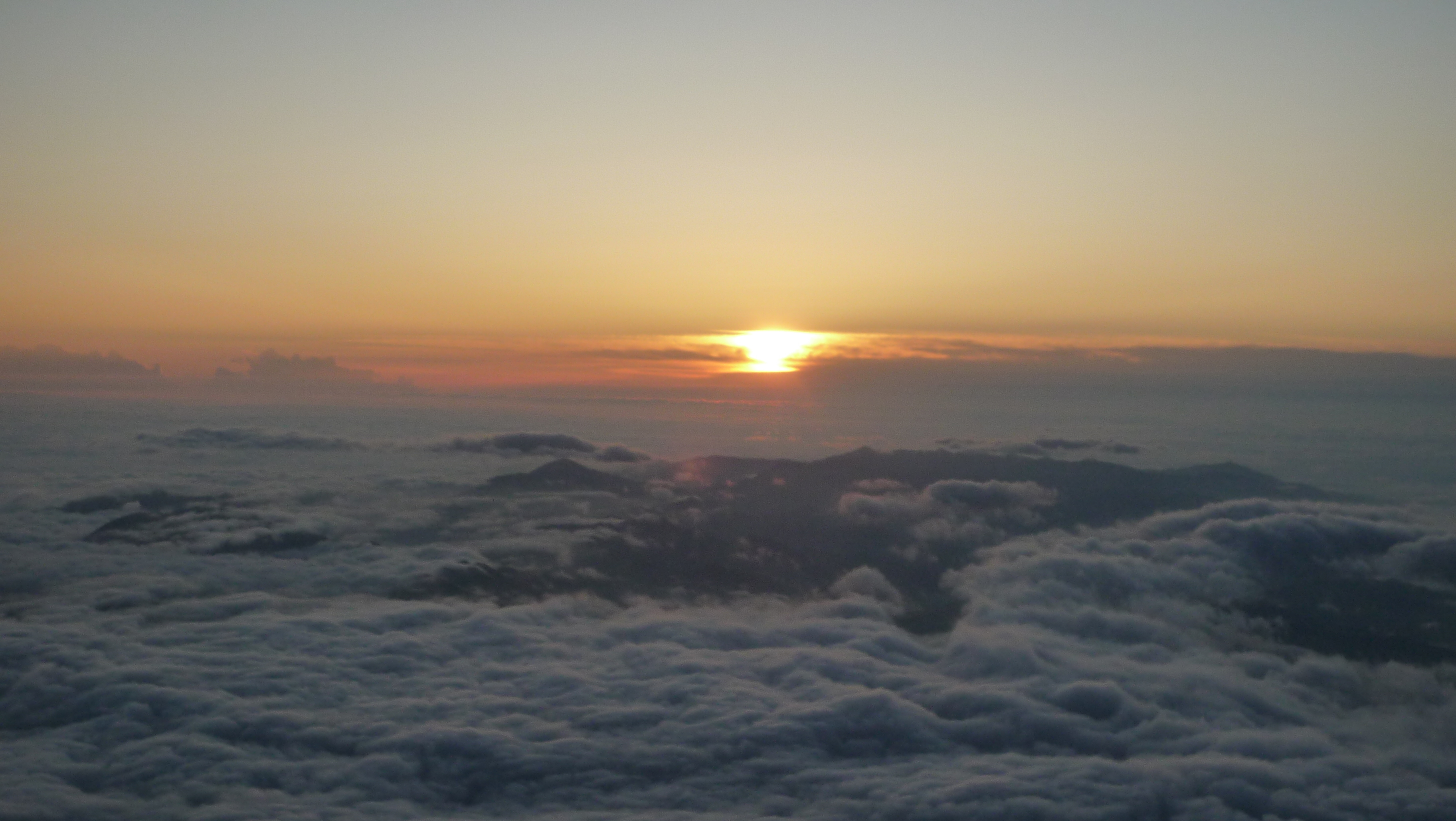
Carpe Diem #785 goraikou or sunrise seen from a mountain top


!! Our new prompt-list for August 2015 is ready, you can find it in the menu !!

Dear haijin, visitors and travelers,

We have only two days left of July and I think we had a wonderful CDHK month with all beautiful classical Japanese kigo (seasonwords) for summer, based on the ancient Japanese saijiki, a list of kigo.
As I was preparing this month's prompt-list I was looking for special kigo and I think I succeeded in that, but the kigo for today ... is (in my opinion) very special, because it's a kigo about an action. Today we share haiku inspired on goraikou or sunrise seen from a mountain top ... what can I say? This sounds like a really nice kigo and I have sought the Internet and found not a single haiku with this kigo in it. So I have chosen a few haiku in which Mt. Fuji is mentioned.

There is something to tell about this kigo. "Goraikou," is the special name given to the sunrise when seen from the top of Fuji-san (Mt. Fuji). It's a very special kigo, because of it's link with the holy mountain of Japan, Mount Fuji. As we all know the Japanese are very close to nature and they honor nature with whole their hearts. It is said that seeing the sunrise from the top of Mt. Fuji brings good fortune.

Credits: Mt. Fuji Goraikou
asakusa ya asahan mae no fuji môde

Asakusa--
before my breakfast plate
pilgrims climb Mount Fuji


© Kobayashi Issa

As for many Muslim is the once in a lifetime pilgrimage to Mecca so is the climb to the top of Mt. Fuji a classical task for Buddhists and Shinto-believers (at least that was the task in classical Japan). However this climb is to strong for several believers there were miniature Mt Fuji in almost every shrine. In the above haiku by Issa, he is referring to pilgrims who are climbing such miniature Mt. Fuji.

Another haiku by Issa about Mt. Fuji:


waki muite fuji wo miru nari kachi sumô

turning aside
to look at Mount Fuji...
sumo champion


© Kobayashi Issa

Credits: Otome Pass woodblock print by Hiroaki (Shotei) Takahashi (1871-1945)

The highest and most sacred of Japan's peaks, Mount Fuji was the home of the great kami-sama or gods. Buddhists believed it was a mystical gateway between earth and heaven.

fuji no kaze ya oogi ni nosete Edo miyage

the wind from mt. fuji.
I brought it on my fan.
a souvenir from Edo


© Matsuo Basho

Written in 1676, Basho Age 33. On the way to Iga Ueno. Probably written at the home of Shi-in.This is a greeting hokku to his host, who maybe presented him with a fan to keep cool during the summer heat.

kumo o ne ni fuji wa suginari no shigeri kana

clouds for roots,
Mt. Fuji's green foliage,
the shape of a cedar


© Matsuo Basho

And here is a haiku by Kato Shuson, a modern haiku poet who died in 1993:

fuji no kon sude ni happoo kiri ni fusu


the blue of mount Fuji
on all the sides
covered by the fog


© Kato Shuson (1905-1993)

I really had hoped to find a haiku with our kigo for today in it, but ... it just had to be that way I think. So I have tried to imagine goraikou to write an all new haiku based on this kigo.

Credits: Mt. Fuji seen from Mizukubo woodblock print by Hiroaki (Shotei) Takahashi

after a steep climb
I get my prize
sacred sunrise


© Chèvrefeuille

falling in love
is like climbing Mt. Fuji
Ah! that sunrise


© Chèvrefeuille

Isn't it awesome! How would that be ... after climbing the sacred mountain getting the prize, falling in love with the amazing sunrise as seen from the top of Mt. Fuji.


It wasn't an easy task to create this episode, but it turned out to be a nice one and I hope it will inspire you to write/compose an all new haiku or tanka.

This episode is open for your submissions tonight at 7.00 PM (CET) and will remain open until August 1st at noon (CET). I hope to publish our new episode (a special one), buruu moon or Blue moon (a second full moon in one month), later on. Have fun!

Monday, July 27, 2015

Carpe Diem #784 hirune (nap)


Dear Haijin, visitors and travelers,

This month full of classical kigo for summer is running to its end and we have only a few days left this month. Right now I am busy with preparing our new prompt-list for August. In August we are going on an adventure ... we will sail the Nile from its delta to its well and during that journey we will see a lot of beauty .... I hope you all will like that journey, that adventure. We will explore the "afriku" further as invented by Adjei Agyei Baah, our featured haiku poet from Ghana. Next month our featured haiku poetess will be our winner of the second kukai "summertime", Laura Williams a.k.a. Lolly and of course we will have a special Tokubetsudesu episode about Jen (a.k.a. Paloma) of Blog It or Lose It. But that's all for next month. I hope to publish our new prompt-list later on this week. Here is our logo for next month already:


Ok ... back to our prompt of today. Today our classical kigo (seasonword) is hirune or nap. A nice kigo I think and I think you all will understand that this is a wonderful kigo for summer. For this episode I have gathered a nice series of haiku by different haiku poets. Our first haiku is one which Basho wrote a while before he died on October 12th 1694.

hiya hiya to kabe wo fumae te hiru ne kana

a midday nap
putting the feet against the wall
it feels cool

© Basho (Tr. R.H. Blyth)

chilly coolness
my feet on the wall
a midday nap

© Basho  (Tr. Jane Reichhold)

'A midday nap' is not a well known haiku of Basho, but in my opinion it's a wonderful one. He goes back to the essential element of summer heat ... to cool down. In this haiku the cooling down comes from the cool wall to which he is putting his feet. It's just the simple experience of the cool wall on a hot summer day.

this summerday
the heat makes me drowsy -
the cool stone wall

© Chèvrefeuille


And here are the other haiku which I would like to share here to inspire you:

hiru neru ni yoshi to iu hi ya niji hajime

a noon nap
on a good day...
first rainbow


© Kobayashi Issa (1763-1828)

lying on the beach
dreaming away in a midday nap
departing spring

© Chèvrefeuille

midday nap
a hot summer day break
against the cool wall

© Chèvrefeuille

hana ni kite hana ni ineburu itoma kana

viewing cherries,
he takes a nap;
what a leisure time!


© Yosa Buson (1716-1784)

kyarakusaki hito no karine ya oborozuki

fragrance of incense
around a man while he naps--
a cloudy moon.


© Yosa Buson

suwari taru fune ni neteiru atsusa kana

in a boat grounded at low tide,
taking a nap
in the summer heat!

© Yosa Buson

utataneno samureba haruno higuretari

a short nap,
then awakening--
the spring day darkened.

© Yosa Buson


And for closure I love to share a haiku by Soen Nakagawa, one of our featured haiku poets last year. I think you will remember this one:

aiming my penis
out over the steppes
awoken from a nap

© Soen Nakagawa (1907-1984)

To this haiku he adds, “The word penis had never been used before in a haiku, and I was criticized for exposing such a thing! But a penis is just a penis. Nowadays there is confusion regarding sex. But in truth, sexual energy, like digestive energy, is God’s fine energy, Buddha’s energy, cosmic energy.”

All wonderful haiku on hirune or nap and I hope this episode will inspire you to write an all new haiku or tanka ... I have given it a try too, so here is my attempt:

awakening
in the arms of a stranger
after a nap


© Chèvrefeuille

This episode is NOW OPEN for your submissions and will remain open until July 30th at noon (CET). I will try to post our next episode, a new Tokubetsudesu, later on. For now ... have fun!


Sunday, July 26, 2015

Carpe Diem #783 Tentoumushi (Lady bug)


Dear Haijin, visitors and travelers,

Today I have another nice classical summer kigo for you all. Today our kigo is Tentoumushi or Lady bug. Lady bugs are little wonders and in summer you can see them often. My grandchildren love to catch them and play with them.
My roses are always welcoming these little Lady bugs especially when they are suffering of aphids (plant lice), because those little ones are milking them lice. It's for sure a nice little insect and of course very colorful, as is e.g. our haiku family (smiles).
Lady bugs can refer to love and to good luck. I have tried this time to write a haiku with a kind of sensuality in it. The next haiku is a revised version of a tanka which I composed. Tanka however isn't really my kind of poetry. I don't know several of you, including Jane Reichhold, told me that I just have to try tanka, because of my warmhearted and loving character ... Jane even said "you have it in you to become a great tanka poet".
Tanka and emotions are almost synonymous with each other they say, so it could be my kind of poetry ... I have tried it several times, but ... I don't know ... tanka doesn't fit me at all. The ones I composed weren't strong, at least not as strong as my haiku.

A Hand Full of Lady Bugs
This following haiku I wrote a while ago and it is published on my personal WP weblog:

arm full of lady bugs
my grandson, one with nature,
enjoys his childhood

© Chèvrefeuille

And here is the new haiku which I promised you above in which I have tried to bring some sensuality into:

white almond flesh
ladybug climbs the mountains
blanc breasts move


© Chèvrefeuille

Well .... what do you think? It's a nice haiku full of sensuality I think ...

This episode is NOW OPEN for your submissions and will remain open until July 29th at noon (CET). I will (try to) publish our new episode, hirune (nap), later on.

Saturday, July 25, 2015

Carpe Diem Special #158 Adjei Agyei Baah's 5th special "Afrikuland"


Dear Haijin, visitors and travelers,

First ... my dad is doing well Next Monday he will be released from the hospital ... I am grateful that he survived his major heart attack. Thank you all for your thoughts, warm words and prayers.

Today we have our last CD Special of July. It was really a joy to introduce Adjei Agyei Baah here at CDHK and I am grateful that he would be our featured haiku poet this month. Thank you Adjei. I am glad that we had the opportunity to meet eachother trhough haiku. It feels great to have an African haiku poet here at CDHK.

Adjei has recently launched his own weblog Afrikuland it looks great and I have complimented him with his weblog. His weblog is certainly worth a visit.

The following haiku he emailed me before the launch of his weblog, I know for sure that he also will publish them at his own weblog, but of course I have to "fill" this CD Special.

amenbou (water strider)

slowly unseating the pond skater
from his water throne
harmattan winds

in his world alone
a water strider resting
on his shadow bed

Origami frog (Utabukuro)

origami frog
plead the kids to find your voice
when the night come

origami frog
frozen in its trail
no jump over the moon


On Strawberry

planting kisses
of strawberry breath
summer waves

filling her dimples
with strawberries
summer camp

two flavors
on our wild romance
vanilla & strawberry

Jasmine

Jasmine
P-l-e-e-e-e-a-s-e
just be mine

Midsummer

midsummer blues–
the wild memories of
a skirt-chaser


© Adjei Agyei-Baah, Ghana

Credits: Afrikuland
Adjei wrote a wonderful Soliloquy No Renga for our last Tokubetsudesu episode. I think he has done a great job on it and I am glad to share it here with you ...

Soliloquy No Renga Challenge

Hokku:

Ah! those cherry blossoms
their beauty amazes me again -
finally spring is here


visitors bask in fragrance
of white confetti showers


birds chirp in frenzy
as hearty chat fills benches
Cupid’s arrow flies by


busy hands penning hokku
as cameras seize the moment


the leaden skies add
background to the artist’s pen
no need for abstract


ah! cherry blossoming blast–
come take a white carpet walk!


© Adjei Agyei-Baah, Ghana


All wonderful poems as I may say so. Adjei is a very talented haiku poet and I hope to read a lot more of his work in the future ...
Lilies of the Valley

lilies of the valley
their sweet perfume makes me drowsy
hot summer night

hot summer night
between silken sheets her warmth
honeysuckle coolness


© Chèvrefeuille

I hope you did like this CD-Special and that it will inspire you to write an all new haiku or tanka. This episode is NOW OPEN for your submissions and will remain open until July 28th at noon (CET). I will (try to) publish our new episode, tentoumushi or Lady bug, later on.

PS.: During lack of time I will not publish a new episode of our special feature "Utabukuro" and there will be also no "Time Glass" episode ... I hope to do them next week again. I hope you all will forgive me ...

Friday, July 24, 2015

Carpe Diem #782 Suzuran (Lilly of the Valley)


Dear Haijin, visitors and travelers,

First of all ... thank you all for your love and prayers for my dad and my family. My dad is recovering from his heart attack and we hope he can be home after the weekend.
Than this ... I haven't had time to create a Tan Renga Challenge and a new episode of "On The Trail With Basho Encore". Next week I hope to do them again.
Than I have another announcement to make. As you maybe know I am also a co-host at MindLoveMisery's Menagerie (MLMM) where I hosted the Fairy Tale prompt. Yes you read it right "hosted". Because of changes in the hosting team of MLMM I will be the host for their haiku feature starting July 29th.
Than another announcement ... as I told you all earlier there will be a new version of ous CDHK e-book "On The Trail With Basho" ... well that new version is NOW Available at the left side of our Haiku Kai.
Suzuran (Lilly of the Valley)

Back to our episode of today. We are exploring classical kigo (seasonwords) for summer and today our prompt is Suzuran or Lilly of the Valley. I have spend a lot of time to find haiku with this classical kigo suzuran, but couldn't find one. So I took another path. Lilly of the Valleys is a kind of orchid, so I have a few haiku by Issa for your inspiration:

kaza shimo no ran ni tsuki sasu ka yari kana

downwind, an orchid
in moonlight...
smudge pot smoke

ran no ka ya ikoku no yô ni mika no tsuki

scent of orchids--
like a foreign country
the sickle moon


© Kobayashi Issa

This episode is open for your submissions tonight at 7.00 PM (CET) and will remain open until July 27th at noon (CET). I will try to publish our new episode, our last CD Special by Adjei Agyei Baah, later on. Have fun!

Thursday, July 23, 2015

Carpe Diem #781 Ichigo (Strawberry)


Dear Haijin, visitors and travelers,

My dad has had a major heart attack yesterday and he is in the hospital at the ICU. His bloodlevels were very high according to the Cardiologist and we hope he will survive this major heart attack. Today, around noon (CET), my dad was replaced to the Cardiac unit. He is ok and will stay in the hospital until next Monday. Heart-revalidation started today. I am glad he has survived this major heart attack. Thank you all for your love and prayers. I am grateful for all of your support.

Today our prompt is Ichigo or Strawberry another beautiful classical Japanese kigo for summer. I remember that I had a strawberry prompt last year (June 2014). In that month we had all modern kigo based on Jane Reichhold's "A Dictionary of Haiku", so this new episode (more than a year later) we can see as a "reprise-prompt".

Strawberries
A little bit history can be on its place here. So I have searched they Internet and ran into the following piece of history:

Strawberries have been introduced to Japan by the Dutch merchants during the Edo period, at that time they were called "Holland Strawberries" (oranda ichigo). The season started in early summer, so they became a kigo of that period. Later they were grown in large hothouses, along many coastal areas in Japan. Now the strawberry season starts before the New Year, since they are used as a decoration for the whipped cream Christmas Cake. They are also used as Birthday Cake decorations. I tried to grow them in the garden, but the strong weeds are no match for these delicate plants, you need a hothouse indeed. (Source: World Kigo Base)

hi no yoo ni ichigo narabete tabe-ni-keri

like flames
I arrange the strawberries
and eat them . . .


© Gotoo Takashi (1968 - )

Strawberries ... I like them very much. In my country (The Netherlands) they are called "zomerkoninkjes" or in English "summer kings/queens". It's that name that inspired me to write the next haiku (from my archives):


little red queens
tasteful and attractive
strawberry field


© Chèvrefeuille

And to conclude this episode I love to reproduce the haiku by Jane Reichhold which I used in the above mentioned episode of CDHK.

strawberries tasting
open fields
on the tip of his tongue
a strawberry

our tongues
strawberries tasting
each other

© Jane Reichhold

Aren't they wonderful? Strawberries have a nice sensual and erotic meaning for a lot of us. These haiku by Jane are responding on that feeling.

I hope you liked this episode and I hope it will inspire you to write an all new haiku or tanka.

This episode is open for your submissions tonight at 7.00 PM (CET) and it will remain open until July 26th at noon (CET). I will try to publish our new episode, Suzuran (Lilly of the Valley), later on. Have fun!

Wednesday, July 22, 2015

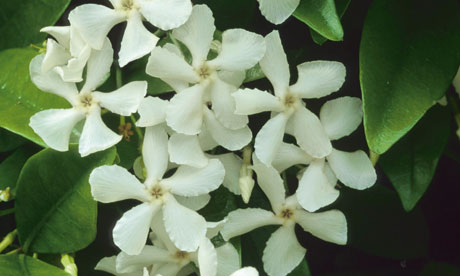
Carpe Diem #780 Kuchinashi (Jasmine)


Dear Haijin, visitors and travelers,

This episode will not become a long one, because of certain circumstances. My dad has had a heart attack last night and is now in hospital. So you will understand that I have to concentrate on something else than CDHK, but of course I will try to keep CDHK running, because you all are such wonderful haiku poets and you have a right, as being part of our CDHK family, to get the episode as planned.

As you all know I have gathered all of our "On The Trail With Basho" episodes into one CDHK e-book, which is available for download at the left of our Haiku Kai. It's the first edition, but there will be another version of that same e-book soon. In that new version I will share a few new episodes/chapters with haiku by Basho and of his disciples/students.
We are busy with exploring the classical Japanese kigo for summer and today our classical kigo will be kuchinashi or Jasmine. In the "On The Trail With Basho"- episodes we had already a nice haiku in which this kigo is used:

This one you can find in chapter 14 of our "On The Trail With Basho" e-book:

shaded by blossoms
it is like song in a play
resting on a journey


© Basho (Tr. Jane Reichhold)

And I found another nice haiku written by an Indian modern haiku poetess:


buds huddle by day
fragrance comes alive at night
affair with the moon

© Manjula Reddy

Credits: Kuchinashi or Jasmine
Isn't it a beauty? I can almost smell that sweet perfume of Jasmine and maybe you can remember the haiku which I composed in response of the above haiku by Basho.

scent of Jasmine
sound of a gurgling brook
peace of mind


© Chèvrefeuille

A wonderful haiku in what I think is what Basho mentioned karumi.

Well ... I hope you did like this short episode and I hope it will inspire you to write an all new haiku or tanka. Have fun!

This episode is open for your submissions tonight at 7.00 PM (CET) and will remain open until July 25th at noon (CET). I will (try to) publish our new episode, Ichigo (strawberry), later on. Have fun, be inspired and share your haiku (or tanka) with us all here at our Haiku Kai.
Monday, July 20, 2015

Carpe Diem #779 Seika (Midsummer)


Dear Haijin, visitors and travelers,

Welcome at a new episode of our Haiku Kai. As you all know we are exploring the classical Japanese kigo (seasonwords) for summer. Kigo or seasonwords are a kind of markers to place the haiku (or tanka) in the right season. Kigo are very important to the haiku poet, but also to his/her readers, because of the time, time needs to be clear to help the reader to experience the scene, the impression in the haiku.

Today our classical kigo is Seika or Midsummer. I think this midsummerfeeling is approximately around this time in summer (on the Northern Hemisphere) July 21st until August 21st, so in my opinion midsummer starts today.

As I started creating this episode I first thought at the play A MidsummerNight’s Dream by William Shakespeare and the wonderful music composed for this play by Felix Mendelssohn.


A wonderful piece of music I think, but that's just my humble opinion as a fan of classical music. I hope you did like this music.

Ok ... back to our classical kigo, Seika (Midsummer), because that's why we are here (smiles), but I love to create sometimes episodes with more than only haiku.
The rainy season is now over and summer comes with all its might, daily temperatures well over 30 degrees centigrade, which are called "midsummer days" (manatsubi) in the weather forecast. Sometimes they last for about 50 days in Kyushu.
Summer season in Japanese Haiku  is fixed according to the Asian lunar calendar from the beginning of summer around the sixth of May until the eighth of August. In reality the summer in Central Japan lasts roughly from June to the end of August, so July 21 is somewhat the middle of summer according to the Japanese lunar calendar.

Let us look at a few haiku written with seika as kigo:

.鶯に土用休はなかりけり
u
guisu ni doyô yasumi wa nakari keri

for the nightingale
there's no break...
midsummer heat

.朝顔の花から土用入りにけり
asagao no hana kara doyô iri ni keri

from the morning-glory's
blossom
midsummer begins

.水切の本道り也土用なり
mizugire no hondôri nari doyô nari

the main road
dry from drought...
midsummer

.木末から土用に入し月よ哉
kozue kara doyô ni irishi tsuki yo kana

from the treetop
gliding into midsummer...
bright moon


© Kobayashi Issa (all above haiku)


Credits: Takotsubo (Octopus trap, Japan)


たこつぼやはかなきゆめおなつのつき
 
takotsubo ya hakanaki yume o  natsu no tsuki

mere octopus traps,
evanescent dreams beneath
a midsummer moon.


© Matsuo Basho

And I found a nice haiku written by a modern haiku poet, Stewart C. Baker. (I couldn't retrieve an email-address to ask permission)

midsummer storm—
shadows rushing over
a burst of rose


© Stewart C Baker
All different angles for "midsummer", but all are really nice, however not the correct kigo seika, because I couldn't find haiku in which seika is used, so I have selected the example haiku on midsummer ...

I love to share the following haiku written by myself inspired on this kigo, not a recently written one, but one from my archives, a nice cascading haiku which I wrote in February 2012:

young dancer © Enosh
ankle chimes
listen to the movement
of the young dancer


a ballerina
dances through the streets
sound of chimes


sound of chimes
through the midsummer night
fading away
© Chèvrefeuille

Well ... I hope you did like this episode and that it will inspire you all to write/compose an all new haiku (or tanka) and share it here with us.

This episode is open for your submissions tonight at 7.00 PM (CET) and will remain open until July 23rd at noon (CET). I will (try to) publish our new episode, a new Tokubetsudesu episode, later on.

Thursday, July 16, 2015

Carpe Diem #777 kingyo (goldfish)


Dear Haijin, visitors, and travelers,


This is Paloma from Blog It or Lose It, helping Chèvrefeuille for the weekend. 

Our prompt for today is “kingyo” – or, goldfish. 

Wikimedia

    引越しのたびに大きくなる金魚 
     hikkoshi no tabi ni ookiku naru kingyo


     every time we move
     the goldfish

     grows bigger 


In researching for this prompt I discovered very few haiku about goldfish!  At first I was puzzled – especially in finding that kingyo / goldfish is a kigo for “all summer”.    And not just “goldfish” – many members of the goldfish family:  wakin, ranchuu, ryuukin, maruo, gingyo – and on and on - they are all seasonal kigo. 

     五月雨に金魚銀魚のきげん哉
     samidare ni kingyo ginyo no kigen kana

     in Fifth Month rain –
     feeling like silver
     or goldfish

     Issa

Ohara Buson.  Carp and Bee, 1910. WikiArt.

It turns out that “carp” and “koi” are also kigo for “all summer”, which led me to these haiku written by our host in 2013:

     along the canal
     gazing at the mirror-like water
     my first catch

     my first catch
     the line almost breaks
     a gold carp

     a gold carp
     hooked at my fishing line -
     mouth watering

     Chevrefeuille (2013)

If you live in the Southern Hemisphere, you’ll be happy to note that “carp in the cold” is a kigo for late winter.


Here is a fun haiku from Gabi Greve: 

     鯉さんも 恋煩いあるか 夜熱し
     koi san mo     koi wazurai aru ka      yoru atsushi

     can a carp
     get love-sick?
     hot summer night


This haiku is chock-full of word play – as “koi” can be “koi, the carp 鯉”or “koi, the love 恋”. 

Hokusai. Carp in a Cascade. WikiArt.

Here is my lighthearted offering – because sometimes it is good for haiku to be a bit playful, don’t you think?


     an orange flash
     and then – only green –
     was that a koi?

     Paloma

So for today I give you your choice – you may write about koi, carp, or goldfish – wherever the muses lead you. 

*

Before you link up today, I have a request – as a student and a fellow haijin. 

Since discovering Carpe Diem Haiku Kai, I’ve grown as a writer and have enjoyed being a member of this family.

Our host deserves our immense respect.   Not only does he provide food for inspiration on a daily basis – he writes thoughtful haiku to go along with his posts.  In the comments today, please leave a note to thank our host Chevrefeuille for his hard work, time, and dedication to Carpe Diem Haiku Kai.


This episode is open for your submissions tonight at 7.00 PM (CET) and will remain open until July 19th at noon (CET).                                       


Wednesday, July 15, 2015

Carpe Diem #776 shika no ko (fawn)


Dear Haijin, visitors and travelers,

Another day for a nice classical Japanese kigo for summer. Today I have a nice prompt for you which first brought me the motion picture/animation Bambi by Disney in mind, because that's what shika no ko means ... fawn (like Bambi). Bambi was one of my favorite Disney movies and my kids and grandchildren were also "in love" with that beautiful fawn.
Credits: shika no ko (fawn)
I have found a few nice haiku with this classical kigo composed by Kobayashi Issa which I love to share here with you all.

hagi no ha ni kakure kurasuru kanoko kana
in bush clover
staying well hidden...
a fawn


karakasa no shita ni shibaraku kanoko kana
lingering
under the paper umbrella...
a fawn


yû yami ya kanoko madara no yuri no hana
evening gloom--
a fawn's spots
in the lilies


© Kobayashi Issa (Tr. David G. Lanoue)

All wonderful haiku don't you think so? I love them all, Issa has written more haiku about fawns, but maybe you have to visit HaikuGuy to read more. And here a haiku written by my master Basho:

on Buddha's birthday
a spotted fawn is born –
just like that


© Basho

I think you have enough inspiration to compose an all new haiku (or tanka).

This episode is open for your submissions tonight at 7.00 PM (CET) and will remain open until July 18th at noon (CET). I will (try to) post our new episode, kingyo (goldfish). By the way I have a weekend off so Jen (Blog It Or Lose It) will be your host for next weekend (17, 18 & 19th July).

Monday, July 13, 2015

Carpe Diem Special #156 Adjei's third "silvery curtain"


Dear Haijin, visitors and travelers,

It's my pleasure to present the third CD Special by Adjei Agyei Baah. As in his second CD Special I will share his haiku inspired on our prompts, because of the fact that he hasn't yet his own weblog. This episode I also use to introduce him a little bit more to you. Here is his biography:

Adjei Agyei-Baah is from Ghana and is the co-founder of Poetry Foundation Ghana. He is a teacher of English language and also part-time lecturer at Institute of Continuing and Distance Education, University of Ghana, Kumasi Campus. He doubles as the co-editor of Poetry Ink Journal, a yearly poetry anthology in Ghana. He is widely anthologized, both home and abroad.

He is a devotee of the Japanese poetry form haiku, and presently championing a new haiku breed dubbed “Afriku” which focus on the African setting and draw on extensively on African images and symbols. He was motivated to explore haiku three years ago by the works of his fellow African poets like Nana Fredua-Agyemang (Ghana), and Prince K. Mensah (Ghana) and Emmanuel-Abdalmasih Samson (Nigeria) and after pursued works of the haiku masters like Basho, Buson, Shiki, Issa etc for enlightenment and direction. Adjei has one poetry (Embers of Fireflies) and two haiku collections awaiting publication.

He has written and published in international journals and e-zines such as Shamrock, Frogpong, World Haiku Review and The Heron’s Nest.

In the words of Alan Summer, the editor of With Words Magazine, Adjei is:

“A rising star, strong contender and extremely relevant and important. A voice to watch, the name will become better known”.

As you have read Adjei is already well known for his work as an haiku poet. I really was surprised as I read this biography, because, before he contacted me through email, I never had heard of him. Therefore I am so glad to bring his haiku to your attention here at Carpe Diem Haiku Kai ... and I am proud that I can and may bring his haiku to the world, to our haiku family.

Here are his haiku submissions for last week's prompts:

Rainbow

rainbow:
the rain and his so-called bowl
little kids argued all day


Summer waves

caked lagoon
migratory waves
home again


Credits: The Boti Falls (Ghana) | © Sarah Benke

Waterfall

silvery curtain
on a mountain wall-
waterfall!


Straw hat

riverbank
in my hat's shadow
a fingerling


Fountain


first sail...
inside his paper boat
the weight of water


© Adjei Agyei Baah


A great series of haiku (or afriku) I think and I am glad that I have the opportunity to share them here with you.

I have chosen to respond on Adjei's haiku about "waterfall" with a haiku which I once wrote in the classical way several years ago, so this one is from my archives.

puzzle resolved
the sound of a waterfall
makes me happy

© Chèvrefeuille

This episode is open for your submissions tonight at 7.00 PM (CET) and will remain open until July 16th at noon (CET). I will (try to) publish our next episode, a new Tokubetsudesu episode, later on. For now ... enjoy the read and be inspired.