Showing posts with label The Zahir. Show all posts

Wednesday, December 6, 2017

Carpe Diem #1321 miracles


Dear Haijin, visitors and travelers,

Welcome at a new episode of our wonderful Haiku Kai. I had a very busy day at work, I had the dayshift on the so called "chemo-unit" and it was a tough day, a real tough day, but ... well my co-worker and I "survived". Every day I work with very sick people, all have a kind of cancer, but they all are strong and look at their life with gratefulness.

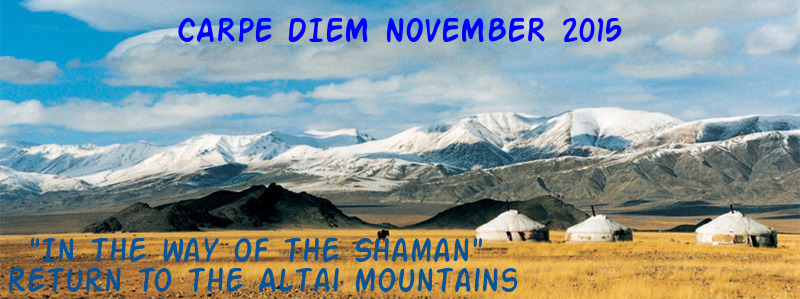
Back in 2015 we spent a whole month in the Altai Mountains of Mongolia were we discovered the way of the shaman and maybe you remember that we read "The Zahir" by Paulo Coelho, another wonderful novel.
This month I hope to inspire you through quotes taken from a big part of Coelho's oeuvre. Today I have a nice quote taken from "The Zahir". Let me give you a brief overview of this novel, like in "The Pilgrimage", this novel is also about a pilgrimage, but not as we know it. It's more a pilgrimage to find inner peace.

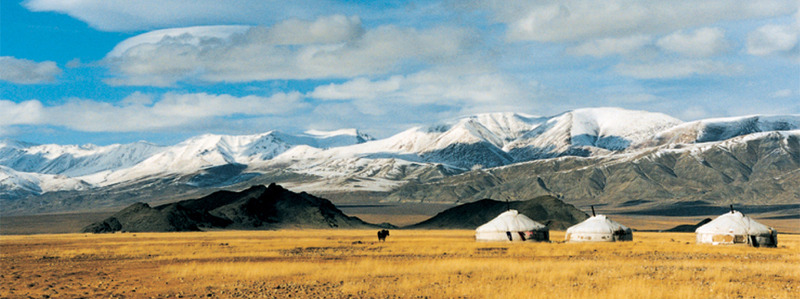
Altai Mountains Mongolia
Brief overview:

The Zahir means 'the obvious' or 'conspicuous' in Arabic. The story revolves around the life of the narrator, a bestselling novelist, and in particular his search for his missing wife, Esther. He enjoys all the privileges that money and celebrity bring. He is suspected of foul play by both the police and the press, who suspect that he may have had a role in the inexplicable disappearance of his wife from their Paris home.

As a result of this disappearance, the protagonist is forced to re-examine his own life as well as his marriage. The narrator is unable to figure out what led to Esther's disappearance. Was she abducted or had she abandoned the marriage? He encounters Mikhail, one of Esther's friends, during a book launch. He learns from Mikhail that Esther, who had been a war correspondent against the wishes of her husband (the protagonist), had left in a search for peace, as she had trouble living with her husband. The author eventually realizes that in order to find Esther he must first find his own self. Mikhail introduces him to his own beliefs and customs, his mission of spreading love by holding sessions in restaurants and meeting homeless people living in the streets. He tells the narrator about the voices he hears, and his beliefs related to them. The narrator, who only too frequently falls in love with women, (also known as Michael Gardiner) consults with his current lover, Marie, about his encounters with Mikhail. She warns him that Mikhail could be an epileptic. However, she also advises him to search for the Zahir as is his desire, even though she would prefer him to stay with her.

The narrator eventually decides to go in search of his Zahir. As it was Esther who had initially brought Mikhail from Kazakhstan to France, the protagonist suspects that she may in fact be in Kazakhstan. At first, he is curious about what made Esther leave, but later he realizes that troubles in her relationship with her husband may have been a major reason. As he discovers, she was interested in getting to know herself through the making of carpets. Eventually the narrator meets his Zahir and the outcome of this meeting constitutes the climax of the book. (Source: Wikipedia)

Cover The Zahir
And here is the quote for your inspiration:

[...] "The great advantage of writing about spirituality is that I know I’m bound to keep encountering people with some kind of gift. Some of those gifts are real, others are fraudulent, some of those people are trying to use me, others are merely testing me out. I have seen so many amazing things that I no longer have the slightest doubt that miracles can happen, that everything is possible, and that people are beginning to relearn the inner powers they long ago forgot." [...] (Source: The Zahir by Paulo Coelho)

As I look around me in my own environment than I can feel that I am surrounded by miracles. Miracles we are taking for granted, but that's not enough, we have to be part of it, we have to see, feel, hear, smell and taste our environment ... than we can see the miracles. The miracle of the coloring leaves, the sound of the wind, the rain on our faces, that sweet perfume of the wet earth. It are all little wonders and miracles.

Find Your Inner Child
As we regain our inner child again, bringing it out ... than the miracle is there ... than there is the healing of our body, soul, heart and mind ... This is what The Zahir is about ... this is what The Altai Mountains and the Mongolian shamans tell us, are anxious to learn us all ... nature is healing and ... if I take that feeling, that idea to our beloved haiku ... than every haiku can be healing, can be a little miracle.

That's our goal today ... try to write/compose a haiku and let it be that little wonder, that little miracle that makes you happy.

one heartbeat
a flash of light cuts through the sky
a shooting star

© Chèvrefeuille

Well ... I hope I have awakened your muses ... your source of inspiration ... maybe I have awakened that Inner Child ... 

This episode is NOW OPEN for your submissions and will remain open until December 13th at noon (CET). I will try to publish our new episode later on. For now ... feel like a child again and enjoy nature's miracles.

Saturday, April 15, 2017

Carpe Diem Summer Retreat 2017 (unconditional) love Introduction


Dear Haijin, visitors and travelers,

Welcome at a new edition of Carpe Diem's Summer Retreat. This year,2017, I have chosen for the theme "(unconditonal) love". Today this new Summer Retreat starts and 30 days later we will look back at a wonderful Summer Retreat I hope.

Carpe Diem's Summer Retreat is a period of 30 days in which the goal is to create haiku or tanka themed "(unconditional) love" every day. What is (unconditional) love? Let me tell you what I think it is.

I think love is a strong sense, but each of us will respond on love in a different way. Love is not only something you have for a person, but it can also be for art, literature, nature and as I speak for myself ... haiku, maybe my love for haiku is even more stronger than the love for my wife, children and grandchildren. For sure my love for haiku is very strong, but my love for my wife (and I have a lot of love to give) is everlasting and unconditional.

Love, Unconditional Love

[...] “All men and all women are connected by an energy which many people call love, but which is, in fact, the raw material from which the universe was built. This energy cannot be manipulated, it leads us gently forward, it contains all we have to learn in this life. If we try to make it go in the direction we want, we end up desperate, frustrated, disillusioned, because that energy is free and wild.We could spend the rest of our life saying that we love such a person or thing, when the truth is that we are merely suffering because, instead of accepting love’s strength, we are trying to diminish it so that it fits the world in which we imagine we live”. [...] (Source: The Zahir by Paulo Coelho).
lotus flowers
rising from the depths of the pond
everlasting love
like a river flows onwards
uncertain of its goal
© Chèvrefeuille

Maybe you know "Manuscript found in Accra" another wonderful novel by Paulo Coelho. In that novel he says the following:

[...] "Love changes, love heals. Love is just a word until we decide that she can take possession of us Love is just a word until someone gives meaning to it". [...] (Source: Manuscript found in Accra - Paulo Coelho)

Haiku is love, a love that grabs you by the throat and takes you into an adventure to discover the beauty of our world in all her beautiful details and bring that into the tine form of haiku that shows us a scene, a moment that lasts only one heartbeat.
The main character in one of my novels (Never To Return) says the following on (unconditional) love:

[...] "Unconditional love is never-ending. Unconditional love is bound together with the Collective Consciousness which binds together every living creature with the Universe. Unconditional love makes us one." [...] (source: Never to Return)

"Real (unconditional) Love" is in my opinion the only base for haiku. Without real love, for all and everything, creating haiku is not possible.
As I discovered haiku I fell in love ... in love with that universal beauty that binds all artists (poets, musicians, painters, sculptors and more) together.
a little verse
lighted a fire in my heart
addicted to love
© Chèvrefeuille

Well ... I wish you all a wonderful Carpe Diem Summer Retreat 2017 and I hope to read wonderful haiku or tanka. The Summer Retreat 2017 is open for your submissions tonight at 10.00 PM (CET) and will remain open until May 15th 10.00 PM (CET).

PS. Try to give your submitted poems for this Summer Retreat a number, because then it will be easier to link up to the linking widget.


Monday, November 30, 2015

Carpe Diem #869 Tavn Bogd


[...] "We started climbing one of the dunes, and as we proceeded the noise grew more intense and the wind stronger. When we reached the top, we could see the mountains standing out clearly to the south and the gigantic plain stretching out all around us." [...] (The Zahir - Paulo Coelho)

Dear Haijin, visitors and travelers,

It's with sadness and pain in my heart that I am writing the last episode of CDHK for November. 2015 Runs to an end and next month we will go on "the Narrow Road to the Deep North" following in the footsteps of Matsuo Basho. I am looking forward to that wonderful journey.

But first ... Tavn Bogd (or the Five Mountains or Five Saints) five snow-capped mountains who are sacred in the Altai .. vistas are gorgeous here and the snow-capped peaks are mirrored in the pools and lakes around them. Must be a real holy experience to sit there taking in the view and the power of the mountains. Listen to the wind over the steppes, listen to the sweet sound of the grasses waving, listen to the birds ... listen to the eagle, king of the skies, and Messenger of the gods.

Credits: Tavn Bogd (Five Mountains)

The Tavn Bogd (lit. "five saints") is a mountain massif in Mongolia, on the border with China and Russia. Its highest peak, the Khüiten Peak (formerly also known as Nairmadal Peak) is the highest point of Mongolia at 4374 meters above sea level. The Tavn Bogd massif is located mostly within the Bayan-Olgii Province of Mongolia; its northern slopes are in Russia's Altai Republic, and western, in China's Burqin County.
Besides the Khüiten Peak, the Tavn Bogd massif includes four other peaks: Nairamdal, Malchin, Bürged (eagle) and Olgii (motherland). 
To inspire you a little bit more I have found a nice video on You Tube about Tavn Bogd:
 
 
Wow ... what a beautiful place ... really a holy place where you can feel the spirit of the Altai Mountains ... must be awesome to walk there and experience the magnificent nature of Mongolia .. the land of shamanism and Tengrism ... I can hear the drums of the shaman to reach his/her trance to be a mediator between the spirit wortld and us.

resonating drums
the five saints ... impressive beauty
spirit world opens


© Chèvrefeuille

Hm ... not a very strong one, but I like the feeling of it ... it's a (real) shaman haiku I think ...

PS. I have published our new prompt-list for December 2015

This episode (a little later than I had planned) is NOW OPEN for your submissions and will remain open until December 3rd at noon (CET). I will (try to) publish our new episode, our first of December, later on.


Thursday, November 26, 2015

Carpe Diem #866 Shevet Uul (or the valley of Shiveet Khairhan Mountain)


[...] "We started climbing one of the dunes, and as we proceeded the noise grew more intense and the wind stronger. When we reached the top, we could see the mountains standing out clearly to the south and the gigantic plain stretching out all around us."[...] (The Zahir - Paulo Coelho)

Dear Haijin, visitors and travelers,

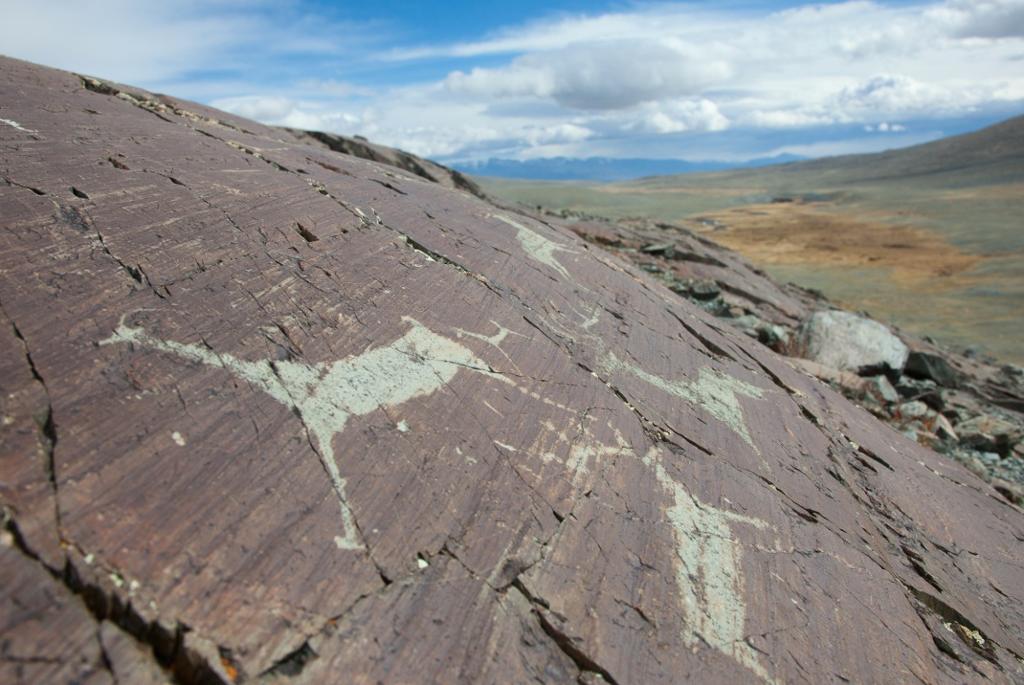
First I have to apologize for being this late with this episode, Shevet Uul). I had read about this sacred place in Mongolian Altai Mountains, but couldn't find enough to write a episode about it, so it took some more research. I discovered that "Shevet Uul" is the valley of Shiveet Khairhan Mountain and that it is a very sacred place for the Tuvan people. Shirveet Khairhan means "holy carved mountain" and it points towards a very large amount of petroglyphs which can be found on this mountain. Those petroglyphs are telling the creation of the Altai Mountains region and its religious meaning for the Tuvan.

The above quote from The Zahir by Paulo Coelho could be scened on this very mountain, because in The Zahir the head character becomes a new name ... following the Tuvan way of religion.

Credits: One of the carvings on Shiveet Khairhan Mountain

Awesome I think ... there are several other carvings in which you can see how the Tuvan thought their world was created.
This kind of petroglyph we see everywhere around the world ... they are carved or "painted" by our faraway ancestors to tell us their story. Petroglyphs are the predecessor of written words as we know them.

carvings from the past
telling the story of our ancestors
without words


© Chèvrefeuille

Not as strong as I had hoped, but I think this haiku says it all ...

This episode is NOW OPEN for your submissions and will remain open until November 29th at noon (CET). I hope to publish our next episode, Tuvan people, later on today.


Monday, November 23, 2015

Carpe Diem #865 torn apart book (reading nature)


[...] "A sense of paradise descends from the skies. And I am aware that I am living through an unforgettable moment in my life; it is the kind of awareness we often have precisely when the magic moment has passed. I am entirely here, without past, without future, entirely focused on the morning, on the music of the horses’ hooves, on the gentleness of the wind caressing my body, on the unexpected grace of contemplating sky, earth, men. I feel a sense of adoration and ecstasy. I am thankful for being alive. I pray quietly, listening to the voice of nature, and understanding that the invisible world always manifests itself in the visible world." [...] (The Zahir - Paulo Coelho)


[...] “What is Tengri?” “The word means ‘sky worship’; it’s a kind of religion without religion. Everyone has passed through here—Buddhists, Hindus, Catholics, Muslims, different sects with their beliefs and superstitions. The nomads became converts to avoid being killed, but they continued and continue to profess the idea that the Divinity is everywhere all the time. You can’t take the Divinity out of nature and put it in a book or between four walls. I have felt so much better since coming back to the steppes, as if I had been in real need of nourishment. Thank you for letting me come with you.” [...] (The Zahir - Paulo Coelho)


Dear Haijin, visitors and travelers,

What a joy ... this month we are exploring the Altai Mountains and their spiritual meaning. In this last week of this month we will even come closer to that spirit. As you have read in the above quotes from The Zahir by Paulo Coelho it's all about reading nature this day. 


Credits: Reading Nature (the Altai Mountains)

I remember an article which I read about a woman exploring the region of the Altai Mountains. She had a Mongolian guide who never used a map or travel-book ... he could read his path, the weather coming and so on ... just by reading nature. Reading nature is one of the most important pillars of what is called Tengrism or 'sky worship’. 
That's truly being one with nature ... to have the ability to read nature's signs. Those signs are all around us. In plain simple words I can say: As I see the buds of the cherry grow ... than I know that spring is coming. Or ... as I see the changing colors of leaves at the end of summer I know that autumn is coming.
Isn't that beautiful? Let me look at our beloved haiku ... what do I see? I see kigo (seasonwords) who are pointing to the season in which the haiku was written ... through those kigo we can read nature ... that makes the haiku not only a Japanese poetry form, but also a poetry form of the Altai Mountains, haiku is part of Tengrism ... look around you .... see the signs of nature and read them ... just read them.

yellow meadow
starts to become green again
spring is coming


© Chèvrefeuille

Awesome ... reading nature is really a spiritual experience ...

This episode is NOW OPEN for your submissions and will remain open until November 26th at noon (CET). I will try to publish our new episode, another Haiku Writing Technique, later on. For now ... have fun!


Saturday, November 21, 2015

Carpe Diem #864 Juniper


[...] As empty as the steppes: I understood now why Esther had decided to come here. It was precisely because everything was empty that the wind brought with it new things, noises I had never heard, people with whom I had never spoken. I recovered my old enthusiasm, because I had freed myself from my personal history; I had destroyed the acomodador and discovered that I was a man capable of blessing others, just as the nomads and shamans of the steppes blessed their fellows. I had discovered that I was much better and much more capable than I myself had thought; age only slows down those who never had the courage to walk at their own pace. [...] (fragment: The Zahir - Paulo Coelho)

Dear Haijin, visitors and travelers,

I can not remember why I have chosen this prompt for today, juniper. I think it's because of the fruits which are used to make strong sake-like wine or gin, but there is something else with juniper ... it has magical powers according to the shamans of the Altai Mountains.

For countless generations, Altai people herded their livestock across what is now known as the Golden Mountains of Altai UNESCO’s World Heritage Site, in Russia’s southern Siberia. They endured many obstacles–from Mongol hordes to Soviet oppression.  Today, they face the new challenge–climate change. Torrential downpours, freezing and thawing splinter the rock and destroy petroglyphs, the millennia-old repository of Altai people’s culture. Permafrost that preserved the remains of Altai ancestors in burial grounds for thousands of years is melting. And unpredictable snowstorms, winter rains, thawing and freezing, decimate herds of sheep and horses on which Altai people still rely heavily.
Local shamans are convinced that only through restoring their reverential relationship with the sacred and spiritual realms can Altai people and the rest of the world restore the balance of the Earth and its climate.
Credits: Shaman and Healer Maria (photo © Gleb Raygorodetsky - NGC)

One of those local shamans is Maria Amanchina, a traditional Altai shaman and healer, she lights a pipe as she sends her prayers with the smoke to the Sky, the Land, and the Spirit of Altai. The “tobacco” in her pipe are needles of the juniper. It is said that the smoke of juniper can clear peoples minds from evil and can restore the health of Mother Nature.

This is closer to Tengrism and shamanism than we were earlier in this month ... we are now entering the last phase of our journey ... the spiritual path of the shaman ...

holy smoke rises
blesses the steppes - the wind
spirit of Altai


© Chèvrefeuille

behind clouds
the cry of an eagle -
holy smokes rises


© Chèvrefeuille

This episode is NOW OPEN for your submissions and will remain open until November 24th at noon (CET). I will (try to) publish our next episode, another beautiful haiku by our featured haiku poetess Ese, later on.


Sunday, November 8, 2015

Carpe Diem #854 happiness


[...] “The circle of happiness and joy which always wraps around those who are in contact with the energy of love.” [...] (fragment from The Zahir by Paulo Coelho)

Dear Haijin, visitors and travelers,

Today our prompt is happiness. What has this to do with the Altai Mountains? What does happiness mean to you? Are you happy with your life, your qualities and talents? Are you happy with what you have? Hereafter I have reproduced an oldie in which I think happiness is mentioned in a very subtle way:

timeless beauty -
the glint of polished pebbles
in the crystal brook


© Chèvrefeuille

All questions which came in mind as I was preparing this episode of CDHK. What happiness has to do with the Altai Mountains, I will tell you later, but first I will look at those other questions. To me happiness means that I am happily married, I am happy with my kids and my grandkids. I am happy with my work as an oncology nurse, but I am also very happy to be your host (and maybe your teacher) here at Carpe Diem. Do I lead a happy life? Yes I do. I thank God, Spirit, Energy, the Cosmos for what I have done and what I may do ... nothing more to wish for ... yes I am happy and of course I hope you all are happy. And if not ... then I wish that you will become happy soon, very soon.

What has happiness to do with the Altai Mountains? Everything. As I read diverse articles about the Altai Mountains and the people who are living there ... than one thing was special ... they all told the reporters the same thing ... that they are happy. They are happy with the beauty of their surroundings, their spirituality, their loved ones and with the powers of their shamans. They are happy with their wealth ... maybe not in money or something, but they are happy with the wealth of beauty, the wealth of nature, the wealth of their health. They live a hard life, but they love their life ... they are happy with what they have.

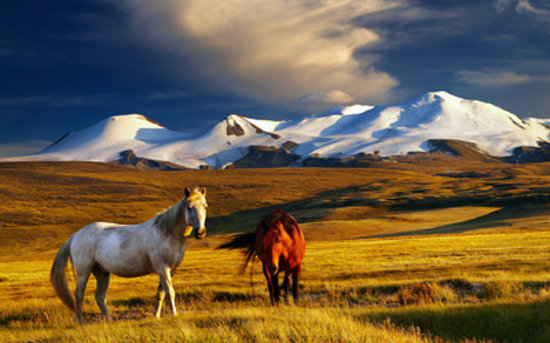
Credits: Altai Mountains (Southern part)

That fragment above from The Zahir says it all in my opinion: "The circle of happiness and joy which always wraps around those who are in contact with the energy of love". That energy is all around the people living in the region of the Altai Mountains. They love nature, they love their simple, but hard life, they love how they are connected with the world around them, with the nature around them. The majestic Altai Mountains protecting them, giving them the strength they need and the wisdom they need. The people of the Altai Mountains trusting each other and trusting the shaman with his/her magical powers. That's ... happiness.

happiness shared
as we walk through the steppes
and the Altai Mountains
unconditional love
as we walk our path together


© Chèvrefeuille

And I just had to share a few haiku from my archives in which I think happiness can be seen, felt, heard, tasted and touched:


on the wings of birds
the faint reflection of the sunset -
the sound of the wind


shadows on the wall
one single candle shines its light
towards the world


after the rainstorm
I sit down on the porch
smelling the fresh air


(c) Chèvrefeuille

Sheer happiness caught in the beauty of the Altai Mountains and in those little poems we all love so much ... haiku and tanka.

This episode is open for your submissions tonight at 7.00 PM (CET) and will remain open until November 11th at noon (CET). I will (try to) publish our new episode, meadow(s), later on. Have fun!