Thursday, May 19, 2016

Carpe Diem Tan Renga Challenge Month May 20th: "night rolled away" by Gillena Cox


Dear Haijin, visitors and travelers,

First this today I only will publish a new Tan Renga Challenge just because of lack of time, so no worries I am okay.

For today's Tan Renga Challenge I have a nice starting verse "hokku" written by Gillena Cox, she is one of our family members and maybe you have read this haiku somewhere at CDHK.


night rolled away
the street-sweeper's broom
deepening dawn sounds


© gillena cox

A nice one I think. 

My excuses for this short episode, but ... well as I said "lack of time". This episode is NOW OPEN for your submissions and will remain open until May 24th at noon (CET). Our new "hokku" you can find on Twitter.


Wednesday, May 18, 2016

Carpe Diem Theme Week #4 (4) Latifa Prayer "I hope"


Dear Haijin, visitors and travelers,

Welcome at a new episode of our fourth Theme Week about the Latifa Prayer. In this episode we will explore the thrid line "I Hope", but first I have to make an announcement.
A few days ago I got an e-mail by Georgia (a.k.a. Bastet) she told me that her mother's health is worsening fast, so she will not be very often at Carpe Diem in the upcoming weeks. Please remember her and her mother and her family in your prayers. Thank you.

praying hands
seeking the wisdom of the Lord
the cry of an eagle 


© Chèvrefeuille, your host.

Introduction:

Today the third line of the Latifa Prayer "I hope". Hope is the one thing we never have to forget. There is always hope and as we will loose hope than what's than ...?
There are several ways to use the Latifa Prayer, one of course to pray it, but another use is in meditation and that meditation I love to share in the last episode of this Theme Week. The Latifa Prayer Meditation is built around the seven lines of the Latifa Prayer and in that meditation you have to use several gestures. For the third line "I hope" that's the following gesture:

[...] Bring your right hand to your left lung. Always use your left hand to help your right hand. Say to yourself: I hope. Think about all the things you wish and want in life. Because of this you are going to be able to make space in your mind. [...]

My response:

As I was preparing this new episode I ran through several posts here at Carpe Diem and one in particular came in mind. Maybe you can remember our series about the "Divine Tarot" in which we explored the divine in the Tarot. One of the cards of the Great Arcana is The Star and that card came in mind as I was doing my research for this episode. Let me give you a quote from that episode:


[...] "The Star (Jesus) represents a moment, a time, of renewed hope, inspiration and discovery. (The time of Aquarius in which we are living now?) We have escaped The Devil, as we saw in The Devil (XV) and The Tower (XVI) and we are now in calm waters. It's a major breakthrough, a new opportunity to rise to a higher state of consciousness. (In The Tower (XVI) there is a third window. That window means 'super consciousness' which is just granted to a few. It stands for the secret, ancient, deeper knowledge as hidden in the Crown of the Tree of Life, the Kabbalistic glyph, Kether or God Consciousness. And that knowledge is now in reach through the spiritual growth, through this Aquarius era.

gaining insight
re-balancing the Inner Self
the Crown is in reach


The Star (XVII) is the first of three cards of increasing light. A higher pathway will become visible, the way to Calvary. A way we have to go to enter the City of God. The Star is indicating that we are approaching the goal of Enlightenment". [...]

What has this to do with "I Hope"? I think this shows that all religions are connected with each other. All religions are seeking their goals walking upon their own paths, but in the essence of every religion lays Hope ... Hope to create a better world full of peace honoring each other's ideas, honoring our environment. Hope we can only reach by following the light (and I don't mean that Light of Christianity alone, but all light that comes to use by all our different religious and spiritual backgrounds) we need light to see our path ... not only that real path in front of you, but also that Inner Path we all follow with our heart and soul.

Without Hope all will be lost.

This episode is NOW OPEN for your submissions and will remain open until May 22nd at noon (CET). Have fun!


Carpe Diem Tan Renga Challenge Month May 18th and 19th: praying hands & two bubbles


Dear Haijin, visitors and travelers,

As I started preparing this episode I realized myself that I had published also a Tan Renga Challenge for May 18th, but that was a Wednesday and Wednesday means "Tokubetsudesu" time. However because of having published two "hokku" on our Twitter account I will give you the opportunity to respond on both "hokku".
Today you may decide yourself for which "hokku" you choose, but of course you may respond with your completion on both "hokku" too ... that's all up to you. To make it myself easy I will only give the both "hokku" without responding in this episode myself to write the second stanza.

So here are your choices:

praying hands
seeking the wisdom of the Lord
the cry of an eagle 


© Chèvrefeuille, your host.


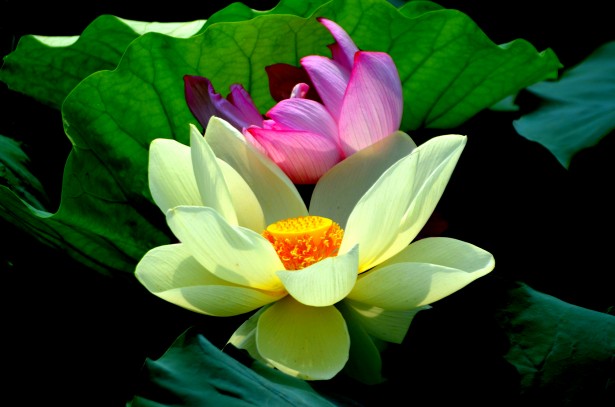
Lotus Flower

And this one by a not so well known classical haiku poet Murakami Kijo (1865-1938):

the moment two bubbles
are united, they both vanish,
a lotus blooms


© Murakami Kijo *

*) Kijo Murakami (1865-1938). Murakami Kijo, the Haiku poet, was born in Edo in 1865, and moved to Takasaki city in 1873. He was in sympathy with Masaoka Shiki and joined his group to publish the first edition of 'Hototogisu', the famous Haiku magazine. He published the collection of Kijo in 1917. He was a highly esteemed poet both within the prefecture and nationally. He died on September 17th, 1938 at the age of 73.

Well ... not an easy choice maybe, but ... go for it.

This episode is NOW OPEN for your submissions and will remain open until May 23rd at noon (CET). You can find our new "hokku" for May 20th and 21st at our Twitter account.


Tuesday, May 17, 2016

Carpe Diem Theme Week 4 (3) Latifa Prayer "I desire"


Dear Haijin, visitors and travelers,

What a joy to see how you are responding on this new Theme Week about that powerful Latifa Prayer and I am so glad that you all do like this new Theme Week. Today we are exploring the second line of the Latifa Prayer "I desire".

cold winter night
dreaming about the coming of spring -
cherry trees blooming
© Chèvrefeuille

In this haiku the desire for spring is the leading theme. After the long cold winter I am longing for spring and of course spring starts (at least for me) as my old Sakura in the backyard starts to bloom.
Introduction:
The second line of the Latifa Prayer is "I desire" and with that line you open your thoughts for your desires and become aware of them. What are your desires?

I once had the desire to write a novel I chased that goal and I made my desire real. I wrote a novel. Of course there are more desires I have and to bring another one up here ... Another desire I had was to become a well known haiku poet. As I fell in love with haiku in the late eighties I always thought that I would only be writing in Dutch, but at the start of this century I found the courage to publish a Dutch haiku translation to English and published it on the WWW. From that moment on I only wrote English haiku and became who I am now. Again one of the desires I had was fulfilled.

May we have desires? Of course you may have desires, you may chase goals you have set for yourself ... nothing wrong with that too.

It's my experience that chasing desires to become true gives a lot of pure energy. It's not wrong to have desires, but you have to be aware of them.
desire
My response:
But ... let us look at us as haiku poets. We all know that haiku has roots in Zen-Buddhism and as we look at Zen-Buddhism than having desires is something very different as meant above. In Zen-Buddhism the only desire possible is to become enlightened ... does that mean that haiku poets may not have desires? I don't know ... but as I look deep inside myself, in my Higher Self, that pure energy which is our guardian in our life ... than as a haiku poet I have just one desire. The only desire I have, not to become enlightened, but creating that one masterpiece in which I can read, see, feel and reveal the master, my master Basho, that's my only desire.
I am aware of that desire and it's my lifelong goal to once create that masterpiece, maybe I have done that already, but I am not aware of it ... 
Be aware of your desires ... don't feel ashamed when you discover your desires ... desires and being aware of them makes you human.
silent prayer
reaches for heaven
sunflowers bloom
© Chèvrefeuille

This Theme Week episode is NOW OPEN for your submissions and will be open until May 21st at noon (CET).

Carpe Diem Tokubetsudesu #80: Memory Lane: Utabukuro (or poem bag)


Dear Haijin, visitors and travelers,

It's Wednesday again and that means time for a new episode of Carpe Diem Tokubetsudesu. This week I love to take you back on a trip along memory lane towards a special feature I love dearly and that was created in June 2015. Those were already participating in CDHK will know this feature still.

That feature was called Carpe Diem Utabukuro let us take a look at the introductory episode of this special feature again.

[...] This feature was based on a haiku by Basho which he wrote when he was around 22 years of age, it's one of his earliest known haiku according to Jane Reichhold. I have called this new feature "Carpe Diem Utabukuro, which means "poem bag".
Logo of Carpe Diem Utabukuro (with Romaji text of the base haiku by Basho)

The logo above is a bag with a wonderful print of a Japanese woodblock and in the logo you can read the romaji translation of the haiku on which this new feature is based. I will give that haiku here again:
hana ni akanu
nageki ya kochi no
utabukuro


© Basho

And this is the translation by 
Jane Reichhold:
flower buds
sadly spring winds cannot open
a poem bag


© Basho (Tr. Jane Reichhold)

In her compilation of all Basho's haiku "Basho, the complete haiku" she gives the following description of this haiku:

1667 - spring. Because Basho has used kochi instead of the conventional ware for "my", the verse has two distinct versions. The associative technique is the idea that the flowers are not yet opened and neither is Basho's bag of poems (Utabukuro). The unopened purse of poems is like the flower bud in its potential for beauty.


The goal of this CDHK feature was not difficult, because I just asked you to share a haiku or tanka which you admire. That haiku or tanka can be one of a classical or non-classical haiku poet or one by yourself. You can choose what ever you like, but it has to be a haiku or tanka. Maybe the haiku brings you sweet (or sad) memories or you just like it. Explain why you have chosen that haiku or tanka to share here "in" CDHK's Utabukuro, poem bag and ... that's the second task for this feature write/compose an all new haiku inspired on the one you have chosen. [...]

I think this special feature is worth to bring up again I even think of bringing it back here at CDHK. For this Tokubetsudesu episode along memory lane I have a wonderful tanka which I love to share again with you.
It's a tanka which was really proud of and which had a great review on Wonder Haiku Worlds, a website which brought me the international name I have. (I think I have used this tanka earlier in a Utabukuro episode, so I took the liberty to re-produce it here again.

Lilies of the valley
their sweet perfume makes me drowsy
hot summer night
between silken sheets her warmth
honeysuckle coolness
 

© Chèvrefeuille
Lilies of the Valley

And this is the reason why I have chosen (immodest maybe) this Tanka, because of the response of Narayanan Raghunathan (co-founder of Wonder Haiku Worlds) and the wonderful comment as I will reproduce here:
[...] "I take the personal liberty, say literary freedom and tentatively meta cultyuro-anachronistically call this Tanka a neo-wordsworthian version of Tanka ~ It is done with care and blessed freedom ~ Well, as we know Tanka was essentially originally a genre of Japanese poetry about "love" ~ Here, that too gets exemplified very elegantly in this modern tanka ~ People who care to know about Tanka as a genre may venture to procure the first Wonder Haiku Worlds Anthology the large beautifully designed "Spasms Of Light" ~ available at Amazon.com and check the elaborate introduction ~ Our next Anthology is possibly expected to be published by June ~ 2016 We will surely be honored to have this Tanka in its contents, of course if you permit Chèvrefeuille ~ ` [...] 

Narayanan Raghunathan  
 
As I read this comment I really was overwhelmed with feelings of pride and happiness. As you all know I have just recently started to write Tanka and than this kind of comments ... I am really proud.

And now I have to write an all new Tanka or Haiku inspired on this one ... I don't know if I can ... I have tried it, but I only could come up with a haiku:


midsummer night -
the scent of Honeysuckle
tickles the senses


© Chèvrefeuille


Well I hope you don't find me immodest, but I just had to share this with you all.

Try to choose a favorite haiku or tanka and tell us why you do like it and try to write/compose an all new haiku or tanka to share with us.

This episode of Utabukuro is NOW OPEN for your submissions and will remain open until May 22nd at noon (CET). Have fun! 

Monday, May 16, 2016

Carpe Diem Theme Week #4 Latifa Prayer episode 2 "I exist"


Dear Haijin, visitors and travelers,

Welcome a the second episode of our Theme Week about that wonderful and powerful Latifa Prayer. Today I will introduce to you the first "line" of this prayer, "I exist".

in deep prayer
eyes closed in devotion -
Lotus starts to bloom

© Chèvrefeuille

Introduction:

"I exist" ... what does that mean? Is it what René Descartes meant with his "Cogito Ergo Sum" (I think, therefore I am)? I think so. René Descartes lived in the 17th century and was a great philosopher and his "Cogito Ergo Sum" is what makes us human, but also spiritual. As we give our thoughts the freedom to run than we exist ... than we can see the deeper layers in all that's around us, we are all part of humanity and we are all connected through this "Cogito Ergo Sum".

But as we take a look at the Latifa Prayer's first line than maybe we see something different in it.

I exist or "Nafs":

The word nafs is usually translated as self or psyche. Its etymology is rooted in "breath" (similar to Biblical or Kabbalistic nefesh) and is common to virtually all archaic psychologies where the act of breathing was connected with life, animating otherwise lifeless object. In this respect, ancient notions of "Prana" in Hinduism, Greek "pneuma", Latin "spiritus" or Hebrew "Ruach" -all equate the basic visible process of breathing with energizing principle that confers existence to an individual human being. Some Sufis consider under the term "Nafs" the entirety of psychological processes, encompassing whole mental, emotional and volitional life; however, the majority of Quranic-based Sufis are of the opinion that Nafs is a "lower", egotistical and passionate human nature which, along with Tab (literally, physical nature), comprises vegetative and animal aspects of human life. Ego may be assumed as an equivalent for Nafs in modern psychology. The central aim of the Sufi path is transformation of Nafs (technical term is tazkīyyat an-nafs or "purging of the soul") from its deplorable state of ego-centredness through various psycho-spiritual stages to the purity and submission to the will of God. In essence, this is almost identical to Christian paradigm of "vita purgativa" and various stages the spiritual aspirant traverses in the journey towards God.


In the Latifa Prayer "I exist" is the base of all further spiritual growth through the Latifa Prayer. In this you can see the same thing as we see in e.g. Buddhism, growing through doing good things to become enlightened.

As we look at "I exist" in that way I think the spiritual layer of the Latifa Prayer fits us haiku poets like a glove. To create our haiku we need to understand that we exist and that we are part of nature, we are not nature's superior, but we are its friend and caregiver.
Nature is the base of our wonderful haiku ... so in a way ... I exist is the base for our haiku too.

My response:

At the start of this episode I shared a haiku from my archive with you and that haiku is I exist in the most absolute way ... the Lotus grows from deep down the waters, from the muddy bottom through the breaking light of the sun in the water to its existing as a beautiful flower on the water. The Lotus exists as a "marker" to point us at our goals ... becoming spiritual beings, becoming one with nature and with each other ... that's the message of the Lotus ... I exist lets make the world a little bit more peaceful.

dancing dervishes
reflecting movements
Lotuses dance too

© Chèvrefeuille

It wasn't an easy task to create this episode for you but I think I have done it in the right way. And now it is up to you to create your haiku, tanka or other Japanese poetry form ... to give room to the idea that "you exist" ...

This episode is NOW OPEN for your submissions and will remain open until May 20th at noon (CET). 


Carpe Diem Tan Renga Challenge Month May 17th: "spring rain" by Ozaki Hosai (1885-1926)


Dear Haijin, visitors and travelers,

Welcome at a new episode of our Tan renga Challenge Month. Today I have a "hokku" for you from a not so well known haiku poet at least to me. While I was preparing this wonderful Tan Renga Month I ran into several unknown haiku poets, both classical and non-classical. Today I have a haiku from Ozaki Hosai (1885-1926) a contemporary of Shiki, the name giver of our haiku.
Before starting this month I hadn't heard from Ozaki Hosai, but I ran into a wonderful document in which he was the leading haiku poet. From that document I extracted a wonderful "hokku":

Let me first introduce him to you all.

Ozaki Hosai (1885-1926)
Ozaki Hōsai was the haigo (haikai pen name) of Ozaki Hideo, a Japanese poet of the late Meiji and Taishō periods ofJapan. An alcoholic, Ozaki witnessed the birth of the modern free verse haiku movement. His verses are permeated with loneliness, most likely a result of the isolation, poverty and poor health of his final years.
Ozaki was born in what is now part of Tottori city in Tottori prefecture. Ozaki's interest in haiku and writing began at an early age, and he was influenced by the pioneer of free verse style haiku, Ogiwara Seisensui, while still in high school.
Ogiwara Seisensui was also the master of Santoka Taneda, one of our featured haiku poets in our history of Carpe Diem.

Ogiwara Seisensui

Ozaki attended the prestigious Tokyo Imperial University, graduating on 16 October 1909. During this period he proposed marriage to Yoshie Sawa, a long-time friend and distant maternal relative. Unfortunately for Ozaki, her older brother opposed the marriage, believing that this maternal connection was too close. Nearly immediately following the failure of this rejection, Ozaki's heavy drinking, which would continue for much of his life, began. Many writers believe that the rejection was the initial cause of his later alcoholism

After graduation, Ozaki joined the Nihon Tsūshin Company in October, 1909, but was fired one month later due to incompetence.
The following year, Ozaki joined the Tōyō Life Insurance Company , (the predecessor to Asahi Mutual Life Insurance Co) where for a time he led a seemingly successful career. After several promotions, he married a 19-year-old woman named Kaoru in 1911. Shortly thereafter, one of his subordinates described Ozaki as "reeking of alcohol beginning each morning." During the same period, although all of the other employees wore business suits, Ozaki owned no clothing other than a tuxedo and a pair of pajamas. He wore both to work. In spite of this, he was promoted to Contract Section Chief, likely due to well-placed connections.
Ozaki's problems with alcohol continued to worsen, and he left Tōyō in 1920 at the age of 36. He became a lay mendicant monk at a Buddhist training center. In 1926, he settled on the island of ShodoshimaKagawa Prefecture, in the Inland Sea, and was given the post of rector of the small hermitage of Minango-an at the temple of Saiko-ji. With ties from his former life severed, and without any material possessions, he began to write haiku in earnest. His only anthology, Daikū (大空, Big Sky), contains poems of his solitary final months, and was only published posthumously.

Now as we have an idea about who Ozaki Hosai was it's time to share the "hokku" I have chosen to inspire you to create a Tan Renga.

Spring Rain

spring rain:
parting on the beach
a boat and an umbrella


© Ozaki Hosai (1885-1926)

A nice one I would say and in this haiku you can already see that Ozaki Hosai was a disciple of Ogiwara Seisensui, this haiku is written in the "free-styled" way (as I by the way prefer too) and I think it can become a wonderful Tan Renga.

spring rain:
parting on the beach
a boat and an umbrella     
                    (Ozaki Hosai)

raindrops resonate
puddle filled clouds
                               (Chèvrefeuille)

I don't know if this second stanza works with the hokku by Ozaki Hosai, but it was the first idea that cam in mind ... so I had to use it.

This episode is NOW OPEN for your submissions and will remain open until May 21st at noon (CET). Our new "hokku" I have published already at our Twitter account. Have fun!