Showing posts with label Björn Rudberg. Show all posts

Thursday, August 20, 2015

Carpe Diem #801 Khartoum


Dear Haijin, visitors and travelers,

We are sailing with our papyrus boat from Alexandria to the source of The Nile. We have crossed the border between Egypt and Sudan and we have arrived in the region of Khartoum.

Khartoum is the capital and second largest city of Sudan and Khartoum state. It is located at the confluence of the White Nile, flowing north from Lake Victoria, and the Blue Nile, flowing west from Ethiopia. The location where the two Niles meet is known as the "al-Mogran", meaning the Confluence. The main Nile continues to flow north towards Egypt and the Mediterranean Sea.
Divided by the Niles, Khartoum is a tripartite metropolis with an estimated overall population of over five million people, consisting of Khartoum proper, and linked by bridges to Khartoum North and Omdurman to the west.

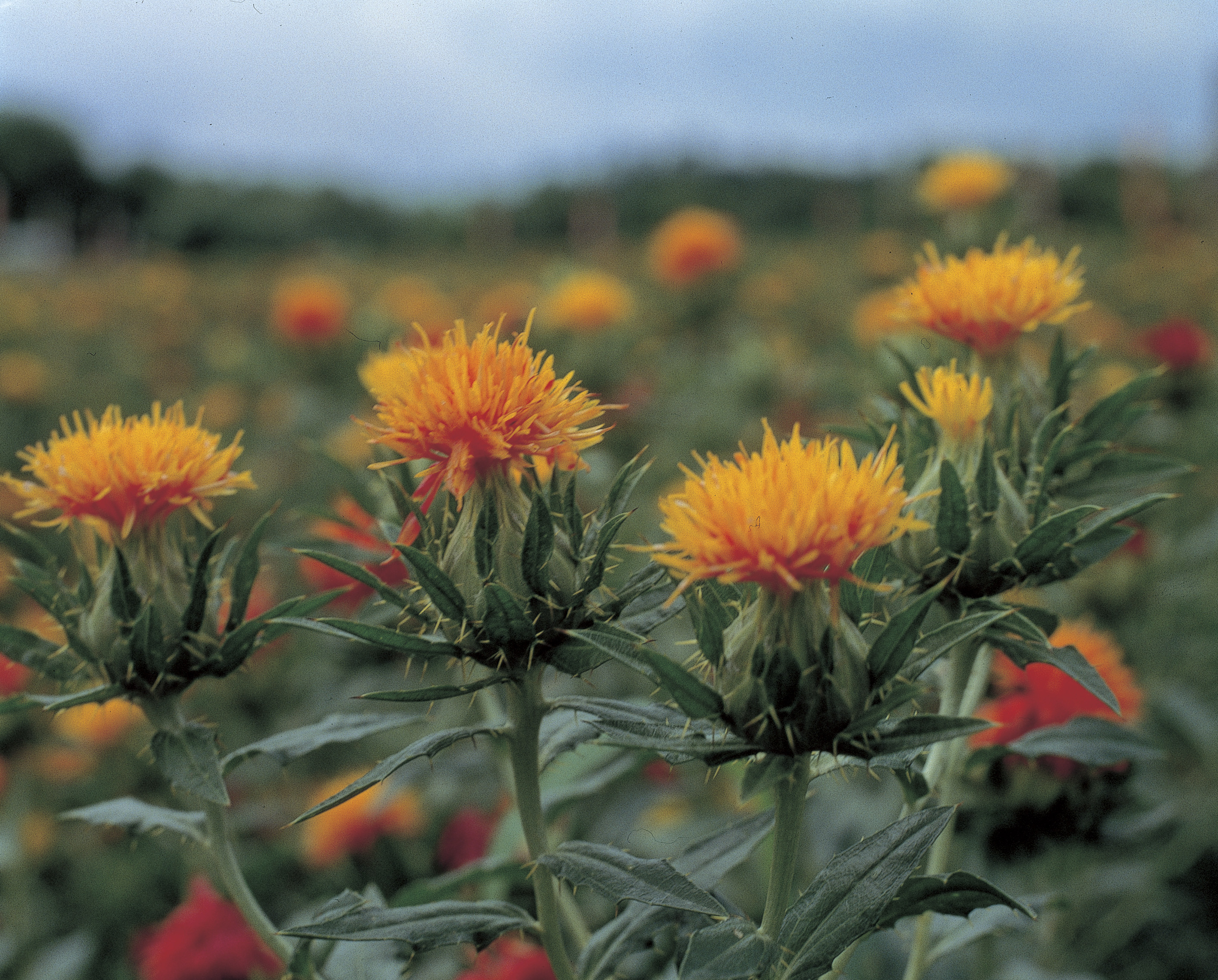
The origin of the word Khartoum is uncertain. One theory argues that khartoum is derived from Arabic kharṭūm meaning 'trunk' or 'hose', probably referring to the narrow strip of land extending between the Blue and White Niles. Captain J. A. Grant, who reached Khartoum in 1863 with Captain Speke's expedition, thought that the name was most probably from the Arabic qurtum, safflower (Carthamus tinctorius), which was cultivated extensively in Egypt for its oil to be used as fuel.

Credits: Skyline of Khartoum, capital of Sudan

Khartoum was established 15 miles (24 km) north of the ancient city of Soba in 1821 by Ibrahim Pasha, the son of Egypt's ruler, Muhammad Ali Pasha, who had just incorporated Sudan into his realm. Originally, Khartoum served as an outpost for the Egyptian Army, but the settlement quickly grew into a regional center of trade. It also became a focal point for the slave trade. Later, it became the administrative center of Sudan and official capital. (Source: Wikipedia)

As you could read above there is the idea that Khartoum got its name from the Safflower and that makes it somewhat easier to write/compose a haiku or tanka in response of this prompt. So I love to tell you a little bit more about Safflower.
Safflower (Carthamus tinctorius L.) is a highly branched, herbaceous, thistle-like annual plant. It is commercially cultivated for vegetable oil extracted from the seeds. Plants are 30 to 150 cm (12 to 59 in) tall with globular flower heads having yellow, orange, or red flowers. Each branch will usually have from one to five flower heads containing 15 to 20 seeds per head. Safflower is native to arid environments having seasonal rain. It grows a deep taproot which enables it to thrive in such environments.

Credits: Safflower

Safflower is one of humanity's oldest crops. Chemical analysis of ancient Egyptian textiles dated to the Twelfth dynasty identified dyes made from safflower, and garlands made from safflowers were found in the tomb of the pharaoh Tutankhamen. John Chadwick reports that the Greek name for safflower (kārthamos) occurs many times in Linear B tablets, distinguished into two kinds: a white safflower, which is measured, and red which is weighed. "The explanation is that there are two parts of the plant which can be used; the pale seeds and the red florets." (Source: Wikipedia)

While I was preparing this episode I sought for examples of haiku in which the Safflower is mentioned and I found a beautiful haiku, a not so well known one, by Matsuo Basho:


mayuhaki o omokage ni shite beni no hana

an eyebrow brush
is the image drawn by
safflower blossoms


© Basho

This haiku Basho wrote as he was on his journey "oku no hosomichi" or "the small road into the deep north" in the summer of 1689. I have read this haibun several times, but this haiku I couldn't remember, but it's a beauty I think.

While surfing the Internet I ran also into a nice haiku on Safflower written by Bjórn Rudberg, you all will know him, in response on the Safflower prompt of CDHK back in April 2014. I love share that haiku here again with you:

safflower field
beneath the periwinkle sky –
sight to dye for


© Björn Rudberg

What a coincidence, I knew that I had used this Safflower earlier at CDHK, but wasn't aware of when I did use it. I think Khartoum has brought us a wonderful prompt "extra" and I hope it will inspire you to write an all new haiku or tanka to share here.

Credits: Safflower field at Yamagata

Here is my attempt, I have used the haiku which I shared in the above mentioned episode of CDHK and have revised it into the following haiku. I think it has become stronger and more in balance.

amazing sight
a yellow sea as far as I can see
Safflower field

© Chèvrefeuille

I hope you did like this episode. This episode is NOW OPEN for your submissions and will remain open until August 23rd at noon (CET). I will (try to) publish our next episode, Blue Nile, later on. For now ... have fun, be inspired and share.

Friday, January 2, 2015

Carpe Diem Tan Renga Challenge #67, Björn Rudberg's "the old oak's roots"


Dear Haijin, visitors and travelers,

The New Year is already two days old and it's Friday today ... so time for a new episode of our Tan Renga Challenge. Our special feature (every Friday) in which I challenge you all to write a second stanza of 7-7 syllables towards a given first stanza of 5-7-5 syllables. This week I have chosen a haiku composed by Björn Rudberg of Brudberg's Writings. Björn composed this haiku in response on our prompt "Last Year". As I read his haiku I was immediately "in love" with it. It brought nice memories to my mind and the first I thought of was the meaning of the Old Oak, the theme of his haiku, in the ancient druids Ogham oracle and alphabet.
Credits: Old Oak
The Oak is one of the sacred Druidic three: 'Oak, Ash & Thorn'.  In general, Oak is associated with spells for protection, strength, success and stability, healing, fertility, health, money, potency, and good luck. Oak has been considered sacred by just about every culture that has encountered the tree, but it was held in particular esteem by the Norse and Celts because of its size, longevity, and nutritious acorns. The oak is frequently associated with Gods of thunder and lightning such as Zeus, Thor, and the Lithuanian God Perkunas. This association may be due to the oak's habit of being hit by lightening during storms. Specific oak trees have also been associated with the 'Wild Hunt', which is led by Herne in England and by Wodin in Germany. Oak galls, known as Serpent Eggs, were used in magical charms. Acorns gathered at night held the greatest fertility powers. The Druids and Priestesses listened to the rustling oak leaves and the wrens in the trees for divinatory messages. Burning oak leaves purifies the atmosphere. In general, oak can be used in spells for protection, strength, success and stability; the different varieties will lend their own special 'flavor' to the magic.
Credits: (c) photo Björn
The above photo goes along with Björn's haiku ... and here it is:

the old oak’s roots -
reach from past to future
recall last year


(c) Björn Rudberg

Isn't it a beauty? And as I read the above given meaning of Oak than this haiku becomes magical and mysterious. An awesome take on "last year". To write a second stanza towards it will not be an easy task, but .... well you know me .... (smiles)

the old oak’s roots -
reach from past to future
recall last year
                                (c) Björn Rudberg

listen, listen carefully
oak leaves rustling secrets              (c) Chèvrefeuille

Ah ... I like it as an idea comes true. I loved bringing the magic and mystery into my second stanza and I think I have succeeded.

This Tan Renga Challenge is NOW OPEN for your submissions and will remain open until next Friday January 9th at noon (CET). Have fun!


Wednesday, December 10, 2014

Carpe Diem #623, Northern Lights (Aurora Borealis)


!! This episode is published earlier, because I am in the night shift !!

Dear Haijin, visitors and travelers,

I hope you all did like the "double" post yesterday in which we read a wonderful poem by Robert Frost and a gorgeous haiku by Richard Wright. I already have read wonderful responses, but the haiku shared by Björn of Brudberg's Writings was really gorgeous. Björn tried to catch both poems into one haiku ... and in my opinion he did a great job on that. I love to share his haiku here again:

Credits: Snow-angel

In the crow’s shadow
I become a child again -
making snow-angels


© Björn Rudberg

Isn't it a beauty?

Ok ... back to our prompt for today, Northern Light (Aurora Borealis), extracted from Jane Reichhold's saijiki "A Dicitionary of Haiku". This month all the prompts are modern kigo (seasonwords) for winter and Jane has gathered a lot of them. Here is the haiku which she shared for "Northern Lights":


Northern Lights
a white robed choir sings
to radio static
Northern Lights as seen from the Northern Provinces of The Netherlands

A beauty I think ... it's so well build and in tune with the time of year. This haiku brings a church choir in mind as I know them from the Gospelchoirs or Pentacostal Church, enjoying their belief in praising the Lord and that joy and praise becomes even stronger as I see the Northern Lights in front of my mind's eyes. Gorgeous and such a great image ... wow! Thanks Jane for this wonderful haiku. How can I ever touch that same quality as the haiku by Jane? Will not be easy ... so I have sought in my archive and found the following cascading haiku on Auruora Borealis:

treat of Mother Earth
coloring the skies
Aurora Borealis
Aurora Borealis
a palette of colors
treat of Mother Earth
© Chèvrefeuille
 Well ... I hope you all did like this episode and I hope it will inspire you to write an all new haiku or tanka ... This episode is open for your submissions tonight at 7.00 PM (CET) and will remain open until December 13th at noon (CET). I will (try to) publish our next episode, snow, later on.


Friday, December 5, 2014

Carpe Diem's Tan Renga Challenge #62, Björn Rudberg's "tempting waves"


Dear Haijin, visitors and travelers,

It's time again for our Tan Renga Challenge. Today here in The Netherlands we celebrate Sinterklaas (it's a Dutch tradition which is very similar to Santa Claus) and all the children are awaiting presents. The story goes like this:

Sinterklaas was a bishop who cared a lot for the poor and once in a year he gave presents and food to the people. He got help from Zwarte Piet to take care that everyone got his/her present and food. This tradition we have here already several centuries, but in this time this tradition lays under fire, because of the idea of some bad thinking humans. They have protested against the idea of Zwarte Piet, because they think it has to do with slavery, discrimination and rascism. So this very old Dutch tradition will disappear I think in the  next decennia. And it's just a festival for children.

Ok ... back to our Tan Renga Challenge for this week. This week I have chosen a haiku written by Björn Rudberg of Brudberg's Writings. He wrote this haiku in response on our first prompt of December "accepting the finite". I think with this haiku he paints a great image in which the essence of that prompt is caught. Here is our first stanza of our 62nd Tan Renga Challenge:

tempting waves -
the old boat still needs
a little rest


© Björn Rudberg


Credits: Old Boat
For those who are new here I will explain the goal of this Tan Renga Challenge. Tan Renga is a short chained poem of two stanzas written by two poets. It looks very similar with Tanka, but Tanka is written by one poet. As you maybe know Tanka (a five-lined poem) follows the classical syllbles count 5-7-5-7-7. This same syllables count is used for Tan Renga, but there is one little difference: after the first three lines (5-7-5) there is a white line and than follows the second two-lined stanza (7-7).
The goal is to write the second stanza of this Tan Renga and make it complete or continue the image by association on themes in the first stanza. For example: You can write a second stanza associated on the "old boat":

tempting waves -
the old boat still needs
a little rest                        (© Björn Rudberg)

in the backyard, next to the pond,
an old boat overgrown with Ivy               (© Chèvrefeuille)

In this example you can see that the second stanza was inspired on the theme of the "old boat" in the first stanza. This was just an example, you can also associate on waves, little, need and so on. The choice is yours.

Here is my attempt to complete this Tan Renga started by Björn:

tempting waves -
the old boat still needs
a little rest                          (© Björn Rudberg)

an old sailor man with red-stained eyes
grieving for the loss of his boat                               (© Chèvrefeuille)

And now it's up to you. You don't have to use the 7-7 syllables count for the second stanza, but feel free to do if you like to. Writing haiku and Tan Renga is fun and has to be free from rules ... at least that's my opinion. Write from your heart and not from your mind ... go with the flow and let it inspire you.

This Tan Renga Challenge is NOW OPEN for your submissions and will remain open until next Friday December 12th at noon (CET). Have fun!


Friday, September 19, 2014

Carpe Diem #565, cutting wood


Dear Haijin, visitors and travelers,

What a joy ... to have some spare time to create a new episode of our wonderful haiku kai. This month we are discovering modern kigo for autumn as compiled by Jane Reichhold in her "A Dicitionary of Haiku", a great saijiki in which you can find several modern kigo.|
Today our prompt is "Cutting Wood" and it immediately brought a haiku by Jim Kacian, our featured haiku-poet of August, in mind:

chopping wood-
someone does the same
a moment later

© Jim Kacian

To re-read this episode of CD-Special click HERE. It was our first CD-Special in August and I recall that you all shared wonderful haiku on this haiku e.g. by Björn Rudberg:

axes sing -
quenching winter’s dirge
of dying embers


©Björn Rudberg

Or this one by Nimi:

With each strike
the groan resonates -
Chopping wood

© Nimi

Both are beautiful and so different from each other. In my response on that haiku by Jim Kacian I wrote:

deep silence
in the forest I only hear
a Woodpecker

© Chèvrefeuille

Credits: Cutting wood
As I am preparing this episode another haiku came in mind. This time one by Yosa Buson and here it is:

ochikochi ochikochi to utsu kinuta kana

near and far
here and there the beating sound
of fulling blocks . .

© Yosa Buson

In ancient Japan, fulling blocks to chop wood on were also used for washing clothes. Another one also by Buson goes as follows:

kangetsu ni kiwo waru terano otoko kana

Under the winter moon
chopping up firewood,
the man of the temple

© Yosa Buson

All wonderful haiku on "cutting wood" and I think it's great to look at what Jane Reichhold uses as an example for this modern kigo.

the mountain path
being drawn through the woods
a sound of saws

© Jane Reichhold

Or what do you think of this example, also by Jane:

chain saw stilled
the sound of the ocean
comes into view

© Jane Reichhold

Isn't it a beauty. The chain saws are stilled and you can immediately hear the sound of waves, the song of birds or the rustling of leaves. Awesome.

after the rainstorm
again the sound of roaring chain saws -
dripping raindrops

© Chèvrefeuille

Awesome! What a wonderful prompt we have today. I hope you all will be inspired to share your haiku with us all here at our Haiku Kai. Keep on going ... let's do some "wood cutting" (smiles).

This episode will be open for your submissions tonight at 7.00 PM (CET) and will remain open until September 22nd at noon (CET). I will publish our next episode, crow, later on. For now ... have fun!