Showing posts with label Europe Ginko. Show all posts

Monday, October 23, 2017

Carpe Diem #1287 Ireland


Dear Haijin, visitors and travelers,

First my apologies for being late with publishing. I had a very busy day at work ... so I first had to recover from that before I could start creating this new episode of our luster month October 2017.
As you all know Basho was a traveling haiku poet and we have wandered along the paths he went, but we also wandered through Europe. Back in the summer of 2016 I had our first Ginko, or "haiku-walk". We visited several European countries to find inspiration in the beauty of those countries. Today's "memory lane" trip is back to that ginko. We visited Ireland (June 19th, 2016) and it was a joy to find haiku poets in that wonderful country.

Ireland
high above the waters
a bird's nest destroyed -
a rough sea

© Chèvrefeuille

Ireland is a very spiritual and mystical country. I think you all know Stonehenge ... in Ireland you can find similar stone circles ... one of them, Drombeg Stone Circle, County Cork, is such a stone circle. As excavations prove it was certainly used for religious ideas. It is proven that the stones are aligned on the Winter Solstice.

Dromberg Stone Circle
greener than green
everywhere I look, as far as I can see,
greener than green

© Chèvrefeuille

I couldn't come up with a new haiku, so I reproduced a few haiku from the original post back in June 2016.

This episode is NOW OPEN for your submissions and will remain open until October 30th at noon (CET). I will try to publish our new episode, abalone shells, later on. Have fun! 

PS. I have created a CDHK Forum, you can find the link at the right of our Kai.


Wednesday, June 29, 2016

Carpe Diem #987 Portugal


Dear haijin, visitors and travelers,

Today our last stage on our Europe Ginko. We will end our ginko in Portugal, which became a member of the European Union (EU) in 1986. Let me tell you something about Portugal's history.

The territory of modern Portugal has been continuously settled, invaded and fought over since prehistoric times. The IberiansCeltsPhoeniciansCarthaginians and the Romans were followed by the invasions of the Visigothic and the Suebi Germanic peoples, who were themselves later invaded by the Moors. These Muslim peoples were eventually expelled during the Christian Reconquista. Portuguese nationality can be traced back to the creation of the First County of Portugal, in 868. In 1139, Afonso Henriques was proclaimed King of Portugal, thus firmly establishing Portuguese independence, under the Portuguese House of Burgundy.
In the 15th and 16th centuries, under the House of Aviz, which took power following the 1383-85 Crisis, Portugal expanded Western influence and established the first global empire, becoming one of the world's major economic, political and military powers. During this time, Portuguese explorers pioneered maritime exploration in the Age of Discovery, notably under royal patronage of Prince Henry the Navigator and King João II, with such notable discoveries as Vasco da Gama's sea route to India (1497–98), Pedro Álvares Cabral's discovery of Brazil (1500), and Bartolomeu Dias's reaching of the Cape of Good Hope. Portugal monopolized the spice trade during this time, under royal command of the Casa da Índia, and the Portuguese Empire expanded with military campaigns led in Asia, notably under Afonso de Albuquerque, who was known as the "Caesar of the East".
Flag of Portugal
The destruction of Lisbon in a 1755 earthquake, the country's occupation during the Napoleonic Wars, the independence of Brazil (1822), and the Liberal Wars (1828-1834), all left Portugal crippled from war and diminished in its world power. After the 1910 revolution deposed the monarchy, the democratic but unstable Portuguese First Republic was established, later being superseded by the "Estado Novo" right-wing authoritarian regime. Democracy was restored after the Portuguese Colonial War and the Carnation Revolution in 1974. Shortly after, independence was granted to all its colonies, with the exception of Macau, which was handed over to China in 1999. This marked the end of the longest-lived European colonial empire, leaving a profound cultural and architectural influence across the globe and a legacy of over 250 million Portuguese speakers today.

Now we know a little bit more about Portugal's history, but history is not a big part of haiku, nature however is. So let us take a look at the nature of Portugal.

Portugal has a long beach-line it is almost surrounded 1005 by water and the West Coast of Portugal is really stunning.

West Coast of Portugal
waves come and go
hidden between mountains -
love on the beach

© Chèvrefeuille

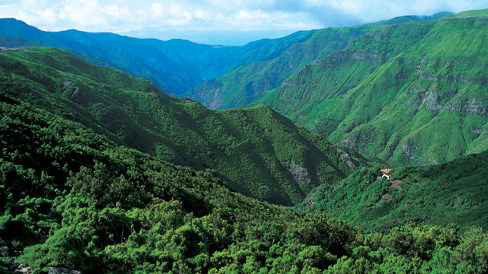
But of course Portugal has forests too:

Forests of Portugal (this image was taken on Madeira, part of Portugal)
forests
cover the mountains
deep silence
the rustling of leaves in the breeze
birds praising their Creator

© Chèvrfeuille

Wandering through Portuguese nature
babbling brook
I breath the fresh morning air
and smile

© Chèvrefeuille

Wow ... what a beautiful country Portugal is. I know I have said this often this month, but as I look at these images ... than Portugal is like paradise.

In every episode of our Europe ginko I introduced haiku poets from the countries we visited. So in this last episode of this month I will do that too. I have searched the Internet but couldn't find haiku poets from Portugal, but I love to share a few haiku in Portugese, so I had to "take the airplane" to Brasil. In Brasil they speak Portugese. So I have a series of Brazilian haiku for you.


Esta corola de lírio
Quer continuamente
Me voltar as costas

This lily’s corolla
wants continuously
to turn its back to me

Sem pedir, o vento
Derruba as flores do chão . . .
Eu nunca ousei.

Without asking, the wind
Sheds the flowers on the ground . . .
I never dared.

© Afrânio Peixoto (1876 – 1947)

Desfolha-se a rosa
parece até que floresce
o chão cor-de-rosa
The rose sheds its petals
it seems that there blooms
a pink colored ground
© Guilherme de Almeida (1890-1969)

Sobre a laje fria
diz adeus à primavera
uma rosa murcha

On the cold slab
says goodbye to spring
a withered rose

© Fanny Luíza Dupre (1911 – 1996) 
 
embalante alas
lento bailado a lembrança
enlaçando almas
rocking wings
slow ballet to memory
entwining souls
© Pedro Xisto
começo de outono
cheia de si
a primeira lua

early fall
full of herself
the first moon

fim do dia
porta aberta
o sapo espia

end of the day
open door
the frog peeps

© Alice Ruiz
Well ... it has become a nice last episode I think, however it is sad that I couldn't find Portugese haiku poets, but I hope you did like the Brazilian haiku.

This episode is NOW OPEN for your submissions and will remain open until July 4th at noon (CET). I will try to publish our new episode, the first of July ... , later on.
By the way I hadn't time to create the new prompt-list for July, but we are exploring the mysterious, mystical and magical nature.


Monday, June 27, 2016

Carpe Diem #986 Poland


Dear Haijin, visitors and travelers,

Welcome at the penultimate "stage" of our Europe Ginko. It was really a joy to create this month and we have seen a lot of Europe, virtually. Today we will visit Poland. Poland, once part of the Warsaw Pact, became a member of the EU in 2004. Let me give you a brief overview of Poland's history.

The establishment of a Polish state can be traced back to 966, when Mieszko I, ruler of a territory roughly coextensive with that of present-day Poland, converted to Christianity. The Kingdom of Poland was founded in 1025, and in 1569 it cemented a longstanding political association with the Grand Duchy of Lithuania by signing the Union of Lublin. This union formed the Polish–Lithuanian Commonwealth, one of the largest and most populous countries of 16th and 17th-century Europe. The Commonwealth ceased to exist in the years 1772–1795, when its territory was partitioned among Prussia, the Russian Empire, and AustriaPoland regained its independence (as the Second Polish Republic) at the end of World War I, in 1918.


flag of Poland

In September 1939, World War II started with the invasions of Poland by Nazi Germany and the Soviet Union (as part of the Molotov–Ribbentrop Pact). More than six million Polish citizens died in the war. In 1944, a Soviet-backed Polish Committee of National Liberation was formed and, after a falsified referendum in 1947, it took control of the country and Poland became a satellite state of the Soviet Union, as People's Republic of Poland. During the Revolutions of 1989 Poland's Communist government was overthrown and Poland adopted a new constitution establishing itself as a democracy. Despite the large number of casualties and destruction the country experienced during World War II, Poland managed to preserve much of its cultural wealth. (Source: Wikipedia)

I once had a colleague from Poland and she told me that she missed her country, of course. As I asked her why she missed her country, she told me that she not only missed her family, but also the beautiful nature of Poland. As a haiku poet that triggered my attention and I think she is right ...


Tatra Mountains Poland
Look at these gorgeous mountains ... awesome don't you think so too?

reflections
mountains with their top down
clear blue water

© Chèvrefeuille

Or what d you think of this wonderful reserve, Bolechowicki Gully Nature Reserve:


Bolechowicki Gully Nature Reserve
rocks rising
to the clear blue sky
a skylark's song

© Chèvrefeuille

It's not all mountains and hills of course in Poland, but as I was doing research for this episode I ran into a wonderful image of a Polish winery on a hill-side. I didn't know that Poland had a winery culture, but the wineries are really beautiful.

Polish winery
in front of the fireplace
dreaming of wonderful Poland
with the one I love

© Chèvrefeuille

I really didn't know about Polish wine. I thought the Polish were of Vodka and Beer, but in the last few decades the Polish have discovered wine and the producing of it.
Next to the wine ... will there be haiku poets in Poland?

Poland has its own International Haiku contest, so there will be haiku poets living there I think. I found a few examples of haiku by Polish haiku poets:

Between one raindrop
And just the following one—
It is not raining


© Alina Kizierowska 

fourth anniversary—
only the wind sweeps the leaves
from the grave


© Robert Kania


Indian Summer
rendezvous—
on my lips
Indian summer


© Marta Chociłowska

wind chill
among trembling leaves
more and more sky


© Maria Kowal-Tomczak

All haiku examples from Poland retrieved from HERE:

Poland ... a fantastic country ... worth visiting once ....

This episode is NOW OPEN for your submissions and will remain open until July 2nd at noon (CET). I will try to publish our new episode, a new Tokubetsudesu, later on. For now ... have fun!

!!! I couldn't retrieve a possibility to come in contact with the above haiku poets, but as always I have credited them all !!!


Sunday, June 26, 2016

Carpe Diem #985 Austria


Dear Haijin, visitors and travelers,

It's a wonderful month, travelling through the European Union is awesome and today we will visit one of the European countries which I visited myself once long time ago. Today we will visit Austria. Austria became a member of the European Union (EU) in 1995. Let me tell you a little bit about the history of Austria.

The origins of modern-day Austria date back to the time of the Habsburg dynasty when the vast majority of the country was a part of the Holy Roman Empire. From the time of the Reformation, many Northern German princes, resenting the authority of the Emperor, used Protestantism as a flag of rebellion. The Thirty Years War, the influence of the Kingdom of Sweden and Kingdom of France, the rise of the Kingdom of Prussia, and the Napoleonic invasions all weakened the power of the Emperor in the North of Germany, but in the South, and in non-German areas of the Empire, the Emperor and Catholicism maintained control. During the 17th and 18th centuries, Austria was able to retain its position as one of the great powers of Europe and, in response to the coronation of Napoleon as the Emperor of the French, the Austrian Empire was officially proclaimed in 1804. Following Napoleon's defeat, Prussia emerged as Austria's chief competitor for rule of a larger Germany. Austria's defeat by Prussia at the Battle of Königgrätz, during the Austro-Prussian War of 1866, cleared the way for Prussia to assert control over the rest of Germany. In 1867, the empire was reformed into Austria-Hungary. After the defeat of France in the 1870 Franco-Prussian War, Austria was left out of the formation of a new German Empire, although in the following decades its politics, and its foreign policy, increasingly converged with those of the Prussian-led Empire. During the 1914 July Crisis that followed the assassination of Archduke Franz Ferdinand of Austria, Germany guided Austria in issuing the ultimatum to Serbia that led to the declaration of World War I. 
Flag of Austria
After the collapse of the Habsburg (Austro-Hungarian) Empire in 1918 at the end of World War I, Austria adopted and used the name the Republic of German-Austria (Deutschösterreich, later Österreich) in an attempt for union with Germany, but was forbidden due to the Treaty of Saint-Germain-en-Laye (1919). The First Austrian Republic was established in 1919. In the 1938 Anschluss, Austria was occupied and annexed by Nazi Germany. This lasted until the end of World War II in 1945, after which Germany was occupied by the Allies and Austria's former democratic constitution was restored. In 1955, the Austrian State Treaty re-established Austria as a sovereign state, ending the occupation. In the same year, the Austrian Parliament created the Declaration of Neutrality which declared that the Second Austrian Republic would become permanently neutral.
I remember that I visited Austria as a young guy of 18 years, it was an educational tour to learn German. I was housed in the home of an Austrian family, the best way to learn German. I was overwhelmed by the beauty of the Austrian nature. I had never seen mountains in reality, I only knew mountains from pictures. It was amazing ...

As a haiku poet nature is one of the main themes, so it must be easy to create haiku about the Austrian nature ... the clean mountain air, the mountains, the mountain flora and fauna ... awesome. Let us take a look at the beauty of the Alps.

The Alps
clear blue sky
embraces the mountains
cry of an eagle


© Chèvrefeuille

sound of water
babbling mountain stream

deepens the silence

© Chèvrefeuille

Austrian National Park (Hohe Tauern National Park)

In the heart of the Austrian Alps, Hohe Tauern National Park provides endangered animal and plant species with a protected habitat. 1800 km² in area, Hohe Tauern National Park is actually the second largest in Europe. Here you can experience Mother Nature at her most beautiful: Austria’s highest peaks and biggest glaciers, meadows strewn with colorful alpine flowers, imposing crags and refreshing waterfalls. A centuries-old natural and cultural landscape, formed by the Ice Ages and the forces of the seasons, is just waiting to be discovered.
Mother Nature
dances in her Paradise
the sound of water
© Chèvrefeuille
As I was doing my research for this episode I ran into a wonderful, spiritual and mysterious almost mystical photo of the Alps. I just had to use it in this post today ... look for yourself.
Mystical Alps
serene beauty
the gods cherish Mother Nature
blessing her


© Chèvrefeuille
cloud cover breaks open
sun rays finding their way to the mountains
like blessing hands
© Chèvrefeuille
It wasn't easy to find haiku poets from Austria, but I finally found a few examples of haiku from Austria.
Eine Wasserrose,
Die aus der Tiefe auftaucht.
Kräuselt sich das Wasser.
A water lily
Emerging from the depth
Ripples of water
© Paul Ernst (1898) (one of the first haiku written in Austria)
And I found a few haiku by Dietmar Tauchner, a modern Austrian haiku poet, who has won several prizes and is also a member of the American Haiku Society. To read more haiku by Dietmar Tauchner please visit his website Bregengemme. (The German translations are my own)
Autumn Colors
 
Herbst Einbruch der Nacht
Die Eiche ist ein wieder
mit seinem Schatten
autumn nightfall
the oak is one again
with its shadow
Wiese Safran
die rohen Schreie von Staren
beziehen sich auf mich
meadow saffron
the raw cries of starlings
refer to me
© Dietmar Tauchner
Austria ... a wonderful country ...

This episode is NOW OPEN for your submissions and will remain open until July 1st at noon (CET). I will try to publish our new episode, the last CD-Special by Joyce Lorenson, later on.


Saturday, June 25, 2016

Carpe Diem #984 Malta


Dear Haijin, visitors and travelers,

Welcome at a new "stage" in our Carpe Diem Europe Ginko, in which we will visit a large part of the countries that are part of the European Union (EU). Maybe you have followed the new about the so called "Brexit" about the British referendum to stay in the EU or leave the EU. This referendum took place on June 23rd and a small majority voted to leave the EU, with 52% the UK will leave the EU. So as for today on the UK will be no longer an active member of the EU. It's for sure not very clear what will happen to the EU or the UK after the Brexit ... we will see in time.

Okay back to our "stage" today. Today we will visit Malta (once a part of the UK) were the people speak English and Greek. Let us take a brief look at the Maltese history.

Malta's location has historically given it great strategic importance as a naval base, and a succession of powers, including the Phoenicians, Romans, Moors, Normans, Sicilians, Spanish, Knights of St. John, French and British, have ruled the islands. 
Maltese flag
King George VI of the United Kingdom awarded the George Cross to Malta in 1942 for the country's bravery in the Second World War. The George Cross continues to appear on Malta's national flag. Under the Malta Independence Act, passed by the British Parliament in 1964, Malta gained independence from the United Kingdom as an independent sovereign Commonwealth realm, officially known from 1964 to 1974 as the State of Malta, with Elizabeth II as its head of state. The country became a republic in 1974, and although no longer a Commonwealth realm, remains a current member state of the Commonwealth of Nations. Malta was admitted to the United Nations in 1964 and to the European Union in 2004; in 2008, it became part of the Eurozone.
Malta has a long Christian legacy and its Roman Catholic Archdiocese of Malta is claimed to be an apostolic see because, according to the Acts of the Apostles, Paul the Apostle was shipwrecked on Malta. Catholicism is the official religion in Malta.
Let us take a closer look at the Maltese nature ... 
Harbor of Valletta, capital of Malta
clouds
moving forward
rain?
© Chèvrefeuille

As I was doing research for this episode I ran into a wonderful "creature" named Velella. The velella is found in all warm and temperature waters of all the oceans. The organism is like an oval, translucent, deep-blue plastic with a transparent sail on top.  It lives on the water surface and is at the mercy of the wind, tides and currents for transport. It is often found in large numbers and sometimes hundreds of thousands become stranded along the coast. This beautiful "creature" is found often in the waters around Malta.
Velella
small creatures
fighting against the wind
Velella
© Chèvrefeuille
floating plastic?
is the water polluted?
no ... Velella!


© Chèvrefeuille
 
Landscape of Malta
green meadow
as far as I can see
colorful flowers
© Chèvrefeuille
Malta ... paradise? I think so ... it's really a beautiful country. Must be awesome to live there. By the way ... I told you about the history of Malta and there are several ancient remains, so called megalithic temples, on Malta. One of those megalithic temples is Tarxien Temple:
 
Tarxien Temple
praying to the gods
offering them the gifts of nature
peace of mind
© Chèvrefeuille
With the beauty of Maltese nature and its rich history there have to be haiku poets on the Island. I searched for them on the Internet and found only one Maltese haiku poets, John P. Portelli (I couldn't retrieve an emailaddress or something to ask permission, but as always I credit the poet):
çass il-˙amiem
lil sidu jistenna –
ma jici qatt
the pigeons stare
awaiting their master —
he never comes
ri˙et ix-xita
fuq bjut im˙allba friski:
taqtig˙ il-qalb
the smell of rain
on terraces newly sealed:
losing heart
ri˙et ix-xita
fuq ˙axix mixwi sfajjar:
fer˙et il-qalb
the smell of rain
on scorched and jaundiced grass:
heart’s delight
g˙ollieq inigge!
jispunta kullimkien –
ming˙ajr avvi!
stinging thorns
growing everywhere —
no prior notice
tqattar ix-xita
ixiddu l-˙mura s-sicar
oqbra mg˙ottija
dripping rain
trees blushing
covered tombs
taqbe! il-˙uta
jin˙eba f’˙alqha l-ganç
ba˙ar ka˙lani
the fish leaps
in mouth the hook is hiding
azure sea
Azure Sea Malta
 
id-dell tad-dielja
jinfirex, jo˙loq kenn –
jg˙annu l-imrie!aq
the vine’s shadow
spreads, makes shelter —
the cicadas sing
il-weraq waqg˙u
qrie˙u s-sicar bla g˙ata
erwie˙ mitlufa.
the leaves have shed
bald the trees uncovered
lost souls.
waslet ix-xitwa
bil-ckieket u l-irwejja˙:
boççi tal-kamla
winter’s here
with jackets and scents:
moth balls!
u jg˙anni bikri
il-kardinal ˙amrani
u l-qattus jong˙os
he sings so early
the crimson bird –
the cat is dozing
tqattar ix-xita
jifir˙u !-!rincijiet
f’g˙adira niexfa
dripping rain
the frogs rejoice
in a dry pond
© John P. Portelli
 
Well I hope you did like this episode about Malta and of course ... I hope to have inspired you to create haiku yourself.

This episode is NOW OPEN for your submissions and will remain open until June 30th at noon (CET). I will try to publish our new episode, Austria, later on. For now .... have fun!
 

Friday, June 24, 2016

Carpe Diem #983 Lithuania


Dear Haijin, visitors and travelers,

Welcome at this (belated) episode of our Europe Ginko. I am on the nightshift so I couldn't create it earlier. Today we will visit Lithuania, one of the Baltic states. Lithuania became a member of the European Union (EU) in 2004.

For centuries, the southeastern shores of the Baltic Sea were inhabited by various Baltic tribes. In the 1230s, the Lithuanian lands were united by Mindaugas, the King of Lithuania, and the first unified Lithuanian state, the Kingdom of Lithuania, was created on 6 July 1253. During the 14th century, the Grand Duchy of Lithuania was the largest country in Europe; present-day Lithuania, Belarus, Ukraine, and parts of Poland and Russia were the territories of the Grand Duchy. With the Lublin Union of 1569, Lithuania and Poland formed a voluntary two-state union, the Polish–Lithuanian Commonwealth. The Commonwealth lasted more than two centuries, until neighboring countries systematically dismantled it from 1772–95, with the Russian Empire annexing most of Lithuania's territory.
Lithuanian flag

As World War I neared its end, Lithuania's Act of Independence was signed on 16 February 1918, declaring the re-establishment of a sovereign State of Lithuania. Starting in 1940, Lithuania was occupied first by the Soviet Union and then by Nazi Germany. As World War II neared its end in 1944 and the Germans retreated, the Soviet Union reoccupied Lithuania. On 11 March 1990, a year before the formal dissolution of the Soviet Union, Lithuania became the first Soviet republic to declare itself independent, resulting in the restoration of an independent State of Lithuania.

Lithuania is a small country, but its nature is overwhelming and breathtaking, similar with the other two Baltic states (Estonia and Latvia) we already have visited. So let us take a look at the Lithuanian nature.
Lithuania is a lowland country. Its highest point is merely 294 m above sea level (in fact Lithuania is the world's largest country without locations above 300 m). The lack of mountains on the horizon is compensated by lush forests and countless lakes.


Nemunas River Delta National Park, Lithuania
seeking their way
through the lowlands
clouds on water


© Chèvrefeuille

My country is flat, but I hadn't thought that there would be a country more flat than The Netherlands. Our highest "mountain", the Vaalserberg, is 322 m above sea level. Lithuanian's highest point is nearly 300 m above sea level.

Lithuania is sometimes called "the land of lakes", because thaere are about 6000 lakes in Lithuania. A lot of villages are situated on the borders of these lakes for example Trakai. As I saw this image I immediately fell in love with this small country, this "land of lakes". Look for yourself.

Trakai
surrounded by water
living on the borders of the lakes
I found true love


© Chèvrefeuille

Awesome ... what a beautiful country Lithuania is ... have to visit it ...


Lithuania, the land of lakes
land of lakes
Excalibur once thrown away
recovered in Lithuania


© Chèvrefeuille

Not a strong one, but the story of Excalibur came in mind as I saw this beautiful image of Lihuania. the land of lakes.

In Lithuania there are a lot of haiku poets and they are great. Back in 2011 the Japanese Embassy in Vilnius organized a haiku contest and I love to share a few of the haiku submitted for that contest here with you.


bumpt bumpt obuoliai
sodo tyloj į žemę
žiemos beldimas

flump and flump apples
in garden’s silence to earth
knocking of winter

© Dainius Dirgéla

Kiškiakopūstis
dreba nuo menko vėjo
meilės trikampis
a wood sorrel
shiver with gentle wind
love triangle
© Asta Čižiūnaitė  
 
Lihuanian nature (did you know that Lithuania is the geographical center of Europe?
 
Kūdron įmetė
Mėnulio pinigą – kas
vilias čia grįžti?

Someone’s dropped into the pond
the Moon coin – who’s
hoping to come back?

© Vaclovas Mikailionis

tavo atvaizdas
pageltusioj nuotraukoj
ankstyvas ruduo
your image
on the yellowing photo
early autumn
© Andrius Luneckas

kalnų šaltini
kalbam apie tą patį
tik kitais žodžiais

by the mountain spring
we talk about the same things
just in other words

© Goda Virginija Bendoraitienė

Well ... I hope I have inspired you with the beauty of Lithuania.


This episode is NOW OPEN for your submissions and will remain open until June 29th at noon (CET). I will (try to) publish our new episode, Malta, later on. For now ... have fun!

!!! PS. I am behind with commenting, but I hope to catch up a.s.a.p. !!!