Showing posts with label Jack Kerouac. Show all posts

Sunday, July 17, 2016

Carpe Diem Special #215 Jack Kerouac's "white clouds"


Dear Haijin, visitors and travelers,

Welcome at a new episode of our CDHK Special. Last week I shared a haiku by Buson for your inspiration and today I love to share a few haiku written by Jack Kerouac, well known as the initiator of the Beat generation in haiku loving America. In our last Utabukuro episode I shared a few beauties by Kerouac and today I love to share two other haiku.

White clouds of this steamy planet
obstruct
My vision of the blue void

White rose with red
splashes – Oh
Vanilla ice cream cherry!

© Jack Kerouac

I would say two beautiful, but somewhat strange haiku, but that's Kerouac's style. I think it can inspire you in a fun way or in a serious way. It's up to you to create a new haiku inspired on these two and try to catch the spirit of Kerouac in your haiku.

only a faint moon
Here is my attempt:

dark clouds hide
the deep blue sky of night
only a faint moon

© Chèvrefeuille

A nice one, but did I catch the spirit of Kerouac? I am not sure, it's for sure in the spirit of Chèvrefeuille (smiles)

This episode is NOW OPEN for your submissions and will remain open until July 22nd at noon (CET). I will (try to) publish our new episode, blackthorn, later on. For now .... have fun!


Saturday, July 16, 2016

Carpe Diem Utabukuro #13 "a balloon caught" by Jack Kerouac


Dear Haijin, visitors and travelers,

Last week I hadn't time enough to publish a new episode of Utabukuro, but now ... well I ran into a beautiful haiku by Jack Kerouac and I just had to create an Utabukuro episode about this haiku.

Jack Kerouac (1922-1969) was an American writer and pioneer of the Beat Generation. He epitomized the era of sex, drugs, alcohol, and jazz through his novel "On the Road," which became the bible of the countercultural generation.
Back in May 2014 Jack Kerouac was our featured haiku poet and I have written more posts about his beautiful haiku. So I am sorry if you think "again Jack Kerouac?"

A balloon caught
in the tree – dusk
In Central Park zoo


© Jack Kerouac
Jack Kerouac (1922-1969)

In this haiku the scene is just beautiful. The Zoo has closed and in the twilight the shade of a balloon caught in a tree looks like a monster or a ghost. A strong scene I think and the beauty of haiku makes this possible.


Autumn eve –
my mother playing old
love songs on the piano
© Jack Kerouac
This second haiku brought all wonderful memories back to me, not to my mother, I am happy she is still alive, but to my grandmother. My grandmother was Always busy with music, not playing the piano but she loved to sing. She sang beautiful and my kids liked her songs. So this haiku by Jack Kerouac is very special to me.

grandmother sings
the little boy smiles and falls asleep -
the full moon


© Chèvrefeuille

This Utabukuro episode is open for your submissions tonight at 7.00 PM (CET) and will remain open until July 21th at noon (CET). The goal ... share a favorite haiku and create an all new one inspired on your favorite. Have fun!

Friday, June 19, 2015

Carpe Diem Tan Renga Challenge #90, Allen Ginsberg's "on the porch"


Dear Haijin, visitors and travelers,

This week's Tan Renga Challenge, in which I challenge you to write a second stanza towards the given first stanza ("hokku"), is very special in my opinion. I was running through my archives and my library and ran towards a well known poet, Allen Ginsberg. Ginsberg is one of the poets from "The Beat Generation" as was e.g. Jack Kerouac. I was reading about Ginsberg and I discovered that he had written haiku once. His haiku were never published, so this is a very special Tan Renga Challenge.

Let me first introduce Allen Ginsberg to you. Irwin Allen Ginsberg (1926 – 1997) was an American poet and one of the leading figures of both the Beat Generation of the 1950s and the counterculture that soon would follow. He vigorously opposed militarism, economic materialism and sexual repression. Ginsberg is best known for his epic poem "Howl", in which he denounced what he saw as the destructive forces of capitalism and conformity in the United States.
In 1957, "Howl" attracted widespread publicity when it became the subject of an obscenity trial, as it depicted heterosexual and homosexual sex at a time when sodomy laws made homosexual acts a crime in every U.S. state. "Howl" reflected Ginsberg's own homosexuality and his relationships with a number of men, including Peter Orlovsky, his lifelong partner. Judge Clayton W. Horn ruled that "Howl" was not obscene, adding, "Would there be any freedom of press or speech if one must reduce his vocabulary to vapid innocuous euphemisms?"
Ginsberg was a practicing Buddhist who studied Eastern religious disciplines extensively. He lived modestly, buying his clothing in second-hand stores and residing in downscale apartments in New York’s East Village. One of his most influential teachers was the Tibetan Buddhist, the Venerable Chögyam Trungpa, founder of the Naropa Institute, now Naropa University at Boulder, Colorado. At Trungpa's urging, Ginsberg and poet Anne Waldman started The Jack Kerouac School of Disembodied Poetics there in 1974.

Credits: Allen Ginsberg (1926-1997)
And I love to share a few haiku (never published in print) written/composed by Ginsberg.

Looking over my shoulder
my behind was covered
with cherry blossoms.

I didn't know the names
of the flowers—now
my garden is gone.

I slapped the mosquito
and missed.
What made me do that?


© Allen Ginsberg

Nice haiku. As I selected these I really saw/read the classics in them. For example that third haiku brought a haiku by Basho in mind:

a mosquito
aiming noisily -
the sound of one hand


© Basho (?)

A few other haiku by Ginsberg:


A frog floating
in the drugstore jar:
summer rain on gray pavements.

On the porch
in my shorts;
auto lights in the rain.

Another year
has past—the world
is no different.

The first thing I looked for
in my old garden was
The Cherry Tree.


© Allen Ginsberg

In this 'series' of haiku by Allen Ginsberg brought also a haiku in mind by one of our classic haiku poets, Buson:

a frog floating
in the water-jar:
rains of summer


© Buson

Allen Ginsberg was a "fan" of the classical haiku poets and the above haiku he wrote, so is said, he wrote while reading one of the four volumes "haiku" by R.H.Blyth.


So it is really a pleasure to share these haiku by Ginsberg with you. Ok ... back to our Carpe Diem Tan Renga Challenge. I love to challenge you all to complete the following Tan Renga starting with a haiku by Allen Ginsberg:

on the porch
in my shorts;
auto lights in the rain

© Allen Ginsberg (1955)

Well ... let me see what I can do with this haiku. To complete the Tan Renga I have to associate on the images shared in the haiku above. As I look at the complete scene than I think it's a summer haiku. It has been a hot day, he sits in his shorts on the porch; and it rains. It's late evening, because of the "auto lights". So how to complete this Tan Renga ...
In the above short biography of Ginsberg we can read that he was a Buddhist ... so can I use that for my second stanza. In the above biography we can read Ginsberg was homosexual ... can I use that maybe?
Hm ... to many thoughts, to many images and associations to choose from, so I decided to complete this Tan Renga in a very simple way ...


on the porch
in my shorts;
auto lights in the rain
                            (Allen Ginsberg)

after a lonely ... hot day
lips on mine ... together again
              (Chèvrefeuille)

Hm .... I like this completion. It completes the scene. After a long hot day alone finally together again, no more tears to shed (the rain), but only intense happiness (auto lights). A warm loving scene I think.

Well .... it's up to you now. Make this Tan Renga complete by writing the second stanza of two lines with approximately 7-7 syllables. This Tan Renga Challenge is NOW OPEN for your submissions an will remain open until next Friday June 26th at noon (CET). Have fun!

Tuesday, June 9, 2015

Carpe Diem Tokubetsudesu #47 flowers


Dear Haijin, visitors and travelers,

It's Wednesday again and so it's time for a new episode of our former Ghost Writer, Tokubetsudesu, feature. This week I love to take you on a trip along flowers and challenge you to write an all new haiku following the classical rules on flowers and by using images. This week's Tokubetsudesu episode will bring CD Imagination, one of our special features, back to your attention.

Flowers ... there are a lot of haiku (classical, non-classical, ancient and modern) about flowers. Sometimes flowers as a bigger picture, sometimes more specific e.g. violets or sunflowers. This week I have gathered a nice series of haiku on flowers for your inspiration and a few beautiful images to help to awaken your muses ...

kobi bito no   kokoro ni mo niyo   shii no hana

the traveling heart
should be like
hidden blossoms


shii no hana no   kokoro ni mo niyo   kiso no tabi

hidden flowers
the heart resembles
a trip to Kiso


© Basho (1644-1694) (Tr. Jane Reichhold)


The preface of these two was:

'As Kyoriku leaves for Hikone by the Kiso Route".

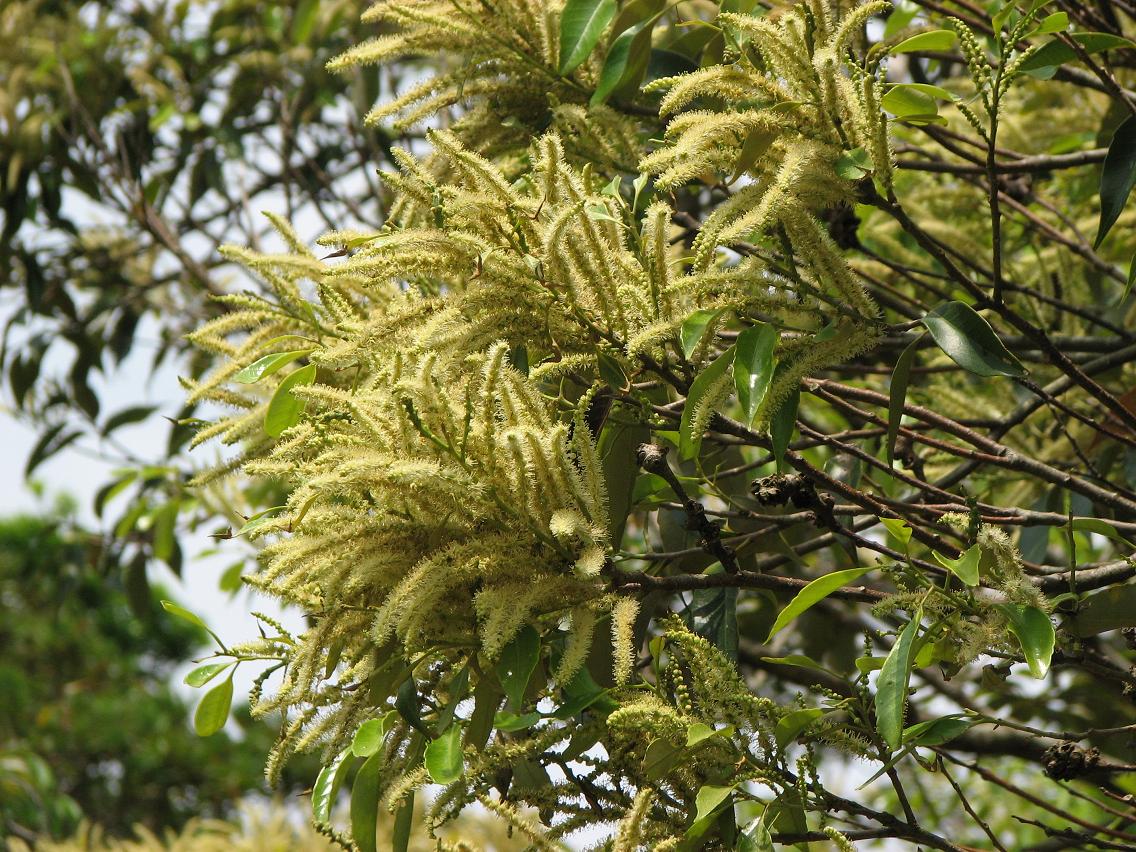
The name of the tree (Shii) is the castanopsis cupsidata (or fake, apparent, chestnut) which bears inconspicuous flowers. Well ... let me go with the flow and look a bit closer to these haiku. Both are about traveling, both speak about 'hidden flowers'. The line 'hidden flowers' is about the inconspicuous flowers of the Shii, but can easily be seen as a line that points to hidden meanings, or secrets.
Credits: Castanopsis
Another nice haiku, this time composed by Kobayashi Issa (1763-1827):

na no hana ni yotsu no naru made asa cha kana

amid mustard flowers
till the ten o'clock bell...
morning tea

jiji ga yo ya kare-gi mo yuki no hana no haru


an old man's world--
flowers of snow on bare trees
spring's blossoms


© Kobayashi Issa (Tr. David G. Lanoue)

Or what do you think of this gorgeous Morning Glory haiku by Chiyo-Ni (1703-1775) who says of her own haiku:


"When beauty is expressed in terms of Buddhism, it is a form of self- enjoyment of the suchness of things. Flowers are flowers, mountains are mountains, I sit here, you stand there, and the world goes on from eternity to eternity, this is the suchness of things."

The morning glory!
It has taken the well bucket,
I must seek elsewhere for water.


© Chiyo-Ni (Tr. Patricia Donegan)

The above haiku is very famous and in Chiyo-Ni's words above we can easily see and feel the strong influence of Basho, who was admired by Chiyo-Ni.


Another classical haiku-poet which I love to share a haiku of is Yosa Buson (1716-1784), he not only was a great haiku poet, but also a great painter of haiga.


cha no hana ya shiro nimo ki nimo obotsu kana

The tea-plant flowers--
whether white or whether yellow,
hard to tell


© Yosa Buson

Let me now look at a few modern haiku poets' haiku on flowers.

For example this one by Dolores, one of our haiku kai family members:

as shadows grow
blossoms close their petals
awaiting dawn


© Dolores


Or this one by another haiku kai family member, Maniparna:


tender touch of color
ushering spring’s arrival
bare branches come alive


© Maniparna
And to close these examples of modern haiku poets a haike cascade by Leslie and by Jane Reichhold:

petals velvet smooth
reaching up toward the sun
your smile welcomes home


your smile welcomes home
elegant dress for the night
outlined by the moon


© Leslie

one flashlight
in the daisy meadow
stars


 All wonderful haiku written by classical and modern haiku poets. I think I will share a few more haiku on flowers for your inspiration. What do you think of this one by Garry Gay, one of our featured haiku poets last year.

Dandelion seed--
unnoticed
in his beard


© Garry Gay

Next to his haiku, Garry Gay is a respected photographer and the following photo goes with this above shared haiku:

Credits: Dandelion Seed © Garry Gay
Or this one by Jack Kerouac (1922-1999):

one flower
on the cliffside
nodding at the canyon


© Jack Kerouac (from: Book of Haikus by Jack Kerouac)

Flowers ... a great topic in haiku which brings wonderful and beautiful haiku. Here is a "troiku" which I wrote myself in which a peony plays the lead:


(sleigh):

pink flowers bloom
between green dewy leaves
a double peony


(horse 1):

pink flowers
as far as man can see -
purple sea

(horse 2):

between green dewy leaves
hides a little green frog
for the blue heron


(horse 3):

a double peony
in full bloom in my garden -
a dawning sun

© Chèvrefeuille

!! More about the "troiku" you can find in the menu at the top of our Haiku Kai. "Troiku" is a haiku-form which I created at the start of Carpe Diem Haiku Kai.


Well .... it's much to take I think, but I enjoyed creating this episode of Tokubetsudesu (former Ghost Writer) and I hope it will inspire you to write all new haiku, tanka of haibun. You can use the haiku and the images for your inspiration. Have fun!

This episode of Tokubetsudesu is open for your submissions tonight at 7.00 PM (CET) and it will remain open until June 12th at noon (CET). I will (try to) publish our new episode, eagles, later on. For now .... have fun, be inspired and share your inspired poem with us all.

Friday, October 24, 2014

Carpe Diem "Sparkling Stars" #11, Jack Kerouac's


!! I publish this new episode of Sparkling Stars already, because I haven't enough time next weekend to write and publish new posts !!

Dear Haijin, visitors and travelers,

It's my pleasure to publish an all new episode of our "Sparkling Stars" feature. In this episode I love to take you on a "trip" along haiku written by Jack Kerouac.
Let me first give you all a brief biography of his life:

Famed writer Jack Kerouac was born Jean-Louis Lebris de Kerouac on March 12, 1922, in Lowell, Massachusetts. A thriving mill town in the mid-19th century, Lowell had become, by the time of Jack Kerouac's birth, a down-and-out burg where unemployment and heavy drinking prevailed. Kerouac's parents, Leo and Gabrielle, were immigrants from Quebec, Canada; Kerouac learned to speak French at home before he learned English at school. Leo Kerouac owned his own print shop, Spotlight Print, in downtown Lowell, and Gabrielle Kerouac, known to her children as Memere, was a homemaker. Kerouac later described the family's home life: "My father comes home from his printing shop and undoes his tie and removes [his] 1920s vest, and sits himself down at hamburger and boiled potatoes and bread and butter, and with the kiddies and the good wife." 
Jack Kerouac (1922-1969)
Living in New York in the late 1940s, Kerouac wrote his first novel, Town and City, a highly autobiographical tale about the intersection of small town family values and the excitement of city life. The novel was published in 1950 with the help of Ginsberg's Columbia professors, and although the well-reviewed book earned Kerouac a modicum of recognition, it did not make him famous.
Kerouac's most famous later novels include Book of Dreams (1961), Big Sur (1962), Visions of Gerard (1963) and Vanity of Duluoz (1968). Kerouac also wrote poetry in his later years, composing mostly long-form free verse as well as his own version of the Japanese haiku form. Additionally, Kerouac released several albums of spoken word poetry during his lifetime.

Despite maintaining a prolific pace of publishing and writing, Kerouac was never able to cope with the fame he achieved after On the Road, and his life soon devolved into a blur of drunkenness and drug addiction. He died from an abdominal hemorrhage three years later, on October 21, 1969, at the age of 47, in St. Petersburg, Florida. 
Credits: Jack Kerouac's Grave
Here are a series of haiku written by Jack Kerouac:

In my medicine cabinet,
the winter fly
has died of old age.

November - how nasal
the drunken
Conductor's call

The summer chair
rocking by itself
In the blizzard
Those birds sitting
out there on the fence -
They're all going to die


© Jack Kerouac


All wonderful haiku by Jack Kerouac, last May (2014) we had Jack Kerouac as our featured haiku-poet for the CD-Specials, you can find those episodes by clicking on the beneath given links:

http://chevrefeuillescarpediem.blogspot.nl/2014/05/carpe-diem-special-94-jack-kerouacs-5th.html

http://chevrefeuillescarpediem.blogspot.nl/2014/05/carpe-diem-special-93-jack-kerouacs-4th.html
http://chevrefeuillescarpediem.blogspot.nl/2014/05/carpe-diem-special-92-jack-kerouacs-3rd.html
http://chevrefeuillescarpediem.blogspot.nl/2014/05/carpe-diem-special-91-jack-kerouacs-2nd.html
http://chevrefeuillescarpediem.blogspot.nl/2014/05/carpe-diem-special-90-jack-kerouac-worm.html

And of course I have to share an all new haiku here inspired on the haiku above and from the posts. Not easy, but I have to try ...


Waterfall of Flowers
on their way home
drunken sailors bend over
to vomit


it's a strange sight
like a waterfall they fall
drunken sailors


Ah! that sight
a waterfall of flowers
when vomiting


© Chèvrefeuille


Well .... I hope you all did like this new episode of our "Sparkling Stars" feature and that it will inspire you to write/compose an all new haiku (or more than one).

This episode of "Sparkling Stars" is open for your submissions Saturday October 25th at noon (CET) and will remain open until Saturday November 1st at noon (CET). For now ... have fun, be inspired and share your haiku with us all here at our Haiku Kai.

Friday, June 6, 2014

Carpe Diem Tan Renga Challenge #38, Suzanne's "reflecting the sky"


Dear Haijin, visitors and travelers,

I am proud to introduce to you one of our new promising members, Suzanne of Suzanne Miller Writings as I am correct I read a first entry composed by her on one of our CD Specials last month (Jack Kerouac). As I read her response on the 5th haiku by Kerouac I was immediately sold ... she had a wonderful haiku written and I had to ask her permission to use her haiku for our Tan Renga Challenge ... I am so happy that she granted me permission to use her haiku. And this week ... her haiku "reflecting the sky" is the first stanza of this week's Tan Renga Challenge.
The goal of this Tan Renga Challenge is to write a second stanza of 7-7 syllables (if you like the classical way ofcourse) in respons to the first stanza. In other words ... make the Tan Renga complete.

Here is our first stanza written by Suzanne:

reflecting the sky
rainwater in a fallen leaf
- embodied light

© Suzanne

With this haiku came a wonderful photo which I love to share here too.

Credits: Embodied light
And here is my second stanza to complete the Tan Renga:

reflecting the sky
rainwater in a fallen leaf
- embodied light
                (Suzanne)

the world upside down
against gravity rules
           (Chèvrefeuille)

A nice Tan Renga if I may say so ... now it's up to you to complete the Tan Renga started with the haiku by Suzanne. Have fun, be inspired and share!

This episode of CD Tan Renga Challenge is NOW OPEN for your submissions and will remain open until June 13th at noon (CET).


Tuesday, May 27, 2014

Carpe Diem Special #94, Jack Kerouac's 5th "the butterfly wings"


Dear Haijin, visitors and travelers,

With this last CD Special episode of May I become a bit sad, but also I feel joy. Sad because this is the last haiku by Jack Kerouac we will read here, but a joy that I had the possibility to share Kerouac's wonderful "Beat-Generation" haiku with you all. I have read wonderful responses on his haiku in our other CD Specials of May and that makes me proud, proud to be your host and proud that I can see how you all are growing in your haiku-skills. Thank you all for being a member of this wonderful and loving haiku-family Carpe Diem Haiku Kai.

The goal for this CD Special is to write a haiku in the same sense, tone and spirit as the one by Jack Kerouac ... so let me go on with this last Kerouac episode.

Credits: Church Rose-Window
What has this photo of a Rose-Window of a church to do with the haiku by Kerouac? We will see ...

Jack Kerouac said the following about haiku:
[…] “The "haiku" was invented and developed over hundreds of years in Japan to be a complete poem in seventeen syllables and to pack in a whole vision of life in three short lines. A "Western Haiku" need not concern itself with the seventeen syllables since Western languages cannot adapt themselves to the fluid syllabic Japanese. I propose that the "Western Haiku" simply say a lot in three short lines in any Western language. Above all, a Haiku must be very simple and free of all poetic trickery and make a little picture and yet be as airy and graceful as a Vivaldi Pastorella”. […]
Kerouac looked at haiku as a distilled form of poetry. The idea of presenting an entire image in just three lines appealed to him. It also helped him in his study of Buddhist teachings, which would become very important to him later in life. Here is the haiku by Kerouac for this last CD Special of May:


In the sun
the butterfly wings
Like a church window

© Jack Kerouac 
Credits: Butterfly Glass in lead

I think what is interesting about this haiku is the wording of "butterfly wings". Kerouac does not give the butterfly possession of its wings; instead, they are just objects unto themselves, which I think works really well in this haiku for the comparison. Or, he could be talking about many different butterflies, flying all at once, their wings making the stained-glasslike appearance. Either way, the unique wording of "butterfly wings" sets this haiku apart. By objectifying the wings, I begin to wonder who those wings belong to, and therefore who should get credit for their beauty. The obvious answer is alluded to in the last line- God, in the reference to church windows. The butterfly did nothing to create those beautiful wings, the Creator did. Normally, I do not like poetry or haiku with church or religious reference, for personal reasons, but I like this haiku despite that for two reasons. First, I can appreciate the beauty and artistry of "church" windows merely for their artistic value, not religious. And second, understanding that Kerouac let Buddhist teachings influence his religion, I can see that this haiku might have been symbolic of his two faiths coming together. The nature image (Buddhism) compared with the church image (Catholic) shows how one can influence the other, and vice versa. This poem seems like a way for Kerouac to begin to meld his two religions together. He was a fervent Catholic, despite his lifestyle, though he later tempered his Catholicism with Buddhism. Though simple on the surface, this haiku has a lot going on with it, and is most definitely a true haiku, when compared to Kerouac’s definition. (Source: Klein On Kerouac)
Credits: Hummingbirds (glass in lead)

I ran into the above piece of text and I just had to use it, because it describes Kerouac's haiku in an awesome way. Kerouac is one of the best modern haiku-poets ...

This CD-Special episode is open for your submissions tonight at 7.00 PM (CET), I know I am a bit early with posting, but I am in the nightshift. This episode will remain open until May 30th at noon. And I will try to post our next episode, greed, later on today (if possible). With this new episode we are entering the last days of our journey along worldwide legends, myths, saga and folktales. By the way in these last days we will discover Mongolian Mythology.
!! I have published our prompt-list for our next month of Carpe Diem Haiku Kai. You can find that prompt-list above in the menu or HERE !!


Wednesday, May 21, 2014

Carpe Diem Special #93, Jack Kerouac's 4th "playing basketball"


Dear Haijin, visitors and travelers,

First I have to apologize for a little confusion about yesterday's prompt. I have used "creation" for prompt instead of "ancestor" as planned on our prompt list. On my 'paper-list' (on which I had written the stories to use) I had written "creation" as prompt instead of "ancestor". Our yesterday's post IS the "ancestor"-episode, but I used the wrong word, I used the word for the story. So my excuses for that. I have placed "ancestor" in that episode-title today.

This month is almost over, we are in the last semester of this month and that makes me a little bit sad, because we will have no Jack Kerouac haiku anymore after this month has gone.
But ... it's still May and so today I challenge you to write a new haiku, inspired on the one given by Jack Kerouac, in his spirit, sense and tone. I know several of you, my dear Haijin, are fan of Kerouac's haiku and I am too ...

Here is another haiku written by Kerouac for your inspiration:

playing basketball
– the lady next door
watching again


© Jack Kerouac
Credits: Playing Basketball Outside
 
Wow ... I like this haiku very much, maybe it's because of the theme, basketball (I once was a good basketball-player) and the hidden adoration, sensuality and maybe sexuality in it. Must have been a great sight. 

she watches him
from behind the curtains
prima ballerina

prima ballerina
dances in the arms of her boyfriend -
just a dream

just a dream
to become happy again and in love
dying lady swan

© Chèvrefeuille

Credits: Ballet-duet from Swan Lake

I hope you did like this Special and that it will inspire you to write haiku in the same sense, tone and spirit as Jack Kerouac.

This episode is open for your submissions tonight at 7.00 PM (CET) and will remain open until May 24th at noon. I will try to post our new episode, Valley, later on today. For now ... have fun!


Thursday, May 15, 2014

Carpe Diem Special #92, Jack Kerouac's 3rd "two big bumblebees"


Dear Haijin, visitors and travelers,

Another little week has gone and it's time again for our featured haiku-poet, Jack Kerouac, of this CDHK-month. It's a joy to share another wonderful haiku written by him. This one is one of my favorites and I think it would be a favorite of Basho too (if he could have read it). This haiku is so in the way as haiku was meant to be as we could have read in our 5th Ghost-Writer post of this month:

[...] " I learned to look better, in a new way, to the small things along my way and the ordinary things of life. I learned to see for example Buddha in the horse manure of a horse that pooped closely to my head. I noticed the flies on the manure and through that I learned that the small things are more important than the big things in nature, in our surroundings in the Creation. " [...]

In the haiku by Jack Kerouac that's very clear the point ... looking in a different way to nature and the small things in nature .... to see Buddha in it ...

early morning gentle rain,
two big bumblebees
humming at their work


As you all know ... the goal is to write a new haiku in the same sense, tone and spirit as the one given. So here is my haiku in the same sense, tone and spirit as the one Jack Kerouac By the way it's a haiga which I created in 2007 with a photo taken by myself in our backyard.  
searching for honey
the little bumblebee
in the hyacinth

Well ... it's up to you my dear Haijin, visitors and travelers to write a haiku in the same sense, tone and spirit as the one I gave by Jack Kerouac.

This episode will be open for your submissions tonight at 7.00 PM (CET) and will remain open until May 18th at noon. I will try to post our next episode, Awareness, later on today. It is possible that I will post it later than I normally do, because I am in the nightshift. For now ... have fun!
 

Friday, May 9, 2014

Carpe Diem Special #91, Jack Kerouac's 2nd "girls come by shades"


Dear Haijin, visitors and travelers,

Time flies when you have fun ... so it's time again for a new CD-Special by our featured haiku-poet Jack Kerouac. Kerouac has written wonderful haiku in which he wrote everything and that makes his haiku strong and still actual. He wrote e.g. haiku about alcohol misuse (he died of to much alcohol) and prostitution.

For this episode of CD-Special I have chosen the next haiku in which is clear what the girls are who are coming out of the shade.

Neons, Chinese restaurants
coming on -
Girls come by shades

© Jack Kerouac


This is a good example of the way how Kerouac wrote his haiku. So now it's up to you to write a haiku in the same sense, tone and spirit as the one by Kerouac. 

This episode is open for your submissions tonight at 7.00 PM (CET) and will remain open until May 12th noon. For now ... have fun, be inspired and share your "Kerouac-like"-haiku with us all here at Carpe Diem Haiku Kai.
!!! I have published a new weekly prompt at Haiku Shuukan too !!!


Saturday, May 3, 2014

Carpe Diem Special #90, Jack Kerouac's "glow worm"


Dear Haijin, visitors and travelers,

What a joy to prepare our first CD-Special, with a new logo, of this CD-month. This month our featured haiku-poet is Jack Kerouac (1922-1969), a modern time American haiku-poet. I had heard about him, but had never read a haiku composed by him. So this month will be a revelation to me ... and maybe to you also.

Jean-Louis "Jack" Kérouac is recognized for his method of spontaneous prose. Thematically, his work covers topics such as Catholic spirituality, jazz, promiscuity, Buddhism, drugs, poverty, and travel. He became an underground celebrity and a progenitor of the hippie movement, although he remained antagonistic toward some of its politically radical elements.
In 1969, at age 47, Kerouac died from internal bleeding due to long-term alcohol abuse. Since his death Kerouac's literary prestige has grown and several previously unseen works have been published. All of his books are in print today.


Jack Kerouac (1922-1969)

Kerouac once said:

[...] "I propose that the 'Western Haiku' simply say a lot in three short lines in any Western language. Above all, a Haiku must be very simple and free of all poetic trickery and make a little picture . . ." [...]

The goal of CD-Special is to write a haiku in the same sense, tone and spirit as the given haiku by our featured haijin. I have a nice haiku to share with our haiku-family.

Here is our first Special haiku by Jack Kerouac:

glow worm
sleeping on this flower -
your light's on


© Jack Kerouac

A beauty I think. Will not be an easy task to write a new one ...

Here is my attempt:

'Look! Those strange lights?'
the child says full of surprise
'a cloud of fireflies!'


© Chèvrefeuille

A Cloud of Fireflies
Fireflies, wonderful creatures caught in the imagination of a child ... wisps ...

This episode will be open for your submissions tonight at 7.00 PM (CET) and will remain open until May 6th 11.59 AM (CET). I will try to publish our new episode, frog, later on today. For now have fun, be inspired and share your haiku in the spirit of Jack Kerouac with us all here at Carpe Diem Haiku Kai.