Showing posts with label Carpe Diem Freestyle. Show all posts

Tuesday, March 3, 2015

Carpe Diem Special #135, Santoka Taneda's "reflection" & CD's "Haiku Writing Techniques #9 "freestyle haiku"


Dear Haijin, visitors and travelers,

What a joy and what a honor it is to have the possibility to introduce a haiku-poet who lived in almost the same time-period as Masaoka Shiki. Shiki was the "name-giver" of our beloved haiku, but this featured haiku poet this month was the "builder" of the "free-style haiku". "Free-style haiku"? And this is also a new episode of our "Haiku Writing Techniques" about the "freestyle" haiku.

Free-style haiku in this case is based on the teachings of another great haiku poet, Ogiwara Seisensui (1884-1976), who was a strong proponent of abandoning haiku traditions, especially the "season words" so favored by Takahama Kyoshi (1874-1959), and even the 5-7-5 syllable norms. In his Haiku teisho (1917) (a kind of Zen Sermon on Haiku), he broke with Hekigoto (1873-1937) and shocked the haiku world by advocating further that haiku be transformed into free verse. His students included Ozaki Hōsai (1885-1926) and Santōka Taneda (1882-1940), our featured haiku poet this month. His (Seisensui) role in promoting the format of free-style haiku has been compared with that of Masaoka Shiki (1867-1902) for traditional verse, with the contrast that Seisensui was blessed with both vigorous health, and considerable wealth. He also was able to use new media to promote his style, including lectures and literary criticism on national radio.


Ok ... that's the introduction to this new Carpe Diem Special. Now let me tell you a little bit more about Santoka Taneda, our featured haiku-poet this month. (Of course you can find information about him at the page of our March prompt-list too).

Santoka once said: "Days I don't enjoy: any day I don't walk, drink sake, and compose haiku."
And here is another quote of a saying by Santoka:
"Westerners try to conquer the mountains. People of the East contemplate the mountains. For us, mountains are not an object of scientific study but a work of art. Patiently I taste the mountains."


Santoka is considered a unique proponent of "free-style" haiku poetry, a mode that abandoned much of the customary form and subject matter of traditional haiku in favor of a direct and unadorned depiction of human experience. He was also, as e.g. Matsuo Basho, a wandering poet and ascetic Zen priest for the last fifteen years of his life, Santoka emphasized many of the essential qualities of Zen Buddhism in his verse, including mujo (impermanence), the necessity of sabi (solitude), the importance of simplicity in life, and the pervasive sadness that accompanies all human affairs. Many of his poems point toward the Zen goal of overcoming this ubiquitous melancholy by achieving spiritual enlightenment and serenity. To this view Santoka added his concern with what was called "the vital necessity of movement and the partial release it brings to the anguish of the soul."

So as you can read we are on a journey through the poetry, the freestyle haiku, of Santoka Taneda this month. I think he will bring us some insight in how haiku has evolved from the 19th to the 21st century ... without the strong rules as known for our classical haiku ... this month will be "freestyling with haiku".
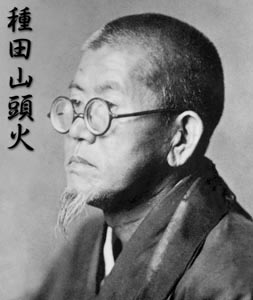
Santoka  Taneda (1882-1940)
Here is the first "freestyle haiku" by Santoka Taneda. (SMT refers to his work Somokuto - Grass Tree Stupa).I found two (very) different translation for this first haiku, reflection:

mizu ni kage aru tabibito de aru (SMT)

reflection
in the water
a traveler
my shadow
on the water,
traveler I am
.

Both are great, but personally I prefer the first version the most, it even could have been written shorter than this one:

My "freestyle-haiku" translation, would be like something as this:

shadow
in water
travels


© Chèvrefeuille

Santoka Taneda was, as Basho was, a traveling haiku-poet. He traveled clothed like a Zen-Buddhist monk and he also wrote his "adventures" in a haibun. On his first journey in 1926 he started a three years walk in which he visited a great part of the 88 temples on Shikoku-Island (which we also visited virtualy in February and March 2014) and visited the gravesite of a deceased friend and follower of Seisensui, Ozaki Hōsai (1885–1926).


yakisutete nikki no hai no kore dake ka

now they’re burned
these are all the ashes
from my diaries (*)?


(*)Santoka burned the diaries from his first trip because he was ashamed of what he had written.


It's quit a story and I think we will have a lot of fun with this haiku poet ... I love to tell you (again) the goal of these CD-Specials, especially for our new family-members, ... The goal is to write/ compose an all new haiku inspired on this haiku by Taneda Santoka and try to catch the same sense, tone and spirit as the one shared here. You may write a classical or non-classical haiku or as Taneda Santoka was in favour of ... a "freestyle haiku".

Here is my attempt, (again) a tanka:

after the rainstorm
reflections of blue sky and clouds
in muddy waters
raindrops - rhythmic art of nature
in the pond circles fade


© Chèvrefeuille

Is it possible that I am attracted by tanka? Am I becoming a tanka-addict? No ... don't worry ... I am just trying to master this nice Japanese poetry form ... I will be a haiku-poet always, but I have to try something else sometimes and now that's tanka.

I hope you did like this post about our featured haiku-poet and the "freestyle-haiku" and I hope you will like the challenge to write/compose an all new haiku inspired on this haiku by Santoka Taneda ... with using the "freestyle-haiku" have fun!

This episode is open for your submissions tonight at 7.00 PM (CET) and will remain open until March 6th at noon (CET). I will (try to) publish our new episode, meadow, later on. For now ... have fun!

Friday, December 27, 2013

Carpe Diem's ''Freestyle'' #5


Dear Haijin, visitors and travelers,


To give you all the space to share your haiku, senryu, tanka, kyoka and all other Japanese kinds of poetry I have launched a little while ago the Carpe Diem's Freestyle feature. As from now on I will try to publish a Freestyle episode once a month.

Freestyle is what it is ... just share your poetry without a given prompt, maybe you have read a wonderful haiku, or did you write an awesome haiku but it didn't suit to the prompts given. Then this is the place to share that poetry with Carpe Diem.
Feel free to share your poetry and enjoy the publishing here on the world wide web.


Credits: Firework

It's almost New Year so I have chosen a few New Year haiku to share here with you all. Let me first share one written by Issa.

kageboshi mo mame sokusai de gyokei kana

my shadow too
in good health...
"Happy New Year!"

(c) Issa

Or this one composed by Buson:

saitan wo shitarigao naru haikaishi

it's the First Morning,
and he certainly knows it -
the poetry master

(c) Buson


Credits: Fireworks

What do you think of this nice New Year's haiku by Basho?

on New Year's Day
each thought a loneliness
as winter dusk descends

(c) Basho

All wonderful haiku written about New Year's Day by the classics. Here is one written by a modern haiku-poetess Jane Reichhold, I think this is one of her best haiku for New Year's Day.

night snows
the words on New Year's Day
clean and white


And a totally new haiku written by myself to close this episode of our Freestyle-feature:

still hearing the wind
of yesterday morning
on New Year's Day

(c) Chèvrefeuille, your host

Credits: fireworks (Dubai)

I wish you all a wonderful and inspirational New Year and I hope to see you all again here at Carpe Diem for a whole new year of haiku-writing. Have fun, be inspired and share your haiku with us all here at Carpe Diem Haiku Kai.
This episode will stay on until January 20th 11.59 AM (CET) and is NOW OPEN for your submissions.


Sunday, October 13, 2013

Carpe Diem's Freestyle #4


Dear Haijin, visitors and travelers,

To give you all the space to share your haiku, senryu, tanka, kyoka and all other Japanese kinds of poetry I have launched a little while ago the Carpe Diem's Freestyle feature. I will try to publish a Freestyle episode once a month.

Freestyle is what it is ... just share your poetry without a given prompt, maybe you have read a wonderful haiku, or did you write an awesome haiku but it didn't suit to the prompts given. Then this is the place to share that poetry with Carpe Diem. Feel free to share your poetry and enjoy the publishing here at Carpe Diem Haiku Kai.


For this episode of "Free-style" I love to share a "Troiku" I have used one of my favorite haiku written by my Master Basho:

the pumpkins look cool
flecked with mud
from the morning dew

1: the pumpkins look cool
    almost humanlike -
    all souls night

2: flecked with mud
    the white chrysanthemums
    after the storm

3: from the morning dew
    Monarch butterfly drinks to life -
    sound of funeral bells

Awesome! What a nice Troiku, even better then I thought. After reading it twice aloud I felt that there is a connection between all three haiku destilled from the haiku by Basho.


Monarch Butterfly

Well I hope you liked it and I love to invite you all to share your own Freestyle here with us. This Freestyle-episode will stay on 'till November 15th 11.59 AM (CET) and I will try to publish that same day the new episode of Freestyle.


Tuesday, September 3, 2013

Carpe Diem's Freestyle #3


Dear Haijin, visitors and travelers,

To give you all the space to share your haiku, senryu, tanka, kyoka and all other Japanese kinds of poetry I have launched a little while ago the Carpe Diem's Freestyle feature. As from now on I will try to publish a Freestyle episode once a month.

Freestyle is what it is ... just share your poetry without a given prompt, maybe you have read a wonderful haiku, or did you write an awesome haiku but it didn't suit to the prompts given. Then this is the place to share that poetry with Carpe Diem.
Feel free to share your poetry and enjoy the publishing here on the world wide web.

I love to share here a haiku by Basho, which I love, and the respons I gave on that same haiku by Basho. It's all about a little humor in haiku and I don't know if I have touched that humor with the revised haiku.


Humor ... was, and is still, part of haiku. Basho also used humor in his haiku. Humor isn't my thing to use in haiku. In some of my haiku it's possible that there is a touch of humor, but I did that unconscious and not on purpose.
Basho's next haiku has this humor very clearly. He has written this at Ryumon Falls at the southern foot of Mount Ryumondake in Yoshino, province of Nara. This is the area with Japan's most notable display of cherry trees. This verse uses a comparative technique: Basho is comparing how a person who is drunk stands (or doesn't stand) with the shape of a waterfall and with the way branches loaded with blossoms hang down.

sake nomi ni    katara n kakaru    taki no hana

drinking friends
to talk I'll hang over like this
a waterfall of flowers

Well I have written a few haiku in the sense and tone of this one by Basho. I only can hope that it has also a little bit of Basho's humor in it.

on the way home
drunken sailors bend over
to vomit

it's a strange sight
like a waterfall they fall
drunken sailors

Ah! that sight
a waterfall of flowers
when vomiting

Well I hope you liked it and I love to invite you all to share your own Freestyle here with us. This Freestyle-episode will stay on 'till September 30th 11.59 AM (CET) and I will try to publish that same day the new episode of Freestyle.


Saturday, July 13, 2013

Carpe Diem Freestyle #2


Dear Haijin, visitors and travelers,

Another episode of Carpe Diem's Freestyle. Feel free to share your haiku, senryu, tanka, kyoka, sedoka and all other forms of Japanese poetry here. No prompt ... just freedom to share your haiku or other Japanese kind of poetry here. So another way to share your inspiration.

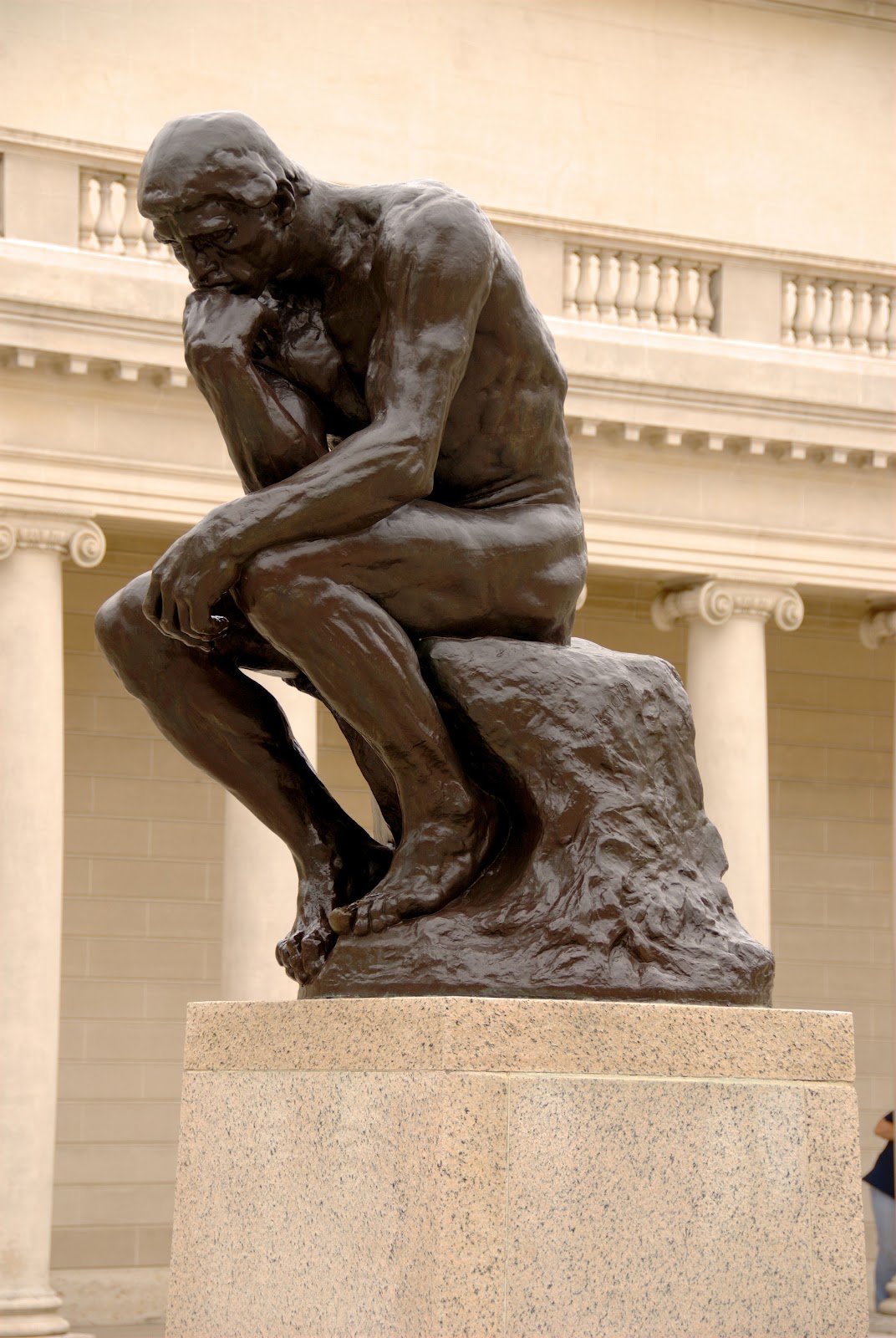
My freestyling verse this time is a Pi-ku, which I once have written:


The Thinker
alone
no more thoughts


A Pi-ku is in a way somewhat artificial haiku and it follows the number 'PI' which is 3,14. The syllables count for a Pi-ku is:

first line: three syllables
second line: one syllable
third line: four syllables

I learned about this poetry-form last year February and I thought "this is a challenge".


This Carpe Diem's Freestule episode will be open 'till July 20th 11.59 AM (CET) and I will post our next 'freestyle' episode later on that day.
Have fun, share your freestyling with us. Freestyle can be all other forms of Japanese poetry (including haiku of course).


Friday, July 5, 2013

Carpe Diem's Freestyle #1


Good day dear haijin, visitors and travelers,

As I told you earlier this month I start a new feature on Carpe Diem's daily haiku meme. I have called it "Carpe Diem's Freestyle" and as the name already says ... feel free to share your haiku, senryu, tanka, kyoka, sedoka and all other forms of Japanese poetry here. No prompt ... just freedom to share your haiku or other Japanese kind of poetry here.

I love to share a special form of haiku with you all. Somewhere at the start of last November I published a Carpe Diem Preview about troiku and I love to share here a troiku with you all.


The Sleigh:


walking on the heath
in the light of the full moon
the scent of autumn

Horse 1:


walking on the heath
feeling one with a Shepherd
in contact with God

(Inspired on the Shepherd boy in The Alchemist of Paulo Coelho)

Horse 2:


in the light of the full moon
laying down in the meadow
the River of Heaven (*)

(*) the Milky Way

Horse 3:


the scent of autumn
feelings of departure and loneliness
tears in the puddle


I hope you liked this Troiku and maybe you will try it yourself. It's really fun to do and makes you more creative.


This Freestyle episode will stay on 'til July 12th 11.59 AM (CET). Have fun, be inspired and share your haiku or other Japanese poetry form here with us all.