Dear Haijin, visitors and travelers,
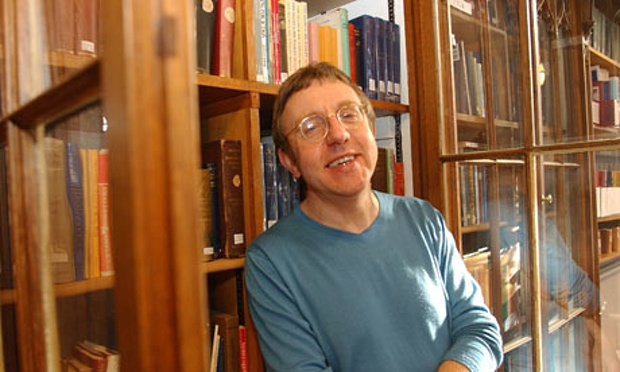
I have another nice article written by Jim Kacian. This article "Bridges" is a Key Note speech which Jim gave in 2007 for the Haiku North America International Conference in Winston-Salem, NC. I think it's an awesome article .... so enjoy the read and maybe it will inspire you to write more (or better) haiku .....
++++++++++++++++++++++++++++++++++++++++++++++++++
++++++++++++++++++++++++++++++++++++++++++++++++++
++++++++++++++++++++++++++++++++++++++++++++++++++
Keynote Speech given at the Haiku North America
International Conference 2007 (Winston-Salem, NC ); published as “The Haiku
Hierarchy,” Modern Haiku 39(1), Spring 2008, pp. 23-45; later in White Lies:
The Red Moon Anthology of English-Language Haiku, Red Moon Press, 2008, pp.
111-136.
Bridges
Jim Kacian
So here we are.
Thank you, Dave, and thank you, fellow poets, for the
opportunity to speak with you today here in Winston-Salem, North Carolina, at
the 9th Haiku North America, entitled Bridges. I'd like to dedicate this talk
to the memory of Agnes Davidson (1917-2007).
* * *
Haiku, as all of you here assembled already know, is
an island, and we its inhabitants. For a long time it seemed to be an
isolani—that is, a lonely speck of land far away from any other, the Pitcairn
of western poesy—but lately, perhaps because the air is clearing, it now seems
much closer to other specks of land, and even to the mainland.
It's a small island, located, as we now can see, in
the Lesser Anthologies, and one of the few islands in this sector that still
exhibits evidence of life. Our neighbors, equally small, and now mostly
submerged, though once much larger and more heavily populated, have names like
Sonnet Isle and Villanelle Cay. On a clear day, across our rugged strait, we
espy other landmasses: to the west you can make out the archipelago of Free
Verse, where it is rumored that the laws of physics do not hold; beyond that
there is the shadow of a territory so large that it cannot be crossed in a
lifetime—the continent of Prose. Some of our inhabitants claim to have visited
these lands, some even to have come from them. But it could be something in the
air just as likely, so we don't put too much stock in it.
Despite its size, the island of Haiku is quite
multiform. A great variety of flora and fauna dwells here, and it has been closely
observed in all its seasons and its eternities, its miracles and mundanities,
its mountains and prairies, rivers and deserts, its birds and beasts and gods
and men.
We are, for the most part, Robinson Crusoes here,
stranded a bit at first but soon quite at home. Perhaps initially we didn't
meet many of our fellow inhabitants, but now we hold conferences and are likely
to email or text message one another to share our latest thoughts and work, so
things seem much less secluded than they once did. Most of us have arrived here
in boats of our own making—rafts, really, enough to keep us afloat so long as
the water doesn't turn too turbulent, and holding no real promise of returning
us from whence we came.
As you know, the water in these parts is extraordinary:
clear, calm, benign, teeming with life, rich in phosphorescence. This is the
sort of island of which the millions who do not know the Lesser Anthologies
might only dream. It's the sort of place where it's possible to while away the
days without boredom, endlessly engaged, endlessly at ease. Most of us here
have no inclination to leave, even if we could.
But lately there's been some talk of the most
sensational sort. There's rumor of a bridge being built from the mainland to
Haiku, and should it ever come, it will bring to us, as you might well imagine,
all manner of people. Thoreau once wrote, “Nothing is more revolutionary than a
road.” Fellow
inhabitants of Haiku, I ask you, are you prepared for this?
I know what pride we natives of Haiku take in our
island. I know it will be difficult to see our native goods taken up in the
hands of newbies and know-nothings, handled, soiled, put back on the shelf. I
know that none of us wishes to be the T-shirt vendor in paradise. But we've all
seen this happen on islands where the natives had not properly prepared. I
think a bit of planning beforehand is in order to make certain that things work
out for the best for our beloved island as well as for ourselves.
In thinking about what sort of a plan we might choose,
I found myself dwelling a good deal on our national pastime here on Haiku—the
game of baseball. I know you all know about baseball—every kid in Haiku at one
time or another plays the game, and even those who play little or poorly come
to know many of its finer points. Baseball aspires to more than national fame,
though: away from our island, it holds an annual conference of its own which it
calls the World Series.
Everyone knows what baseball is, but in case anyone's
been away for a while, perhaps I should offer a definition. Baseball is a sport
played between two teams of nine players (excepts when it's fewer, or more, as
in the American League). One of the players, a pitcher, on one team throws a
ball that is 91/4 inches in circumference (except when it's smaller), and 5
ounces (except when it's lighter) from a mound (that is, a hill raised 10 above
the playing surface, except when it's more or less, and at a distance of 60' 6
except when it's less) toward a batter on the opposing team. The batter attempts
to hit the baseball with a tapered cylindrical bat made of wood (unless it's
made of something else, like aluminum). A team scores runs only when batting,
by advancing its players counterclockwise past a series of four markers called
bases arranged at the corners of a ninety-foot square (unless it's smaller).
The game, played without time restriction, is structured around nine segments
called innings (unless there are fewer, or more).
So, there you have it—baseball made simple.
* * *
And yet, in spite of this dither, the multiple
exceptions, the provisos, the special considerations, we all are pretty much
agreed that we know baseball when we see it. In fact, we're sure of it.
Part of the reason for this is that baseball is sure
of itself. It has no problem when the same name is applied to all its
variations—in fact, it encourages it. So whether it's played by six-year-old
girls hitting off a tee or by grown men in the night heat of August, it's all
baseball. Except, of course, when played by beer-drinking men on Sunday
afternoons, when it's called, euphemistically, softball. This, you may recall,
is the national sport of our sister island Senryu.
One of the reasons for baseball's autonomy is that it
controls the reward systems of the game. This means not only that baseball's
overarching hierarchy makes provision for the various levels of play—T-ball,
Little League, Babe Ruth League, High School, College, the professional Minor Leagues,
and of course the Major Leagues—but also recognizes the outstanding
accomplishments of each of these groups on their own level, without confusing
these accomplishments with anything done on any other level. Baseball
accomplishment is a pyramid: of the millions who play T-ball, some will not
achieve the level necessary to play Little League ball; some Little Leaguers
will not make a Babe Ruth roster; some of these will fail to make their High
School teams; and so on, up to the Major Leagues. In fact, at any given time,
only 720 players are playing in the Major Leagues. So it's not idle when we
recognize this level of accomplishment as the highest there is.
Beyond this, baseball has a sense of its own history.
Not only is it busy lauding the accomplishments of its current players, it is
keen to compare them to the best players of previous eras. Baseball has done a
very good job of taking control of their product, telling people what is
important about it and who has done the best at it, and letting people aspire
to achieve in these same ways.
And perhaps the most important factor in baseball's
certainty is that it has the authority for baseball wholly vested in itself.
There is no other entity claiming to be baseball in opposition to it. This
hasn't always been the case, of course—upstart leagues have come and gone. What
baseball has done very successfully is to have folded the competition into
itself, to enlarge itself to accommodate a larger vision of what baseball could
be. This has worked so well that now nobody can even imagine usurping its
hegemony. Instead, people aspire to be a part of it, or to innovate within it.
All the conversation is on baseball's terms.
All of this permits baseball to ask the right
questions and supply the right answers. Baseball doesn't ask, for instance, “Is
this baseball?” but rather “What level of baseball is this?” And because it can
give a clear answer to this question, it can manage all the various ways it's
played and still keep everything within its realm.
* * *
Okay, we didn't come here to talk about baseball. What
does this have to do with haiku?
When the bridge is built, and we are overrun by
newbies and know-nothings, some of them will insist they know all about our
island. How we meet them on our side of the bridge will largely determine how
the conversation will go. If we have control of the situation, we will help
people come to a larger understanding of what we do. If not, we will be the
T-shirt vendors. The choice is simple.
So here's what I propose:
I propose that we take control of our island in the
very way baseball has taken control of its domain.
To begin, we should control the system of rewards for
haiku, something that we've done quite poorly in the past. For instance, you
would think that the top monetary prize in a haiku contest would be awarded by
a haiku organization—but it's not. The top prize is offered by the Samhain
Poetry Group, a mainstream poetry organization in Ireland. Prize money offered
by haiku organizations is usually scarcely more than nominal. And you might
think that the top haiku each year would be the most disseminated around the
world. But because the indigenous publications of our island tend to stay on
the island and reach only coterie audiences, poems published in non-haiku
periodicals such as the Christian Science Monitor and the New York Times
receive much greater distribution. It's true that haiku does have such awards
for best publications and lifetime service—the Haiku Society of America's Merit
Book Awards and the Sora Award. But these are the offerings of only one small
group, and are publicized so poorly that often our own inhabitants haven't even
heard of the awards, never mind who received them. Clearly we have abdicated
authority so far as reward is concerned.
If we were better organized, if we pooled our
resources, perhaps we could make more of a collective splash. We would, of
course, have to come to more of an agreement as to what we consider excellent,
what we consider a fit reward, and how it recognition of such success might be
better disseminated. This is asking a lot of us, since we on this island are
not essentially political or even joiners. Yet here we are, gathered together,
and what we might do as a group is far more powerful than what any one of us
might do individually.
Next, we need to have a better sense of our history.
We people of Haiku have long had a modest streak, and while this may be
personally attractive, the truth is it tends to diminish awareness of our
accomplishments. This doesn't mean we don't privately acknowledge the
achievements of a John Wills or Raymond Roseliep, but we still have difficulty
granting them a similar status to the Japanese masters. In fact, even the word
Master is difficult for us to say, especially for fellow islanders still
living. But this really works to our disadvantage. In the baseball world, there
may be some disagreement about who the best player is: is it Albert Pujols,
Barry Bonds, Ichiro Suzuki, Alex Rodriguez? Good arguments could be made for
each of them. But absolutely nobody would hesitate to acknowledge them all as
masters.
In fact, they are all so good that we can expect each
of them to someday be enshrined in the Baseball Hall of Fame. This is a place
where only the best of the best will be commemorated, along with the history of
the game and the paraphernalia attendant upon it. Inclusion here is the
attainment of a dream first held by its recipients when they were at the bottom
rung of that pyramid, in their infant days in the sport. It is the ultimate
incentive and the ultimate attainment the sport has to offer.
Our island has nothing like this, so what may the
natives of Haiku seek? Well, many things, of course: education, publication,
travel, fame, literary acknowledgment, mastery. All these things might be
embodied by a Haiku Hall of Fame. We have the beginnings of such things: Brooks
Books has released two volumes in a series dedicated to preserving the legacy
of our best writers. Red Moon Press will release in the next twelve months its
first volume in the American Haiku Masters series. And of course there is the
American Haiku Archives, and soon a second archive to be founded at Rutgers
University. But books, though critically important, are not enough: we need a
mental and, preferably, a physical space dedicated to our interest, which
houses books, of course, but also commemorates the activities of haiku. Ideally
it would be a place where we could walk, think, read, write, meditate, where we
might spend some time in pursuit of haiku and which is dedicated to no other
activity. No amount of books demonstrates the acknowledged authority of a cause
so much as a single building dedicated to its pursuit. This is a dream that can
only be realized if enough of us dream it.
And while we need this physical space on our island,
we need, too, the mental space in each of us. We need all of us to be
conversant, casually and without hesitation, with the masters and the
masterstrokes of our cause. We need to be able to quote, immediately and with
conviction, and with free explanation, the best haiku we know. We need this as
we need to breathe because when the newbies and know-nothings arrive, they will
ask. We need to know what it is we know, and we need to impart it with
authority.
These are things we can put in place now, before the
bridge is built, and simpler for that. After all, haiku, too, are bridges,
means to help others cross over to where we ourselves have crossed. The more we
have in place, the more certain the landscape of the island, the more certain
will be our command of the situation.
When we greet people at the bridge—and I do suggest we
greet them—we should be ready to recognize all the different forms of haiku as
part of our domain. We should be as inclusive as possible. We should make
everyone who has ever put pen to paper and called the result haiku welcome,
acknowledge that they are one of the tribe, admit them to the island as full-fledged-members.
We lose nothing by doing this, and gain everyone's good will from the start.
But this doesn't mean that we have to abandon our
standards of excellence. Critical to this general welcome is that we behave in
a fashion that is authoritative, that welcomes all efforts but which is capable
of telling Little League from Major League haiku. This is not difficult for us
islanders—in fact, we do it all the time. Who amongst us has not decried the
poor work we see in the popular media and public places as inferior to what we
see regularly in the haiku journals? Even so, let us embrace all this work,
good and bad, recognize it as haiku indeed, but let us keep for our own domain
the understanding of quality. Nobody gets to the Big Leagues without working
their way up through the minors.
* * *
Which brings me to my final suggestion. If we are to
be inclusive, as well as the arbiters of excellence, we must have a firm understanding
of just what it is we value. How do we convey, in a way that is clear and
without special pleading, those values that make haiku special to those who are
new to such things? To answer this question, I've written a book called The
Haiku Hierarchy. It's now in the hands of a publisher, and time will tell. The
hope is that such a book will be published in time for the first wave of
newcomers to read before they cross the bridge. It's a fairly long book, since
it has to develop from first principles, which takes time. But because we
islanders already share much of what must be said, I can give you a quick
overview.
The book is laid out in three parts. The first part
begins where it must, when dealing with newbies—it suggests the many things
that haiku has been and can be. I avoid an ultimate definition, like the
baseball definition, since even today one of you will write a haiku that would
not fall within any definition's reach. In lieu of such a definition, I
consider the three unfailing elements of every haiku—form, content, and
style—as well as the relationship between them. These matters are commonplace
for us, so I that's all the time I'll spend on it here.
The second part creates a system of evaluation. Once
we recognize a haiku when we see one, we'd like to know just how good it is: is
it worth the study of newbies and others, or not? In order to answer this
question, I've created a scale that helps make such evaluations. In the book I
go into some considerable detail and with numerous examples, but here I'll just
give you an overview.
The scale is laid out in three parts—one each for the
three elements form, content and style—with a bonus section for special
considerations. It's possible to score from zero to three points in each
part—zero for not using an element or using it incorrectly, one for ordinary
usage, two for usage that has a significant impact on the poem, and three for
usage that has a significant impact on the genre. Take form, for instance—it
may be simple to decide if a poem has seventeen syllables or not, or is in a
short-long-short structure, or any of the other normative models. It's more
difficult to assess whether the form chosen is the most suitable one for that
particular poem, and more difficult yet to decide what effect this usage might
have on genre-wide practice. Content is much harder than form to evaluate, and
style, which includes technique, word choice, image order, sensibility and much
more, harder yet. Once each element is considered, we total the points of the three
categories and so arrive at a numerical rating.
 |
| Matsuo Basho (1644-1694) |
To illustrate how this works, let's take an example:
kare-eda ni karasu no tomari keri aki no kure
Autumn evening;
A crow perched
On a withered bough.
© Basho (trans. R. H. Blyth, Haiku Volume 3, p. 898)
We all know this poem, and most would agree it's a
masterpiece. I refer, of course, to the Japanese original, not necessarily the
translated version. But the English poem is the only version most of us know.
How do these two versions fare in the rating system?
Had we come to this from Part 1 of the book, we would
have no difficulty identifying these poems as haiku because we would now
recognize their form—both in three lines, one of the accepted norms, though
neither is 5-7-5. The Japanese version is an erratic, turning up as a 5-9-5,
for a total of 19, on. Blyth's version is not even short-long-short. Still both
are easily identified, seeming simply to be making use of predetermined norms
and filling them in, more or less accurately.
In the English version, the enjambment seems to work
in the usual fashion—in fact, it makes an active verb of “perched” where it
might be read as passive if the second line was simply “A crow”. But there is
no particular surprise or resonance generated by this activation, or from
delaying the appearance of the final image. This is a more or less
garden-variety haiku in form, and it receives one point in this
category—recognizable and competent, not more. The same is true of the
original—since the norms for this style of verse were well established by the
time Basho wrote it, there was no great loss by varying the count to
accommodate clearer meaning. His readers would still recognize it as a hokku.
We'll grant this one point as well.
In terms of content they are also recognizably
haiku—they are nature poems, one of the accepted norms. They use a season
word—in fact, name a season—a second norm. Most importantly, the images of the
poems speak readily with one another. This sympathetic relating of image to
image—in short, the content—is the original's greatest immediate and emotional
appeal, and these images work as well in English as they do in Japanese. There
is something almost universal in the bleakness conjured here. This might be
seen a greater accomplishment in the original, but the translator did find
terms to communicate this same affect, so we'll not quibble. Both poems receive
twos for content.
This leaves style, and there is much to consider. To
begin we note that the poems use what has become the gold standard of technique
for haiku, juxtaposition. This is, no doubt, the basis for the poem's success
in English. When we consider the other elements the translator has used, we
don't note any particularly outstanding attributes. The way the poem is set out
is a bit prosaic: setting, full stop; activity, enjambed line but with no real
energy to it, phrase for enhancement. In fact, it is like many thousands of
other haiku we may find around the world. The English version here again merits
one point.
But the Japanese version is quite different. For one
thing, the order of events is reversed: here in the original it is the leafless
branch we first see, then the crow, and only at the end is the season made
explicit. A more accurate translation might be something like “on a leafless
branch a crow alights—autumn evening.” And in this version, by withholding the
seasonal aspect until the end, the poet lets the full impact of the scene flow
into the reader's imagination first, so we already have a sense of bleakness
before we know the season or time of day. In this context, that “autumn night”
feels like the hand of doom, and the effect is magnified many times over.
But that's not the poet's only stylistic achievement.
He also piles up the “k” and “r” sounds—kare, karasu, tomari, keri, aki,
kure—like a knocking at the door (which would bring Poe to mind in our
culture). This very effective alliteration heightens the impact of the poem,
something that is entirely missing from the translation. Basho's original poem
gets a full three in the technique category, one of the reasons it is so highly
esteemed.
But there is something more to this poem, too, which
helps raise it above so many others. This is a singularly important poem in
terms of Basho's style. Heretofore he had composed most of his verse in the
Danrin style that is characterized by puns and wit. This poem, a serious,
refined and evocative poem relying on images and emotion, is a renunciation of
that style, and the beginning of shofu, the poet's mature style of composition.
So this poem receives an extra point for its value in terms of the history of
haiku.
And there's more yet: in this poem, Basho alludes to
waka and Chinese poems from earlier eras, a heretofore uncommon inclusion that
was to mark much of his later poetry and have a lasting effect on the way the
genre was pursued. So let's add another point for that.
When we add it all up, we find that Blyth's poem is a
four: one for form, two for content, one for style. This is quite a good score,
and if we looked through the contemporary journals we would find many poems
with much the same feel and accomplishment. This is partly because we have
learned so much from Blyth that has elevated the standard of our writing. But
the Japanese poem is so much more, and the scale reveals this: a full eight—one
for form, two for content, three for style, and two bonus points for innovative
additions to the genre. We can see the esteem in which this poem is held is
justified.
By way of contrast let's consider a poem originally
written in English and not considered a classic. How about this one:
Three things are certain:
Death, taxes, and lost data.
Guess which has occurred.
© David Dixon
Actually, this poem is quite famous in its own domain,
one of the Big Blue Haiku that were ubiquitous on the internet at the end of
the 80s. Of course it's a haiku—its form is unmistakable. So how does it rate
on the scale?
If you're like me, this is something of an acid test.
If a classic Basho poem in translation scores four on this scale, we would want
this poem, which is obviously so much less, to score less well. If they are
close, then the scale is not well adjusted. So let's see.
Form: anything special about it? I would say no, it
uses one of the accepted norms, in this case the 5-7-5. But it doesn't use it
innovatively or to greater purpose. It's just used in the “that's what a
haiku's supposed to look like”
way, which gets it one point.
Content: pleasant and funny enough to agree that it
actually has content, though it's far from classical in its aspirations. But
still, one point.
Style: anything here? Not that I can see in terms of
technique, word choice, or word order—it's just prose arranged to meet the
syllable requirement. And though it is possible to argue that it is possessed
of a sensibility, in that it elicits a geek ethos commensurate with the time
and conditions of its creation, I think this is a stretch, and would have to
say no, and give it a zero in this category.
Summing up, then: that would be two points. And this,
I probably don't need to point out, is where most such poems are going to end
up. This seems fair: it took a great deal more talent and vision to come up
with kare-eda ni than it did to come up with “Three things are certain.” It's
only right, and a relief, that the scale make this obvious. Once we can
recognize and rank haiku, and have looked at a few hundred of them, we begin to
recognize types. These types constitute the Haiku Hierarchy. The Haiku
Hierarchy is the organization of haiku poets into achievement levels—it
recognizes the Little Leagues and Minor Leagues and Major Leagues of haiku, and
is ultimately the basis for our own Haiku Hall of Fame.
* * *
Like baseball, the Haiku Hierarchy is a pyramid, and
like baseball, the vast majority of its participants will play on these lowest,
broadest levels. Like baseball, each successive step is characterized by its
greater degree of difficulty, and effectively winnows out those who cannot
perform at the higher level. And like baseball, only a very few at any given
time will be seen to be performing at the very highest level.
The Haiku Hierarchy is divided into seven levels. The
first three are grouped together by the fact that they are each concerned with
the acquisition of a single element: the first with form, the second, content,
and the third, style. The resulting poems we may consider T-ball or Little
League haiku. As we all started here, we should recognize our own journey
toward mastery in these first efforts.
If you think back, you'll recollect how complicated
haiku seemed at first, how many rules there were, how uncertainty dogged our
every move. We first encounter haiku as a series of problems to be solved, and
so I call this first stage Haiku as Problem. Whether we are self-taught or have
a teacher, a goodly amount of our time is first spent considering other
matters—counting, observing, vocabulary, syntax, and so on. If a little poetry
sneaks into the poem as well, so much the better. All things considered, it's
not really a bad way to start—it provides very concrete goals that can be
objectively met. And after all, it didn't hinder any of us from learning more.
Here's a haiku composed by a fourth grade class
following a lesson plan:
A tree? A moose? Which?
Crooked antlers? Thick branches?
Clumsy movement—moose!
We can imagine that lesson plan without ever having
seen it: “write a poem in three-lines, the first line containing 5 syllables,
the second 7 and the third 5 more. If you can, use images from nature. Write it
in the present tense.” And the class has solved this set of
problems, and not without a certain charm, though utterly without anything we
might call poetry. It's simply an exercise in problem. A quick evaluation using
the rating scale will recognize this general lack of quality: 1 for form, a
generous 1 for content, zero for technique, a total of 2. This sort of poem is
just what we would expect from an introductory lesson on haiku in grade school.
Of course it isn't only the young who write such poems, merely the young in
haiku.
If haiku is a series of problems, why don't we get
some help? Why don't we program a computer to learn the form and supply words to
create haiku. And of course this has been done. The computer is a whiz at
following instructions. One thing we can say with absolute
certainty—computer-generated haiku will never receive less than a 1 for form.
All such poems will be 5-7-5, with no anomalies. But these poems will never use
the form innovatively or strikingly, so they will never receive more than a 1,
either. So the rest of their value will have to come from content and style.
Let's look at one:
barbed melody prowls
softly, weakly, gloating queens
flee, excretions flee
I know some of you are wavering out there—this is just
terrible. How can it be a haiku? But it is, and most everyone in the world
outside this room would accept it as such instantly and without question. It
has perfect form. So we must remember to ask the right question, not is it a
haiku, but how good a haiku is it.
And the answer, even without the rating scale, is
obviously “not very good”. It gets one point for counting to 17 in the right
increments, but content? Zero. And style? If we could give negative points, we
would. But let's be kind, let's be inclusive. We'll concede this is a haiku,
but one of the most primitive sort—a T-ball haiku.
* * *
Nearly all of us begin our haiku journey with these
sorts of concerns over form. Once we have a beginning understanding of it, we
can consider other matters, such as what we want to put into it. This second
level is called Haiku as Point-of-View.
This is easily the most popular form of haiku in the
west. It's what the mainstream media, major publishing houses and users of the
internet think haiku is. These are “purpose” poems, and the point of view is of
central importance. They are playful, often humorous, usually cultish, and once
in a very great while, quite good. They are as far removed from art as greeting
cards or paint-by-number kits. And they are, of course, 5-7-5s. Here's an
example:
I wait for you to
Clean the rugs. Hack! Hack! Here: my
Best hairball to date.
© Deborah Coates, Cat Haiku

We must concede this is perfect form, and also that it
adds something: it makes a coherent statement about its subject, in this case
from the point of view of a cat. While we may not value this much, it's
certainly better than the computer-generated poem. So this is what has been
added—an intended perspective. We can evaluate this, and its ilk, rather
quickly. Form: 1, for the same reasons as the earlier examples. Content: this
is tough, but I'm in a generous mood, so let's say this really is content of a
sort, and give it a point. Style: zero. Before even considering the overt
personification, consider the endings of lines: very poorly fitted, obviously a
line simply ends when the syllable count fills it up. So this poem, and
thousands like it, rates a two. It's not much of an accomplishment, and it will
make you weep to learn that this example is taken from a book of like poems
published by a large New York publishing house. It is intended to be ephemera,
and that's just how we'll treat it, a notch above T-ball haiku, but really
Little League stuff.
* * *
Achieving the next level requires some knowledge of
both form and content, and then adds something more to it, the element of
style. It's called Haiku as Platform. Poets at this level must be aware of how
their efforts will affect their readers and listeners. Audience expectation
will generally include that they can count syllables—a poet who performs a
haiku at a poetry slam that is not 5-7-5 is in jeopardy of being eliminated
immediately simply on that basis. So we must allow these poets to play by the
rules that give them a chance to win and not count that against them.
There are many considerations to style in haiku: image
order, word choice, content relationship, poetic effect, tone, timbre, rhythm,
meter, and so on. To reach the third level, a poet must have something to say
and a form in which to say it, but also command of a host of tricks that permit
the best possible means of getting it said. This is not dissimilar to the lot
of writers anywhere. Here's an example of an award-winning performance haiku by
the British punk poet John Cooper Clarke:
To convey one's moods
In seventeen syllables
Is very diffic.
This is a wonderful lampoon of the entire haiku
enterprise. It's funny because of its surprise ending, of course, which is
incomplete but can't fail to be understood. The poet suggests that counting
syllables while baring one's soul is too daunting a task. But the poem works
because it is so precisely wrong.
The joke is that the content is at odds with the
rigidity of the form, but anyone with the least facility could “fix” it. It is
the “diffic” which makes the poem memorable, but it is the “very” which sets it
up, and which could be quite easily replaced. What could have been simpler than
to have said, for instance, “quite difficult”? Nothing diffic about it at all.
It's the style—in this case clever word choice—which makes the poem work.
A further assumption of the poem is worth considering
as well: it may be difficult to convey one's moods in seventeen syllables—or
not—but the poem presumes that this is the purpose of haiku in general, when in
fact this is patently not what his poem is about. Instead it's a statement
about process. This is both a problem and point-of-view haiku that uses
technique cleverly enough to make us remember it. In fact, it's more closely
related to aphorism than classical haiku.
As to a rating—one for form, one for content, two for
technique: an unusually good poem of its kind.
* * *
In the book I consider other aspects of style as well
as forms in which it occurs—extended narratives using 5-7-5, slam haiku, and so
forth. There is something happening here that requires a feel for style, though
it's not exactly what we most prize in our own work. Nevertheless, we should
acknowledge these skills. It's at this level that haiku might begin to interest
an audience, just as baseball starts drawing a crowd not comprised solely of parents
by the time it reaches Babe Ruth level.
Each of the first three levels focuses on a single
element. The next three begin at this point of embarkation. In order to rise
higher on the Haiku Hierarchy, a poet must begin to integrate these elements. This
requires practice and usually study, so one's relationship to haiku begins to
change. What may have begun as an amusement or a dare now becomes a pursuit of
the mind. At this point we must recognize what has worked in our haiku so
far—and then we must be willing to throw it out. Only those whose needs have
not been met by 5-7-5, a confessional mode and a humorous delivery ever bother
to go this far. The remaining levels are for those of us who, having heard of
this island, crafted our rafts and set out to find this place, not quite
believing the rumors of it to be true.
Once we know haiku is large enough to command our
energies and interest we begin a revaluation of its elements, along with a
study of how they fit together. This shifts haiku from a populist toss-off to a
possible poetry.
Each of the next three stages is achieved by following
a process. If, for instance, the standard form for haiku when we arrive at the
fourth level is 5-7-5, the standard as we're leaving is that there is no
standard. It's not enough to arrive at the conclusion that syllables are
different than on, and that something shorter in English gives a closer
approximation to a haiku in Japanese, etc. etc. This is no less a knee-jerk
reaction than 5-7-5. At these next levels, we must consider each poem
individually and create the form and content and style that best reveals it.
* * *
Level 4 is called Haiku as Practice. Finding the form
that serves each poem best is its basic goal, and once the popular default is
seen to be unessential, the range of possibilities is as varied as one's
imagination. Even so, there are a few formats which have had greatest usage,
and which might be considered norms of the genre. These include the 5-7-5, of
course, but also the short-long-short, the 2-3-2, the one-liner, the organic
form, and the free form. I discuss each of these in the first part of the book,
but as you are all conversant with them I won't here.
The sole purpose of form is to deliver the poem most
effectively to the audience. Sometimes one form performs this function better
than another. Consider, for example, this poem:
A bright red apple
On the apple's topmost bough —
And a cardinal.
I doubt anyone will argue greatness for this poem,
though it did find a publisher. I chose it because it's a very common sort of
poem, one we've seen many times in more or less this same package. Later, this
poem was reformatted and became
an apple
on the topmost bough
cardinal
The only justification for this change would be that
the new format improves the poem. Does it?
To save time, let's agree the content is identical.
And let's ignore the small technical advantage the latter holds for the moment.
The real question before us is, is the poem better for having dropped its
adjectives and conjunction, and so lost its syllable count?
Both versions are easily visualized. In the first
version, however, no doubt is left as to the time of year: it must be autumn,
since we are told the apple is bright red in the very first line. In the second
version, because the adjectives are missing, the reader is not immediately
certain what time of year it is. This omission, combined with dropping the
conjunction and article in the third line, creates an ambiguity that serves the
poem well, since the linking of the fruit and the bird becomes subtler and more
surprising. In the original version, it is more of a list, while in the later
version a truer juxtaposition is attained. In this instance, then, it appears
the change in form was a definite improvement, though the poem's success
remains modest.
To quickly evaluate them: the original gets one for
form, one for content and a grudging one for style for a total of three; the
rewritten poem claims two for form, one again for content and style, despite
the clever technique of the hinged second line, which allows the poem to be
read top to bottom or vice versa, for a total of four. In brief, an ordinary
poem, one of hundred such poems we see in the journals, somewhat improved by a
closer consideration of form.
* * *
If the fourth level marks the new understanding of and
emphasis on form, the fifth level is characterized by a similar emphasis on
content. This is called Haiku as Pathway.
Haiku are not just patterns of words—haiku are about
something. But what? When we're beginners, they're about anything we want them
to be, and usually about ourselves. Along the way we are taught something of
the tradition, wherein most haiku have been about nature and our relationship
to it, and that the poet rarely appears directly in the poem.
Entering level 5 we might believe that haiku need to
follow these rules to be the kind of haiku we find in books. These books create
a poetic space in the mind, and cherry blossoms and the cries of deer are the
topics to be found in this space. Not surprisingly, we try our hand at these
topics, possibly even with success. Nevertheless, the result is an imitation of
haiku. The process of level five is to move beyond this inherited content and
into personal content out of our own lives.
For example, consider these poems:
A glistening crown
Of blossoming cherry trees earth
In the pale moonlight.
where the sky
touches
the thunder
Both of these poems were published within the past ten
years by poets in Croatia, a country that during this time has been at war and
undergoing “ethnic cleansing” on its own soil. We may consider these works to
be reactions to these circumstances.
The first poem can be read at least three ways. We can
take it to be an hommage, recreating a particular ethos which calls upon an
earlier time to set the stage for more current work. We can read it as irony, a
knowing wink at an earlier time when literary convention was so precious that
poets were restricted to matters such as the blooming of the trees when civil
war threatened their lives. This could be seen as a close parallel to the
poet's own circumstances. Or we can take it at face value—it's a poem about
cherry blossoms written by a 21st century poet as though this were a new
insight.
From all indications the poet means to have us read it
straight, as though he were a Japanese poet of the 16th century, or an
imitative American poet of the 1960s. The fact that alternative readings are
available arises directly from the imitative quality of the poem. If such a
poem invites confusion, we are well entitled to question its strategy. A great
deal of trust must be granted a poet to make something significant of such
work, and the poet much work that much harder to earn it. And of course there
is the very real possibility he will not.
Compare this with the second poem that also is
grounded in natural imagery. Here the response seems to be more local, direct
and original, the result being a much more powerful evocation of the poet's
specific circumstance. Instead of falling back upon imitation, the poet has
found his own voice to express his emotion and experience. The result is a
memorable evocation of the poet's experience rather than a masking of that
experience through tropes and tradition. Moving from the imitative to the
evocative is exactly what the fifth level is about.
There are many other things to say about moving from
expected to real content, and in the book I address these matters. Worth noting
here is the overcoming of cultic content, especially the zen-inspired poems
that have held such sway in western haiku for its first century. Incorporating
zen, or any other religious or philosophic or political content, into haiku
asks it so serve two masters: itself and poetry, with the usual result being
that neither is served adequately. Even Zen haiku's greatest advocate, R. H.
Blyth, wrote “I understand Zen and poetry to be practically synonyms, but . . .
if there is ever imagined to be any conflict between Zen and the poetry of
haiku, the Zen goes overboard; poetry is the ultimate standard.” (Haiku Vol. 1, p. 7) This is
certainly good advice to poets who are interested in determining the furthest
reaches of where haiku can be taken.
* * *
So we come to the sixth level, which I call Haiku as
Plan. It's process is the recognition and overcoming of stylistic defaults we
may have picked up on our haiku journey. Style is a very potent element in
haiku, as in all art—if we think of form as the shell of the poem, and content
as the filling, style is the glue that binds the materials together into a
cohesive whole.
There are many contributors to style, and we've
mentioned a few of them: word choice, image order, punctuation and enjambment,
and so on. Again, I deal with them at length in the book, but will mention here
only technique. When we first arrive at this level likely the only technique of
which we might be aware is juxtaposition. Juxtaposition holds a deserved place
of reverence in the haiku world, but to reduce all haiku to its action is to
consider haiku a one-trick pony. More than twenty kinds of tools have been
identified as the agencies behind some of the best haiku in the language. Consider
for example:
my head in the clouds in the lake
©Ruby Spriggs
This technique is called imagistic fusion, and its
particular shorthand is perfectly gauged for the effect the poet had in mind.
What if she had instead written, to be more in keeping with simple
juxtaposition:
my head
in the clouds—the clouds
in the lake
Not bad—the content is good to begin with. But much of
the effect, the vigor, the poetry would be lost by adherence to the wrong tool.
There are thousands more, of course, and you've read
and enjoyed them without necessarily thinking about how they worked. In fact,
we generally resist explanation, lest we discharge its magic. But this is not
magic, and knowing how the trick is done does not diminish poetry's charge. If
anything, it deepens the mystery.
* * *
Okay, you've worked your way through the minor
leagues. You've acquired the basic skills. You've put in the time studying.
You've moved through the processes past default expectations. You're ready to
engage haiku on its highest level—you're ready for Haiku as Poetry. Not
everyone who aspires to this level will achieve it, because it's not just a
matter of knowing all there is to know—you also have to have the gift.
The level-seven chapter of the book is largely a
compilation of poems that have all the attributes of mature haiku as well as
that frisson, which more than carry them into the realm of mastery. No poem
exactly follows any formula of haiku. In each case the poet has made choices
from among the range of possibilities to maximize effect. Lesser poets might
have needed to match a syllable count, or include a season word, or use an
appropriate topic, or stick to juxtaposition. The venturing into the unexpected
is part of what makes these poems great.
on this cold
spring 1
2 night
3 4
kittens
wet
5
© Marlene
Mountain
second husband
painting the fence
the same green
© Carol Montgomery
pruning roses
not making money
not spending it
© William Ramsey
another dream beside me in your own
© Jeff Witkin
losing its name
a river
enters the sea
© John Sandbach
why go there
when it's here now?
the Cage exhibit
© R. Grey (USA)
under the pier,
the sea roars in —
a woman, a man
© Jack Galmitz (USA)
When the bridge is built and the waves of newbies
arrive upon our shores, show them these poems, but not only these poems. Save
these for last. Once they've had the opportunity to learn of other poems,
successes and failures, they'll be readier to appreciate the poetry contained
here.
So that's what I propose. Let's take charge of haiku,
the whole enterprise of it. Let's do a better job of knowing our stuff, of
knowing what's great in and about it, of teaching it, of promoting it and
bringing to the lives of those who have so far only heard rumors of it, or been
exposed only to its minor leagues. The bridge could open any time.
Thank you for your kind attention.
Jim Kacian
Winston-Salem, NC
13 August 2008
++++++++++++++++++++++++++++++++++++++++++++++++++
++++++++++++++++++++++++++++++++++++++++++++++++++
PS.: All the haiku used in this article by Jim Kacian
are copyrighted, copyrights belong to the haiku-poets as mentioned after the
poems.
PPS. : This article is published with permission of Jim Kacian