Dear Haijin, visitors and travelers,
What a joy to read all of your responses on the first posts of this month. It's really a joy to read all of your poems. Everyone creates in his or her way and yet there are so much things the same. It feels like CDHK has really become a family in which we are sharing our love for Japanese poetry but are also sharing unconscious the same thoughts and feelings. You all are such great poets ... who am I that I can and may be your host here ... I am really honored with your warm and loving participation here. Thank you all ...

" Existentialism is the belief that philosophical thinking begins with the human subject—not merely the thinking subject, but the acting, feeling, living human individual. While the predominant value of existentialist thought is commonly acknowledged to be freedom, its primary virtue is authenticity. In the view of the existentialist, the individual's starting point is characterized by what has been called "the existential attitude", or a sense of disorientation, confusion, or dread in the face of an apparently meaningless or absurd world. Many existentialists have also regarded traditional systematic or academic philosophies, in both style and content, as too abstract and remote from concrete human experience." (Source: Wikipedia)
What has this to do with the poem for today? Well ... what can I say? In the peom of today Rumi is speaking about "existence" and with that came my "revalation" to tell you a little bit about existentialism, because that was the first thing I thought about. Maybe that's just a coincedence, because I am reading Nietzsche's "Also Sprach Zarathustra" at the moment, one of Nietzsche's most famous works. And existence triggered me to look at existentialism ...
Let me first give you the poem by Rumi which is our source of inspiration for this episode:
We are as
the flute, and the music in us is from thee;
we are as the mountain and the echo in us is from thee.
we are as the mountain and the echo in us is from thee.
We are as
pieces of chess engaged in victory and defeat:
our victory and defeat is from thee, O thou whose qualities are comely!
our victory and defeat is from thee, O thou whose qualities are comely!
Who are we,
O Thou soul of our souls,
that we should remain in being beside thee?
that we should remain in being beside thee?
We and our
existences are really non-existence;
thou art the absolute Being which manifests the perishable.
thou art the absolute Being which manifests the perishable.
We all are
lions, but lions on a banner:
because of the wind they are rushing onward from moment to moment.
because of the wind they are rushing onward from moment to moment.
Their
onward rush is visible, and the wind is unseen:
may that which is unseen not fail from us!
may that which is unseen not fail from us!
Our wind
whereby we are moved and our being are of thy gift;
our whole existence is from thy bringing into being.
our whole existence is from thy bringing into being.
© Rumi
Ah the sound of the Ney, the Persian flute. Really a wonderful sound. (More about the Persian Ney). In this poem Rumi describes our connection with the world around us, the subconscious connection between us all, and he describes it in a beautiful way. That comparison with the pieces of chess ... awesome. Than he describes our existence or non-existence, because we are all one and part of that one Being, Spirit, God or what ever name you give it.
Let us take a look again at existentialism as mentioned above: "Existentialism is the belief that philosophical thinking begins with the human subject—not merely the thinking subject, but the acting, feeling, living human individual. While the predominant value of existentialist thought is commonly acknowledged to be freedom, its primary virtue is authenticity. In the view of the existentialist, the individual's starting point is characterized by what has been called "the existential attitude", or a sense of disorientation, confusion, or dread in the face of an apparently meaningless or absurd world."
Rumi describes our connection in an "absurd" way he compares us with pieces of chess, with banners moving in the wind, but he is right. Our existence is built on that absurdity of the world. Look around, religions fight each other, all from aout an idea of supremacy ... and that is a real part of existentialism. Are we supreme beings? I don't think so, we are all pieces of what I call (as in earlier posts here) "god-stuff", we are all connected with that Being. That Being gives us the opportunity to exist, we are part of that Being and from out Being's unconditional love we can and may use nature, but we also have to care and have respect for nature. Isn't that what existentialism means? We exist and we exist together in a world we have to care for ... an absurd world nowadays.
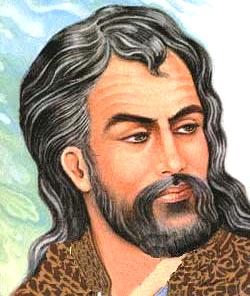
What a beautiful poem with all those deeper layers, not only spiritual, but also philosophical ... really wonderful. Rumi, in my opinion, is one of Persia's best poets.
It will not be easy to become inspired by this above post, but based on the poem by Rumi I came up with the following:
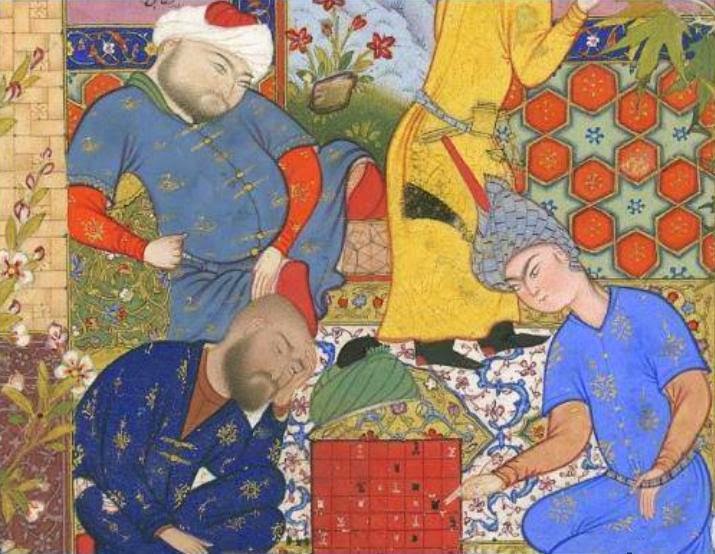
a game of chess
played in the shadow of lion banners -
the wind unseen
Ah the sound of the Ney, the Persian flute. Really a wonderful sound. (More about the Persian Ney). In this poem Rumi describes our connection with the world around us, the subconscious connection between us all, and he describes it in a beautiful way. That comparison with the pieces of chess ... awesome. Than he describes our existence or non-existence, because we are all one and part of that one Being, Spirit, God or what ever name you give it.
Let us take a look again at existentialism as mentioned above: "Existentialism is the belief that philosophical thinking begins with the human subject—not merely the thinking subject, but the acting, feeling, living human individual. While the predominant value of existentialist thought is commonly acknowledged to be freedom, its primary virtue is authenticity. In the view of the existentialist, the individual's starting point is characterized by what has been called "the existential attitude", or a sense of disorientation, confusion, or dread in the face of an apparently meaningless or absurd world."
 |
| Persian Youth playing chess |
What a beautiful poem with all those deeper layers, not only spiritual, but also philosophical ... really wonderful. Rumi, in my opinion, is one of Persia's best poets.
It will not be easy to become inspired by this above post, but based on the poem by Rumi I came up with the following:
a game of chess
played in the shadow of lion banners -
the wind unseen
© Chèvrefeuille
This episode will be open for your submissions tonight at 7.00 PM (CET) and will remain open until March 11th at noon (CET). I will try to publish our new episode, humble, later on. For now ... have fun!