Showing posts with label Peruvian Railway. Show all posts

Wednesday, May 30, 2018

Carpe Diem #1443 Music to close our journey


Dear Haijin, visitors and travelers,

Welcome at the last episode of this month in which we were on a journey into the High Mountains of the Andes. I am busy with preparing our new CDHK month. Next month we will find our inspiration in the classical saijiki for seasonwords in haiku. Every day I will give you a nice kigo (seasonword) for summer and I will (try to) tell you a little bit of background on those kigo, but that's for next month.

May was a wonderful month and to conclude this wonderful month I have another nice piece of music from the Andean Mountains.


It's a beautiful piece of music "El Condor Pasa" and it's played on the renown music instrument of the Andean Mountains ... the panflute.

Enjoy the music and let your muse awaken to grant you with her / his energy for inspiration.

This episode is NOW OPEN for your submissions and will remain open until June 6th at noon (CEST). I will try to publish our new episode, the first of June, later on. Have fun!


Tuesday, May 29, 2018

Carpe Diem #1442 almost at the end of our journey


Dear Haijin, visitors and travelers,

Welcome at the penultimate episode of our journey into the high mountains of the Andes. It was a wonderful journey and I hope that you all did enjoy this month at Carpe Diem Haiku Kai. It wasn't an easy month to create, but I think the journey was awesome.

This journey is almost over ... finally we will arrive at our end-station Huancayo, '(place) with a (sacred) rock') is the capital of Junín Region, in the central highlands of Peru.

Huancayo is located in Huancayo Province, of which it is also the capital. Situated in the Mantaro Valley at an altitude of 3,271 meters, it belongs to the Quechua region. Depending on delimitation, the agglomeration has a population between 340,000 and 380,000 and is the fifth most populous city of the country. Huancayo is the cultural and commercial center of the whole central Peruvian Andes area. Huancayo Metropolitano is made up of seven districts that form the urban center of Junin's region. This region is considered Peru's economic and social hub.

Huancayo Cathedral
almost there
exploring the Andean Mountains
a time machine


© Chèvrefeuille

This episode is NOW OPEN for your submissions and will remain open until June 5th at noon (CEST). I will try to publish our last episode of this month later on. For now ... I hope you will find your muse ...


Thursday, May 24, 2018

Carpe Diem #1440 Lake Titicaca


Dear Haijin, visitors and travelers,

Welcome at one of the last regular episodes of this wonderful month of Carpe Diem. We traveled through the Andean Mountains and dived into the gorgeous history of these mountains. Today I have another wonderful prompt for you. A prompt I think of ... this one had to be made ...

Today we visit Lake Titicaca (Bolivia) one of the world's most high lakes I think. Let me tell you a little bit about Lake Titicaca, also known as "the birthplace of the Sun".

Lake Titicaca

In Andean belief, Titicaca is the birthplace of the sun. In addition, it’s the largest lake in South America and the highest navigable body of water in the world. Banner blue skies contrast with bitterly cold nights. Enthralling and in many ways singular, the shimmering deep blue Lake Titicaca is the longtime home of highland cultures steeped in the old ways.

Pre-Inca Pukara, Tiwanaku and Collas all left a mark on the landscape. Today the region is a mix of crumbling cathedrals, desolate altiplano and checkerboard fields backed by rolling hills and high Andean peaks. In this world, crops are still planted and harvested by hand.

In this world, crops are still planted and harvested by hand.

Isn't it a wonderful place? It feels magical and mysterious and there are even people that say that Lake Titicaca is a holy lake full of spirituality and that it gives in a way energy to the spirit, the mind, the heart and the soul ...

Enjoy ...

This episode is NOW OPEN for your submissions and will remain open until May 31st at noon (CEST). I will try to publish our new weekend meditation later on. Have fun!


Tuesday, May 22, 2018

Carpe Diem #1438 Chachani (Imagination-episode)


Dear Haijin, visitors and travelers,

I am a little bit busy today and the upcoming days, so I have chosen to make it myself a little easier. For today I have (another) imagination-challenge for you all. It's an image of Chachani and Misti two wonderful mountain peaks in Peru.

Chachani and Misti
This image is your source of inspiration. Create your Japanese poetry inspired on this image ... awaken your muse.

This episode is NOW OPEN for your submissions and will remain open until May 29th at noon (CEST). I will try to publish our new episode later on.

Wednesday, May 16, 2018

Carpe Diem #1434 Cusco ... first "contact" with the Inca Empire


Dear Haijin, visitors and travelers,

We are on a journey into the high mountains of the Andes. We are traveling by train and have seen already the beauty of Peru and the rich history of this region. We discovered a few ancient races like the Huanco people and today we will make our first "contact" with the renown race of the Inca people.

Today we are visiting Cusco, the former capital and center of the Inca Empire.

Cusco, often spelled Cuzco, is a city in southeastern Peru, near the Urubamba Valley of the Andes mountain range. It is the capital of the Cusco Region as well as the Cusco Province. In 2013, the city had a population of 435,114. Located on the eastern end of the Knot of Cuzco, its elevation is around 3,400 m (11,200 ft).

The indigenous name of this city is Qusqu. Although the name was used in Quechua, its origin is found in the Aymara language. The word is derived from the phrase qusqu wanka ('Rock of the owl'), related to the city's foundation myth of the Ayar Siblings. According to this legend, Ayar Awqa (Ayar Auca) acquired wings and flew to the site of the future city; there he was transformed into a rock to mark the possession of the land by his ayllu ("lineage"):


The Legend of Ayar Auca

“Then Ayar Oche stood up, displayed a pair of large wings, and said he should be the one to stay at Guanacaure as an idol in order to speak with their father the Sun. Then they went up on top of the hill. Now at the site where he was to remain as an idol, Ayar Oche raised up in flight toward the heavens so high that they could not see him. He returned and told Ayar Manco that from then on he was to be named Manco Capac. Ayar Oche came from where the Sun was and the Sun had ordered that Ayar Manco take that name and go to the town that they had seen. After this had been stated by the idol, Ayar Oche turned into a stone, just as he was, with his wings. Later Manco Capac went down with Ayar Auca to their settlement...he liked the place now occupied in this city Cuzco. Manco Capac and his companion, with the help of the four women, made a house. Having done this, Manco Capac and his companion, with the four women, planted some land with maize. It is said that they took the maize from the cave, which this lord Manco Capac named Pacaritambo, which means those of origin because...they came out of that cave.”

What a wonderful story. This is just the beginning of our next stage in this journey ... visiting the ancient grounds of the Inca Empire.

a miracle
without wings attached
mankind grew


© Chèvrefeuille

Cusco ... image found on Pinterest

This episode is NOW OPEN for your submissions and will remain open until May 23rd at noon (CEST). I will try to publish our next episode later on.


Tuesday, May 15, 2018

Carpe Diem #1433 Cerro de Pasco


Dear Haijin, visitors and travelers,

A wonderful place we visited yesterday one of the National Parks of Peru somewhere along the Peruvian Railway we are traveling this month. Today we will make a stop in Cerro de Pasco, the capital of Pasco Region Peru.

I ran through the Internet and found a nice article about this city at Wikipedia. I will share part of it here.

Sunset at Cerro de Pasco
Cerro de Pasco became one of the world's richest silver producing areas after silver was discovered there in 1630. It is still an active mining center. The Spanish mined the rich Cerro de Pasco silver-bearing oxide ore deposits since colonial times. Sulfide minerals are more common in the Atacocha district however.
Francisco Uville arranged for steam engines made by Richard Trevithick of Cornwall, England, to be installed in Cerro de Pasco in 1816 to pump water from the mines and allow lower levels to be reached. However, fighting in the Peruvian War of Independence brought production to a halt from 1820 to 1825.

Cerro de Pasco (population 70,000) is a city in central Peru, located at the top of the Andean mountains. It is the capital of the Pasco region, and an important mining center. At 4,330 metres (14,210 ft) elevation, it is one of the highest cities in the world. (Source: wikipedia)

on top of the world
black smiths create beauty
the silvery moon


© Chèvrefeuille

This episode is NOW OPEN for your submissions and will remain open until May 22nd at noon (CEST). I will try to publish our new episode later on.


Sunday, May 13, 2018

Carpe Diem #1431 Chavin Culture


Dear Haijin, visitors and travelers,

What a wonderful weekend I have had. First there was the International Nurses Day and second today (May 13th) was Mother's Day. Of course I visited my mother. She was released from hospitial and is doing great now. Tomorrow we will celebrate her 88th birthday. Thank you all for being so kind to pray for her health. Thank you all from the bottom of my heart.

I hope you all have had a wonderful weekend too and especially those of you who are mother, grandmother and mother-in-law. I hope you all had a wonderful Mother's Day.

Okay ... back to our journey into the high mountains of the Andes. Last Friday I challenged you with an image of Paron Lake and told you already a little bit about our theme for today ... the Chavin Culture, a prehistoric culture that was far ahead on their time.

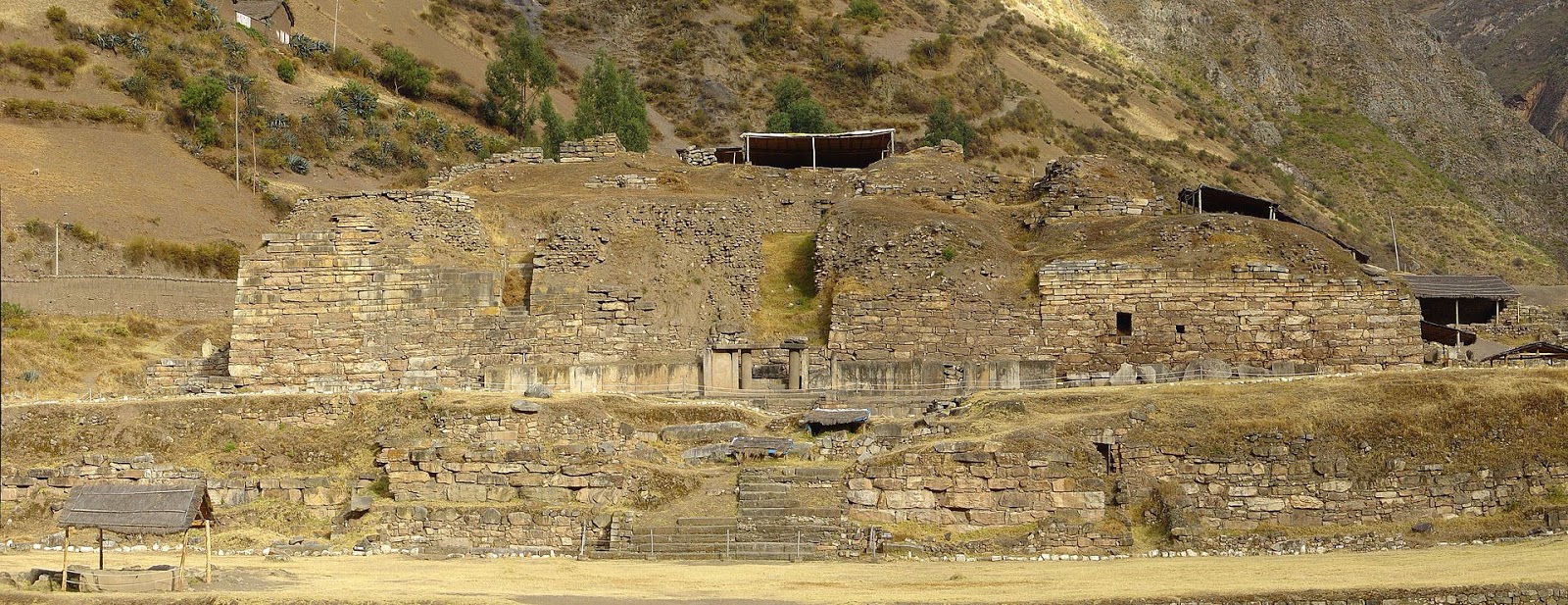
Chavin de Huantar (photo © Martin St. Amant
The above image shows you an archaeological site of the Chavin Culture. This photo I found on Wikimedia and is made by Martin St, Amant. Let's go and find out some nice information about the Chavin Culture.

The Chavín culture is an extinct, prehistoric civilization, named for Chavín de Huantar, the principal archaeological site at which its artifacts have been found. The culture developed in the northern Andean highlands of Peru from 900 BCE to 200 BCE. It extended its influence to other civilizations along the coast. The Chavín people (whose name for themselves is unknown) were located in the Mosna Valley where the Mosna and Huachecsa rivers merge. This area is 3,150 metres (10,330 ft) above sea level and encompasses the quechua, suni, and puna life zones. In the periodization of pre-Columbian Peru the Chavín is the main culture of the Early Horizon period in highland Peru.

The Chavin Culture has reached wonderful achievements for example they were wonderful goldsmiths.

Chavin Gold Crown
The chief example of architecture is the Chavín de Huantar temple. The temple's design shows complex innovation to adapt to the highland environments of Peru. To avoid the temple's being flooded and destroyed during the rainy season, the Chavín people created a successful drainage system. Several canals built under the temple acted as drainage. The Chavín people also showed advanced acoustic understanding. During the rainy season water rushes through the canals and creates a roaring sound and creates a noise like a jaguar, a sacred animal. The temple was built of white granite and black limestone, neither of which is found near the Chavín site. This meant that leaders organized many workers to bring the special materials from far away rather than use local rock deposits.

The Chavín culture also demonstrated advanced skills and knowledge in metallurgy, soldering, and temperature control. They used early techniques to develop refined gold work. The melting of metal had been discovered at this point and was used as a solder.

The people domesticated camelids such as llamas. Camelids were used for pack animals, for fiber, and for meat. They produced ch'arki, or llama jerky. This product was commonly traded by camelid-herders and was the main economic resource for the Chavín people. Chavín people also successfully cultivated several crops, including potatoes, quinoa, and maize. They developed an irrigation system to assist the growth of these crops.

More about this Culture? At Wikipedia

A Stela found in Chavin that looks somewhat like a bird
As I look at the above image ... something odd happens. My mind works in a very fast way ... this "stela" looks very much like the "steles" found of Ithe nca and Mayan culture. It seems like in the Andes the spirit is giving its inspiration through the same way. Isn't that odd? Or am I delusional? 

high in the mountains
an eternal creature is dwelling
cultures entwined

© Chèvrefeuille

Well ... what a wonderful forgotten culture this is ... the Chavin I never had heard of them.

This episode is NOW OPEN for your submissions and will remain open until May 20th at noon (CEST). I will try to publish our new episode later on.


Thursday, May 10, 2018

Carpe Diem #1430 Paron Lake (Peru)


Dear Haijin, visitors and travelers,

Welcome at a new episode of our wonderful Kai. Today I have chosen to challenge you to create a haiku, tanka or other Japanese poetry form inspired on an image. It's an Imagination episode so to say.

It's an image of Paron Lake, a lake somewhere in the Andean Mountains. In this region of the Andean Mountains once lived the Chavin. The Chavín culture had its development nucleus in the Huari Province (Ancash Region), covering various ecological zones, in the view of the lagoon Parón in the natural region of Janca.

About this Chavin culture we will speak in our next regular episode that I will try to publish next Sunday.

Paron Lake (Peru)
reflections
peaks
ripple


© Chèvrefeuille (experimental haiku)

A short episode ... but I think this image will inspire you in a great way ...

This episode is NOW OPEN for your submissions and will remain open until May 17th at noon (CEST). I will try to publish our new weekend-meditation later on. For now .... have fun!


Wednesday, May 9, 2018

Carpe Diem #1429 Galera Station


Dear Haijin, visitors and travelers,

Welcome at the 2nd episode for today. Earlier today I shared an episode with you about the Huanca, one of the races that lived and still live in Peru. We are on our way with the Peruvian Railroad, one of the highest railroads of the world. A few days ago we arrived at Lima and now we are going further on this railroad.

The Peruvian Railroad includes also one of the highest railway stations, Galera Station. Galera station is the theme for this episode. It will be a short episode and I hope you will find the inspiration to create haiku, tanka or other Japanese poetry form ...

Galera Station (wikimedia)
Galera is the third highest railway station in the Western Hemisphere with an elevation of 4,777 m (15,681 ft). It is situated in the Andes in Peru at km 172.7 on the Ferrocarril Central Andino (FCCA) line from Lima to Huancayo, immediately east of the 1.2 km (6860 ft) Galera summit tunnel (4,783 m (15,694 ft) above sea level).

Nowadays there are no longer passenger trains that enter this station, but ... we are on a virtual railroad trip so we can visit it. The above image was made back in 2008, in that same year the last passenger train arrived here.

high in the mountains
the nest of an eagle embedded by white peaks
no more trains allowed


© Chèvrefeuille

This episode is NOW OPEN for your submissions and will remain open until May 16th at noon (CEST). I will try to publish our new episode later on.


Carpe Diem #1428 The Story of the Huanca


Dear Haijin, visitors and travelers,

Yesterday I told you a little about the Huanca people and I promised you all that I would tell you a little bit more about the Huanca. I have done some research on this, not so renown Peruvian group of people, and ran into a nice weblog about Peru. I was really surprised to read that weblog and I am glad to share a part of this weblog. Of course I will give the credits after this part of this episode.

Park of the Huanca Identity
When hearing about Peru you will hear a lot about the Incas and their empire as it was one of the largest and was the empire that would confront the Spanish in the 16th century. According to some historians like Waldemar Espinoza Soriano the Spanish conquest was not only successful because of the technological superiority that the Spanish possessed but also due to one key alliance between the Spanish and the Huancas (also spelt Wancas, or Wankas). The Huancas emerged from the Jauja, Concepcion and Huancayo provinces at the end of the 12th century and according to the stories of the Huancas the nation came into being when sixty kinship groups (Ayllus) left the “Pacarina” (Pacarina is an ancient Andean term that refers to a location where the ancestors came from and the final destination of their ancestors) called Huari Huillca. They were known for their vast cities built on mountaintops, their capital Siquillapucara (or Tunanmarca) located in the district of Tunanmarca in Jauja at one point had a population of 1500.


The nation continued to grow, cultivating maize and herding llamas and alpacas for over 500 years. One thing to note about the Huancas in their culture was the close relationship to dogs, this relationship is mentioned in some legends some which are disputed as being false. It all starts with a war of two gods Huallallo Carhuincho and Yanamka Tutamñaca. Huallallo defeated Yanamka, Huallallo then took the fertile lands and gave it to the Huancas however, Yanamka refused to accept defeat and organized a rebellion. On hearing about the rebel army Huallallo went to the Quinancaya plain to watch the rebel army and found that the rebels were far superior to the Huancas and feared for his people. Huallallo planned to destroy the rebels so he sent a hail storm, heavy rains and red soil that fell from the sky which lasted five days and to finish them off he sent thunder and lighting. After the storm had finished Huallallo was surprised to find that the rebel officers were still alive so in one final act of desperation he turned them into dogs. As the rebels were turned into dogs they howled which annoyed Huallallo who sent lighting to shake the Earth, as the Earth shook the dogs became mute and the dogs became hoarse and became reluctant to bark. It is said that the Huancas were known as Allcomicoc (dog eater in Quechua) to the neighbouring communities. Their God, Huallallo Carhuincho, ordered five dogs to be sacrificed and that the meat and blood should be presented to his soldiers who ate them with chicha. The skulls of the dogs were made into musical instruments by the God and were known to make a terrifying noise when played. Dogs also became faithful companions that helped with daily tasks such as sheep dogs and to keep birds from the crops and were trained to perform tricks to provide entertainment and some were painted and sacrificed. In some legends you may read that the Huancas started to eat dogs because before that they used to eat humans although, it is said this was a lie created by the descendants of the Gods Pariacaca and Yanamka. Now, at the same moment that the Huancas were expanding the Incas were also expanding and starting from app. 1438 A.D the Inca Manco Capac started a rapid expansion through war and peaceful assimilation, many nations were incorporated into the Inca Empire however, the Huancas fought hard against the Incas. It was in 1460 when the Huancas fell to the Incas, under the command of Inca Yupanqui a large Inca army invaded, fierce fighting over the course of several months ensued but due to hunger and the lack of water the Huancas surrendered to the Incas. The Incas then exiled the Huanca people to far off lands and destroyed the capital Siquillapucara. When the Huancas learnt of the Spanish arrival to the land they quickly allied themselves with them, supplying the Conquistadores with men, women, food and information. The Huancas were not the only ones to see the Spaniards as force that could release their lands from the Incas, others communities joined another well-known group called the the Chachapoyas also joined the Spanish. After the fall of the Inca Empire, the Huancas requested compensation for the help they provided to the Spanish Empire many of their requests were denied and the Spanish crown refused to allow them to take back control of their land. However, under Philip II, King of Spain the Huancas received recognition for their service and was provided with a coat of arms to symbolize the union. (Source: https://gringoperu.blogspot.nl/2016/04/the-story-of-huancas.html)

Huanca ruins
What a story. "gringoperu" is a wonderful weblog about Peru sure worth a visit, so share your appreciation by visiting that weblog. 

This episode is NOW OPEN for your submissions and will remain open until May 16th at noon (CEST). Later today I will publish another episode.


Monday, May 7, 2018

Carpe Diem #1426 Junin, Mantaro Valley


Dear Haijin, visitors and travelers,

Welcome at this belated episode of Monday May 7th. Thank you all for your kind words according my mother. It takes a lot of my time to take care of her, but that cannot mean that I am forgetting my other family of haiku poets at Carpe Diem Haiku Kai. So here it is a new (short) episode about another region along the Peruvian Railroad that we are traveling this month.

Junín is a region in the central highlands and westernmost Peruvian Amazon. Its capital is Huancayo.The region has a very heterogeneous topography. The western range located near the border with the Lima Region, has snowy and ice-covered peaks. On the east, there are high glacier valleys which end up in high plateaus (Altiplano). Among them is the Junín Plateau that is located between the cities of La Oroya and Cerro de Pasco.

Mantaro Valley Peru (Junin region)

The Mantaro Valley becomes wider before Jauja up to the limit with the Huancavelica Region. This area concentrates a large share of the region's population. Towards the east, near the jungle, there is an abundance of narrow and deep canyons, with highly inclined hillsides, covered by woods under low-lying clouds.

Until the arrival of the Incas the plains of Junin region known as the Pampas were inhabited by a semi-wild, rowdy group of people whose rivals were the Tarumas. Meanwhile, the Mantaro Valley was inhabited by the Huancas. Inca Pachacuti won all these races in 1460, which later became part of the Inca Empire. Huancayo became the region's main highway rest stop on the Inca Trail.

Well ... the Junin Region looks awesome and here we find the first historical culture we will find our inspiration in ... but that's for tomorrow.

This episode is NOW OPEN for your submissions and will remain open until May 14th at noon (CEST). I will take you into the history of Peru in our next episode ... no not the Incas ...


Thursday, May 3, 2018

Carpe Diem #1425 El Río Hablador (The Talking River)


Dear Haijin, visitors and travelers,

First I have an announcement to make. During circumstances I will not publish new episodes next week. There are some things occurring right now that need my attention. As you all maybe have read my mother is hospitalised again and I think you all will understand that she needs my attention and my time. What does this mean? Well ... next week I will give you short episodes, sometimes only the prompt. I know that's not your experience here at CDHK. I always try to create episodes to inspire you and that's what I love to do, but right now I haven't the energy to create the episodes as you know them.

Today I have chosen another nice prompt and I hope it will inspire you. We are on a journey through the Andean Mountains and I hope you like this journey. Our prompt for today is "El Rio Hablador" (The Talking River) and it's a nickname for the Rimac River.

Rimac River (nicknamed: "The Talking River")
The Rímac River is located in western Peru and is the most important source of potable water for the Lima and Callao Metropolitan Area. The river is part of the Pacific watershed and has a length of 160 km. The river begins in the highlands of the Huarochirí Province in the Lima Region and its mouth is located in Callao, near Jorge Chávez International Airport.

The name Rímac is from the Quechua word rimaq, meaning "speaker, speaking", leading to it being nicknamed El Río Hablador ("the talking river").

What a wonderful nickname this river has ... The Talking River ... Isn't that what we can say too the babbling brook ... Maybe you can remember us reading "Siddhartha" and in that story we read that Siddhartha listened to the river and became enlightened. Will "The Talking River" give the citizens of Lima that same feeling?

high in the mountains
crystal clear water gives birth to a river -
I light a candle

© Chèvrefeuille

This episode is NOW OPEN for your submissions and will remain open until May 10th at noon (CEST). I will try to publish our new weekend-meditation later on.


Wednesday, May 2, 2018

Carpe Diem #1424 Lima


Dear Haijin, visitors and travelers,

Well are on our way. Our journey through the Andean Mountains has started. And today we will arrive at Lima, capital of Peru. So let's take a break and visit Lima together. Let me firsr tell you a little about Lima.

Lima, capital of Peru
Lima the capital and the largest city of Peru. It is located in the valleys of the Chillón, Rímac and Lurín rivers, in the central coastal part of the country, overlooking the Pacific Ocean. Together with the seaport of Callao, it forms a contiguous urban area known as the Lima Metropolitan Area. With a population of more than 10 million, Lima is the most populous metropolitan area of Peru and the third-largest city in the Americas (as defined by "city proper"), behind São Paulo, and Mexico City.

Lima was founded by Spanish conquistador Francisco Pizarro on January 18, 1535, as Ciudad de los Reyes. It became the capital and most important city in the Spanish Viceroyalty of Peru. Following the Peruvian War of Independence, it became the capital of the Republic of Peru. Around one-third of the national population lives in the metropolitan area.

Lima is home to one of the oldest institutions of higher learning in the New World. The National University of San Marcos, founded on May 12, 1551, during the Spanish colonial regime, is the oldest continuously functioning university in the Americas.

Plaza de Armas, Lima, Peru
The Historic Center of Lima, La Plaza de Armas, is on the UNESCO heritage list. It's the ancient city of Lima. Here you can sense history as if you are there. Say ... in the ancient time, a time traveling experience.

Lima is the birthplace of the first Southern American Saint Rose of Lima. She was declared holy in the 17th century by Pope Clement IX. She became the patroness of Peru and is still the patroness of Peru.

Saint Rosa de Lima (painting by Claudio Coello
What a wonderful place Lima must be I think. So enjoy this short break ....

This episode is NOW OPEN for your submissions and will remain open until May 9th at noon (CEST). I will try to publish our new episode later on.


Tuesday, May 1, 2018

Carpe Diem #1423 Callao ... the journey begins


Dear Haijin, visitors and travelers,

I hope you all are into a new journey. This month we are on a journey through the Andean Mountains by train and today ... we start at the port of Callao. Here is the starting point of the "Ferrocarril Central Andino". The line starts at the port city of Callao and goes through Lima and the Desamparados station parallel to the Rímac River. It crosses into Junín state via the Galera Tunnel, the second highest railroad tunnel in the world. It reaches La Oroya, where it splits in two: the southern branch goes to Huancayo, while the northern branch (previously a line operated by a mining company) goes into Pasco region, through Cerro de Pasco (the regional capital) to the Goyllarisquizga coal mines. Formerly a branch split off at Cerro de Pasco and ran into Pachitea Province in Huánuco region. There are 27 stations.

One of the 27 stations on this railway (lima)
Callao was founded by Spanish colonists in 1537, just two years after Lima (1535). It soon became the main port for Spanish commerce in the Pacific. The origin of its name is unknown; both Indian (particularly Yunga, or Coastal Peruvian) and Spanish sources are credited, but it is certain that it was known by that name since 1550. Other sources point to the similarity with the Portuguese word calhau [pebble], having a similar sound.

Callao is situated about 15 km from Lima, the capital of Peru, and one of the other prompts for this month.

Imagine that you are on this train, it's one of the highest railroads of the world and this month we also will explore the rich history of this wonderful region.

What are your expectations for this month? Try to catch them in your haiku, tanka or other Japanese poetry form. Or describe a wonderful experience on a train trip.

first train trip ever
I am excited to meet new friends -
squeaking brakes

© Chèvrefeuille

This episode is NOW OPEN for your submissions and will remain open until May 8th at noon (CEST). I will try to publish our new episode later on. I hope to publish our prompt-list later this week. For now ... have fun!


Carpe Diem #1422 Journey Into The High Mountains Of The Andes


Dear Haijin, visitors and travelers,

First I have to apologize with being this late with publishing. I had a very busy day at work and my mom became hospitalized again so I hadn't time to publish on time.

Welcome at the first episode of a new month of Carpe Diem Haiku Kai. This month we will go on a journey into the high mountains of the Andes. We will travel by train and we will discover the beauty of the Andes Mountains and its rich history. To start this month I have a wonderful image of the Andes for your inspiration.

Andes Mountains
This episode is NOW OPEN for your submissions and will remain open until May 7th at noon (CEST). I will try to publish our new episode later on. For now ... have fun!

PS.: I am a little bit behind with commenting, but I will visit all of you a.s.a.p.