Thursday, January 22, 2015

Carpe Diem #653, Yuzuriha


!! This post will be published earlier, because I am in the nightshift !!

Dear Haijin, visitors and travelers,

As I told in episode 652 I ran into several "strange" kigo and today such a kigo is our prompt. Today our prompt is Yuzuriha (or Daphniphyllum Macropodum)
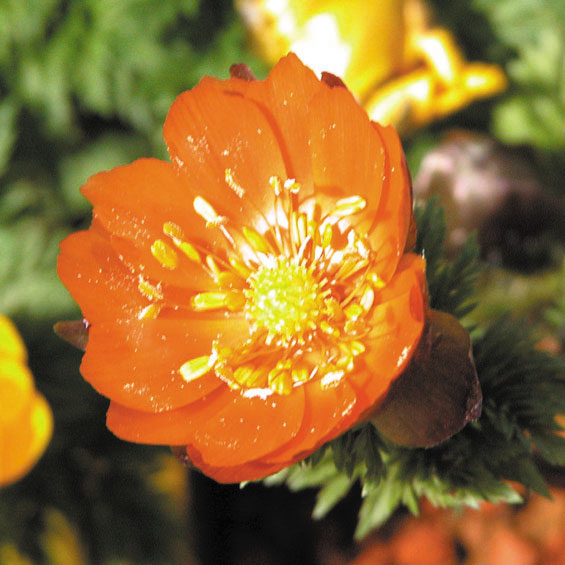
Yuzuriha is a plant with long broaded evergreen leaves and it was very common in ancient Japan to use it as an ornament for New Year to celebrate the good relationship of old and new generations . There is no English-name for it. Here is a small description of this plant:

Daphniphyllum macropodum is a shrub or small tree found in China, Japan and Korea. Like all species in the genus Daphniphyllum, D. macropodum is dioecious, that is male and female flowers are borne on different plants. The timber is used in China in construction and furniture making. It is grown as an ornamental plant, chiefly for its foliage.
Credits: Yuzuriha (in it's habitat)
As I look at this photo of Yuzuriha it looks somewhat similar with the rhododendron in my backyard, but as you can see in our next photo it's blossoms/flowers are looking very different than the blossom/flowers of the rhododendron.
 
Credits: Yuzuriha flowers (cultivated)
It's a very beautiful plant and those flowers/blossoms are really gorgeous. And as you can see at it's "construction" than you can understand the meaning of Yuzuriha, to celebrate the good relationship of old and new generations, it's very complexed. 
 
I have sought for an example of haiku with this Yuzuriha in it, but I couldn't find one, so I have to write one myself with this New Year kigo:

yuzuriha blooms
together with my kids and grandkids
picking the flowers

celebrating New Year
an Ikebana piece on the table
adoring it's beauty

© Chèvrefeuille

Not as strong as I had hoped, but I think these haiku are nice examples of this Yuzuriha. Yuzuriha must be an awesome flower to use in an Ikebana piece as you look at the bright green leaves and the complexity of it's flowers. Just one branch with flowers is already gorgeous.
 
Credits: Ikebana piece (sadly without yuzuriha) for New Year
This episode is open for your submissions tonight at 7.00 PM (CET) and will remain open until January 25th at noon.

 

Wednesday, January 21, 2015

Carpe Diem #652, Pheasant's Eye (Fukujusoo)


!! I publish this new episode earlier than I normally do, because I am in the nightshift !!

Dear Haijin, visitors and travelers,

As I was preparing the prompt-list for this month I ran into several classical kigo for (the fifth season) New Year with very rare/strange things. On of them was our prompt for today, Pheasant's Eye (Fukujusoo), I even thought for a while that it was a joke or something, but it really is a kigo for New Year and I will try to explain it to you.

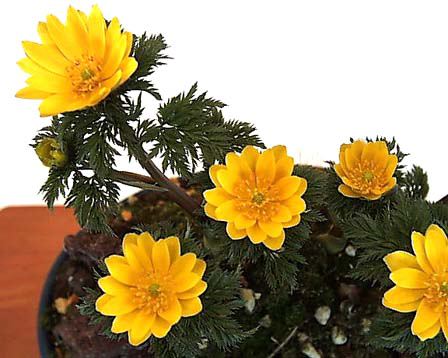
It turned out to be a flower which was special for New Year. Pheasant's eye, fukujusō, New Year's Day Plant. It grows in many mountainous areas of Japan. It begins to show new leaves in February or March and flowers with small bright yellow blossoms of 10 to 20 petals with a strong glow. Since the flowering time fell in the New Year season according to the lunar calendar, it was used as a decoration for the New Year, and so it came known as Pheasant's Eye or New Year's Day plant. Even now some farmers grow it especially to flower for the First of January.

In the Edo period, it was already artificially grown and sold in small pots, with petals of white, cream and red flowers, even double-petals. The name actually means : Plant of good fortune and long life, "prosperity grass" or "longevity grass", so it was very auspicious for the New Year celebrations.
Pheasant's Eye (Fukujusoo)
And I found a few really beautiful haiku with this wonderful Pheasant's Eye as theme. Here they are:

ôyuki o kabutte tatsu ya fukuju kusa

covered by the big snow
yet they stand...
New Year's grasses
© Issa

asahi sasu rooshi ga ie ya fukujusoo

morning sunshine
on the old Zen teacher's home -
Pheasant's eye in bloom


© Buson

jimen kara sora ga hajimaru fujukusoo

from the earth
the sky begins ...
Pheasant's eye


© Miyasaka Shizuo (1937 - )

hi no ataru mado no shooshi ya fukujusoo

the sun shines bright
on the window panes ...
Pheasant's eye
© Matsui Kafuu (1879 - 1959)
All great haiku I think. I especially the one by Miyasaka Shizou, because of it's image and the spiritual meaning of it as I look at the "meaning" of Pheasant's Eye (good fortune and long life). It will not be an easy task to write/compose an all new haiku for today's prompt, but ... yes you are right I have to try ... (smiles).
Credits: Pheasnat's Eye (Fukujusoo)

Pheasant on the run
as the first day of the year is celebrated -
colorful fireworks


© Chèvrefeuille

And I have tried to write a classical haiku following the classical rules, but I can not get that third line with it's 5 syllables, so maybe you can help me with that ...

Pheasant's Eye reflects
looks at it's beauty in the mirror -
she arranges her corsage


© Chèvrefeuille

This episode is open for your submissions tonight at 7.00 PM (CET) and will remain open until January 24th at noon (CET). I will (try to) post our next episode, Yuzuriha, later on.

Tuesday, January 20, 2015

Carpe Diem's Haiku Writing Techniques #3, Repetition & Carpe Diem Special #128, Sogi's 4th haiku


!! I will publish this episode earlier because I am in the nightshift. This is a DOUBLE episode, each part has it's own linking widget !!

Dear Haijin, visitors and travelers,

It's my pleasure to present to you our third episode of our Haiku Writing Techniques feature here at Carpe Diem Haiku Kai. I love to tell you something more about repetition, repeating words and sounds, in haiku. I think this episode is a nice follow-up of our 2nd episode "onomatopoeia" of last week.

Among all poetical forms the haiku is the very soul of brevity. In no more than three lines it contains a maximum of seventeen syllables, often fewer. Every word, every break counts. Yet there are haiku that have space for repetition within this narrow frame. How then is this achieved?It goes without saying that in order to work it must be done with considerable skill, or sensitivity. It may use for quite different poetical reasons, however. By its very element of surprise repetition of a word or part of a phrase may make the readers pay greater attention. They may feel that in order to be understood the text as it stands calls for reading aloud. Now recitation of poetry is an excellent practice which has been neglected in these years of silent reading due to general literacy. A poem worth reading is worth reciting, and will gain by it. Often the word which is repeated changes its sense to some degree. This will encourage the reader to savor its complete range of meaning. This effect is particularly striking when different forms of the same verb are used.A word may create a definite anticipation that is then twisted to a surprise. Some haiku are written in an elusive style which it would be difficult to render into exact prose. By the repetition of words the reader is encouraged to shift them around and consider various possible interpretations of the scene. In other haiku the text may be perfectly clear and the repetition will serve as an exclamation, an expression of the sense of wonder. A scene will be compressed. A single word is used where normally a full description would be needed.The repetition will show the reader the value of the word that has been chosen and the richness of meaning within its range. Repetition can increase the impact of a haiku.
Matsushima
One of the most well-known haiku in which repetition is very clear is the following by Matsuo Basho. He wrote this haiku as he saw Matsushima:

"Matsushima,
Ah! Matsushima!
Matsushima!".


© Basho (?)

It is said that this haiku was indeed written by Basho as he saw Matsushima, but in his “Narrow Road to the Deep North” he writes about Matsushima the following: “I couldn’t write a haiku as I saw Matsushima’s beauty, it was to overwhelming”. So who did wrote that haiku? There are sources who say that it was written by a monk named Tahara Bo. Well it doesn’t matter really, because it’s a wonderful haiku and it shows how you can use repetition in your haiku to show the beauty of something.
There are several haiku written in which "repetition" is used and I have found a few of them. I found for example a lot of haiku with repetition written by Kobayashi Issa who was the master of repetition:


kyoo mo kyoo mo onaji yama mite haru no ame

today too, today too
I see the same old mountain ...
rain in spring 


nake yo nake yo oya nashi suzume otonashiki

sing, sing!
orphan sparrow...
so quiet

sakura sakura to utawareshi oiki kana

"Cherry blossoms! Cherry blossoms!"
they sang
under this old tree

kuyo-kuyo to sawagu na asu wa asu no tsuyu

don't complain
so much - tomorrow brings
tomorrow's drew drops

na-batake ya hyoi hyoi hyoi ya kiku no hana

canola field --
a chrysanthemum, another
and another


© Kobayashi Issa

And I found a few haiku by others, but with a strong repetition in it. Repetition can increase the beauty of haiku, but I think you don't have to over do it. Repetition can have a function in your haiku (or tanka). It can make an emotion stronger or a painted image even more beautiful ... repetition ... well try it sometimes.

tsubame tsubame doro ga suki naru tsubame kana

Swallows, oh, swallows,
how much you like the mud!
you swallows!
 

© Hosomi Ayako (19071997)

snow is falling
on millions of homes
snow is falling


© Taro Kunugi, Japan (2011)

the river

the river makes
of the moon 

© Jim Kacian (1996) 

Of course I had to try it myself and I have sought through my archive to find a few examples of "repetition" ... here they are:

cherry blossoms fall
the spring breeze rustles through the leaves
cherry blossoms fall

one summer morning
the sound of a dog barking
and barking again


A last one to conclude this episode of our Haiku Writing Techniques:


children's laughter
I enjoy their laughter whole day long
laughing children


© Chèvrefeuille

Well ... I hope you did like this episode of our Haiku Writing Techniques and I hope it will inspire you all to write all new haiku in which you use this "repetition". Have fun!

This episode is open for your submissions tonight at 7.00 PM (CET) and will remain open until January 23rd at noon (CET). I will try to post our next episode, Pheasant's Eye (Fukujusoo), later on.

++++++++++++++++++++++++++++++++++++++++++++++++++++++++++++


CARPE DIEM SPECIAL #128, Sogi's 4th haiku "life in this world "


Dear Haijin, visitors and travelers,

It's my pleasure to present to you our 4th haiku by Iio Sogi (1424-1502) our featured haiku-poet of this month. We have had already three wonderful haiku written by him and today I love to share another nice haiku by Sogi with you all.

yo ni furu mo sara ni shigure no yadori kana


life in this world
just like a temporary shelter
from a winter shower


© Iio Sogi (1424-1502)


It's a very unique haiku I think, but it's so true what Sogi is saying here. Life is just like a temporary shelter, life is short like the snow ... enjoy life to the fullest I would say ... and that's what Sogi says in this haiku.


The goal of this CD-Special is to write/compose an all new haiku inspired on the one by Sogi and try to touch his sense, tone and spirit ... not an easy task I know, but I think it's a great way to learn how you can improve your haiku skills.

in just one heart beat
the sunlight breaks through the mist
revealing the meadow

© Chèvrefeuille

Hm ... not as good as I had hoped, but well ... I like this haiku ...

This episode is open for your submissions tonight at 7.00 PM (CET) and will remain open until January 23rd at noon (CET). I will try to publish our new episode, Pheasant's Eye (Fukujusoo), later on. For now ... have fun!

Monday, January 19, 2015

Carpe Diem #651, Picking Young Greens (wakanatsumi)


Dear Haijin, visitors and travelers,

As we are closing in to the end of January our New Year kigo will be more looking like Spring kigo as we have today Picking Young Greens (wakanatsumi) for prompt than we see that spring is coming closer. In this kigo with the "young greens" are meant the seven sacred herbs as we have seen in earlier posts here at Carpe Diem Haiku Kai. 
Today it's all about Jinjitsu (January 7th) on this date there is the Festival of Seven Herbs or Nanakusa no sekku on which the Japanese cook a special seven-herb rice porridge. 
The Festival of Seven Herbs or Nanakusa no sekku is the long-standing Japanese custom of eating seven-herb rice porridge (nanakusa-gayu) on January 7 (Jinjitsu).

Credits: Nanakusa-gayu
On the morning of January 7, or the night before, people place the nanakusa, rice scoop, and/or wooden pestle on the cutting board and, facing the good-luck direction, chant "Before the birds of the continent (China) fly to Japan, let's get nanakusa" while cutting the herbs into pieces. The chant may vary.

The seventh of the first month has been an important Japanese festival since ancient times. The custom of eating nanakusa-gayu on this day, to bring longevity and health, developed in Japan from a similar ancient Chinese custom, intended to ward off evil. Since there is little green at that time of the year, the young green herbs bring color to the table and eating them suits the spirit of the New Year.

This is the song mentioned above: 

tōdo no tori to,
nihon no tori to,
wataranu saki ni,
nanakusa nazuna,
te ni tsumi-ire te,
kōshitochō to naru
        

China-land's birds and
Japanese birds,
earlier than bring on their coming,
seven species wild herb,
I pluck them to the hand and
it becomes Neck, Turtle Beak, Dipper and Extended Net
.

By the way "Neck", "Turtle Beak", "Dipper" and "Extended Net" are all Chinese constellations.

I found a nice haiku written by Narayanan Raghunathan (co-founder of Wonder Haiku Worlds) with this prompt in it:

cool dawn -
an old Indian picking
young greens


© Narayanan Raghunathan


I found a nice Waka written by Emperor Koko Tennoo

  
It is for your sake
That I walk the fields in spring,
Gathering green herbs,
While my garment's hanging sleeves
Are speckled with falling snow.


© Emperor Koko Tennoo


Credits: Chickweed, one of the Seven Sacred Herbs
And I have found a nice trio of haiku written by Kobayashi Issa with wakanatsumi as theme:


kusa-tsumi no kobushi no mae no irihi kana

sun sinking
just beyond the fist
of the herb picker

kake-nabe mo asahi sasunari kore mo haru

dawn sun shining
even on my chipped pot --
this, too, New Year's

waga haru ya tadon hitotsu ni kona ichiha

my New Year's --
one ball of charcoal
a bunch of stunted greens


© Issa

And here is my attempt to write a haiku inspired on this prompt:

late at night
picking young greens in the kitchen garden -
the almost full moon

© Chèvrefeuille

Well ... a nice post I think. This episode is open for your submissions tonight at 7.00 PM (CET) and will remain open until January 22nd at noon (CET). I will try to post our next episode, a new episode of our special feature on Haiku Writing Techniques, later on.


Carpe Diem Ask Jane #8, Is tanka another name for waka or are these two different forms?


Dear Haijin, visitors and travelers,

Not so long ago Gillena emailed a question for Jane and with this episode of "Ask Jane" I present that question by Gillena. By the way Jane has become 78 last Saturday and I have send her our love and congratulations with her birthday.

Waka (literally "Japanese poem") or Yamato uta is a genre of classical Japanese verse and one of the major genres of Japanese literature. The term was coined during the Heian period, and was used to distinguish Japanese-language poetry from kanshi  (poetry written in Chinese by Japanese poets), and later from renga.
The term waka originally encompassed a number of differing forms, principally tanka ("short poem") and chōka ("long poem"), but also including bussokusekika, sedōka ("whirling head poem") and katauta ("poem fragment"). These last three forms, however, fell into disuse at the beginning of the Heian period, and chōka vanished soon afterwards. Thus, the term waka came in time to refer only to tanka.
Japanese poet and critic Masaoka Shiki created the term tanka in the early twentieth century for his statement that waka should be renewed and modernized. Until then, poems of this nature had been referred to as waka or simply uta ("song, poem"). Haiku is also a term of his invention, used for his revision of standalone hokku, with the same idea.
Traditionally waka in general has had no concept of rhyme (indeed, certain arrangements of rhymes, even accidental, were considered dire faults in a poem), or even of line. Instead of lines, waka has the unit  and the phrase


++++++++++++++++++++++++++++++++++++++++++++++
++++++++++++++++++++++++++++++++++++++++++++++


Dear Jane,

Is tanka another name for waka or are these two different forms?

Gillena Cox

-0-0-0-0-0-0-0-

Dear Gillena,

It is good to see you here in Holland on Carpe Diem! Thanks for the question.
Yes waka and tanka are basically the very same form. In the Japanese passion for giving a thing various names at various times, and since we in English have borrowed the Japanese terms, we are stuck with this problem.

In the very beginning poems in the tanka form were called “uta” or songs and occasionally even this word is still used. I found Akiko Yosano writing in Japan in 1901 did this. Also Jim Wilson, an American in California, in his books of tanka, composes music that can be used to sing or accompany any of his tanka. This is possible because he uses a strict syllable count.

When the Japanese began to compose other song forms (in the 800 CE) they changed the name from uta to waka.  Waka has remained in use up until today when both waka and tanka are employed for the same form. Whenever the court world of Japan refers to the form they use the older world of waka. Most modern Japanese, when speaking of the form and the poems, use the word tanka which translates to “short poem or song or elegance.”  Thus it is possible to hear all three terms used to indicate the same thing. I hope this gives you courage to write down whatever you are feeling in poetry!

Jane

Jane Reichhold
PS.: I (your host) will include a waka by Ariwara no Motokata

Within the year
Spring has come again;
The one year:
What should I say: that it's last year,
Or that it's the year to come?

As you can see, Waka follows the same form as Tanka.

+++++++++++++++++++++++++++++++++++++++++++++
+++++++++++++++++++++++++++++++++++++++++++++

I hope you did like this episode of "Ask Jane". Do you have a question for Jane? Than please feel free to email your question to:


I will take care that your question will be brought under the attention of Jane.


Sunday, January 18, 2015

Carpe Diem Time Glass #18, High Tea


Dear Haijin, visitors and travelers,

As you could have read in the last CD-Extra I will publish our time challenging Time Glass feature from now on on Sundays, so today is the first "sunday"-episode of our Time Glass feature and I have chosen a prompt and image that fit to the sunday ... at least to me.
Today I have chosen for the prompt HIGH TEA and it's based on childhood-memories. When I was a kid the Sunday was church-going day and in the afternoon we had the obligation to visit my grandparents ... my grandmother always served a High Tea ... and it was always great to visit them, but sometimes I wouldn't, but ... well I had to of course.

Credits: High Tea
I will explain the goal of this Time Glass to you. You have to write an all new haiku (classical or non-classical) inspired on the prompt and the image and submit it within 24 hours. Why such a short time? Well haiku are moments caught in three lines as short as the sound of a pebble thrown into water.

This episode of our time challenging feature Time Glass is NOW OPEN and will remain open until Monday January 19th at 7.00 PM (CET). You have just 24 hours to respond ... good luck and have fun!


Carpe Diem #650, First Rooster Crowing (hatsutori)


Dear Haijin, visitors and travelers,

As you all know every new year starts with fireworks, but in haiku every new year starts with kigo like "first moon rising", "first dream" and so on. Today we have such a kigo for prompt. This time it's about Hatsutori, the first rooster crowing. After New Year's Eve and after the fireworks we go to bed, because life starts all over ... and after a festive New Year's Eve it's nice to go to sleep and dream about the future or the past, but than .... the first rooster crows as it starts to become light again. What a short night we had, but that first rooster crowing does help us to remember that life goes on ... nothing has changed, only the year has changed ...

As I was preparing this episode I couldn't find a proper haiku example for this prompt, but after quit a while of searching around on the internet I finally found a wonderful haiku written by Narayanan Raghunathan, one of the co-founders of Wonder Haiku World (a great website).

first rooster -
then one after another
three more


© Narayanan Raghunathan

Credits: Rooster
And another one which is composed by Kobayashi Issa, it's not really a haiku for the New Year's season, but I just had to share it here, because of the scenery it paints:

yûdachi no ura ni naku nari yane no tori

at the tail end
of the cloudburst crowing...
rooftop rooster


© Issa

Isn't it a wonderful scene? I can see that rooster upon the rooftop, he has a mighty overlook on the property of his boss, he sees the hens and chickens walk around the house ... and than he crows .... awesome scene ... 

daylight brightens
the rooster crows his sun greet -
the silence deepens

© Chèvrefeuille

In this haiku I just saw that rooster in front of my eyes while I was performing the sun greet, a yoga exercise. And than, as I ended my exercise and the rooster stopped crowing that silence was overwhelming ... an awesome way to start the day.

This episode is open for your submissions tonight at 7.00 PM (CET) and will remain open until January 21st at noon (CET). I will (try to) publish our new episode, Picking Young Greens (wakanatsumi), later on.