Showing posts with label Carpe Diem weekend-meditation. Show all posts

Saturday, February 22, 2020

Carpe Diem Weekend Meditation #117 the cold night


!! Open for your submissions next Sunday, February 23rd at 7:00 PM (CET) !!

Dear Haijin, visitors and travelers,

Welcome at a new weekend meditation here at our wonderful Haiku Kai. I am a bit late with publishing, but I am in the nightshift. This weekend I will give you a nice "fusion-ku" challenge, or "crossroads". That nice special feature in which I ask you to create a "fusion-ku" from two given haiku. Your "fusion-ku" you have to use to create a Troiku (more about Troiku, you can find above in the menu).

Here are the two haiku to create your fusion-ku with and create your Troiku:

spring snow
purifies earth and heaven
our enemies perish

© Mizuhara Shûôshi

the cold night
comes out of the stones
all morning

© Jim Kacian

stones

Two beautiful haiku, with two very different scenes ... both haiku-poets are modern time poets and they are both well known also.

Your task ... create a "fusion-ku" from the two haiku given and create with your "fusion-ku" a Troiku, that nice modern way of creating haiku, based on the Russian sleigh "troika".

Have a wonderful weekend. This weekend meditation is open for your submissions next Sunday February 23rd at 7:00 PM (CET) and will remain open until March 1st at noon (CET).


Saturday, February 8, 2020

Carpe Diem Weekend Meditation #115 Transformation ... a sone for a pillow


!! Open for your submissions tomorrow, Sunday February 9th, 2020 at 7:00 PM (CET) !!

Dear Haijin, visitors and travelers,

Welcome at a (belated) new CDHK Weekend Meditation. It wasn't possible to publish on time, through circumstances. This weekend I love to challenge you with a new Transformation episode, that wonderful special feature in which the goal is to re-create a given haiku into a tanka.
This weekend I have chosen for a haiku by a not so well known haiku poet, Kawabata Bosha (1897-1941).

Kawabata Bosha

Bosha is a not so well known haiku poet, a contemporary of Shiki and a devotee to Basho, as we already can see in his haigo, Bosha.

Let me tell you first something about this not so well known haiku poet. Kawabata Bosha (1897-1941) was born on August 17 in Downtown Tokyo.His family name is Kawabata Nobukazu. His father had a great influence on his haiku career. His grandfather and his mother worked in a hospital and as a child it was his wish to become a doctor himself.
His stepbrother was Kawabata Ryush (Ryuushi), who later became a famous painter of traditional Japanese Paintings (Nihonga). Bosha himself was also a great painter.

At age 17 he started to use the haigo Bosha. He later became a most beloved student of Takahama Kyoshi and worked with the Aogiri Group. But his lung tuberculosis became worse and he died at a young age in 1941. On the evening of July 16 he died, this was his Jisei (death-poem).

ishi makura shite ware semi ka naki shigure

a stone for a pillow
me, just another cicada ...
so shrill, like crying

© Kawabata Bosha

cicada

A beautiful Jisei (death-poem) I would say. As read this Jisei I immediately thought about a haiku written by my sensei Matsuo Basho. In a way the haiku by Bosha was I think inspired on a haiku by Basho.

That haiku was the following:

the deep stillness
seeping into the rocks
the voice of the cicadas

© Matsuo Basho

Did you know that the life-circle of a cicada is 17 years? Could it be that our 17 syllables counting haiku was inspired on the life circle of the cicada? As that is true than haiku is for sure the poetry of nature.

Well ... enough talking.

This weekend meditation is open for your submissions tomorrow Sunday February 9th at 7:00 PM (CET) and will remain open until February 16th at noon (CET). Have a wonderful weekend full of inspiration.


Saturday, February 1, 2020

Carpe Diem Weekend Meditation #114 Renga With ... beach diamonds


!! Open for your submissions next Sunday February 2nd at 7:00 PM (CET) !!

Dear Haijin, visitors and travelers,

Welcome at a new weekend meditation here at Carpe Diem Haiku Kai, that nice special feature for the weekend. I think you all have noticed that I didn't publish on last Thursday and Friday, my excuses for that, I had a very busy (and tough) week, so I hadn't time to publish on those days.

This weekend I love to challenge you to create a Renga with several haiku poets. Your task is to add the two-lined stanza towards it. You can choose your own "line-up", but have to start with the haiku I will give first. So this Renga With ... is a kind of Hineri, with a twist.

Here are the six haiku to use, the first given haiku has to be your hokku (starting verse) and is a beauty created by Jane Reichhold (1937-2016).

beach diamonds
a new day crystallized
in sunny surf foam

© Jane Reichhold

cold spring breeze
makes the cherry blossom shiver
one heartbeat long

© Chèvrefeuille


The wind from Mt. Fuji
I put it on the fan.
Here, a souvenir from Edo

© Basho (Tr. Ryu Yotsuya)

watch birth and death:
the lotus has already
opened its flower.

© Soseki Natsume (Tr. Soiku Shigematsu)


dervishes whirling
- seeking a higher consciousness
third eye opens

© Chèvrefeuille

flute melodies
across green ocean waves
spring meadows

© Jane Reichhold

Six wonderful haiku to work with I think, not an easy task, but I think and belief that you all can do it. Enjoy this Renga With ...

This weekend meditation is open for your submissions next Sunday February 2nd at 7:00 PM (CET) and will remain open until February 9th at noon (CET). Have a great weekend.


Saturday, January 25, 2020

Carpe Diem Weekend Meditation #113 Troiku Hineri ... at dawn


!! Open for your submissions Sunday January 26th at 7:00 PM (CET) !!

Dear Haijin, visitors and travelers,

The last days were very busy, so I couldn't publish or regular Friday episode and a bit late with the Weekend Meditation. My excuses for it.

This weekend I love to challenge you to create a Troiku Hineri. What doea it mean? I will give you a haiku. With that haiku you create a Troiku. Than you have three new haiku. The Hineri (with a twist) is that I love to challenge you to create with those three new haiku NINE new haiku following the Troiku idea, so you have to create three new haiku from every haiku you created from the given haiku.


I have chosen one of the first haiku by Yozakura, the Unknown Haiku Poet. Here is his first haiku to work with:

yoake ni arau tsuyude watashino ashisaichoubi

at dawn
I wash my feet with dew
the longest day

© Yozakura (1640-1716)

A nice challenge I think for this weekend. Have an awesome weekend!

This Weekend Meditation is open for your submissions next Sunday January 26th at 7:00 PM (CET) and will remain open until February 2nd at noon (CET).


Friday, January 17, 2020

Carpe Diem Weekend Meditation #112 Transformation ... sketching from life (Shiki's Shasei technique)


!! Open for your submissions next Sunday, January 19th at 7:00 PM (CEST) !!

Dear Haijin, visitors and travelers,

Welcome at a new Weekend Meditation here at our wonderful Haiku Kai, the place to be if you like to create Japanese poetry and share it with the world.

Maybe you remember that new feature I introduced a while ago "Carpe Diem Transformation" in which I challenge you to "re-build" a given haiku into a tanka. In the first episode of this feature I challenged you to "re-build" a famous haiku by Chiyo-Ni (that episode you can find HERE).

And for this weekend meditation I have chosen a haiku by that other famous haiku master, Masaoka Shiki. In this episode I love to challenge you to re-create a haiku by Shiki into a Tanka. Maybe you can remember that Shiki has a certain haiku writing technique named "shasei". Let me introduce this technique again here.

Japanese Stamp with an image of Shiki

Shasei

The word "shasei" has not yet been invented at the time of Basho, but the idea was there according to what Basho tells his disciples:

[...] Matsuo Basho advises his disciples: “Learn from the Pine!”To do that you must leave behind you all subjective prejudice. Otherwise you will force your own self onto the object and can learn nothing from it. Your poem will well-up of its own accord when you and the object become one, when you dive deep enough into the object, to discover something of its hidden glimmer. [...]

Here is an example of this Shasei technique:

Come spring as of old.
When such revenues of rice.
Braced this castle town!

© Masaoka Shiki

It's a good example of the shasei technique. What is the Shasei technique? Let me try to explain that to you all with the help of Jane Reichhold.

Sketches of Life, Tree of Life (image found on Pinterest)

Though this technique is often given Shiki's term Shasei (sketch from life) or Shajitsu (reality), it has been in use since the beginning of poetry in the Orient. The poetic principle is "to depict the thing just as it is". The reason Shiki took it up as a poetical cause, and this made it famous,  was his own rebellion against the many other techniques used in haiku. Shiki was, by nature it seemed, against whatever was the status quo - a true rebel. If older poets had overused any idea or method, it was his personal goal to point this out and suggest something else. This was followed until someone else got tired of it and suggested something new. This seems to be the way poetry styles go in and out of fashion.

Thus, Shiki hated associations, contrasts, comparisons, wordplays, puns, and riddles - all the things we are cherishing here! He favored the quiet simplicity of just stating what he saw without anything else happening in the haiku. He found the greatest beauty in the common sight, simply reported exactly as it was seen, and ninety-nine percent of his haiku written in his style. Many people still feel he was right. There are some moments that are perhaps best said as simply as possible in his way. Yet, Shiki himself realized in 1893, after writing very many haiku in this style, that used too much, even his new idea could become lackluster. So the method is an answer, but never the complete answer of how to write a haiku.

Eggplant

I hope you can relate to this Shasei technique and can work with it. This weekend I love to challenge you to re-create a haiku (in Shasei style) by Shiki into a Tanka. Here is the haiku to work with:

kaboocha yori nasu muzukashiki shasei kana

Sketching from life —
eggplants are harder to do
than pumpkins

© Masaoka Shiki (Tr. Burton Watson)

A challenging task for you this weekend. I am looking forward to all of your wonderful "transformed haiku". Have a great weekend!

This weekend meditation is open for your submissions next Sunday January 19th at 7:00 PM (CET) and will remain open until January 26th at noon (CET). 


Saturday, January 11, 2020

Carpe Diem Weekend Meditation #111 Troiku ... New Beginnings ... Lotus starts to bloom


Dear Haijin, visitors and travelers,

Welcome at a new Carpe Diem Weekend Meditation, our special feature for every weekend. My excuses that I am a bit late with publishing this weekend meditation, but ... well you all know the circumstances I have to deal with at the moment.

For this weekend meditation I have chosen a wonderful haiku to work with and create a Troiku with. More on Troiku you can find above in the menu.

Lotus
Here is the haiku to work with, a haiku chosen from our archives themed New Beginnings:

in deep prayer
eyes closed in devotion -
Lotus starts to bloom

A beautiful haiku to workj with I think. Have a great weekend!

This weekend meditation is open for your submissions next Sunday, January 12th at 7:00 PM (CEST) and will remain open until January 19th at noon (CEST). Have fun!

PS. If you like Tanka than you can also visit Tanka Splendor, that special website on Tanka. I have published a new Tanka Splendor episode there.

Friday, November 22, 2019

Carpe Diem Weekend Meditation #110 Carpe Diem Transformation ... Bush Warbler


!! Open for your submissions next Sunday November 24th at 7:00 PM (CET) !!

Dear Haijin, visitors and travelers,

Welcome at a new episode of our CD Weekend Meditation ... Maybe you remember that new feature I introduced a while ago "Carpe Diem Transformation" in which I challenge you to "re-build" a given haiku into a tanka. In the first episode of this feature I challenged you to "re-build" a famous haiku by Chiyo-Ni (that episode you can find HERE).

And for this weekend meditation I have chosen a haiku by that other famous haiku master, Matsuo Basho. I have chosen a not so well-known haiku by him, but I think you remember it from our series about "Haiku Writing Techniques", it's one of his Karumi haiku. Karumi (lightness) was Basho's Haiku Writing Technique he strived his whole life for.


Here is the haiku to "re-build" into a tanka:

Uguisu ya mochi ni fun suru en no saki

A spring warbler casts
A dropping on the rice cakes —
The veranda edge.

© Basho

Bush Warbler
What is karumi?

Bashô developed this concept during his final travels in 1693. Karumi is perhaps one of the most important and least understood principles of haiku poetry. Karumi can best be described as “lightness,” or a sensation of spontaneity. In many ways, karumi is a principle rooted in the “spirit” of haiku, rather than a specific technique. Bashô taught his students to think of karumi as “looking at the bottom of a shallow stream”. When karumi is incorporated into haiku, there is often a sense of light humor or child-like wonderment at the cycles of the natural world. Many haiku using karumi are not fixed on external rules, but rather an unhindered expression of the poet’s thoughts or emotions. This does not mean that the poet forgets good structure; just that the rules of structure are used in a natural manner. In my opinion, karumi is “beyond” technique and comes when a poet has learned to internalize and use the principles of the art interchangeably.

So ... your goal is to "re-build" this beauty into a tanka ... take your time.

This Weekend Meditation is open for your submissions next Sunday November 24th at 7:00 PM (CET) and will remain open until Sunday December 1st at noon (CET). I will try to publish our new episode later on. For now ... have a wonderful weekend full of inspiration.


Friday, October 11, 2019

Carpe Diem Weekend Meditation #106 Turn Back Time (2) Revise That Haiku by Taigi


!! Open for your submissions next Sunday October 13th at 7:00 PM (CEST) !!

Dear Haijin, visitors and travelers,

Welcome at a new weekend meditation here at our wonderful Haiku Kai were we are celebrating our 7th birthday. Last weekend I introduced a special feature for this festive month "Turn Back Time". In this special feature I will take you back in time ... or in other words "I will turn back time" into our amazing CDHK history.


This week I love to "turn back time" to another wonderful special feature we have had here at our wonderful Haiku Kai. In October 2013 I started our special feature "Revise That Haiku" with a haiku by Taigi (1709-1771). Taigi was a contemporary and friend of Buson. I will first give the haiku (including the Japanese Romaji) and then I will give the description of the moment which led to the haiku.

umi ikete tsuki to mo wabin tomoshikage

arranging the plum-flowers,
I would enjoy them in the light of the lamp,
as if in the moonlight

© Taigi (1709-1771)

The brevity of haiku is not something differnt from, but a part of the poetical life; it is not only a form of expression but a mode of living more immediately, more closely to life as may be illustrated in the above haiku by Taigi.

Flourishing Plum Blossoms in the Moonlight

The original of the above haiku is even more difficult, literally: "arranging the plum, as if the moon, I would savour, lamp-light" (Wabiru translated 'enjoy', 'means' to live a life of poetry in poverty). The poet has arranged the flowers in a vase, and wishes to see them in the light of the moon, but there being no moon, he lights the lamp instead, and adds its light to the poetry and the beauty of the flowers.
The whole of the poet's life is shown in this action and the essence of the verse in wabin. This poverty, this asceticism of life and form in haiku, this absence of luxury and decoration finds its philosophical and transcendental expression in Emanuel Swedenborg's (a Swedish philosopher who lived from 1688 until 1772) "Heaven and Hell" (paragraph 178); after he has described the garments of the angels, some of which glow with flame, some of which shine with light, he adds:

"But the angels of the inmost heaven are not clothed".

Well ... with the desciption of the moment I think you can revise that haiku ... so ... "break a leg", have fun, be inspired and share your revised Taigi-haiku with us at Carpe Diem Haiku Kai.

Ofcourse I than gave it a try, so here is the "revised" haiku by Taigi created by me, your host:

shadow on the wall
flourishing plum blossom
in the moon light

© Chèvrefeuille (October 2013)

Enjoy your weekend. This weekend meditation is open for your submissions next Sunday October 13th at 7:00 PM (CEST) and will remain open until October 20th at noon (CEST). Have fun!

Friday, October 4, 2019

Carpe Diem Weekend Meditation #105 Turn Back Time ... a special feature for our 7th brithday


!! Open for your submissions next Sunday October 6th at 7:00 PM (CEST) !!

Dear Haijin, visitors and travelers,

Welcome at the first weekend meditation of our anniversary month October 2019. This month we are celebrating our 7th anniversary ... and especially for this month I have created a new feature for our weekend meditation. I have titled it "Carpe Diem's Turn Back Time". I think you all will understand that this special feature will bring us back in time ... In this special feature I will challenge you with a few features we have had here at our wonderful Haiku Kai during our existence. For this special feature I have created a new logo also:


credits
In this first weekend meditation I love to take you back in time to one of the first special features I created, Carpe Diem Special. That feature I created to bring the so called "big five haiku masters" to your attention and for your inspiration. The "big five" are: Basho, Buson, Chiyo-Ni, Issa and Shiki ... they all have been the theme for that first special feature "Carpe Diem Special" and I love to Turn Back Time to December 29th 2012 to an episode titled "Ancient Road". This title was taken from a haiku by Yosa Buson (1716-1784):

furumichito kikeba yukashiki yukino shita

"An ancient road," they say
How charming
Though beneath this snow.

© Yosa Buson


The Samurai's Mountain Road

Maybe Buson walked on this Samurai Moutain Road in the middle of winter. The road beneath a blanket of snow isn't seen very well.

Let me tell you a little bit about the "Samourai's Mountain Road": In the days of the samurai, two ancient roads linked Japan’s great cities of Kyoto (the home of the sacred emperor) and Edo (the seat of the shogun and the place we now call Tokyo). One road followed the sea coast; the other wound its way through the forested hills of central Japan and was simply called the Nakasendo – the road within the mountains. Both bore regularly the tramp of marching feet as armies of samurai, dressed in their finest, accompanied their lords on their way to pay his annual respects to the shogun. Should two marching columns meet the social inferior was required to dismount and his men pull respectfully back to one side to allow the nobler lord to pass by.

Nowadays these roads are frequented by a lot of feet, but not of Samurai anymore, but of tourists and hikers.

Somewhere Along the Samourai's Mountain Road

What a joy to Turn Back Time ... this brings sweet memories back to me. I wasn't sure if I would continue with Carpe Diem Haiku Kai back in December 2012, because of the time I had to spend to it. An every day post wasn't always possible back than, but (as you all know) that's a problem sometimes too in our recent time.
The goal of this special feature is to create a Japanese poem, like haiku or tanka, inspired on the haiku by Buson (or the one by Basho).

If you would like to read the mentioned CD Special than you can find it HERE.

To conclude this first weekend meditation I have a nice haiku by Basho for you that in a way has to do with the Samurai's Mountain Road:

waving long grass
all that remains of ancient warriors
trace of dreams

© Basho (Tr. Chèvrefeuille)

(This is a translation of the original by myself: the original haiku in romaji is: natsukusa ya / tsuwamono domo ga / yume no ato)

This weekend meditation is open for your submissions next Sunday October 6th at 7:00 PM (CEST) and will remain open until October 13th at noon (CEST). Have a wonderful weekend!

Friday, September 27, 2019

Carpe Diem Weekend Meditation #104 Photo-shopping Haiku "Camellia" (Yosa Buson)


!! Open for your submissions next Sunday September 29th at 7:00 PM (CEST) !!

Dear Haijin, visitors and travelers,

Welcome at a new weekend meditation here at our wonderful Haiku Kai. This weekend I have chosen for an episode of our so called "Photo-shopping Haiku", that wonderful special feature in which I challenge you to "photo-shop" a renown haiku to make it (maybe) better.

For this "photo-shopping" episode I have chosen a (not so) renown haiku by Buson (1716-1784). Buson is one of the so called big five (next to him we have Basho, Issa, Shiki and Chiyo-ni) and he has written wonderful haiku. He was also an awesome haiga painter and he illustrated the first official print of Basho"s "Small Road Into The Deep North".

Illustrated version of Basho's "Narrow Road Into The Deep North" with haiga by Buson

What a wonderful haiga Buson created for this printed version of Basho's "Narrow Road Into The Deep North", but the haiku to photo-shop is not taken from this haibun by Basho, but a haiku by Buson.

Here is the haiku to "photo-shop":

tama-suri-no zayu ni hiraku tsubaki kana

Unfolding at the
hand of the glass polisher:
a camellia!

© Buson (1716-1784)

More about "photo-shopping haiku".

Well .... a nice challenge I think. This weekend-meditation is open for your submissions next Sunday September 29th at 7:00 PM (CEST) and will remain open until October 6th at noon (CEST). Have a wonderful weekend full of inspiration and joy.


Saturday, September 21, 2019

Carpe Diem Weekend Meditation #103 The Quest For A New Masterpiece Continues ... Start Of Autumn


!! Open for your submissions next Sunday September 22nd at 7:00 PM (CEST) !!

Dear Haijin, visitors and travelers,

Welcome at a new weekend meditation, that special feature that gives you more time to contemplate and meditate before you post your responses. This weekend I love to challenge you to create a new masterpiece, so The Quest For A New Masterpiece Continues.

Maybe you know what I mean with this challenge. Go and find that gem, that beautiful diamond ... your masterpiece, your evergreen like Basho's "Old Pond". Go ... and create your masterpiece themed "start of autumn" and share it with us all here at our wonderful Haiku Kai ... where we are almost creating haiku together for seven years.


Start Of Autumn

nights become longer
while Mother Nature starts to color
loneliness grows


© Chèvrefeuille

This episode is open for your submissions next Sunday, September 22nd, at 7:00 PM (CEST) and will remain open until September 29th at noon (CEST). Have a great weekend!


Saturday, September 14, 2019

Carpe Diem Weekend Meditation #102 Renga With Basho ... ancient times


!! Open for your submissions next Sunday September 15th at 7:00 PM (CEST) !!

Dear Haijin, visitors and travelers,

Welcome at a some what belated weekend meditation. I had other important things to do, so my apologies for being late with this weekend meditation. I hope your weekend started with a wonderful day ... here it was an awesome start of the weekend, because it's my first vacation day. The sun shines bright and we have a nice temperature ... a kind of Indian Summer feeling I should say.

This weekend I have chosen to challenge you (again) to create a Renga With Basho. I will give you a series of haiku by Basho to work with. You can decide which "line-up" you will follow, and add your two lined stanza towards the renga. It's a wonderful opportunity to create a renga with Basho, my sensei.

Here are the six haiku to work with (all translated by Jane Reichhold and taken from "Basho, The Complete Haiku"):

flood waters
stars too will go to sleep
on top of a rock


still summer
the harvest moon too hot
to enjoy the coolness


Japanese Morning Glory

morning glories
in the daytime a lock lowered
on the gate


chrysanthemum flowers
bloom at the stonemason's
between stones

warriors
the bitterness of pickles

in the talk

plum blossom scent
since ancient times the word
has been sorrowful

© Matsuo Basho (1644-1694)

Six beautiful haiku by the master of masters, Matsuo Basho, I hope you can create a wonderful Renga With Basho.

This weekend meditation is open for your submissions next Sunday September 15th at 7:00 PM (CEST) and will remain open until September 22nd at noon (CEST). Enjoy your weekend.


Saturday, September 7, 2019

Carpe Diem Weekend Meditation #101 Photoshopping Haiku "Criket Silence"


!! Open for your submissions next Sunday September 8th at 7:00 PM (CEST) !!

Dear Haijin, visitors and travelers,

Welcome at our new (belated) weekend meditation. This weekend I love to challenge you to "photoshop" haiku. Let me give you all the "short" explanation of "photo-shopping haiku":

Photo-shopping sounds awfull but, I think it's possible to "photo-shop" haiku and tanka too. Just a little change can make the difference between a good haiku (or tanka) and an excellent haiku (or tanka).


I love to make photos, but I am not a photographer that likes color. I am more of the black and white and sepia photos, because in my opinion the photos are more beautiful ... more vintage.
Maybe it's because of my age (56 yrs) or of my melancholic mind I don't know, but I do know that we can re-make "photo-shop" a haiku (or tanka) into a vintage one just by retouching of a small part. So this new feature, that I first titled "vintage haiku", I have "re-titled" into "photo-shopping haiku".

Let me give you an example:

autumn has come
visiting my ear on
a pillow of wind

© Basho (Tr. Jane Reichhold)

As I start "photo-shopping" this haiku by my master, Matsuo Basho, than I think 'I can bring more softness, tranquility, into it by changing a small part of this haiku into:

whispering into my ear
on a pillow of wind

In this example I only let the first line un-touched:

autumn has come
whispering into my ear
on a pillow of wind

© Chèvrefeuille

I think this "small" re-touch makes this haiku more soft, lovely and tranquil.

I think, no I know that you all understand the goal of this "photo-shopping haiku", try to create a "better" version of a given haiku. Maybe you only change a few words or maybe you think this haiku becomes "better" as "re-make" it into a tanka. You are free in the choices you make.


Autumn Silence

This weekend I love to challenge you to "photo-shop" an autumn haiku created by Jane Reichhold and taken from her online version of "A Dictionary of Haiku".

cricket silence
between scraping sounds
autumn begins

© Jane Reichhold (Source: A Dictionary of Haiku; Section Autumn, subsection Celestial)

A wonderful haiku by our beloved Jane, she is still missed. "Photo-shop" her haiku to honor her.

This weekend meditation is open for your submissions next Sunday September 8th at 7:00 PM (CEST) and will remain open until September 15th at noon (CEST). Have a great weekend full of inspiration.


Friday, August 30, 2019

Carpe Diem Weekend Meditation #100 Crossroads ... Indian Summer

Season Logo CDHK Weekend Meditation

!! Open for your submissions next Sunday September 1st at 7:00 PM (CEST) !!

Dear Haijin, visitors and travelers,

Welcome at the first weekend meditation of Autumn 2019. As you all know next Sunday starts the meteorological autumn, so time for a new logo for this special feature. On the above image you can see the holy mountain "Fuji no Yama" in an autumn setting.

This weekend I love to challenge you to create a Troiku with your "fusion-haiku" created from two given haiku themed "Indian Summer".

Here are the two haiku to use for your "fusion-ku" and the Troiku created with it:

after a warm day
a thin layer of fresh fallen snow
covers the garden

Indian Summer
inbetween seasons
roses bloom again

© Chèvrefeuille

Indian Summer

A nice weekend meditation I think. I wish you all a wonderful weekend and I am looking forward to all your wonderful submissions.

This weekend meditation is open for your submissions next Sunday September 1st at 7:00 PM (CEST) and will remain open until September 8th at noon (CEST). Have a great weekend!


Friday, August 23, 2019

Carpe Diem Weekend Meditation #99 crossroads of summer


!!! Open for your submissions next Sunday August 25th at 7:00 PM (CEST) !!!

Dear Haijin, visitors and travelers,

Welcome at a new episode of our weekend meditation feature. This weekend I love to challnege you to create a Troiku with a haiku distilled from two given haiku ... so this is a Crossroads episode. I have chosen two haiku by Jane Reichhold (1937-2016) from her online saijiki "A Dictionary of Haiku", Summer section, subsection Plants.

The task is to create a fusion haiku from the given two haiku and create a Troiku with it (more on Troiku you can find above in the menu). Here are the two haiku to work with, both by Jane Reichhold:

buttercups
peeping through fog
opening to the sun

sunshine lights
on hibiscus leaves before their
own dark

© Jane Reichhold


Buttercups in Field

Two beautiful haiku by Jane, who is still missed dearly. Create your Troiku starting with the "fusion haiku" from the two given haiku in honor of Jane Reichhold, Queen of Haiku and Tanka.

This weekend meditation is open for your submissions next Sunday August 25th at 7:00 PM (CEST) and will remain open until September 1st at noon (CEST). Have a wonderful weekend.


Saturday, August 17, 2019

Carpe Diem Weekend Meditation #98 Choka ... the long Japanese poem


!! Open for your submissions tomorrow Sunday 18th at 7:00 PM (CEST) !!

Dear Haijin, visitors and travelers,

Welcome at this delayed weekend meditation. My apologies (again) for being late I hadn't time enough to publish this weekend meditation earlier.

This weekend I love to challenge you to create a Japanese long poem, or Choka. Let me tell you a little bit more about the Choka.
The choka can be of almost any length, because its form depends on alternating phrases (or lines) containing either seven of five sound units (onji). The end of the poem is signaled by two lines of seven sounds. So the form is five/seven, five/seven, five seven, .... , seven/seven.
This was the most popular form of poetry in the 9th century as indicated by the large number of works in the celebrated anthology Man'yoshu (The Collection of Ten Thousand Leaves). This anthology of anthologies contained 260 choka and 4200 tanka.

Kakinomoto no Hitomaru

The poet Kakinomoto no Hitomaro, who composed most of his work in the last decade of the 7th century, took the choka to its highest lyrical point with his finesse in the use of ritual language.
The connection to tanka is evidenced by the envoy or hanka - a tanka-like poem attached at the end of the choka. Occasionally more than one envoy will close the choka. There have been a few efforts to revivie the form over the intervening centuries, but the form has failed to gain any popularity in Japan, and even less has been accomplished in English. (Based on Jane Reichhold's "Writing and Enjoying Haiku")

Here is an example of a choka from the Man'yoshu (no. 802):

The briefest chōka documented is Man'yōshū no. 802, which is of a pattern 5-7 5-7 5-7 5-7-7. It was composed in the Nara period and goes:

When I eat melons
My children come to my mind;
When I eat chestnuts
The longing is even worse.
Where do they come from,
Flickering before my eyes.
Making me helpless
Endlessly night after night.
Not letting me sleep in peace?

(envoy or hanka)

What are they to me,
Silver, or gold, or jewels?
How could they ever
Equal the greater treasure
That is a child? They cannot.

© Yamanoue no Okura (Tr. Edwin Cranston)


My personal weblog: Chèvrefeuille's Haikublog

I once wrote a choka (and published it on my personal weblog), but it isn't really my "cup of tea", but I love to share it here with you all:

the cooing of pigeons
resonates through the gray streets –
ah! that summer rain
refreshes the dried out earth
filling its scars
the perfume of earth tickles
my nostrils
after the hot summer days
I dance in the rain
naked on the top of the hills
I feel free at last
nature around me comes to life
field flowers bloom
I see their beautiful colors
the perfume of Honeysuckle

ah! that summer rain
the perfume of the moist soil
tickles my senses
I lay down, naked in her arms
surrounded by Honeysuckle

© Chèvrefeuille

It's a very nice form of Japanese poetry, but as I said above not "my cup of tea", but maybe it'is your "cup of tea". 

PS. You can choose your own theme.

This weekend meditation is open for your submissions next Sunday August 18th at 7:00 PM (CEST) and will remain open until August 25th at noon (CEST). Have a wonderful weekend ... or maybe I have to say "have a wonderful Sunday".

Saturday, August 10, 2019

Carpe Diem Weekend Meditation #97 depth of a flower (CD Crossroads)


!! Open for your submissions next Sunday August 11th at 7:00 PM (CEST) !!

Dear Haijin, visitors and travelers,

First my apologies for being late with publishing of this new weekend meditation, I hadn't time earlier, but now I have found some time to create it.

This weekend I love to challenge you with a Crossroads episode. A Crossroads episode challenges you to create a "fusion"-haiku from two given haiku and create a troiku with your fusion-haiku (more about Troiku above in the menu).

Wildflower Bouquet

As you all know this month we are creating a bouquet of field flowers, so I have chosen two haiku in which field flowers are used. I have chosen two haiku by Jane Reichhold, taken from her "A Dictionary of Haiku", section: summer, subsection: plants. Here are the two haiku to work with:

windy weather
calling the flowers by name
each nods

depth of a flower
flying away with the bee
some mystery

© Jane Reichhold (source: A Dictionary of Haiku)

Two beauties by Jane, she is still missed. Enjoy this weekend meditation.

This weekend meditation is open for your submissions next Sunday August 11th at 7:00 PM (CEST) and will remain open until August 18th at noon (CEST). Have an awesome weekend full of inspiration.


Friday, August 2, 2019

Carpe Diem Weekend Meditation #96 Little Ones ... Sedoka


!! Open for your submissions next Sunday August 4th at 7:00 PM (CEST) !!

Dear Haijin, visitors and travelers,

Welcome at the first weekend meditation of August 2019. This month our theme is "Field Of Flowers", but that's not the theme for this weekend meditation. For this weekend meditation I have chosen to challenge you to create an other kind of Japanese poetry ... Sedoka. I will explain what Sedoka is.

For this "special feature "Little Ones" I have created a new logo and maybe I will use this special feature more often here at CDHK, not only in the weekends, but maybe also as an extra feature on weekdays.


For this logo I have used a renown Japanese woodblock by Katsushika Hokusai (1760–1849) and it's titled: Under the Wave off Kanagawa (Kanagawa oki nami ura), also known as The Great Wave.

Maybe you can remember that special feature "Little Ones" that I used often here at CDHK, maybe if you are a long time member you will surely know that special feature.

Sedoka:

A Sedoka is an unrhymed poem composed of two katauta. A katauta has three lines with the syllable pattern 5-7-7 and is complete in itself and able to stand alone. A Sedoka therefore has the syllable count: 5-7-7, 5-7-7.

In order to be correct, each katauta must be able to be read independently, but also create a cohesive singular work in the Sedoka. Often a Sedoka will address the same subject from different perspectives.

An example:

dark clouds cloak the night;
chilly winds creak gnarled branches,
grasping as bony fingers.

disturbed raven squawks
at frightened children - screaming,
then laughing - they throw him treats

© James Dean Chase

Face In The Mirror (image found on viewbug) (image © beamiyoung)

Here is a Sedoka I wrote several years ago:

behind a veil of clouds
she hides her bright face
she ... the queen of night's sky

in the mirror she looks
at her once beautiful face
mother of two boys and girls

© Chèvrefeuille

I think it's a nice Japanese poetry form and next to haiku and tanka, I think Sedoka fits us all. Try it yourself.

This weekend meditation is open for your submissions next Sunday August 4th at 7:00 PM (CEST) and will remain open until August 11th at noon (CEST). Have a great weekend!


Saturday, July 27, 2019

Carpe Diem Weekend Meditation #95 Quest for a new masterpiece ... sunflowers


!! Open for your submissions next Sunday July 28th at 7:00 PM (CEST) !!

Dear Haijin, visitors and travelers,

Welcome at a new weeken meditation her at CDHK. This weekend I love to challenge you to create a new masterpiece ... so our quest continues ... For this weekend I have chosen the theme "sunflowers" I challenge you to create a new masterpiece (haiku or tanka) themed "sunflowers". I will give you an example:

in my garden
sunflowers bow their heads
in honor of the sun


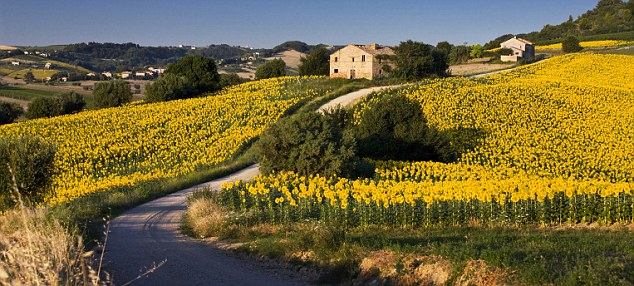
Sunflower Field (Tuscany, Italy)

only sunflowers
those beautiful little suns
in my garden

Both haiku I created back in 2012, around the time that I started with CDHK, so these are special to me.

Are these masterpieces? I don't know, for me they are, because of their meaning to me ... the start of CDHK back in 2012.

This weekend meditation is open for your submissions next Sunday July 28th at 7:00 PM (CEST) and will remain open until August 4th at noon (CEST). Have a great weekend!


Saturday, July 20, 2019

Carpe Diem Weekend Meditation #94 Crow (Photo-shopping haiku)


!! Open for your submissions next Sunday July 21st at 7:00 PM (CEST) !!

Dear Haijin, visitors and travelers,

Welcome at a new weekend meditation here at our wonderful Haiku Kai. This special feature is meant to meditate and contemplate on a given challenge. For this weekend I have chosen for an episode of "Carpe Diem's Photo Shopping Haiku", that nice special feature in which I ask you to "photoshop" a given haiku. (More about this special feature you can find HERE)

For this weekend I have chosen a wonderful haiku by renown haiku poet (and my master) Matsuo Basho. I think you all will know this haiku:

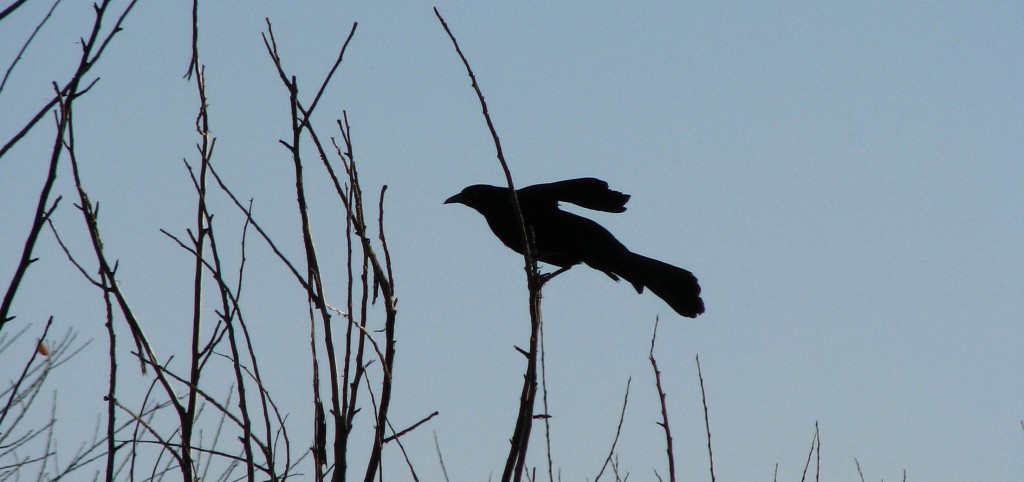
kare eda ni karasu no tomarikeri aki no kure
on a bare branch
a crow has stopped
autumn dusk 

© Basho (Tr. Stephen Wolfe)


And a little background on this haiku:

In 1689, five years before his death, Basho wrote this final version of this seminal haiku, which, according to many literary critics, ushered in modern haiku replete with its subtle yet profound power. It represented a revolutionary change from the shallow, pun-ridden, clumsy haiku of the
Danrin School that held sway at the time. In the words of R. H. Blyth, this 'crow' haiku by Basho was the watershed in "the setting up of his own, indeed, the creation of what we now call 'haiku.”

Basho's care in perfecting his crow haiku suggests that he was striving for a breakthrough nuanced innovation that he hoped would chart a new direction for haiku. Judging by the commentary of innumerable Japanese poets, scholars, and Zen practitioners who saw in this haiku a whole gamut of Japanese aesthetic principles and expression, Basho was successful.

And now it is up to you to create a "photo-shopping" haiku from it by leaving a small bit or transfer a small part for another part, other words.

This weekend meditation is open for your submissions next Sunday July 21st at 7:00 PM (CEST) and will remain open until July 28th at noon (CEST). Have a great weekend!