Showing posts with label calligraphy. Show all posts

Sunday, December 10, 2017

Carpe Diem #1323 serenity


Dear Haijin, visitors and travelers,

Welcome at a new episode of our wonderful Haiku Kai. I hope you all have had a nice weekend. Here in The Netherlands we had almost the whole weekend heavy snow fall, so the world around me has become white. It's an awesome sight, because it has been a while that we had that much snow.

This month we are finding our inspiration in the novels by Paulo Coelho. And today I have a wonderful quote from his novel "The Witch Of Portobello", one of his most beloved novels. I read "The Witch ..." several times and every time again I read new things.

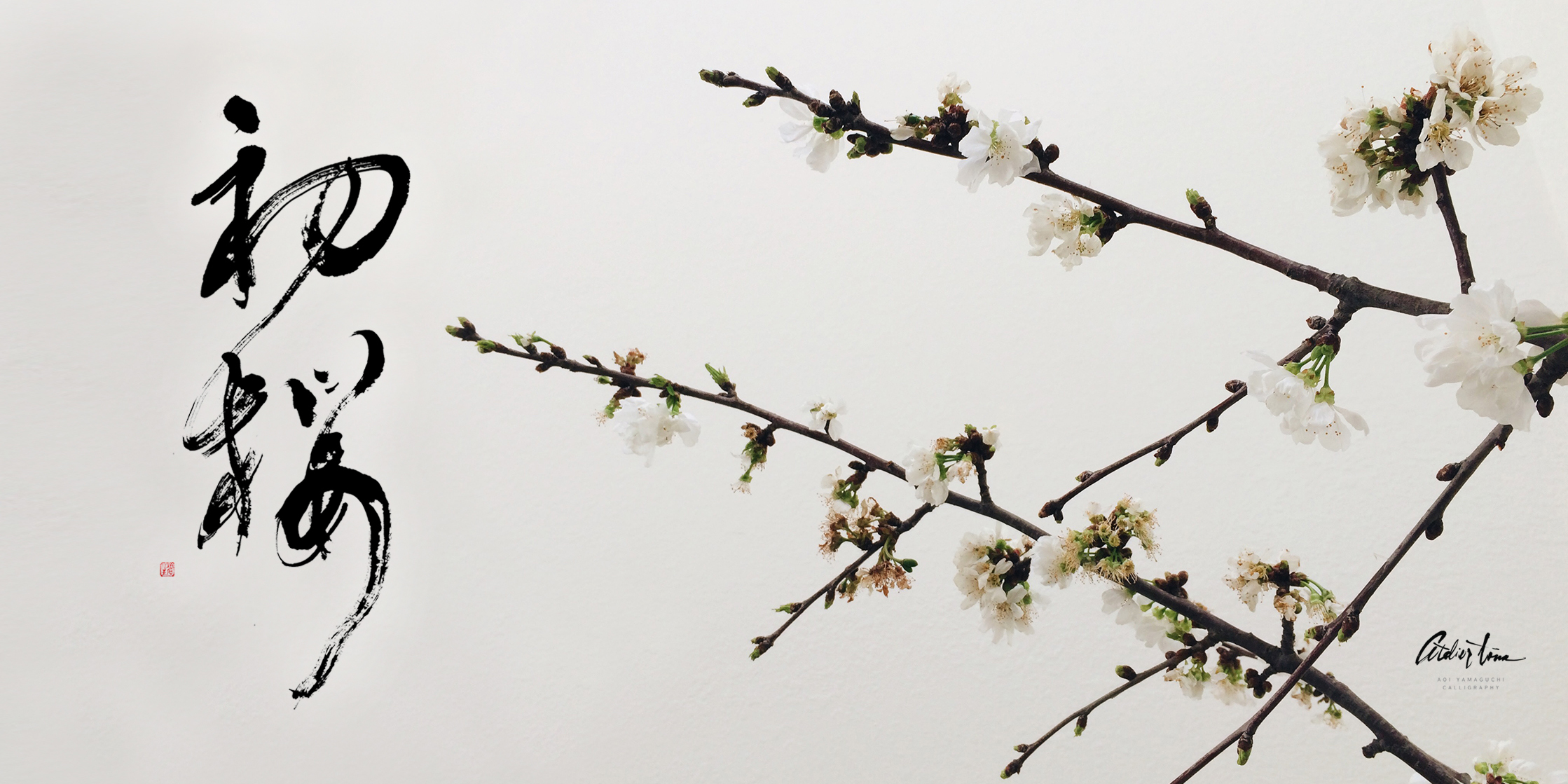
The quote for today points to a skill which we maybe know ... calligraphy. In ancient Japan calligraphy was a high art and all the classical haiku poets used it. The leading character of "The Witch ..." learns this art in the middle of the desert.

Japanese calligraphy by Aoi Yamaguchi (great website)
 Of course the quote to use I will not give you as a calligraphy. Here is the quote for your inspiration:

[...] "Naturally, if she respected the brush that she used, she would realize that in order to learn to write she must cultivate serenity and elegance. And serenity comes from the heart." [...] (Source: The Witch of Portobello - Paulo Coelho)

And here is my response, I wasn't inspired, so I dived into my archives:

migrating
back in time again I write
with a quill pen
screeching paper
the poet writes his poems

© Chèvrefeuille

Have a great week ...

This episode is open for your submissions tonight at 7:00 PM (CET) and will remain open until December 17th at noon (CET). I will try to publish our new episode later on.


Thursday, October 27, 2016

Carpe Diem #1080 fountain pen


Dear Haijin, visitors and travelers,

This wonderful 4th anniversary month is running towards its end. We seen wonderful photos by Paul Militaru and have read wonderful haiku and tanka by Kala Ramesh, Jane Reichhold and Herman van Rompuy. They all inspired you and I am so happy that we could celebrate our 4th anniversary. I am looking forward to another year of Carpe Diem Haiku Kai.
This month all our regular prompts were tools for art and creativity and the last two regulars are both for writing and that's what we all do here. We all write, not only letters or novels, but also haiku and tanka. Haiku and tanka are creative ways of writing and today's prompt fits that like a glove. Today I love to challenge you with fountain pen. "Fountain pen" is the English translation of the Dutch word "vulpen", a kind of pen in which you have to use ink refills, you have to fill the pen with them. As I read the translation of "vulpen" "fountain pen" I was amazed and thought "Why is it called a fountain pen". I couldn't retrieve the origin of this word, but I like its name. It sounds awesome and I immediately thought "this is a pen from which the inspiration flows like a fountain". I hope this prompt, fountain pen, will let your inspiration flow.

Fountain Pen
Several of you have already written a haiku inspired on this prompt, but one had my attention immediately as I read it. That one was by Ese (a.k.a. Noor on Twitter), she wrote the following haiku inspired on " fountain pen":

was it fountain pen splashing the black stains on butterfly' s wings

© Ese (a.k.a. Noor)

Of course this means not that you don't have to visit her, its just to give you an idea what to do with this regular prompt "fountain pen". I had some difficulties with this prompt, but difficulties are to be overcome ... isn't that also what life asks from us? So here is my attempt to create a haiku with this prompt:

hand moves slowly a fountain of letters appears on a blank leave

© Chèvrefeuille


Japanese Brush fountain pen

Another one, a tanka:

meditating monk 
releases his realization 
characters appear  
one by one they form 
a koan of love

© Chèvrefeuille

With this tanka I conclude this episode. This episode is NOW OPEN for your submissions and will remain open until November 1st at noon (CET). I will try to post our next episode, the last Imagination With Paul Militaru episode, later on.


Monday, October 3, 2016

Carpe Diem #1071 brush (zen-calligraphy)


Dear Haijin, visitors and travelers,

Today another nice regular prompt in which I love to share with you the tool that is mostly used by the so-called Zen Calligrapher, the brush. The art of calligraphy is an ancient way of meditation and contemplation.
In ancient Japan the technique, or art, of zen calligraphy has been brought to a level of perfection which we cannot find on other places on our globe. To inspire you I have chosen to share a You Tube video in which a few examples of writing with a brush are shown.


Japanese calligraphy was influenced by, and influenced, Zen thought. For any particular piece of paper, the calligrapher has but one chance to create with the brush. The brush strokes cannot be corrected, and even a lack of confidence shows up to the work. The calligrapher must concentrate and be fluid in execution. The brush writes a statement about the calligrapher at a moment in time (see: Hitsuzendo, the Zen way of the brush). Through Zen, Japanese calligraphy absorbed a distinct Japanese aesthetic often symbolized by the "enso" or circle of enlightenment.
Zen calligraphy is practiced by Buddhist monks and most shodou or shodo practitioners. To write Zen calligraphy with mastery, one must clear one's mind an let the letters flow out of themselves, not practice and make a tremendous effort. This state of mind was called the "mushin" ("no mind state")
by the Japanese philosopher Nishida Kitaro. It is based on the principle of Zen Buddhism, which stresses a connection to the spiritual rather than the physical.

Before Japanese tea cermonies (which are connected to Zen Buddhism), one is to look at a work of "shodo (shodou) to clear one's mind. This is considered an essential step in the preparation for a tea cermony. (source: wikipedia)


Tokonoma in which we can see a calligraphy, this is the "shodo" to clear the mind before attending a tea ceremony 
a charcoal drawing
in the tokonoma

koan of life

© Chèvrefeuille

young monk
brush in hand one with nature
writes Mu
*


© Chèvrefeuille

One of the most popular Ichijikan (One -word barriers) in Zen calligraphy is that of Mu(無), which can be translated as nothing or nothingness. This Mu probably is the best known Koan in the Zen Buddhist tradition, and to penetrate on its true meaning, the endeavor in the practice of Zazen or Zen sitting is essential. By the same means, Zen calligraphy must be understood as a realization of this practice, since the Zen calligrapher manifests in his art not just mere technical ability, but his No Mind ( Mushin). So by the gate of Zazen practice, the calligrapher can enter into the practice of Zensho (Zen calligraphy).

This episode is NOW OPEN for your submissions and will remain open until October 8th at noon  (CET). I will try to publish our next episode, our first Universal Jane, later on. For now ... have fun!