Showing posts with label Legends Myth Saga. Show all posts

Thursday, March 7, 2019

Carpe Diem #1622 Kumano Kodo ... CD Imagination ... Kumano Kodo Waterfall


Dear Haijin, visitors and travelers,

My apologies for being late with publishing our new episode. Today I have chosen the "easy way", because of lack of time, I am on the nightshift, so I have chosen to challenge you with only an image taken somewhere along the Kumano Kodo Pilgrimage route.

I have a wonderful image for your inspiration. The image below shows you the Daimonzaka, a 600 meter section of the Kumano Kode leading to Naichi Taisha, the waterfall.


Daimonzaka ... leading to the waterfall
the sound of water
pointing the way to the Pure Land
meeting Basho


© Chèvrefeuille

You will understand why I created the above haiku. It links to Basho's famous haiku "old pond". But why ... meeting Basho? Well legend tells us that a lot of monks (not Basho by the way) jumped into the waterfall at Nachi (part of Kumano Kodo) to enter paradise ... the Pure Land.

This episode is NOW OPEN for your submissions and will remain open until March 14th at noon (CET). I will try to publish our new weekend meditation later on. For now ... be inspired.


Sunday, October 26, 2014

Carpe Diem #591, Helpful (May 2014) reprise


Dear Haijin, visitors and travelers,

Let us go on with our journey along memory-lane and see were we are now. Today we have arrived at May 2014 in which we had all prompts about Myth, Legend and Saga. This was the last prompt of May and it was a Folktale which I wrote myself about a Mongolian Shaman. It was really fun to write that folktale and I think you all enjoyed it. You can find that episode HERE.

Our Logo of May 2014, Atlantis

The above folktale was about Maidar, an apprentice of a Mongolian Shaman and I love to share the last paragraph of that folktale here again with the haiku I wrote back in May 2014.

[...] Maidar became a great shaman, even better than his beloved master Batbayar, and returned every year to the mountains to the place were he had lost his master to talk with the Eagle. [...]

whispering leaves
telling all wisdom of the steppes -
cry of an eagle

© Chèvrefeuille


I hope you liked this reprise episode and of course I hope you did read the story again and that it inspired you to write an all new haiku.

This episode will be open for your submissions tonight at 7.00 PM (CET) and will remain open until October 29th at noon (CET). I will publish our next episode, Nights of Summer (June 2014), later on. For now have fun!
!! Our new CD "Time Glass" episode this Monday is almost there !!


Sunday, June 8, 2014

Carpe Diem Special #96, BrunuhVille's ²nd "Fable"


Dear Haijin, visitors and travelers,

As you maybe can remember we had last month (May) all prompts based on Legend, Myth, Saga and Folktales and I enjoyed it a lot. I even had a sad feeling that that month was over. Therefore I decided to (at least one) do a composition by BrunuhVille which in a way connects us back to May. I found a nice composition titled "Fable" and I love to share that one here for your inspiration.


I think it's a wonderful piece of inspirational music and I hope you all like it as much as I do. To make this episode a little bit more interesting I have also found a Celtic fable to share here with you all.

##################################################
##################################################

The Legend of Lough Gur

LARRY COTTER had a farm on one side of Lough Gur in the county of Limerick and was thriving in it, for he was an industrious proper sort of man, who would have lived quietly and soberly to the end of his days, but for the misfortune that came on him, and you shall hear how that was. He had as nice a bit of meadow-land, down by the water-side, as ever a man would wish for; but its growth was spoiled entirely on him, and no one could tell how.
One year after the other it was all ruined just the same way: the bounds were well made up, and not a stone of them was disturbed; neither could his neighbours" cattle have been guilty of the trespass, for they were spancelled [= fettered]; but however it was done the grass of the meadow was destroyed, which was a great loss to Larry.
"What in the wide world will I do?" said Larry Cotter to his neighbour, Tom Welch, who was a very decent sort of man himself: "that bit of meadow-land, which I am paying the great rent for, is doing nothing at all to make it for me; and the times are bitter bad, without the help of that to make them worse."
"It is true for you, Larry," replied Welch : "the times are bitter bad - no doubt of that; but may be if you were to watch by night, you might make out all about it: sure there's Mick and Terry, my two boys, will watch with you; for it is a thousand pities any honest man like you should be ruined in such a scheming way".
 
Credits: Lough Gur, a lake in County Limerick Ireland

Accordingly, the following night, Larry Cotter, with Welch's two sons, took their station in a corner of the meadow. It was just at the full of the moon, which was shining beautifully down on the lake, that was as calm all over as the sky itself; not a cloud was there to be seen anywhere, nor a sound to be heard, but the cry of the corn creaks answering one another across the water.
"Boys! boys!" said Larry, "look there I look there! but for your lives don't make a bit of noise, nor stir a step till I say the word."
They looked, and saw a great fat cow, followed by seven milk-white heifers, moving on the smooth surface of the lake towards the meadow.
"it is not Tim Dwyer the piper's cow, anyway, that danced all the flesh off her bones," whispered Mick to his brother.
"Now, boys " said Larry Cotter, when he saw the fine cow and her seven white heifers fairly in the meadow, "get between them and the lake if you can, and, no matter who they belong to, we will just: put them into" the pound."
But the cow must have overheard Larry speaking, for down she went in a great hurry to the shore of the lake, and into it with her, before all their eyes: away made the seven heifers after her, but the boys got down to the hank before them, and work enough they had to drive them up from the lake to Larry Cotter.
 

Credits: Heifers (an Irish kind of catlle


Larry drove the seven heifers, and. beautiful beasts they were, to the pound; but after he had them there for three days, and could hear of no owner, he took them out, and put them up in a field of his own. There he kept them, and they were thriving mighty well with him, till one night the gate of the field was left open, and in the morning the seven heifers were gone. Larry could not get any account of them after; and, beyond all doubt, it was back into the lake they went. Wherever they came from, or to whatever world they belonged, Larry Cotter never had a crop of grass off the meadow through their means. So he took to drink, fairly out of the grief; and it was the drink that killed him, they say.

######################################################
######################################################

What a nice fable don't you think so too? And I think it's a nice fable to go along with the music of BrunuhVille .... and ofcourse I hope it will inspire you to write haiku.

As I listened to this music ... I saw images of combat in my mind, combat in the Highlands or in the green meadows of Ireland ... warriors fighting for honor to be granted awards for their combat by the king. The fable brought me another problem ... how can I bring both inspiration-sources into one haiku ... so I had to think it over and over again. Finally I think that I have composed a wonderful haiku inspired on both sources.

Here it is:

warriors of the king
fighting for glory - in the meadows
the lowing of cows


© Chèvrefeuille
Credits: in the meadows (Drumbeg)
I think this is a nice one ... and maybe it is one of my best ... but that's not up to me to say ...

This Special CD episode will be open for your submissions tonight at 7.00 PM (CET) and will remain open until June 11th at noon (CET). I will try to post our next episode, breeze, later on today. For now have fun, be inspired and share your haiku with us all here at Carpe Diem Haiku Kai.

Friday, May 30, 2014

Carpe Diem #481, Helpful (Mongolian Mythology ... in a way)


Dear Haijin, visitors and travelers,

This is our last day of our month in which we discovered world wide legends, myths, saga and folktales. And this is our last Mongolian Mythology post in which we will discover how helpful we can be  to others. In a way this is a new Mongolian Myth ... I have written it myself inspired on a real Mythology story of Mongolia.

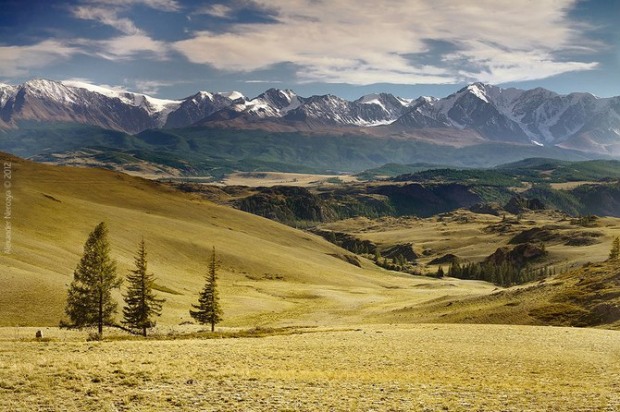
Credits: Altai Mountains
The Cry of an Eagle

A long time ago, in a faraway place somewhere on the steppes, there lived a Mongolian shaman named Batbayar. He was known through out the steppes and many people came to him for counseling and healing. His yurt was made of deerskin and on the floor there were several colorful tapestries.  Underneath those tapestries he had a secret room hidden where he performed magical and alchemical rituals. No one knew about that secret room, because in there was his true wisdom hidden.
One day a young man, Maidar, come to Batbayar with a very heavy burden or problem weighing on his shoulders. As he came to Batbayar's yurt he bowed deep. "Batbayar?" he said. Batbayar looked at him with his deep blue eyes. "What's your name?" he asked with a voice full of music and love. He invited Maidar to his yurt. They sat down on the colorful cushions and looked at eachother a few minutes.
"My name is Maidar", Maidar said after a while, breaking the holy silence in the yurt. "I have a problem and I hope you can help me wise Batbayar". Batbayar had already seen his problem which laid as a burden on the young man's shoulders. He had noticed his sad aura, but didn't mention that. he waited until Maidar would have told him his problem. "Tell me your problem Maidar", Batbayar said.

Credits: Altai Yurt
Maidar looked at him and saw those loving and caring eyes. "If there is someone who can solve my problem than this wise man can do that", he thought.
"One day I was riding through the steppes on my horse, as I do often, because I love the steppes. I came along a young woman, somewhere on the steppes around my village. She sat on a rock and was crying, her face hidden behind her hands. I knelt before her and asked her why she was so sad and crying. She told me that she had met a nice guy and they had fallen in love. Her boyfriend did everything for her and treated her like a queen, but some day he had bought a very nice necklace for her. She looked at me, still crying, but she had no more tears to cry. She only had that sad look in her face. "I lost my necklace", she said. "My boyfriend became very angry and left me as I had told him that I lost the necklace he had given me". I asked her if she could remember were she could have lost it. She nodded. "Somewhere around this rock I am sitting on", she answered. I looked at her redstained face and said: "I will find it for you and than we go to your boyfriend and tell him". "Will you really do that for me?" She asked me with a bright smile on her face.

Her Necklace

I started searching the surroundings of the rock and after three days I finally found her necklace. It was broken near to the tiny lock of it and gave it back to her. She was overwhelmed with joy and kissed me. Right on that moment her boyfriend came to her on his horse and saw her kissing me. He saw the necklace and became very angry. He jumped of his horse and started to fight with me. I lost, because he was a muscled man, very strong and fast ... a real warrior with an athletic body. After our fight he yelled at me. "You thief. I will haunt you forever and I will kill you one day!" This is almost a year ago and he is still haunting me. Maidar looked at Batbayar with tears in his eyes. "And I only helped her to find her necklace back". Batbayar had listened and was impressed that this young man, who looked so strong was crying.
"As I can see, you have still problems with that and you only did what was good, you helped someone in need". Maidar nodded and would say something, but Batbayar shook his head. "No need to tell me more Maidar. I know how I can help you and I know your problem". Maidar looked at him. He had still tears in his eyes. "You know?" he asked. Batbayar nodded. "You are afraid to be helpful again and that makes you sad, because that's why you are here ... to help others". Maidar smiled. "Yes you are right. After that fight I only did things for myself, but in a way it felt empty, it felt like I was incomplete". "You can help me if you want to Maidar. I am getting old and soon I will go to my ancestors. I have no relatives left. So will you help me? In change for your help I will teach you all my secrets, all my wisdom I will give to you. I will teach you Tengriism and shamanism".

Credits: Altai Eagle-hunter

Several years later somewhere high in the Altai Mountains an old shaman and his apprentice sat down on a rock. They sat there for a few days looking over the steppes and the mountains. "Maidar". The apprentice looked at his old master. "It's time. Can you hear the cry of the Eagle?" Maidar nodded. "Yes my master I can hear the cry of the Eagle". As he looked at his master he saw that his spirit was already gone, had left his body. Than he heard and saw the Eagle. In his mind he heard the last words of his master, Batbayar. "You have become a great shaman Maidar and I know that you have finally regained your helpful strength and a lot more ... use it well ..."
Maidar stayed for a few days in the mountains and than returned to the yurt of Batbayar, which was now his yurt.

Credits: Mongolian Shaman
Maidar became a great shaman, even better than his beloved master Batbayar, and returned every year to the mountains to the place were he had lost his master to talk with the Eagle.

whispering leaves
telling all wisdom of the steppes -
cry of an eagle

(c) Chèvrefeuille

I hope you did like this "new Mongolian myth" and I hope it will inspire you to write new haiku and share them with us all here at our Haiku Kai.

This episode will be open for your submissions tonight at 7.00 PM (CET) and will remain open until June 2nd at noon (CET). I hope to publish our first episode of June,  after loving, later on today. For now ... have fun!
PS.: My dad is home again ... yesterday he was released from the hospital, now it's time to heal for him. We don't know yet if the tumor was good or bad ... so we have to wait for that result.

Thursday, May 29, 2014

Carpe Diem #480, Dragon (Mongolian Mythology)


Dear Haijin, visitors and travelers,

First I have to tell you something. My dad is coming home from hospital today. He went in surgery last monday to take away a tumor on his back. After a few days hospital he may return home today. We don't know yet if the tumor is good or bad, but my dad is feeling ok again and will recover.

Than second, I have published a new episode of "Suikazura No Retsu", which you can find on the left side of our Haiku Kai. And I have launched a new weblog in which I will gather all the episodes of "Suikazura No Retsu".

Today our prompt is dragon and it's referring to a Mongolian Folktale titled "Hunter Boy" which I will share next. It's a bit long tale, but I hope you all do like it and that it will inspire you to write haiku, senryu, tanka, kyoka or haibun.

Hunter-Boy

They say that, in this remote beauty, there is a game wealthy Hunter-Boy. His winter camp is in the Altai Mountains and his summer camp in the back tablelands. When he rides his chestnut colored pony eastward he hunts buck and doe, after heading westward there is always an antelope tied to his saddle, if traveling south he tracks deer, if galloping to the north he kills fox and wolf. After hunting he always comes back with something strapped to his saddle. He is never selfish with his catch, whenever around his neighbors he shares the meat. Hunter-Boy is a grown man, able to reach the saddle ties and put his foot into the stirrups. Therefore, over these years, the neighboring families there have never gone without.

Credits: Altai Mountains

One day, when Hunter-Boy was on his way to go hunting, a hawk came flying over and swooped down to catch a thin white snake curled up in the tall grass near the river shore. As the hawk flew back by, the small snake called out, "Hunter-Boy, help! Help!" Hunter-Boy feeling sorry for the snake thought to himself, "Poor thing, the little creature has run into trouble and is pleading me, how can I refuse to help!" He pulled out an arrow and shot the hawk and the thin white snake fell to the ground. "Hunter-Boy, your grace must be repaid!" said the little snake as it disappeared into the tall grass.
That evening, after strapping a roebuck to his saddle, Hunter-Boy headed back along the river shore. On the way he happened upon a multitude of snakes lying criss-cross along the path. "Are you having a gathering today?" asked Hunter-Boy out of curiosity. Then just ahead the thin white snake came out, saying to everyone, "This is Hunter-Boy, the one who graciously saved my life." All of the snakes circled around Hunter-Boy in a loud commotion, "Our master has invited you to visit him." Then the small white snake said, "I am the Dragon Master’s youngest daughter, yesterday you saved my life and my father wishes to show his appreciation by inviting you to visit his palace." "How can I ever get to the Dragon Master’s palace?” asked Hunter-Boy. "Close your eyes and I will lead you there." replied the thin white snake.

Credits: Altai Mountains (2)

While walking along the thin white snake whispered into Hunter-Boy’s ear, "My father is going to offer you precious objects of silver and gold, but don’t accept them. Instead, ask for the small round precious stone which my father always keeps in his mouth, once you place it in your mouth you will be able to understand the languages of all four-legged and winged creatures. However, I will warn you about one thing. After you have put the precious stone into your mouth, can understand the language of the flying creatures and know what they are saying, what ever you do, you cannot tell what you have heard to any human being. If you do, your body will immediately turn to stone. Please, don’t ever forget this." Hunter-Boy, understanding what she had said, nodded his head. After walking a ways further he opened his eyes only to find that they had already arrived at the Dragon Master’s palace.
The Dragon Master, wanting to express great thanks to Hunter-Boy, opened the doors to his one-hundred and eight treasure houses saying, "Hunter-Boy, you may choose anything from among these treasures of mine." Hunter-Boy walked up to the door of the treasure house to peer inside. Gold and silver glittered in his eyes and the pearls were piled high like mountains. Treasures to revive the dead, to bring sight to the blind, to bring sound to deaf ears and speech to the speechless. There was enough for a lifetime of grains, for garments which the sun and wind could not penetrate; the universe would never lack from these treasures.
Hunter-Boy bowed to the Dragon Master and said, "Dragon Master, I live as a hunter, a guardian of the remote spaces, I have need of the small round stone which you keep in your mouth. Please bestow that upon me."

Credits: Mongolian Dragonmaster

The Dragon Master, looked to the right and laughed, looked to the left and cried, took the precious stone from his mouth and gave it to Hunter-Boy. From that time on Hunter-Boy, able to understand the languages of the four-legged and winged creatures, became an even more successful hunter.
One day, as Hunter-Boy went up the mountain to go hunting, he overheard the mountain birds in discussion, "Tomorrow, they say that Sir Tiger, our mountain creature king, will be celebrating his birthday. They also say that he is going to eat the flesh of those two children who always come up the mountain to fetch firewood...the two of them don’t know that they will die tomorrow."
Hunter-Boy was very surprised to hear this and wanted to tell those two children, however, he remembered that if he were to tell them his own body would turn to stone. But then, if he didn’t tell them, when the two poor children go to gather firewood and are eaten by the tiger...the fear tore at him all night. Suddenly, at the break of dawn, an idea came to him. He took his bow and arrows and headed up the mountain, he arrived at a cliff and sat down to wait. Shortly after, the two children came up the mountain gathering firewood and were paying no attention to what was going on around them. All of the sudden the fierce tiger jumped out roaring, “MEAT! MEAT!". They say just as the tiger hurled himself toward the two children, Hunter-Boy, with a single arrow, shot the tiger through the neck killing him instantly. The two children bowed down in front of Hunter-Boy, their lifesaver, thanking him. All of the mountain animals who, time and time again, had been humiliated and taunted by the tiger also came to show their appreciation at his deed.
As the days and nights passed, Hunter-Boy became more and more skilled at hunting on horseback, and at the same time continued to answer to the needs of the neighboring families. One summer day, it is said, Hunter-Boy went to a far off mountain behind his home to go hunting. The Emperor and Empress of the bird kingdom were leading their subjects on a long journey to a faraway place. All of the four-legged animals were growling and quarreling, they say even the bunnies and gophers were grouping together fleeing in excitement. At this, Hunter-Boy, in a state of wonderment, got down from his horse and sat in the shadow of the trees to listen to the birds in conversation.
"Tomorrow this mountain is going to burst and create a large flood. All creatures must take their belongings, not leaving anything behind in the village, and head out." they exclaimed.
At that instant, Hunter-Boy, jumped up and took off toward home. As soon as he reached the village he began, "Quickly we all have to move away from here! Tomorrow the mountain behind us is going to burst and there is going to be a dangerous flood..." As he spoke, it is said, not even one person believed his words. He moved away and thought to himself, "I am an orphan and these people have cared for me since my birth they have taught me the difference between right and wrong. How can I just leave them with this threat of death?" He spoke up "Hurry, get away from here! Hurry! There is really a flood coming!" Hearing this the people badgered him asking over and over. "How do you know about this flood? Who told you?" They say not even one person was prepared to flee.

Credits: Mongolian Vulcan

At this, very worried and excited, he thought to himself, "How can I be afraid of turning to stone and let all of these people and animals die". Then Hunter-Boy began by telling them about saving the thin white snake, and the Dragon Master summoning him to visit his palace to show his gratitude. About the precious stone which the Dragon Master kept in his mouth and how he begged the Dragon Master to give him the stone. How, once he placed the stone in his own mouth, he could understand the languages of all creatures, therefore killed the tiger and saved the two children gathering firewood. He explained how today he overheard the mountain animals talking. He told them that the Dragon Master’s youngest daughter strictly told him not to tell any of this to any other humans otherwise his body would change into stone. As he was speaking his body slowly began to harden
and just as he stood he turned to stone. Everyone around blinked as they watched in disbelief, then their eyes grew larger and larger. Only after witnessing this did the people believe what Hunter-Boy had said. All of the sudden, as everyone began frantically running to and for to get away, there was a loud noise, "Ka boom". The mountain behind them had really burst and they could hear the sound of the rushing water crashing down toward them.
The people gazed at the stone figure of Hunter-Boy from afar as it stood firm in it’s place, not even the water caused it to budge. At a safe distance, everyone sobbed and cried saying, "Hunter-Boy turned to stone for us!". From this time on the people who were saved from the flood continue to pass the memory of Hunter-Boy on from generation to generation.

Hunter's Boy Spring, a blue rock formation in the Altai Mountains, a natural sacred site

There in the Altai Mountains, standing upright next to the source of a natural spring, is a blue rock formation, and they call this spring “Hunter-Boy’s Spring”.

What a story don't you think so too? Of course it's ''to long'' for a blog post, but I just had to share it with you all. (Credits story: Culturev.com)

This episode is open for your submissions tonight at 7.00 PM (CET) and will remain open until June 1st at noon (CET). I will try to post our next episode, helpfull, later on today. For now have fun!


Wednesday, May 28, 2014

Carpe Diem #479, Greed (Mongolian Mythology)


Dear Haijin, visitors and travelers,

Today we start at our last three days of this month of Legends, Myths, Saga and Folktales and we end our journey in the Far Eastern region of Mongolia. Earlier this year we travelled straight through the Soviet Union on the Trans Siberian Railway (TSR) and we had also some Mongolian influences during that journey with the TSR.
In the upcoming folktale it's all about Greed and that is our prompt for today. This prompt refers to the story of The Greedy Dog, a Mongolian Tale. Here it is, thanks to culturev.com :

Credits: Altai Mountains (Mongolia)

"The Greedy Dog"


Once upon a time, a long long time ago, there was a greedy dog living in the Altai Mountains. One day while the greedy dog was walking along he found a nice bone on the ground near a bridge. He stopped to pick up the bone and looked across the river to the other side. He thought it looked nicer on the other side of the river and decided to go on across the bridge. As the greedy dog was walking across the bridge with the bone in his mouth he looked down into the water. There in the water he saw his own reflection and thought it was another dog with a bone. The greedy dog thought to himself “I am going to take that bone away from the other dog as it is bigger than the bone I have”. So the greedy dog jumped off the bridge into the water, he splashed around for a while but never found the other dog and lost his own bone at the same time.
Credits: Greedy Dog
What a nice little story ... as I was doing my research for this episode I came along several other "Greedy Dog"-stories ... it's not a very special story for Mongolia, but I ran into this story as I was preparing our prompt-list for May. I really thought that it was a specific folktale from Mongolia ...
I hope you did like this story an that it inspired you to write new haiku, senryu, tanka, kyoka or haibun.
My inspired haiku:
broken reflection
throwing a pebble into the pond -
scattered full moon
(c) Chèvrefeuille

This episode is open for your submissions tonight at 7.00 PM (CET) and will remain open until May 31st at noon (CET). I will try to post our new episode later on today. That will be Dragon. For now ... have fun!


Tuesday, May 27, 2014

Carpe Diem #478, Rascal (Mayan Mythology)


Dear Haijin, visitors and travelers,

What a joy and a lucky day (I hope), I have found time to prepare our new episode, notwithstanding my busy day. I am in the nightshift the two upcoming nights and I hadn't thought I would have enough time to prepare this episode. My dad has been in surgery today (May 26th) to remove a tumor on his back. All went ok, but we don't know right now if it was a good or bad tumor ... so the coming days will be tensive for my mom and me ... well ... I am a positive guy and I think it's all ok.

Today we going on with the Mayan Mythology and today our prompt is rascal and it refers to the story of "The Disobedient Son", a Mayan folktale.

The Disobedient Son

There was once a boy who was rude and wouldn't obey his mother. He would go out for a walk, without having eaten. He wouldn't come back until late, about ten or eleven o'clock at night. At ten o'clock his mother was still waiting up and worrying about him.
"What have you been doing, son?" his mother asked him. "I'm going to bed because it's late and I have just been waiting for you. You don't pay any attention to anything I tell you. I'm going to send you to your godfather. You don't pay any attention to what I tell you. The boy's mother went to see her Godfather the priest.
"Godfather, what can be done about your godson? He is quite a scoundrel and doesn't obey me. You're a priest, and you can counsel and discipline this godson of yours; I can't do anything with him. This godson of yours is a rascal, Godfather. Let him come to stay here with you to see if he will learn to behave."
"All right, Godmother, have him come here. Why shouldn't he do what I tell him? I'm indeed a priest. I'll teach my godson to work. Don't worry, Godmother, my godson is going to obey me." The woman said to her son:
"Go with your godfather, my son. He'll teach you. Since you won't obey me, go and work there."
"All right, mother, I'll go to my godfather's. Since I'm not of any use to you, I'll go and work with my godfather."
"I have come, godfather. What can I do for you? 'Go stay with your godfather', my mother said. That's why I came here to you. My mother is the one who sent me. 'Go to your godfather, you're no longer of any use to me,' my mother said."
"All right, godson," the priest said to him, "You're going to work for me."
"All right, godfather, I'm going to work. I'm going to do whatever you tell me to do; everything you tell me, I will do, godfather."
"All right. Now I'm going to tell you something," said the priest. "Godson, tomorrow morning early you're going to sweep; at three o'clock in the morning. I'm not going to awaken you, I'm just telling you now."
"All right," said the boy. At dawn he went and swept. When he was finished sweeping he went to tell his godfather the priest.
"Godfather, I've finished sweeping all of the church. So I've come to tell you."
"All right, godson, I'm glad you've finished. Now rest." Another day passed and the godfather gave him his next task:
"Now godson, I'm going to tell you what you have to do tomorrow morning. You're going to ring the bell at six o'clock. I want you to ring three times and when you're finished, come and tell me and I'll go to say Mass."
"All right," said the boy. When the next day was over the boy went to ring the bell. He went to tell his godfather:
"Godfather, I rang the bell three times. It's time to get up and go and say Mass," he told his godfather.
"All right," said the godfather. Another day was over and the priest spoke once more to the godson:
"Now I'm going to tell you once more what you have to do tomorrow."
"All right," said the boy.
"Ring the bell again early at three o'clock in the morning."
"All right," said the boy. The boy got up and remembered to ring the bell. He went to ring the bell in the belfry, but the priest, his godfather, had given the boy a test. He had left a skeleton in the belfry. The boy got there at three o'clock in the morning and found a skeleton standing in his way.
He said to the skeleton: "Get out of my way! I'm coming to ring the bell. Don't get in my way. Get out of my way, for my godfather sent me to ring the bell. Get out of my way or I'll kill you!" He didn't get out of the way, he didn't move and he didn't answer. "Answer, or do you want me to kill you?" the boy asked the skeleton. "If for the third time you don't answer me, I'm going to smash you to pieces. That's what you want. That's why you got in my way, so now you're going to die. I'm going to throw you all the way down from here." And he pushed the skeleton out of the belfry. When he had smashed the skeleton he rang the bell and came down from the belfry. He went to his godfather's bedroom and knocked on the door to awaken him. The godfather woke up and answered the door:
"What is it?" the priest asked the boy.
"Get up, I've already rung the bell," the boy told the priest. The priest heard this and was surprised.
"Oh, did you ring the bell?" asked the priest.
"Yes, I rang the bell, godfather," the boy said.
"Didn't you see anything in the belfry?" asked the priest.
"Yes, godfather," the boy answered, "I saw something."
"What did you see?" the priest asked the boy.
"I saw someone who was standing in my way who wouldn't let me get by to ring the bell," the boy answered.
"Oh, so what did you do?" asked the priest. "Weren't you afraid of him?”
"No, godfather."
"So what did you do?"
"I pushed him and he fell and broke into pieces on the floor."

Well I hope you did like this Mayan folktale and I hope it will inspire you to write haiku.

This episode is NOW OPEN for your submissions and will remain open until May 29th at noon. Later on I will post our new episode. That will be our last CD-Special with a haiku by Jack Kerouac, our featured haiku-poet of May. For now ... have fun, be inspired and share your haiku with us all.


Sunday, May 25, 2014

Carpe Diem #477, Hunting (Mayan Mythology)


Dear Haijin, visitors and travelers,

We are going further with our journey through Mayan mythology. Today our prompt is hunting and it refers to the Mayan folktale 'The Jaguar and the little Skunk. It's a nice story with a great lesson hidden in it.

“The Jaguar and the Little Skunk” from the Mayan tribe shows a valuable life lesson that is known and understood throughout
the culture: one should never go out by their self to do a difficult task that one doesn’t have the right ability or experience because it may end up hurting loved ones around them.
People normally go about their daily lives not thinking about what might happen or who they might hurt due to their actions.
Whether we go out thinking we can do something we cant and end up hurting ourselves and upsetting the people we love or by taking to much of a medicine thinking that it will help but ends up as
not waking up the next day only leaving someone we care about finding the mistake we made. One should never go out by their self to do a difficult task that one doesn’t have the right ability or experience because it may end up hurting loved ones around them".

That's the lesson we will learn out of this folktale ... and here is the story itself:

Credits: Jaguar and the little Skunk

The Jaguar and the Little Skunk

Once there was a gentleman jaguar and a lady skunk. Mrs. Skunk had a son, who was baptized by Mr. Jaguar, so Mrs. Skunk became his comadre (godmother). And as Mr. Jaguar had baptized the little skunk, he was Mrs. Skunk's compadre (godfather).

Mr. Jaguar decided to go looking for food and came to
Mrs. Skunk's house.
"Well, compadre, what are you looking for? What have you come here for?" the skunk asked the jaguar.
"Comadre, what I have come to do is to look for some food," said Mr. Jaguar.
"Oh," said Mrs. Skunk.
"I want my godson to come with me so that he can learn to hunt," said Mr. Jaguar.
"I don't think your godson ought to go; he's still very small and something could happen to him. He better not go, compadre," said Mrs. Skunk. But the little skunk protested:
"No, mother, I had better go. What my godfather says is true. I need to get some practice, if I'm going to learn to hunt," said the little skunk.
"But if you go, you'll be so far away," said Mrs. Skunk.
"I'm going, I'm going. Come on, let's go." So they set
off on a long walk.
"We're going to where there's a river. That's where we're going," Mr. Jaguar explained to the little skunk, his godson.
"When are we going to get there?" asked the little skunk.
"We're getting close. Follow me so you won't get lost," said Mr. Jaguar.
"All right," answered the little skunk. They finally came to the river.
"This is where we're going to eat," said Mr. Jaguar to the little skunk.
"All right," said the little skunk.
"Come on over here. I'm going to sharpen my knife," said Mr. Jaguar.
"All right," said the little skunk, looking at his godfather.
Mr. Jaguar sharpened his claws, which he called his "knife."
"I sharpened my knife. Now you're going to be on guard, because I am going to sleep. When you see them come, wake me up," said Mr. Jaguar.
"All right," said the little skunk, "all right, godfather."
(Skunk wakes Mr. Jaguar when prey is sighted)

Credits: The Jaguar and the little Skunk

Then Mr. Jaguar told him: "Don't shout. Just scratch my belly when they come. Scratch my belly, so I won't alarm them. But don't wake me up if just any little old animals without antlers come along, only when the one with big antlers gets here. That's when you'll wake me up."
"All right," said the little skunk. Then the one with the big antlers came, and the skunk awakened Mr. Jaguar. He scratched his belly, and pointed out the deer to Mr. Jaguar, who attacked the animal with big antlers. He went after him and seized him.
"All right, my godson, let's eat. We're going to eat meat," said the jaguar.
"All right," said the little skunk. And so they ate and ate.
"Now we're going to take whatever leftovers there are to your mother," said the jaguar.
"Since we are full, we can take something to your mother. Your mother will have meat to eat, just as we did. We will take some to your mother," said the jaguar.
When they came back to the mother's house, he told the
lady: "Look at the food here. Look, we've brought you some
food, the food that we hunted. Eat your fill of the meat,
comadre," the jaguar said to Mrs. Skunk.
"All right," said the skunk, and ate the meat.
"I'm full," she said.
"It's good that you're satisfied. I've seen that you are, so I'll be leaving now," said Mr. Jaguar to Mrs. Skunk. And so he left.
After the jaguar left, the little skunk stayed with his mother.
When they ran out of meat, Mrs. Skunk said to her son:
Dear, our meat is all gone."
"Yes, the meat is all gone. I better go and get us some
more food," said the little skunk.
"How can you, son? Do you think you're big enough? You're very small. Don't you think you'll be killed?" asked Mrs. Skunk.
"No, mother, I already know how to hunt, my godfather taught me how," replied the little skunk. "I'm leaving now." He left, and Mrs. Skunk was very worried.
Her son came once more to the river, the place to which he had come with his godfather to get the meat.
"This is how my godfather did it. Why shouldn't I be able to do the same thing?" said the little skunk.
"This is how you sharpen a knife," said the little skunk. He sharpened his "knife."
"This is the way my godfather did it. I'm not going to hunt the little animals, I'm just going to hunt the one with the great big antlers. I'm going to hunt one for myself just like the one I ate with my godfather. I have my knife here and I'm going to sleep for a little while."
The little skunk lay down to sleep, but then he awakened. He was waiting for the one with the big antlers, and when he came, he attacked him, thinking he was as strong as his godfather. But he just hung from the neck of the one with big antlers. His claws had dug into his skin. He was hanging from his neck and was
carried far away and fell on his back. He was left with
his mouth wide open.

Credits: Little Skunks

Since he had not come home to his mother, she wondered: "What could have happened to my son? Why hasn't he come back yet? Something must have happened to him. I better go and look for him."
And so Mrs. Skunk went as far as the bank of the river. She was looking everywhere for her son, but couldn't find him. She began to cry when she found the tracks where the one with the big antlers had come by running.
"They must have come by here," said Mrs. Skunk, and began to follow the tracks. She came to the place where her son had been left lying on his back. When the mother caught sight of him, she noticed that his teeth were showing and shouted at him: "Son, what are you laughing at? All your teeth are showing," she said to him before she had gotten very close. When she did get close she told him: "Give me your hand. I've come to get you, but you're just laughing in my face." She put her hand on him, thinking that he was still alive, but when she noticed that he was already dead, she began to cry.

I hope this folktale will inspire you to compose haiku and to share them here at Carpe Diem Haiku Kai. Have fun, be inspired and share. It inspired me to write this haiku:

lessons of nature
told by an ancient tribe -
lotus blooming


© Chèvrefeuille

This episode is open for your submissions tonight at 7.00 PM (CET) and will remain open until May 28th at noon. I will try to post our new episode, rascal, later on, but I don't know if that episode is on time, because I have a very busy Monday ... so I hope I will be on time. If not ... please forgive me and be patient.


Saturday, May 24, 2014

Carpe Diem #476, Popol-Vuh (Mayan Mythology, Creation story)


Dear Haijin, visitors and travelers,

We are leaving Down Under and are sailing to the East were we will arrive at the Middle- and South American continent. here we will discover the ancient stories, myths, legends and saga of e.g. the Mayan culture. Our first prompt of this part of May is Popol-Vuh.
Every ancient culture has its own Creation-story as we saw e.g. in the Aboriginal culture last days and at the start of this month in Europe. In this part of the world, were we are the coming days, there are also Creation stories and we start with the Creation story of the Mayan culture.

Credits: Mayan Culture
The Maya is a Mesoamerican civilization, noted for the only known fully developed written language of the pre-Columbian Americas, as well as for its art, architecture, and mathematical and astronomical systems. Initially established during the Pre-Classic period (c. 2000 BC to AD 250), according to the Mesoamerican chronology, many Maya cities reached their highest state of development during the Classic period (c. AD 250 to 900), and continued throughout the Post-Classic period until the arrival of the Spanish.
The Maya civilization shares many features with other Mesoamerican civilizations due to the high degree of interaction and cultural diffusion that characterized the region. Advances such as writing, epigraphy, and the calendar did not originate with the Maya; however, their civilization fully developed them. Maya influence can be detected in Honduras, Belize, Guatemala, and western El Salvador to as far away as central Mexico, more than 1,000 km (620 mi) from the central Maya area. The many outside influences found in Maya art and architecture are thought to have resulted from trade and cultural exchange rather than direct external conquest.
The Maya peoples survived the Classic period collapse and the arrival of the Spanish conquistadores and sixteenth-century Spanish colonization of the Americas. Today, the Maya and their descendants form sizable populations throughout the Maya area; they maintain a distinctive set of traditions and beliefs resulting from the merger of pre-Columbian and post-Conquest ideas and cultures. Millions of people speak Mayan languages today.
Credits: Popol-Vuh (1)

The Popol-Vuh is a manuscript in which the Creation and other Mayan Mythology stories are described. This episode of Carpe Diem Haiku Kai is about the Creation according to the Popol Vuh.

Creation myth (described in the chapters 1 to 3 of the Popol-Vuh)

There are four deities, three in a celestial realm collectively called Tepeu and Heart of Heaven and another on the terrestrial plane called Gucumatz.

"This is the first account, the first narrative. There was neither man, nor animal, birds, fishes, crabs, trees, stones, caves, ravines, grasses, nor forests; there was only the sky. The surface of the earth had not appeared. There was only the calm sea and the great expanse of the sky. There was nothing brought together, nothing which could make a noise, nor anything which might move, or tremble, or could make noise in the sky. There was nothing standing; only the calm water, the placid sea, alone and tranquil. Nothing existed. There was only immobility and silence in the darkness, in the night. Only the creator, the Maker, Tepeu, Gucumatz, the Forefathers, were in the water surrounded with light. [...] Then Tepeu and Gucumatz came together; then they conferred about life and light, what they would do so that there would be light and dawn, who it would be who would provide food and sustenance. Thus let it be done! Let the emptiness be filled! Let the water recede and make a void, let the earth appear and become solid; let it be done. Thus they spoke. Let there be light, let there be dawn in the sky and on the earth! There shall be neither glory nor grandeur in our creation and formation until the human being is made, man is formed. [...] First the earth was formed, the mountains and the valleys; the currents of water were divided, the rivulets were running freely between the hills, and the water was separated when the high mountains appeared. Thus was the earth created, when it was formed by the Heart of Heaven, the Heart of Earth, as they are called who first made it fruitful, when the sky was in suspense, and the earth was submerged in the water." 

Credits: Popol-Vuh (2)

Together, gods attempted to create living beings so that they may be praised and venerated by their creation. Their first attempts (animals, mud man, and wooden man) proved unsuccessful because they lacked speech, souls, and intellect.

"This the Forefathers did, Tepeu and Gucumatz, as they were called. After that they began to talk about the creation and the making of our first mother and father; of yellow corn and of white corn they made their flesh; of cornmeal dough they made the arms and the legs of man. Only dough of corn meal went into the flesh of our first fathers, the four men, who were created. [...] And as they had the appearance of men, they were men; they talked, conversed, saw and heard, walked, grasped things; they were good and handsome men, and their figure was the figure of a man."

Women were created later while the first four men slept. (Source: Wikipedia)

Credits: Popol Vuh (3)
What a wonderful story ... in a way similar with our Western thoughts about Creation, but in a way also very different. I liked this story and the Popol Vuh is for sure worth reading completely.

gods of the sun
creating a world to rule over -
sunflowers reach for the sky

© Chèvrefeuille

Well ... I hope that you are inspired by this post and that it will help you to compose haiku ... Have fun! This episode is open for your submissions tonight at 7.00 PM (CET) and will remain open until May 29th at noon. I will try to post our new episode, hunting, later on today.


Friday, May 23, 2014

Carpe Diem #475, Shallow Water (An Aboriginal Legend from Down Under)


Dear Haijin, visitors and travelers,

Today our last Aboriginal Story form Down Under. Tomorrow we will go on further on our journey to South - and Middle-American stories of the Mayan Culture, but that's for later. For now I love to share another wonderful Aboriginal Legend form Down Under.
Today our prompt is Shallow Water and it refers to the Aboriginal Legend "Mirragan, the Fisherman" and here it is:

Credits: Mirragan the Fisherman
It's quit a story and it's maybe to long, but I have to share it with you all.

Mirragan, the Fisherman


A Tale of the Wollandilly River, Whambeyan and Jenolan Caves.
Ages ago, in the dream-time, many of the animals now on earth were men. They were much bigger than the blackfellows of the present time, and were possessed of wonderful magic power, which allowed them to move mountains, make rivers, and perform many other feats of extraordinary strength and daring. At this time, Gurangatch lived in a very deep waterhole at the junction of what we now know as the Wollondilly and Wingeecaribee Rivers, in New South Wales. Gurangatch was half fish and half reptile, with shimmering scales of green, purple and gold. His eyes shone like two bright stars through the clear green water of his camping ground. At mid-day, when the sun was high, he basked in the shallow water of the lagoon, and at nightfall retired to the dark depths of the pool.
Mirragan, the tiger-cat, was a famous fisherman. He would never trouble to trap or spear small fish, but would wait for the largest and most dangerous. One day he was passing by the waterhole, when he caught a glimpse of the gleaming eyes of Gurangatch. Instantly he threw a spear at him, but Gurangatch swam to the bottom of the waterhole, which was very deep. Mirragan sat on the bank for some time, and wondered how he could catch such a splendid fish. At last he hit upon a plan. He went into the bush and cut a lot of bark, carried it to the waterhole, and placed it under the water at several positions around the bank. He intended to poison the water with the bark, and thus cause Gurangatch to rise to the surface. The water made Gurangatch very sick, but it was not sufficiently poisonous to cause him to rise to the surface. After waiting for a considerable time, Mirragan realised that his plan had failed. He was sorely disappointed, but again went in search of more bark.


Credits: Aboriginal Artwork

When Gurangatch saw his enemy depart, he suspected some other trick. In order to escape, he commenced to tear up the ground for many miles, and the water of the lagoon flowed after him. In this manner he formed the present valley of the Wollondilly River. He then burrowed underground for several miles, and came out on the side of the valley by a high rocky ridge, which is now known as the Rocky Waterhole. When Gurangatch reached this lagoon, he raised his head and put out his tongue, which flashed like summer lightning across a stormy sky. From this vantage place he saw Mirragan following swiftly in his trail. Gurangatch then re turned along his burrow to the Wollondilly, and continued to make a channel for himself. When he arrived at the junction of the Guineacor River, he turned to the left and continued its course for a few miles. At last he arrived at a very rocky place, which was hard to burrow through. He therefore turned on his track and continued his former course, which is the long bend in the Wollondilly at this point. He then made Jock's Creek-which flows into the Wollondilly-and, on reaching its source, he again burrowed deep beneath the mountain ranges, and came up inside the Whambeyan Caves.
Let us now return to the adventures of Mirragan. When he arrived at the waterhole with the second load of bark, he saw that Gurangatch had escaped. He then following him many miles down the river, until he overtook him at the Whambeyan Caves. Mirragan was afraid to follow Gurangatch along the dark underground passages of the caves. He now climbed on top of the rocks and dug a very deep hole, and then poked a pole down as far as it would reach in order to frighten Gurangatch out of his safe retreat. However, he did not succeed with the first, hole, and so he made many of them. These holes still remain on the top of Whambeyan Caves.


Credits: Aboriginal Artwork

One morning, at daybreak, Gurangatch escaped through his tunnel to the Wollondilly again. Now, Mirragan's family lived a few miles down the river and, when they saw Gurangatch coming, with the water roaring and seething after him like a great river in flood, they were terrified, and ran up the side of the mountain for safety. At this time Mirragan appeared on the scene of trouble, and his wife upbraided him for disturbing Gurangatch, and begged him to leave his enemy in peace. Mirragan listened very patiently, but would not be dissuaded. He again took up the relentless chase, and overtook Gurangatch at a place called Slippery Rock. Here they fought a desperate fight, until they made the rock quite smooth with their struggles-hence its name. After fighting for some time, Gurangatch escaped and continued his course. The water flowed after him in a roaring torrent. Mirragan followed, and, every time he overtook his enemy, he struck him with a heavy club, while Gurangatch retaliated by striking him with his tail.
This battle continued down the course of Cox's River to the junction of Katoomba Creek. He then doubled on his course, and again travelled up the Cox. Mirragan was close on his trail, and, in order to escape, he again burrowed underground, and came out on Mouin Mountain. Here he made a very deep waterhole, which, even to the present day, is a danger to cattle, on account of its depth. After much travelling he at last arrived at Jenolan Caves, where he met many of his relations. Gurangatch was tired and weary from his long journey, and very sore from the blows he had received. Turning to his relations, he said: "I am weary and very sore; many days have I travelled, and many nights have I watched the moon rise over the mountains and again sink beneath the earth. My enemy continues to hunt me, and will surely kill me. Take me, O my brothers, to a dark, deep waterhole that lies beyond the mountains, and I will rest." They then took him from the eaves to a waterhole beyond the mountain ranges.


Credits: Katoomba Creek

Mirragan was very tired when he arrived at Binnoomur, so he rested himself on a hill. When he had regained his strength, he searched about the caves and saw the tracks of Gurangatch and his relations, and the direction they had taken to the waterhole. Being very tired, he decided that the best thing to do was to seek his own friends and ask their help. Mirragan then travelled far to the west, where the camping ground of his friends was set. On reaching their camp he found them eating roasted eels. They offered him a portion, but he said: "I do not want such little things. I have been hunting a great fish for many days and nights. His eyes shine like stars when the night is cold, and his body shimmers like the noonday sun. His friends have taken him over the mountains to the Joolundoo waterhole. Will you send the best divers in the camp with me so that we may kill him?" After much consideration they decided to send Billagoola the Shag, Goolagwangwan the Diver, Gundhareen the Black Duck, and Goonarring the Wood Duck.
When Mirragan and his comrades arrived at the waterhole in which Gurangatch was hiding, Gundhareen the Black Duck preened his feathers and dived into the waterhole. He quickly returned and said, "There is no bottom to the hole." The others laughed, and Goolagwangwan the Diver said: "I will teach you how to dive; there is no waterhole in the land I cannot fathom." After a while he returned with a small fish and said, "Is this the enemy you were seeking?" Mirragan grew very angry, and replied, "No! It is too small." Billagoola the Shag made the next attempt, and when he had descended a long way he saw a shoal of small fish trying to hide Gurangatch by covering him over with mud. Billagoola made a desperate effort to seize Gurangatch, but it was impossible, as he was fast in the crevice of a rock. Billagoola returned to the surface and again dived. This time he tore a great piece of flesh out of the back of Gurangatch. When Mirragan saw the flesh, he was delighted, and exclaimed, "This is a piece of the fish I have hunted many days and nights."


Credits: Katoomba Creek

A camp fire was started and the meat cooked. After they had eaten it, Mirragan and his friends returned to their camps across the mountains. And this is how the Wollondilly, Cox and Guineacor Rivers, the Whambeyan and Jenolan Caves were formed. Whenever you visit those wonderful caves, you will remember the resting-place of Gurangatch, the star-eyed, and when you see the "pot-holes" on the top of Whambeyan Caves, you will be reminded of the work of Mirragan, the Relentless.
NOTE.--The Jenolan are wonderful subterranean caves of limestone formation, situated in the Blue Mountains, New South Wales. They are set in the midst of wild and rugged mountain scenery, where rivers wind away like silver ribbons to the distant sea, and the mountain kings are crowned with snow. In these deep, mysterious caves of crystalline wonder Nature has surpassed herself in artistry.
Well I hope you did like this, somewhat to long, story and that it will inspire you to compose new haiku.