Showing posts with label mysterious nature. Show all posts

Saturday, July 30, 2016

Carpe Diem #1010 Fairies


Dear Haijin, visitors and travelers,

First this I had planned to create a new Utabukuro episode, but during lack of time I will skip that episode this week, as I did earlier with the Tan Renga Challenge last Friday. My excuses for that.

Today we have the final episode of our Mysterious Nature month in which we explored the mysteries of nature through the Ogham and the Celtic culture. Today our last episode is fairies 
A fairy (also fayfaefair folk; from faeryfaerie, "realm of the fays") is a type of mythical being or legendary creature in European folklore, a form of spirit, often described as metaphysical, supernatural or preternatural.

I love the idea of fairies, but I couldn't write a post about it. So I love to challenge you to create a haiku, tanka or other Japanese poetry form on fairies inspired by the following image.


Mysterious Nature
A kind of Carpe Diem Imagination so to say. Have fun!

I don't have the prompt-list for August ready, but I can tell you that August will be full of excitement and wonderful quotes, because I have chosen to challenge you to create a haiku, tanka or other Japanese poetry form inspired on quotes. Maybe you remember our special feature "Use That Quote". August will be a month full of "Use That Quote" challenges.

To conclude this episode: I have a question for you all. As you all know next October we will celebrate our fourth (4th) anniversary and I love to hear from you which of the prompts we have used in the past four years you would love to see again. I love to create a festive 4th anniversary month with your ideas. You can tell your favorite prompts in the comments field.

A last thing: The judging for our kukai is closed. I will count the points and than I will publish the results.

This episode is NOW OPEN for your submissions and will remain open until August 4th at noon (CET). Have fun!


Friday, July 29, 2016

Carpe Diem #1009 druids


Dear Haijin, visitors and travelers,

This is the penultimate episode of this month in which we discovered / explored the mysteries of nature through the Ogham alphabet. Yesterday I told you a little bit more about the Ogham alphabet and today I love to tell you a little bit more about druids and druidism. 

Druids occur in many mystical tales. In one, a Druid, Figol, threatened to bring fire to rage on his enemies and prevent the men and their steeds from going to the toilet! Their bodies would fill with urine! Of course, from our knowledge of the world today we know that this is impossible, but so many accounts of druids are riddled with mysticism, magic and possible exaggeration.
The origin of the word ‘Druid’’ is unclear, but the most popular view is that it comes from ‘doire’, an Irish-Gaelic word for oak tree (often a symbol of knowledge), also meaning ‘wisdom’. Druids were concerned with the natural world and its powers, and considered trees sacred, particularly the oak.
Druidism can be described as a shamanic religion, as it relied on a combination of contact with the spirit world and holistic medicines to treat (and sometimes cause) illnesses. They were said to have induced insanity in people and been accurate fortune tellers. Some of their knowledge of the earth and space may have come from megalithic times.

druid

There is a lot of mystery shrouding the actual history of the Druids, as our knowledge is based on limited records. Druidism is thought to have been a part of Celtic and Gaulish culture and to have originated in Britain, with the first classical reference to them in the 2nd century BC.

Their practices were similar to those of priests today, connecting the people with the gods, but their role was also varied and wide-ranging, acting as teachers, scientists, judges and philosophers. They were incredibly powerful and respected, able to banish people from society for breaking the sacred laws, and even able to come between two opposing armies and prevent warfare! They did not have to pay taxes or serve in battle. Druid women were also considered equal to men in many respects, unusual for an ancient community. (source: UK History)

ancient wisdom
comes alive again
healing nature


© Chèvrefeuille

Druidism is very similar with shamanism and with haiku. All are one with nature and that makes us, haiku poets, in  a way ... druids too.

This episode is NOW OPEN for your submissions and will remain open until August 3rd at noon (CET). I will try to post our last episode of this month, fairies, later on.


Thursday, July 28, 2016

Carpe Diem #1008 Ogham


Dear Haijin, visitors and travelers,

This month runs towards its end and we have only three (3) days left in this month. In this month we explored the mysterious nature through the trees of the Celtic Ogham alphabet. I referred several times to the Ogham, but I never really told you something about it. So ... today I love to tell you a little bit about the Ogham alphabet.


In the above gif you can see all the letters of the Ogham alphabet as used by the Celtic people and especially their druids. The Ogham was not a script for the people, but for the druids and their direct assistants.
With the Ogham alphabet the druids carved secret messages on sticks of Yew, as we could read earlier. It was important that those messages wwere only seen and read by those it concerned. The Ogham by the way wasn't written somewhere, but the druids used the flat of the hand to memorize the Ogham as you can see in the following image.

A little bit background to share here:


Ogham is sometimes called the "Celtic Tree Alphabet", based on a High Medieval Bríatharogam tradition ascribing names of trees to the individual letters. The earliest example of Ogham comes from the 4th cent AD, although it is generally accepted that the Ogham alphabet script was modeled  on an already existing script. (Source: Wikipedia)

In Early Irish literature a Bríatharogam is a two word combination which explains the meanings of the names of the letters of the Ogham alphabet. Later Medieval scholars believed that all of the letter names were those of trees, and attempted to explain the bríatharogam in that light. However, modern scholarship has shown that only eight at most of the letter names are those of trees, and that the word-oghams or kennings themselves support this.

Each stroke of the Ogham corresponds to a letter of the alphabet, which is in turn associated with a tree. It is most commonly read from bottom to top. Although we know the letters that each stroke represents, and can translate the ancient Ogham inscriptions accordingly, we cannot be so confident when we come to associate the trees with particular months. There has been much controversy as to whether the Ogham really was used as a calendar by the Druids, linking each tree and letter of the alphabet to a moon month. (Source)

ancient secrets
revealed through nature
mystery gone


© Chèvrefeuille

Well ... I hope you enjoyed this episode and that I have inspired you.

This episode is NOW OPEN for your submissions and will remain open until August 2nd at noon (CET). I will (try to) publiush our next episode, druids, later on. Have fun!


Wednesday, July 27, 2016

Carpe Diem #1007 Yew


Dear Haijin, visitors and travelers,

This wonderful month full of the mysteries of nature is running towards its end and with the tree we will explore today that end is coming in sight. Today we will explore the Yew (the last used tree in the sacred Ogham alphabet). Yew is a gorgeous, ever green, tree / bush, but beware ... it's very poisonous, even the sawdust.

Yew tree
The Yew is considered to be the most potent tree for protection against evil, a means of connecting to your ancestors, a bringer of dreams and otherworld journeys and a symbol of the old magic. In hot weather it gives off a resinous vapor which shamans inhaled to gain visions. Yew wood was regarded as especially magical to the Celts, due to its connection with the dead and the ancestors which were deeply respected. 

inhaling Yew
the shaman flies away
visions returned

© Chèvrefeuille

The Yew tree is the last of the 20 trees in the Tree Ogham, a Celtic system in which the Druids encoded their wisdom. Each spiritual insight is represented by a tree, the first letter of which creates an alphabet system. Each letter is written as a line on, or crossing, a central stem line. These symbols can be found on the edges of some standing stones in Ireland and Wales, but they were probably, for magical and communication purposes, carved on sticks of Yew. It was used as a silent communication system by the Druids.

secrets hidden
on a stick of Yew wood
sacred wisdom

© Chèvrefeuille

The Yew tree, or Yew wood, the Tree ogham Idho , is the link to spiritual guidance through your ancestors, guides and guardians in the Otherworld. The Yew is here to remind us that there are other levels of existence beyond this material plane. By understanding the illusionary nature of the life we have created for ourselves, we can live our lives more consciously. Often death is fraught with a sense of loss, but the Yew can teach us to see death as a form of transformation and that it is never final.

fragile wings
pointing the way to transformation -
the summerbreeze


© Chèvrefeuille

Yew tree (2)

The knowledge we gain from the Yew makes it an extremely important tree for healing. It can help us overcome our fear of our own death and, by freeing us from this fear, bring us a greater stillness in our lives. Death heralds the ending of something. It may be a physical death, or the death of our old selves, an old way of life or an old way of looking at things. Each end, each death, is a new beginning, hope, future and transformation. Sometimes things need to end or die before the new can begin, and understanding rebirth always requires seeing beyond our limitations.

In recent years it has been found that taxol, a chemical found in the bark of the Yew, inhibits cell growth and cell division, and may have some promise in the fight against cancer. The biggest problem is that such a huge amount of bark is needed to produce even small amounts of taxol.

Our ancestors preferred the Yew above all other trees. It has always been held sacred and understood as a link with death and rebirth. It was used by early man for making weapons, tools of death, and now thousands of years later it is providing a possibility of averting death for cancer patients. It is a powerful reconnection to humankind for this tree when you consider that each person with cancer has to face their own death, whether they are cured or not. 

One of the most valuable abilities of the Yew is to provide the opportunity for people to turn and face death, to progress beyond fear to a communication with what is beyond our reality, which will bring understanding, clear insight, enriched by a deeper experience of life.

For closure of this episode about Yew I love to share a "pi-ku" which I found in my archives and fits this episode in my opinion.

the sun rises
the heat
already tangible
mist
spirals above the stream
another day starts in mysterious ways 


© Chèvrefeuille
  

This episode is NOW OPEN for your submissions and will remain open until August 1st at noon (CET). I wil (try to) publish our new episode, Ogham, later on. For now ... have fun!


Monday, July 25, 2016

Carpe Diem #1006 Poplar


Dear Haijin, visitors and travelers,

Again a short episode, but I think it's long enough to inspire you. Today we are looking at the mysterious poplar. It is said that Christ's Cross was made from poplar wood and that's why the sound of the leaves sounds like crying, because the poplar remembers what his wood has done to Christ.

in the breeze
poplar leaves tremble in sadness -
Christ Consciousness


© Chèvrefeuille

Let us take a look at the spiritual meaning of the poplar:

The White Poplar flourishes beside rivers, in marshes and in other watery areas. The pith is star shaped. The upper leaves are green, the underside is silver. The wood was used in the making of shields. Leaves move with every puff of wind. It is commonly referred to as the talking, whispering and quivering tree. The Anglo-Saxon rune poem seems to refer to the poplar as being associated with the rune berkano. Heracles wore a crown of poplar leaves when he retrieved Cerberus from Hades, and the upper surface of the leaves was thus darkened from Hades' smokey fumes. 
In Christian lore, the quaking poplar (aspen) was used to construct Christ's cross, and the leaves of the tree quiver when they remember this fact. The Poplar's ability to resist and to shield, its association with speech, language and the Winds indicates an ability to endure and conquer.
Poplar Leaves - the messenger of the gods
It is said that through the leaves of the poplar the gods are talking to us and we just have to listen closely to that whispering, because the gods always have something to say to us.

whispering poplar
the gods of nature are talking
listen, just listen


© Chèvrefeuille

This episode is NOW OPEN for your submissions and will remain open until July 30th at noon (CET). I will try to publish our new episode, a new Tokubetsudesu, back in time, episode, later on. For now ... go outside ... listen to the voice of the gods through the leaves of the poplar and let them inspire you.


Saturday, July 23, 2016

Carpe Diem #1005 Heather


Dear Haijin, visitors and travelers,

This month is running towards its end and until now it was a wonderful month and I hope you all do like this discovery of the mysterious nature, our theme for life as haiku poets. Today I love to share more about Heather. A nice name, but even more beautiful as a plant ... Here in The Netherlands we have great plains of heather and I remember that we visited those plains very often when I was a young guy. I was always happy as I saw the shepherd with his sheep strolling over the heather plains it really was a joy to watch that scene.

I remember that I once spook to the shepherd and that he told me why he had chosen to be a shepherd. He had become a shepherd because of the bond with nature, the silence of the heather plains and the joy of working with the sheep. He also told me that he always enjoyed the spiritual experience of being one with nature, only him, his dog and his sheep ... awesome. There once was a time that I wished to be a shepherd too, but (as you all know) I became an oncology nurse, having my own "sheep" to care for ... The feeling the shepherd had on the heather plains I have too on the unit where I am working all day. My patients need my attention and they often open up to me ... with their questions about life and death and how they will cope with that ... yes in a way I am a shepherd ...


What is the deeper meaning of Heather? Does it fit the feeling of the shepherd? Let us take a look at the deeper meaning of Heather.

The symbolism of the heather plant is rich and steeped in history. Growing on the windy hills of Scotland, the white wild heather has come to symbolize protection. Early in the history of Scotland, there were many wars of competing factions. Throughout these battles of position and power, white heather was worn as an amulet of protection. It was thought that the red and pink heathers were stained with blood. Nobody wanted to invite bloodshed into their life, so these colors of heathers would not be carried into battle.  Scottish legend also says that no white heather will ever grow where blood has been shed. One of the sweetest legends of Scottish folklore is that white heather only grows where fairies have been.

The most well known legend of white heather is that in the 3rd century A.D., a young maiden named Malvina, daughter of the poet Ossian was to be married to her true love Oscar. Oscar, a warrior, never came home. Killed in battle, a messenger was sent to deliver the horrible news. The messenger delivered the horrible news with a spray of burgundy heather. Malvina was inconsolable upon hearing the news of her true love’s death. Wondering among moors and mossy hills, she shed futile tears. Legend says that as her tears fell upon the heather it turned the purple flowers into white ones. Instead of drowning in bitterness, Malvina decided right then and there that anyone who came across a white heather would be blessed with good fortune for all of their days.

Does this fit the idea of the shepherd I once spook to? Maybe ... he felt protected between his sheep on the heather and he protects his sheep. Was it good fortune he got? I don't know ... in a way I think he got good fortune, because he felt completely one with nature.

Of course there came another idea in mind ... Wuthering Heights by Emily Bronte, that awesome story about the maiden, Catherine, and Heathcliff. Maybe you know that song by Kate Bush


I liked that song very much and I listened to it very often. That whole sphere of this song caught me, really amazing. 

wuthering heights
patches of fog like ghosts
above the heath

patches of fog
crawling up and down the hills
wuthering heights  

© Chèvrefeuille


This episode is NOW OPEN for your submissions and will remain open until July 28th at noon (CET). I will (try to) publish our next episode, a new CD Special, later on. For now ... have fun!


Friday, July 22, 2016

Carpe Diem #1004 Gorse


Dear Haijin, visitors and travelers,

It's a very "packed" time here at Carpe Diem, we have our regular episodes, our Tan Renga Challenge, our Theme Week and our first Summer Retreat is running. It's almost to much, but I enjoy it ... this episode will be a short one by the way as will our Theme Week episode for today. Just because of the weather, it is to hot to be in the house ... it's still around 30 degrees Celsius here in the Netherlands.

Today we are having an encounter with another tree / bush from the Ogham, which we use this month to explore the mysterious nature. That nature we are all in love with as haiku poets. Today our mysterious tree /bush is Gorse:

Gorse
There are several species of gorse that flower at different times of the year making it a much-loved plant for the bees and giving it the appearance of being in bloom all year long. There is an old saying that goes, “When the gorse is out of bloom, kissing is out of season.”

Gorse is often associated with love and fertility. It was for this reason that a sprig of gorse was traditionally added to a bride’s bouquet and gorse torches were ritually burned around livestock to protect against sterility. However, one should never give gorse flowers to another as a gift for it is unlucky for both the giver and receiver.
Gorse wood was used as very effective tinder. It has a high oil content which means it burns at a similar high temperature to charcoal. The ashes of the burnt gorse were high in alkali and used to make soap when mixed with animal fat.
In Celtic tradition, gorse was one of the sacred woods burned on the Beltane bonfires, probably the one that got them started. It was a shrub associated with the spring equinox and the Celtic god of light, Lugh, doubtlessly because of its ever blooming vibrant yellow flowers.
In Brittany, the Celtic summer festival of Lughnastdagh, named after the god, was known as the Festival of Golden Gorse.
The flowers have a distinct vanilla-coconut aroma and are edible with an almond-like taste. They can be eaten raw on salads or pickled like capers. They have also been used to make wine and to add color and flavor to Irish whiskey. However, consuming the flowers in great numbers can cause an upset stomach due to the alkalis they contain.
The prickly nature of gorse gave it a protective reputation, specifically around livestock. As well as providing an effective hedgerow, gorse made an acceptable flea repellent and the plant was often milled to make animal fodder.

one golden sea
gorse blossom as far as I can see
bellowing cows


© Chèvrefeuille

This episode is NOW OPEN for your submissions and will remain open until July 27th at noon (CET). I will post our next episode, Heather, later on.


Thursday, July 21, 2016

Carpe Diem #1003 Fir


Dear Haijin, visitors and travelers,

Today I have a short regular episode for you. As you know we are busy to explore the mysterious beauty of nature and we are trying to do that through the ancient Celtic Ogham (tree) alphabet.
Today I have a nice tree for you and I even think it needs no more explanation. So I will only give the "spiritual" meaning today to inspire you. Fir ... is the tree for today and it's a beautiful tree that can become huge and that we will see back in its meaning. A true mystery this tree ...

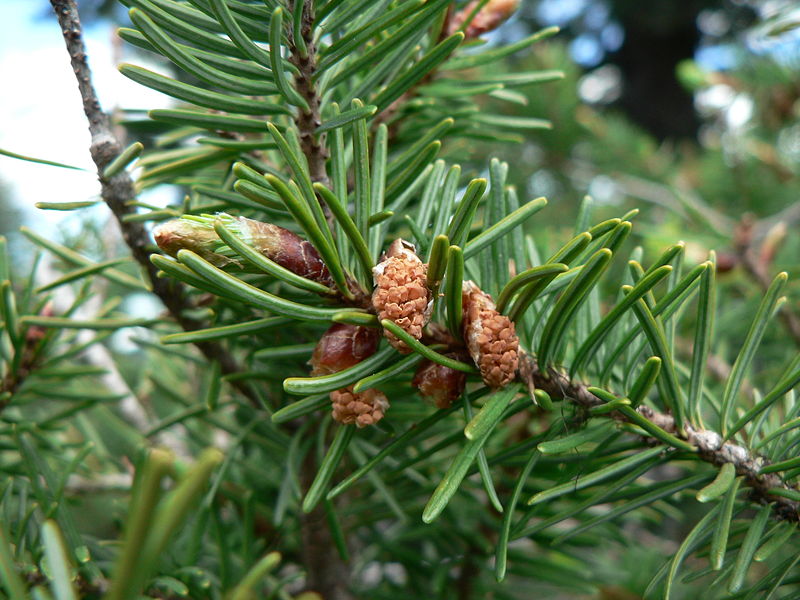
Fir is a very tall slender tree that grows in mountainous regions on the upper slopes. Fir cones respond to rain by closing and the sun by opening. Fir can see over great distance to the far horizon beyond and below. Fir indicates high views and long sights with clear vision of what is beyond and yet to come. Also known as the Birth Tree. The needles are burned at childbirth to bless and protect the mother and baby.

Fir can see into the future and is a very useful tree in divination. So this tree is really wonderful ... and not only in its meaning, but also as seen in nature. 

Fir (cones)
This episode is NOW OPEN for your submissions and will remain open until July 26th at noon (CET). Have fun!


Wednesday, July 20, 2016

Carpe Diem #1002 Elder


Dear Haijin, visitors and travelers,

It's my pleasure to bring a new episode to you about our mysterious nature. This month we are discovering the mysteries and magics of Mother Nature's inhabitants. Today I have another nice tree / bush which I think you will know, because it is very common in a lot of places around the globe, the Elder.

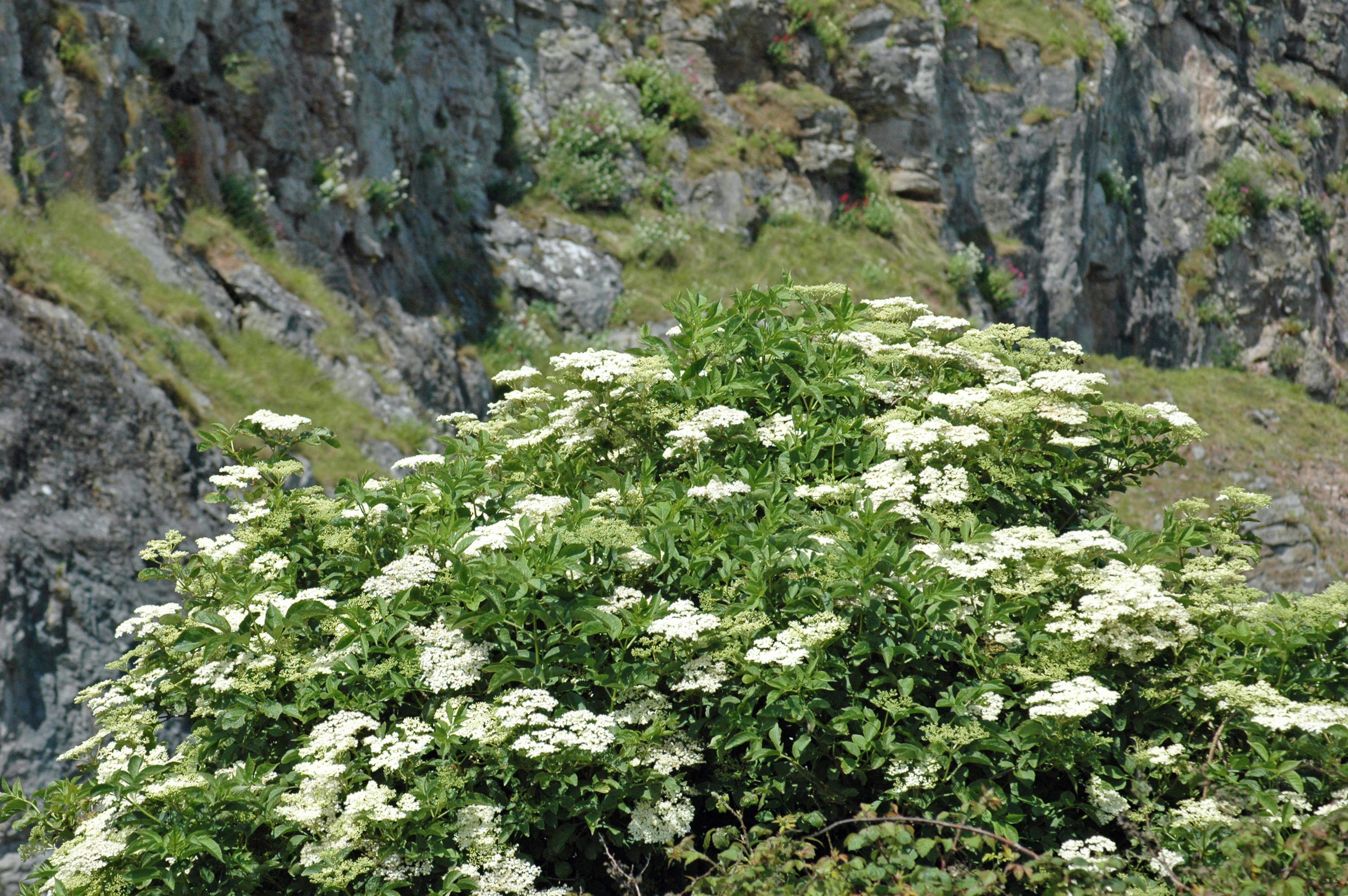
The elder is a small but bountiful tree, covered with edible fragrant blossoms in summer and juicy purple berries in autumn which country people have used for centuries in jams, jellies, medicinal syrups and wine. Its hollow branches have proved useful for all manner of pipes and bellows; in fact, its name probably originates with the Anglo-Saxon 'eller', meaning a kindler of fire. In Ireland elder was a sacred tree, and it was forbidden to break even one twig.

Elder
Like the willow, it seems to have strong feminine associations. In Denmark, peasants would not cut down an elder for fear of Hyldemor, the Elder-mother, who dwelt in its trunk. This belief is also found in Eastern England. In Lincolnshire until quite recently, it was important to ask permission of the ‘Old Lady’ or ‘Old Girl’. The correct way to approach the tree was to say: ‘Old Woman, give me some of thy wood and I will give thee some of mine when I grow into a tree’. If this procedure was not adopted, ill-luck could befall.

Elder blossom
the fragile beauty of Mother Nature -
don't break a twig

© Chèvrefeuille

An elder-tree witch features in the legend of the famous Rollright Stones in Oxfordshire. A king and his army were marching across the land, when a witch approached him and called out a challenge:

Seven long strides shalt thou take,
If Long Compton thou can see,
King of England thou shalt be.
Now, the village of Long Compton is just hidden behind a low mound known as the archdruid’s barrow. After the king had taken seven strides, the witch called out:
As Long Compton thou canst not see,
King of England thou shalt not be.
Rise up stick and rise up stone,
For King of England thou shalt be none.
Thou and thy men hoar stones shall be
And myself an eldern-tree.

The king became the lone stone known as the King Stone, while his men huddle together as ‘The Whispering Knights’, a group of five stones to the east. The stone circle itself is known as the King’s Men. 

King's Men Stone Circle (Oxfordshire)
The elder's reputation went from bad to worse with a Christian legend that claimed that the crucifix was made from its wood and Judas Iscariot was said to have hanged himself on the eider. An old carol called, ‘The Twelve Apostles’ tells the story, and in the last verse denounces the elder, which stands as an outcast from the other trees (any group of trees was known colloquially as the ‘Twelve Apostles’).

The twelve apostles they were standing by,
Their roots in the river, and their leaves in the sky,
The beasts all thrive wherever they be.
But Judas was a-hunged on an elder tree

Soon the much-maligned tree became synonymous with the Devil himself. Many feared to burn elder-logs for fear they would ‘bring the Devil into the house’.

On the Isle of Man, an elder tree outside the cottage door actually kept witches away, according to a Manx folk-tale called, ‘Old Nance and the Buggane’. In other places too it was viewed favorably as a benevolent, protective tree. A 17th century manuscript gives a recipe for a protective amulet made from plucking an elder twig in October, just before the full moon. The wood between the knots must be cut into nine pieces, which are bound in a piece of linen and hung around the neck so that they touch the heart. They hang there until the thread breaks, at which point the amulet has to be buried where it may not be found. 

Cottage on The Isle of Man

In some parts of Scotland it ranked only second to rowan in its ability to ward off evil spells and witchcraft. Crosses made of elder twigs hung over stables and barns to protect the livestock. Drivers of hearses carried whip-handles made of elder to ward off evil influences.
Elder has been prescribed throughout the ages for healing ailments from blindness to epilepsy. The leaves gathered on May Eve had the power to cure wounds, and warts could be removed by rubbing them on a green elder stick and burning it: as it rotted away, so did the warts.

As I read this above part of this post I remembered a post I once created on my personal weblog. It was not about the Isle of Man, but about Holy Isle at the shore of Scotland, but I think it fits this "Elder" episode too, so I love to reproduce the tanka and  haiku here, by the way I extracted the tanka from the original cascading haiku:

waves thundering
soothing my mind with emptiness
no thoughts at all
Holy Isle's nature
seagulls cry

seagulls cry
Om Mane Padme Hum
at last ... world peace

© Chèvrefeuille

Well ... I hope you did like this episode and of course I hope to inspire you to create haiku, tanka or another Japanese poetry form.

This episode is NOW OPEN for your submissions and will remain open until July 25th at noon (CET). I will (try to) publish our next episode, Fir, later on. For now ... have fun, be inspired and share.


Monday, July 18, 2016

Carpe Diem #1001 Blackthorn


Dear Haijin, visitors and travelers,

It's my pleasure to bring to you our 1001st regular episode. A few days ago we had a milestone, 1000 regular posts, so now it is going to our next milestone, 1500 regular posts, but that milestone will be in reach next year. So let us do some haiku-ing today.

Today we are going on with our discovery of mysterious nature through the ancient Celtic Ogham. Today our prompt is Blackthorn.

Let us take a closer look at the Blackthorn:

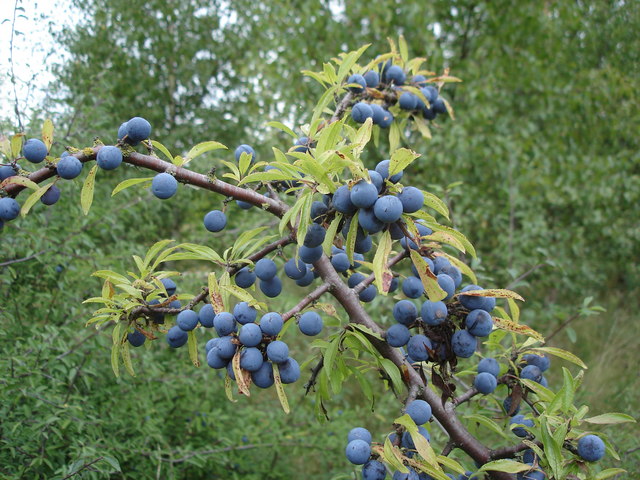
Blackthorn
What do we see? We see the berries of the Blackthorn, the berries you can eat, but they taste best after frost has gone over it. It protects itself through its thorns. If you get wounded through these thorns, an infection will rapidly be there, so be careful. The ancient Celts, the druids, knew this already. Here is what the Ogham says about Blackthorn:

Among the Celts, this sacred tree of the Ogham was considered a portent of challenges ahead, but with the promise of improvement once we push through those challenges.
The Druids recognized portents struggle intuitively in the formation of the blackthorn tree's growth. This tree has some wicked thorns that are ominous looking at best. Indeed, when cut by these thorns the human flesh can turn septic fairly rapidly.

In autumn it turns a sulfurous yellow and when these leaves drop they expose a contorted body. This mangled imagery brought the 
concept of strife and suffering to the Celtic mind.
These visual observations made the blackthorn a symbol of the other half of life that we often shrink back from. When the blackthorn showed itself in Ogham oracle practices, it could be considered as a portent of war, illness or discouragement. It was a sign to get ready and brace yourself.

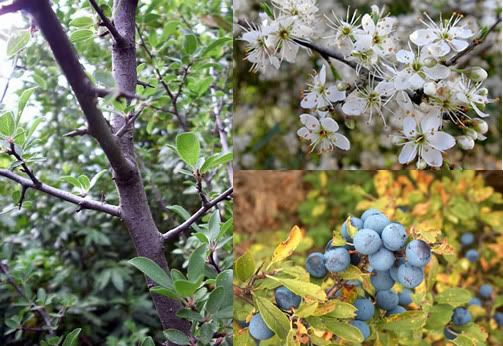
Blackthorn

The blackthorn is not all bad. On the contrary, the Celts observed that this tree produced some of the sweetest berries among the sacred tribe of trees. However, these berries were at their most succulent and sweetest after a hard frost. Here again we see symbolism of strife - but in this light we are shown that the blessing comes after the challenge.
In this way the blackthorn shows us that our very best fruits sometimes come after trials, setbacks and tribulations. We would do well to keep this in mind as we are in the midst of our challenges. We will come out on the other side better and sweeter than we were before.
The message of the blackthorn should not be observed as all gloom. Rather, it can be a message of opportunity if we embrace our experiences as an avenue for growth. (source)

revealed path
through pain and 
misfortune
a new day rises


© Chèvrefeuille


first sign of spring
clothed in fragile lace
nettles disappear


© Chèvrefeuille

This episode is NOW OPEN for your submissions and will remain open until July 23rd at noon (CET). I will publish our new episode, a new Tokubetsudesu, back in time, later on.