Showing posts with label cherry blossom. Show all posts

Tuesday, April 2, 2019

Carpe Diem #1639 blossom haze (hanagumori)


Dear Haijin, visitors and travelers,

Spring ... my favorite season (next to autumn). I love spring and I am always glad to see the first signals od spring. For example: first cherry blossom and snowdrops. Yes spring ... nature leaves its hibernation state and comes alive again.

This month we are exploring the classical and non-classical kigo (seasonwords) for spring and today I have a wonderful classical kigo for you to work with. Today our classical kigo is blossom haze (hanagumori). I will try to explain the meaning of this kigo.

A clouded sky during the Cherry blossom season, blossom haze, is "hanagumori", only in this season used as a kigo for late spring and never used for other flowers in haze or clouds. (Source: Gabi Greve's World Kigo Database)

An example by Shiki:

hanagumori miyako so sumi no Asukayama

blossom haze -
in a corner of the capital
is Asukayama 

© Masaoka Shiki

And another one, more of modern times, by Ayabe Jinki (1929-2015)

tenpura ni kagiru sakana ya hanagumori

this fish is best
as Tempura . . .
cherry blossom haze 

© Ayabe Jinki

blossom haze (hanagumori)

Of course I have given it a try to create a haiku with this classical kigo about blossom haze:

against dark clouds
more fragile than they aready are
cherry blossoms


© Chèvrefeuille

And I found a few other haiku on blossom haze in my archive:

blossom haze -
walking in the middle
of falling petals

Ah! those cherries
have to let go their blossoms -
blossom haze

© Chèvrefeuille (2013)

All beautiful haiku on blossom haze. I hope I inspired you with this new episode on blossom haze, a classical kigo for spring.

This episode is NOW OPEN and will remain open until April 9th at noon (CEST). I will try to publish our new episode later on.


Friday, March 22, 2019

Carpe Diem Weekend Meditation #77 Poetry Archive (3) ... cherry blossom


!! Open for your submissions next Sunday March 24th at 7:00 PM (CET) !!

Dear Haijin, visitors and travelers,

Welcome at a new episode of our special weekend meditation. This weekend I have another nice challenge for you ... a new episode of "Poetry Archive", that special feature in which I love to ask you to dive into your archive(s) and find a haiku, tanka or other Japanese poetry form you have created. This weekend, as it's Spring, I love to ask you to search your archive for poems themed "Cherry Blossom". As you all know I love creating haiku about cherry blossoms and I even created a special E-book "fragile beauty" with only haiku about cherry blossom.

Maybe you know the Vancouver Cherry Blossom Festival (VCBF) that already has started in Vancouver region Canada. I think you know that the VCBF also organized a haiku contest every year during the VCBF. I had the opportunity to be part in that contest and a few of my haiku got an honorable mention. I have still warm memories about that so I love to share a few of my haiku that got a honorable mention. For that I had to dive into my archive(s).


Cherry Blossoms 2019 Vancouver Canada

the cooing of pigeons
between blooming cherry trees -
the cool rain

© Chèvrefeuille (2010, honorable mention)

In 2013 I offered again two haiku for this haiku contest and got a honorable mention for the following haiku:

finally Spring
the old Sakura in the backyard
in full bloom

© Chèvrefeuille (2013, honorable mention)

Two wonderful haiku I think that brought me nice memories while searching for them in my archives. As you know for this feature you have to choose a poem from your archives and create a new one inspired on your choice and ofcourse I love to hear why you have chosen that specific haiku, tanka or other Japanese poetry form.

As I said above the task is to create an all new haiku inspired on the poems of your choice ... so I have to create a new one also. I have given it a try:

at sunrise
a pair of pigeons awaken
between cherry blossoms

© Chèvrefeuille

Cherry Blossom in Vancouver (photo© Alexandra Grant)

Well ... with this wonderful photo by Alexandra Grant of  "To Vogue Or Bust" I end this weekend meditation. I am looking forward to all of your wonderful responses. Enjoy your weekend!

This weekend meditation is open for your submissions next Sunday March 24th at 7:00 PM (CET) and will remain open until March 31st at noon (CET). By the way I will use another Linking Widget for this weekend meditation ... I don't know if I will continue with that linking widget, but we will see. (Click on the CDHK logo below to open the linking widget)


Tuesday, March 12, 2019

Carpe Diem #1625 Kumano Kodo ... a new trail


Dear Haijin, visitors and travelers,

What an awesome pilgrimage this Kumano Kodo (ancient road) is. We are on our way through the Kii peninsula and are close to nature ... The Kumano Kodo is one of the most important Shinto pilgrimages and it's not a one trail pilgrimage. As I told you in an earlier episode ... the Kumano Kodo is a pilgrimage created out of five different trails. Until today we walked the Nakahechi Route, and today we will go further on one of the other trails ... the Iseji Route. Let me tell you a little bit more about this Kumano Kodo trail.

Iseji connects Kumano with Ise Shrine in Mie Prefecture. Like Ohechi, much of Iseji's coastal trail has been covered by paved roads and towns. Only short, isolated sections remain as stoned or earthen trails today. Among them, the Magose Pass in Owase City and Matsumoto Pass in Kumano City are some of the most picturesque.

Magose Pass

Magose-toge Pass forms the boundary between Miyamacho and Owase City. A moss covered stone path stretches about 2 Km into the beautiful cypress forest covered with ferns.
There are points of historical interest along the path which include a Haiku monument, 5-7-5 syllable poetry created by Karyoen Toitsu, Yonaki-jizo, a stone statue of the guardian deity of children and a Magose Milestone.
There is a hiking trail which leads to Tengura-san Mount overlooking Owase City on the east side of the pass. Magosekoen Park on the way down the pass is renowned for its cherry blossoms.

I ran through our rich history and surfed the WWW to find the haiku by Toitsu, but couldn't find it, but maybe one of you has more luck in finding that haiku. To give a haiku in the same sense I love to share one by myself:

on the mountain slopes
fragile cherry blossom petals fall
it seems to snow

© Chèvrefeuille

I think this one fits, because we are walking the Kumano Kodo straight through the Kii peninsula, a wonderful region in Japan with a lot of mountains.


cherry blossom on the mountain slope
Well ... a wonderful start of our new trail on the Kumano Kodo. I am looking forward to your responses.

This episode is NOW OPEN for your submissions and will remain open until March 19th at noon (CET). I will try to publish our new episode later on.


Tuesday, December 4, 2018

Carpe Diem #1559 Vancouver ... renown for the Cherry Blossoms


Dear Haijin, visitors and travelers,

Welcome at a new stage, a new episode, in our journey along the Pan American Highway straight through the Americas from north to south. Today I love to "stop" in Vancouver. Maybe you are familiar with the Vancouver Cherry Blossom Festival (VCBF) and if you are familiair with it than you also know that during the VCBF there is a haiku contest. I have had the pleasure to have won a Honorable Mention in this contest. Let me give you the haiku that won a HM:

the cooing of pigeons
between blooming cherry trees -
the cool rain

© Chèvrefeuille (2010, honorable mention)

Vancouver (Cherry Blossom)
Ofcourse you can see the Vancouver Cherry Blossoms at the start of spring, and now it's winter, so you have to wait a while. But I think Vancouver has the most wonderful Cherry Blossoms of the western world.

daydreaming
cherry blossoms bloom again
bare branches

© Chèvrefeuille 

This episode is NOW OPEN for your submissions and will remain open until December 11th at noon (CET). I will try to publish our new episode later on. For now ... have fun!


Monday, October 1, 2018

Carpe Diem #1511 Basho's Blossoms (Revise That Haiku)


Dear Haijin, visitors and travelers,

As you all know I see Basho (1644-1694) as my sensei (master) and my master has written a lot of haiku inspired on the beauty of the diversity of blossoms. So for today's episode I have chosen to challenge you to revise a "blossom"-haiku written by Basho, but let me first give you a few examples of haiku on blossom by Basho:

haru tachite mada kokonoka no noyama kana

passed the first day of spring,
it’s only nine days
on the hills and fields.

shoshun mazu sake ni ume uru nioi kana

firstly, at the beginning of spring,
they sell sake and plum blossoms
and I smell them.

konohodo wo hana ni rei iu wakare kana

“thanks for all”
expressing my gratitude to blossoms
at the parting.

(C) Matsuo Basho

!! If you not specify the name of the blossom than in haiku blossom always means the blossoms of the cherry tree !!

For example: In the 2nd haiku in the Japanese line you can find "ume", "ume" means plum blossom.

Mount Fuji "surrounded" by Cherry Blossoms
For today's challenge revising the haiku I have chosen two haiku by Basho. I will give both of the "stories" behind the haiku maybe it can help you to revise the haiku. You may choose one or two haiku to revise. Not the above three by the way, but the two following now:

Haiku 1:

hana no kumo  kane wa ueno ka  asakusa ka

a cloud of cherry blossoms;
the temple bell,-
is it Ueno, is it Asakusa?

© Basho (1644-1694, taken from R.H. Blyth’s "Haiku, Volume 2)

R. H. Blyth translated Basho’s haiku into English and noted:

It is early afternoon.  The air is warm and hazy.  As Basho sits in his hut at Fukagawa, he can see, when he wishes, the cloud-like masses of cherry-blossoms in the direction of Ueno and Asakusa.  The boom of a great temple bell comes sounding across the fields; it must be from one of these two places.

Sakura
Haiku 2:

samazama no koto omoidasu sakura kana

how many, many things
they call to mind
these cherry-blossoms!

© Basho

R. H. Blyth also translated Basho’s haiku into English and noted:

Basho renounced the world on the death of Sengin, that is,Todo Yoshitada, son of Todo Shinshiro, who was in charge of Ueno Castle.  Twenty years later, in 1687, he was invited by his former master Todo Shinshiro, and the above verse was the result.  Looking at the same flowers in the same garden when he had spent his youth with his friend, Basho felt what Wordsworth says in the mouth of the Wanderer:

I see around me here
Things which you cannot see; we die, my Friend,
Nor we alone, but that which each man loved
And prized in his peculiar nook of earth
Dies with him, or is changed.

© Wordsworth

Two amazing haiku by Basho to revise. Don't be shy to revise his haiku, because of his great name, because Basho also revised his haiku several times. For example: He revised his "Narrow Road Into The Deep North" several times to make it the perfect haibun. So no shame to revise ...

This episode is open for your submissions tonight at 7:00 PM (CEST) and will remain open until October 8th at noon (CEST). I will try to publish our next episode later on. For now ... have fun!

Revisit the first episode ever of our special feature Revise That Haiku (October 12th 2013)


Friday, April 28, 2017

Carpe Diem Kukai Cherry Blossom - The Results


Dear Haijin, visitors and travelers,

It is my pleasure to announce the results of our Cherry Blossom kukai. This CD-Kukai edition had 25 haiku submitted by nine (9) haiku poets. It was really a joy to read them all and to re-read them all to judge them.

It is my pleasure to announce to you that Ese has won this CD-Kukai with the following haiku:

old gardener
still sees her smile
in cherry blossoms

© Ese

A beauty I would say and I think it has won through the strong emotions in the scene.

And our "runner-up", with a beautiful haiku too is Kim Russell with the following haiku:

pink sakura blush   
spring’s kimono falls to earth
silk snatched by a breeze

© Kim Russell

Congratulations to you both with being the winner and the "runner-up". As you all know the winner, Ese, has won the opportunity to create an exclusive CDHK E-book of a maximum of 50 haiku or 30 pages, of course this negotiable.
And the "runner-up", Kim Russell, won the opportunity to create her own Carpe Diem Tokubetsudesu episode. (This is different with the other kukai we have had).

Here are the results of the complete Cherry Blossom kukai:

10 points: haiku 9
7 points: haiku 15
6 points: haiku 1
5 points: haiku 5
3 points: haiku 11 & 21
2 points: haiku 2, 6, 8, 20 & 22
1 point: haiku 3, 10, 17 & 18
0 points: haiku 4, 7, 12, 13, 14, 16, 19, 23, 24 & 25

Sunflower Reflection

Here is our new kukai theme: Sunflowers

Our new kukai starts today, April 28th and will run to May 19th 10.00 PM (CET). You can submit your haiku, with a maximum of three (3) haiku, to our email-address: carpediemhaikukai@gmail.com Please write  "kukai sunflowers" in the subject-line of your email.

I am looking forward to your haiku.

For closure I love to share a "sunflower"-haiku written by myself:

broken sunflower
torn apart through a rain storm -
puddles on the path

© Chèvrefeuille


Wednesday, April 19, 2017

Carpe Diem #1194 Cherry Blossom (Sakura)


Dear Haijin, visitors and travelers,

What a joy ... today I may share a post about one of my favorite themes in haiku (and recently tanka), Cherry Blossom (Sakura).
As you maybe know I have an old Sakura in the backyard and I am proud of it. Every late winter and early spring I am observing it and every time again as I see the first cherry blossoms I am happy. That day is a day to celebrate and I love it every year again.

In our CDHK library you can find an e-book titled "fragile beauty" in which I have gathered a lot of my cherry blossom haiku and (I think) it is a wonderful e-book to read and to inspire you.

My Sakura 2013 (photo © Chèvrefeuille)
Maybe you have heard from the Vancouver Cherry Blossom Festival (VCBF). The VCBF organises every year again during their festival a haiku invitational  and I have submitted haiku almost every year since 2010. I even had the honor that in 2010 and in 2013 one of my haiku received a honorable mention. Maybe this year my haiku will be again honored .... we will see. I submitted two haiku and upcoming September the VCBF will announce the winners. I am looking forward to it.

Here are a few haiku crafted by Basho (1644-1694) about Cherry Blossoms. Maybe you know them, for sure that last one you know I think, because that haiku is an example of Basho's karumi-style his live's goal challenge.

from among the peach trees
blooming everywhere,
the first cherry blossoms.

a lovely spring night 
suddenly vanished while we 
viewed cherry blossoms

from every direction 
cherry blossom petals blow 
into Lake Biwa 

from all these trees – 
in salads, soups, everywhere – 
cherry blossoms fall

© Basho

Cherry Blossoms (photo found on Pinterest)
Cherry Blossoms so fragile but so beautiful. A rich source for haiku (and tanka) I think this episode can give you enough inspiration and joy. So have fun!

I have created an all new haiku for this episode and I have tried to create it the classical way:

on a gust of wind
the cherry blossoms dance through the streets
in praise of the Creator

© Chèvrefeuille

Is this a classical haiku? Let me take a closer look:

5-7-5 syllables  check
a short moment  check
a kigo  check (cherry blossom)
a kireji  check (after the first line)
interchangeable first and third line  check

in praise of the Creator
the cherry blossoms dance through the streets
on a gust of wind

And last, but not least, a deeper meaning  check (Creator, but also wind, the wind is the messenger of the gods)

Well ... I hope you did like this new episode and I hope I have inspired you to create haiku or tanka with this classical kigo, cherry blossom.

!! I am behind with commenting, but I will visit you all a.s.a.p. !!!

This episode is open for your submissions tonight at 7.00 PM (CET) and will remain open until April 24th at noon (CET). I will try to publish our new "weekend-meditation", a new episode of Universal Jane, later on. For now ... enjoy!


Sunday, April 9, 2017

Carpe Diem #1187 unmelted snow (yuki no hate / zansetsu)


Dear Haijin, visitors and travelers,

I have had a wonderful weekend. Awesome weather for the time of year (almost 20 degrees Celsius and a lot of sun) so really a nice weekend. I cherish these weekends and I hope you understand the choice I had to make earlier this year, to bring the prompts back to a lesser amount than I used to do.

This month it's classical spring here at Carpe Diem Haiku Kai. All our prompts are classical kigo (seasonwords) for spring and today I have another nice kigo I think. Even at the midst or the end of spring we can have sometimes snow, but mostly the snow has gone as spring runs to its end. Today I have "unmelted snow" for you as a prompt. I was somewhat confused as I tried to find the Japanese translation for this kigo, because there were multiple words that describe this kigo ... maybe that's what Japanese is ... a confusing language, because there so may meanings for the words or combinations of the words ... not easy to cope with for us western people. The Japanese word for "unmelted snow" can be yuki no hate or zansetsu, and there will be many more words that have the same meaning I think.

Unmelted Snow on Cherry Blossoms (Photo by @inu_tsugura )
A beautiful image that fits our prompt for today. I couldn't find a possibility to contact the owner of this photo, so I hope it's okay that I give credit to the photographer.

winter departure
the last snow covers cherry blossoms
ah! that fragility


© Chèvrefeuille

It wasn't an easy task to create this rather artificial haiku, just because of that one rule "use the 5-7-5 syllables count". All the other rules are in there I think, but I am not sure about the spiritual meaning of this scene.

This episode is NOW OPEN for your submissions and will remain open until April 16th at noon (CET). I will try to publish our next episode, burning fields, later on. For now ... just have fun and be inspired.

PS. Next Saturday at 10 PM (CET) our Summer Retreat 2017 (unconditional) love will start. 30 Days of writing haiku or tanka themed (unconditional) love.

PPS. As I proposed eralier this week I love to create an exclusive CDHK E-book with only frog haiku. I have already set a title, furu ike ya, the first line of that world famous haiku by Basho.


Saturday, March 18, 2017

Carpe Diem Extra March 18th 2017 judging the cherry blossom kukai


Dear Haijin, visitors and travelers,

I have gathered all the entries for the "cherry blossom" kukai. There were nine contestants who submitted a total of 25 haiku for this kukai.

The judging starts today right now and will run until April 1st 2017 at 10.00 PM (CET).

See the list of beautiful haiku HERE.

Good Luck!

Email your judging to: carpediemhaikukai@gmail.com Please write judging cherry blossom kukai in the subject line.

Namastè,

Chèvrefeuille, your host.

PS. Maybe you have noticed it already, but in menu above you can now find a preview of one of our exclusive CDHK E-books. I will change that preview once a month. This time you can read a preview of "In The Way of Basho", an e-book about the haiku writing techniques used by Basho.

Saturday, February 4, 2017

Carpe Diem Kukai "Autumn" the results


Dear Haijin, visitors and travelers,

First I have to apologize for being this late with the results of our Autumn kukai of 2016. It totally escaped from my attention through several things, but I hope you will forgive me.

Here are the results of the Autumn kukai:

Our winner of the Autumn kukai is Hamaish "Managua" Gunn with the following haiku, a haiku in the free-style of Santoka Taneda:

we learn
from autumn
to let go


© Hamish Gunn

And our "runner-up" of the Autumn kukai is Sara McNulty with the following haiku in which you can sense the cosiness of an autumn evening. Days become shorter and the evenings become longer:

steaming gold
on chilled October evening
mug of hot cider


© Sara McNulty

CONGRATULATIONS TO BOTH OF YOU!!!


Here are the results:

Haiku 27: 7 points (winner)
Haiku 21: 6 points (runner-up)
Haiku 8 and 12: 5 points
Haiku 7, 25, 29 and 30: 3 points
Haiku 6, 15, 23, 32 and 35: 2 points
Haiku 16, 19 and 24: 1 point
All the other haiku: no points

As you all know the winner of the kukai wins the exclusive right to create a CDHK E-book and is the featured haiku poet next month (March 2017) and the "runner-up" will be portrayed in a Tokubetsudesu episode also in March 2017.

0-0-0-0-0-0-0-0-0-0-0-0-0-0
0-0-0-0-0-0-0-0-0-0-0-0-0-0

I love to invite you all to submit haiku (a maximum of three (3)) for our next kukai. That kukai starts today, February 4th at 10.00 PM (CET) and will run to March 4th at 10.00 PM (CET). This time I have chosen for the following theme:

CHERRY BLOSSOM

You can email your submissions to: carpediemhaikukai@gmail.com Please write Kukai Cherry Blossom in the subject line.

Tuesday, January 31, 2017

Carpe Diem #1141 Japan, the journey begins


Dear Haijin, visitors and travelers,

First I have to apologize, because I haven't the prompt-list ready for February 2017, but I hope to bring the "list" later this week. As you all know we are starting with the discovery of the land of the rising sun, Japan, mother of haiku.

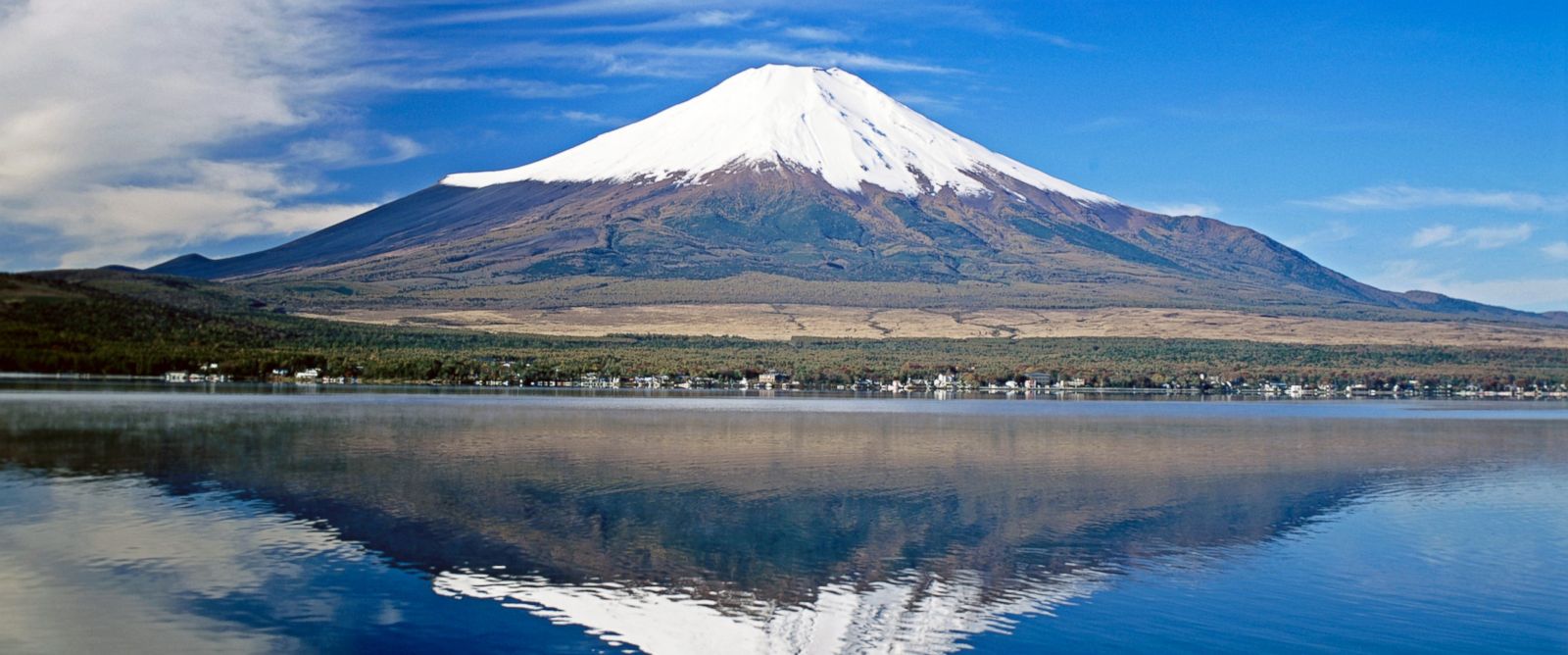
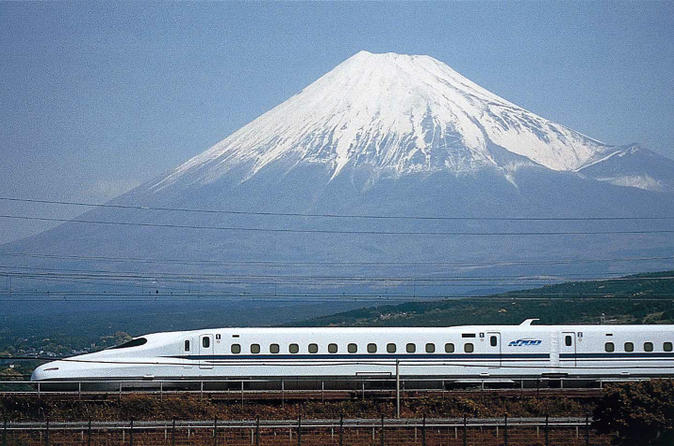
Haiku ... the tiniest poem around the world, a poem we all love dearly and maybe are addicted to. Japan ... the "motherland" of haiku is our adventure place this month. On the above logo you see the holy mountain of Japan in Spring, Fuji no Yama with its snow decked top behind that other wonderful piece of Japan ... the Sakura, the cherry blossom.

I hope to be your guide on a beautiful trip through this country ... a country I hope to visit for real once in my life, but until than I will visit this country together with you, my dear haijin, in the virtual world.

Mount Fuji no Yama
Let us take a look at a haiku created by Basho (1644-1694) in which he describes Mount Fuji:

Fuji no yama nomi ga chausu no ooi kana cha-usu

Mount Fuji
like the tea-grinding mill 
carried by the lice . . . 

© Basho (age 33)

To compare Mount Fuji to a cha-usu, a mill for grinding tea leaves, has been done since olden times.

This is complete fiction to show the greatness of Mount Fuji.

There was a popular song in Edo to which Basho is referring

蚤が茶臼を背たら負うて、背たら負うて、
富士のお山をちょいと越えた

The lice are carrying a tea-grinding mill
carrying it on their back
just trying to climb over Mount Fuji. 

It was also a popular game to cover a tea-grinding mill with strong washi paper to make it look like Mount Fuji.

Matsuo Basho (1644-1694)

An other nicely written haiku by Basho ... in praise of Fuji no Yama:

hito one wa shigururu kumo ka Fuji no yuki

over one ridge
do I see winter rain clouds?
snow for Mt. Fuji 

© Basho (age 44)

The above haiku is a beautiful 'winter landscape painting' on a large scale, in which you are viewing Mt. Fuji in relation to its surrounding mountain families. In the centre, you see Mt. Fuji covered with snow in all its glories. And you also see other mountain-families were probably snow does not reach, as they are not high enough. Your eyes travel from right to left and from left to right, surveying many different things happening. Over one ridge (o-ne) are winter clouds unloading their cargo. However, of all the mountains how tall, superb and magnificent the snow-covered Mt. Fuji is! 
This haiku is famous for depicting the superiority of Mt. Fuji in relation to other mountain families.

A last one also about the Holy Mountain of Japan:

a day of quiet gladness,
Mount Fuji is veiled
In misty rain.

© Basho

I wonder will we see Japan through the eyes of Basho this month, because of the fact that I see him as my haiku master? I think that will be happening, but I hope to be aware of it, because Japan is not only Basho and his haiku. Japan is far more ...

Ancient mountain and the modern time ... there is no time ...

To end this episode I love to share a haiku by our unknown haiku poet, Yozakura. I hope to go on with his story this month, so her it is a haiku, a beauty, by Yozakura:

fujisan no yuki no hi no owari ni ha sakura

through cherry blossoms
at the end of the day -
snow on Mount Fuji

© Yozakura

I hope I have inspired you and I hope this first episode of our new CDHK month will give you the feeling, the idea ... that this month will be awesome.

This episode is NOW OPEN for your submissions and will remain open until February 5th at noon (CET). I will post our next episode, history of Japan, later on.

PS. I haven't time to create a new episode of Universal Jane ... I hope you will forgive me.
PPS. I am hopelessly behind with commenting I hope to catch up a.s.a.p.

Saturday, June 25, 2016

Carpe Diem Utabukuro #12


Dear Haijin, visitors and travelers,

It's my pleasure to bring to you a new episode of our special CD feature "Utabukuro" (or "poembag"). Let me tell you the goal of this special feature first:

The goal of this CDHK feature is not difficult, because I just ask you to share a haiku or tanka which you admire. That haiku or tanka can be one of a classical or non-classical haiku poet or one by you. You can choose whatever you like, but it has to be a haiku or tanka. Maybe the haiku brings you sweet (or sad) memories or you just like it. Explain why you have chosen that haiku or tanka to share here "in" CDHK's Utabukuro, poem bag and ... that's the second task for this feature, write/compose an all new haiku inspired on the one you have chosen.
For this episode I dived into my archives (built from 1988) and choose a haiku which I once have written myself for Wonder Haiku Worlds.

This haiku I wrote in 2006, it was a first try to write in the free style as Santoka Taneda did. (I also will give the Dutch translation):


silence
petals of cherry blossoms fall
so quiet

stilte
kersenbloesem valt

zo sereen
© Chèvrefeuille

Recently I wrote a few haiku for the haiku-contest of the Vancouver Cherry Blossom Festival, which I (of course) cannot re-publish here, because the judging is still going on, and the haiku I submitted for this contest cannot be published earlier.

As you all know cherry blossoms are one of my favorite themes to write haiku about. So to fulfill the goal of this feature I love to share an all new haiku on Cherry Blossoms.

departing
cherry blossom petals fall
without sound
© Chèvrefeuille
And now it is up to you. Share your favorite haiku with us all and try to create an all new haiku inspired on your choice haiku.
This episode is open for your submissions at noon (CET) and will remain open until next Saturday July 2nd at noon (CET). Have fun!

Wednesday, May 25, 2016

Carpe Diem Tan Renga Challenge Month May 26th: "silence" by Jane Reichhold


Dear Haijin, visitors and travelers,

First this ... I was a bit confused I think, because I published a Tan Renga Challenge yesterday instead of a Tokubetsudesu episode, my excuses for that, but this week we will not have a Tokubetsudesu episode. Sorry.

Today I have a nice "hokku" for you created by our co-host in the background, Jane Reichhold. You all will certainly know her I think. You can find a lot abou her by visiting her website AHA-poetry.

Here is the "hokku" for today's Tan Renga Challenge:

silence
in the blind wind's dance
blossoms


© Jane Reichhold


A beauty I will say, but also a challenge to create the second stanza.

Cherry Blossoms in the Evening
Here is my attempt to create a second stanza to make this Tan Renga complete:


silence
in the blind wind's dance
blossoms
                                    (Jane Reichhold)

admiring the cherry blossoms
lying naked on a deer skin
         (Chèvrefeuille)

I like this completion, as I looked at that beautiful image above a haibun I once wrote came in mind.


This episode is open for your submissions tonight at 7.00 PM (CET) and will remain open until May 30th at noon (CET). I will publish our new "hokku", this time one by a classical haiku poet/ess, on our Twitter account.


Thursday, April 14, 2016

Carpe Diem Special #206 Sara McNulty's 2nd


Dear Haijin, visitors and travelers,

It's my pleasure to present to you our 2nd CD-Special in which I introduce haiku created by our "time'-kukai winner Sara McNulty. Sara is a gifted haiku poetess and has created her own style during the years. She is one of the family-members who has been here from almost the start of Carpe Diem Haiku Kai.

This what she says about herself:

[...] "I am a dreamer.  My imagination whirls like an eddy all the time.  As a devoted
Alice-in-Wonderland fan, my office is decorated appropriately to reflect that. 

Most of my life was lived in New York, where I still have family, and dear friends.  Moving to the Pacific northwest, opened my senses more fully to nature.  What better way to relay nature than haiku. 

As a child, I wrote stories and poems, carrying them around in an old cigar box
of my Dad’s.  I stopped writing sometime in my teens, and did not put pen to paper
again, until my 40’s.  With encouragement, I took writing classes, joined groups,
and wrote short stories.  About ten years ago, I found my niche in poetry.  Haiku has developed my sense of concentration and conciseness.  Drawing classes taught me to see in a whole different light and perspective.  Poetry blogs have opened up a new life for me.  I belong to a group of poets called, Voices In Verse, which meets once a month.  The people are wonderful, and we share our writing.

My inspiration comes from the beauty of nature, observations of people, my dogs, and a well-seasoned sense of humor . . . oh, and of course the color purple." [...]

Sara McNulty
Back in November 2013 we had a whole month of Tan Renga Challenges and in one them I shared a haiku by Sara as the starting verse of the Tan Renga. I love to share that haiku here again for inspiration.

life completes circle
at the end of the journey
death draws the last line

© Sara McNulty

I remember that I completed the Tan Renga starting with this beautiful haiku by Sara with the following two lined stanza:

each curve in the path of life
gives new panoramic views

© Chèvrefeuille

Recently I thought about bringing the Tan Renga back. As you maybe know I published the Tan Renga Challenge every Friday and I am missing that a lot, so I think I will restart the Tan Renga Challenge next month.

The goal of the CD-Specials is to create / write a haiku (tanka or other Japanese poetry form) inspired on the given haiku trying to catch the spirit of the haiku poet/ess. So here it goes:

bare branches
cherry tree starts to bloom -
awaiting cherries

© Chèvrefeuille

Sakura in bloom (photo © Chèvrefeuille) 

This episode is open for your submissions tonight at 7.00 PM (CET) and will remain open until April 17th at noon (CET). I will try to publish our new episode, morning, later on. For now .... have fun, be inspired and share your haiku with us all.

PS. Next Sunday I will start with our third Theme Week ... I have already an idea which theme it will become ... I will surprise you.


Sunday, April 10, 2016

Carpe Diem #951 blossom


Dear Haijin, visitors and travelers,

It's springtime and everywere you look trees and bushes are starting to bloom. All those wonderful blossoms showing the beauty of our nature. Finally nature celebrates new life after the long cold and dark winter.

Today our prompt is blossom and (as you maybe know) I am a fan of cherry blossoms especially the blossoms of the old Sakura in my backyard. It's already in full bloom and I am proud (again) on its beauty.

My Sakura (photo © Chèvrefeuille)
All those beautiful blossoms ... they have to inspire you ... so this is the challenge for today: choose a blossom and create a haiga with it.

Of course I have done that myself too ... and I think you all will expect me to use a photo of my old Sakura .... well you are right.

old sakura
regains its strength
winter departs

photo & haiku © Chèvrefeuille

This episode is NOW OPEN for your submissions and will remain open until April 13th at noon (CET). I will try to publish our new episode, new life, later on. For now .... have fun, be inspired and share your haiga with us all ...

Saturday, March 19, 2016

Carpe Diem #943 flute


Dear Haijin, visitors and travelers,

Through circumstances I have decided to publish two episodes in a roll today, so here is our second episode, which by the way was scheduled for today. It's about a haiku writing technique which explains why classical (and modern) haiku poets sometimes refer to known things literary. It's a kind of haiku in which the poet uses his knowledge of for example, classical poems or mythology.
As we know Basho had studied a lot of Chinese and Japanese literature and poems and that knowledge he exposes sometimes in his haiku. In this haiku he uses his knowledge of his own time.

pining for flowers
or a tune from Gichiku
Mount Yoshino


© Basho (Tr. Jane Reichhold)

In this haiku Basho uses the so called "honki-dori" or "literary references" technique. It's one of the ways writers had of elevating their status by linking their verses to another famous person (or place).
In the above haiku Basho refers to Gichiku.
Gichiku, known as Tozaburo, was a popular flute player in Basho's time whose hit song had the title of "Yoshino", the mountain most famous for its cherry trees and deep snows. The idea was that when the flowers bloomed there would be parties, flute playing would be at its best.


This beautiful Japanese Bamboo flute music titled "Sakura" (a traditional Japanese folk-song) inspired me to the following haiku.

bamboo leaves rustle
cherry blossoms from far away
in the backyard


© Chèvrefeuille

Maybe you know that I have an old Sakura in the backyard who is almost in full bloom right now. To me that's a famous spot in my life, so I thought ... maybe I can write a tribute to my Sakura.

And here is one from my archives (with slight revision) about the willow which was once sung by Saigyo, as we have read in Basho's "narrow road into the deep north" last December.

finally have seen
the willow at the crystal stream
sung by Saigyo

© Chèvrefeuille

Isn't it an awesome idea to link your haiku to a famous person or a famous place? 

This episode is NOW OPEN for your submissions and will remain open until March 22nd at noon (CET). I will try to publish our next episode, willow, later on. For now .... have fun!


Wednesday, March 16, 2016

Carpe Diem #940 blossom


Dear Haijin, visitors and travelers,

A new day, a new post in which we will explore a haiku writing technique used by Basho. Our episode of today is about a haiku writing technique which we haven't had earlier here at CDHK. I will try to explain this new haiku writing technique (with the help of Jane Reichhold) to you after this.

This month we are exploring haiku writing techniques used by Basho, my sensei. And I am happy to announce to you all that I will create a CDHK e-book "In The Way of Basho" in which I will gather all the posts about the haiku writing techniques used by Basho and the CD-Specials in which I introduce disciples of Basho, the so called "Shoomon disciples" or "Shoomon school". Next to all the posts I will include your submissions to every post at the end of every chapter (episodes). You can already find a preview at the right side of our Kai, free for download.

Okay ... back to our haiku writing technique for this episode. In this episode I love to introduce "kasuri" or "frame rhyme".

from Kyoto's many houses
a crowd of ninety-nine thousand
blossom viewing

© Basho (Tr. Jane Reichhold)

To understand this "kasuri" technique I also will give you the Romaji translation of this haiku:

kyo wa kuman kusen kunju no hanami kana

By the way this is an early haiku by Basho which he wrote at the age of 22. In this haiku we can already see the splendor of the master.

Maruyama Park Kyoto the best place of viewing blossom

This technique, used by the two haikai schools in vogue in Basho's time (Teimon School and Danrin School), was also utilized in English poetry, where it was also known as the "para-rhyme". An example would be back - buck. This rhyming device had almost completely fallen out of practice in poetry but was recently revived in rap-music. An extension of this technique is still used in jokes. By taking a known phrase or cliché, and then changing one part of it, it is possible to express a new idea. Examples: "He who laughs last thinks slowest." or "Change is inevitable, except from a vending machine". Basho, by changing only one sound unit, was using the frame rhyme.

At the time there was a saying that Kyoto has 98,000 houses. Another phrase is kisen kunju ("a crowd of rich and poor"). Basho changed the kisen to kusen to add another thousand to the number and include the concept of all classes of society.

I think this is a wonderful haiku writing technique, but if you don't mind "I pass" this time to create a new haiku myself, because my English isn't that well to use this "kasuri" or "frame-rhyme" technique. I also think it isn't an easy technique to use ... so .... good luck.

This episode is NOW OPEN for your submissions and will remain open until March 19th at noon (CET). I will try to publish our new episode, heart, later on. For now ... have fun!


Wednesday, January 27, 2016

Carpe Diem Special #194 A Trip Along Memory Lane -- with a twist


Dear Haijin, visitors and travelers,

Welcome at the last CD-Special of January. This month our CD-Specials were all about special features which I have created during the liftime of CDHK. I started with one of my favorites, Carpe Diem Imagination, in which the goal was to write a haiku inspired on a photo, image or something else. And to close our Trip Along Memory Lane I have another special feature for you all, but this one I have never published earlier here at CDHK.

Let me tell you which special feature I am talking about. This feature I created shortly after our first month of inspirational music, but I never dared to publish it, because of its likeness with Imagination.

This special feature I had titled "Carpe Diem Awakens your Muse" and the goal was to share a video for your inspiration. These videos would be all about nature and so ... after thinking and re-thinking this I decided to bring this special feature in our last CD Special of January.

Credits: Sparrow on Lotus (logo CD Awakens Your Muse)

The goal of this CD-Special is to watch a video, look at the images, listen to the music and become one with the scene(s) in the video and awaken your muse and write/compose an all new haiku, tanka or other Japanese poetry form.


Watch the video ... experience the beauty of the Japanese Spring and enjoy the music by Karunesh, one of my favorite musicians. Through this video I can only hope that your muse will awaken and that she will inspire you to write an all new haiku, tanka or other Japanese poetry form.

fragile beauty
the shining wind
* from the east
plays with cherry blossom


from far away
the sound of a temple bell
welcomes spring


cherry blossoms bloom
bare branches in designer cloths
children's laughter


© Chèvrefeuille

* "the shining wind" (a classical kigo) refers to the sparkling of spring sunshine and a gentle wind on a sunny spring day.

My muse was awake for sure ... but ... well you all know that cherry blossoms are my favorite theme for haiku. I hope you all did like this CD-Special and that you will forgive me that I never used this special feature in our CDHK lifetime.

This episode is NOW OPEN for your submissions and will remain open until January 30th at noon (CET). I will (try to) publish our new episode, drinking tea, later on.

!! By the way I have published our new prompt-list for February which has been created by Hamish Managua Gunn. (You can find the new prompt-list above in the menu or HERE) !!

!! Note to Hamish: I have changed the consecution of your list a little bit. I hope you don't mind !!

Saturday, January 16, 2016

Carpe Diem Vernacular #1 cherry blossom (kersenbloesem)


Dear Haijin, visitors and travelers,

As promised ... here is our first episode of our new Carpe Diem special feature "Vernacular" in which I love to challenge you all to publish haiku in your own language, your mother tongue, your "vernacular".

In the first 'try out' issue of our own e-zine Souchou I published a few Dutch haiku and I think it would be great to read haiku, tanka and other Japanese poetry forms in your 'vernacular' (a synonym for 'mother tongue') my dear Haijin.

Carpe Diem Vernacular is especially created to give you all the opportunity to share your haiku in your mother tongue ... of course with an English translation.

"Vernacular" will be published every Saturday, so you have a week to respond ... good luck!

For this first episode I have chosen for one of my favorite themes for haiku, cherry blossom (in Dutch: kersenbloesem). 

Here is one of my Kersenbloesem haiku:

klaterend water
kersenbloesem valt
geluid van kikkers

And this is the English translation:

splashing waters
cherry blossoms falling gently
sound of frogs


© Chèvrefeuille

My Sakura (photo © Chèvrefeuille)

And here are two other Dutch haiku composed by myself:

zonsopgang
kersenbloesems ontluiken
zo breekbaar

In English:

daybreak
cherry blossoms open
so fragile


Japanse lente
kersenbloesems bloeien
wat een dag!


In English:

Japanese spring
cherry blossom blooms
what a day!

© Chèvrefeuille

Well ... I think this new feature can be a wonderful spectacular challenge. I am looking forward to all of your vernacular haiku.

This first episode of Carpe Diem Vernacular is NOW OPEN for your submissions and will remain open until next Saturday January 23rd at noon (CET). Have fun!