Showing posts with label memory lane. Show all posts

Tuesday, October 13, 2020

Carpe Diem Celebrates Its 8th Anniversary October 2020: #1835 caught by the call (Hando)


Dear Haijin, visitors and travelers,

Maybe you can remember that at the start of CDHK, I had every week a haiku by a special haiku poet. That haiku poet was the hightlight for a month. In December 2013 I had Hando as that special haiku poet and I shared five haiku by him that month. 

I love to reproduce the last of those five haiku here again, just by copying it here again. Every month I created a special logo for those Specials and for Hando it was the following logo:


In this time of year (December 2014) several things are for the last time, and that's also with our Carpe Diem Special of today. Today we have our fifth Special haiku by Hando and it's the last of this month and of this year. 

Here is our last Special haiku by Hando for your inspiration. Write a new haiku in the same tone, sense and spirit as the one by Hando. Good Luck

caught by the call
of the flowers and mountain, I forget
how steep the path is

© Hando


And here is my attempt to write a whole new haiku inspired on the one by Hando and (I hope) in the same tone and sense and spirit.

the little child
reaches for the water lillies
without seeing the frog

© Chèvrefeuille

Well ... I love this memory-lane. And ... ofcourse I hope you like it too.

This episode is NOW OPEN for your submissions and will remain open until October 18th 10:00 PM (CEST). Enjoy! You can add your submission to the linking widget hidden in our logo below.

Monday, October 30, 2017

Carpe Diem #1294 Twilight


Dear Haijin, visitors and travelers,

Well ... here it is our last episode of our celebration month. It was a joy to dive into the history of CDHK and I am glad that you all have celebrated this first luster with me. Thank you for your love and participation.

Our trip along memory lane brings us to our near history, because just recently (July 2017), we had this prompt "twilight", it was part of our month of modern and classical kigo for summer. As I was preparing this episode I realized myself that we also have done a renga-party "in the twilight" (the whole renga you can find HERE).


The above musical video is by Vangelis and is titled "Twilight". I couldn't 'handle' the idea that I had not a last musical video for your inspiration this month, so I just had to find a "twilight"-video. This one is created by Sidoreac George.

In this video a Japanese female recites a poem:

Hi ga Kureru
Sore wa Toki no Mahou
Asu Onaji Toki
Mata Chigau Mahou
Sore wa Iro ga Kaori ni
Kaori ga Iro ni Kawaru Toki
Soshite Kage wa Kagirinai
Ao ni Tokeru


And this is the translation of this poem:

The day falls into the twilight.
It is a magic of time.
The same time tomorrow,
there'll be another magic.
It is when colors turn to flavors,
and flavors turn to colors.
And it is when
shadows melt into deep blue....

© Vangelis
Twilight
A wonderful poem I think. Maybe it helps you to find your inspiration ... awaken your muse.

in the twilight
silence deepens into mystery
last beam of light


© Chèvrefeuille

And an experimental haiku:

twilight
stars
perfume


© Chèvrefeuille

A very experimental one, maybe I have to tell the scene behind it. A warm summer night, a clear bright sky, and the sweet perfume of Honeysuckle that arouses the senses.

Well ... this was the last episode of our celebration month and I hope you did like it. With this episode we will step into the next month too ... 


Omar Khayyam
The Rubaiyat by Omar Khayyam, a month full of quatrains and the challenge to create haiku, tanka or other Japanese poetry form inspired by the quatrains of Omar Khayyam. Here is already the first verse of The Rubaiyat by Omar Khayyam:

AWAKE! For Morning in the Bowl of Night
Has flung the Stone that puts the Stars to Flight:
And lo! the Hunter of the East has caught
The Sultan's Turret in a Noose of Light.
 

© Omar Khayyam (Tr. Fitzgerald)

This episode is open for your submissions tonight at 7:00 PM (CET) and will remain open until November 6th at noon (CET), I will try to publish our new episode, Bowl of Night, later on. For now ... have fun!


PS.: I have published a new episode at Haiku Shuukan you can find this weblog at the left side of our Kai.


Sunday, October 29, 2017

Carpe Diem #1293 Time Travel, ancient Japanese poetry to inspire you


Dear Haijin, visitors and travelers,

Welcome at the first of our two last prompts in our celebration month. I had planned a lot of new things, but it all turned out to be a to big task ... I had hoped to give you our new CDHK E-book "tribute to Jane", but I hadn't time to create it. I have started creating it, but you have to wait a little while longer. I have tried to create our You Tube Channel "Karumi", but making such a channel turns out to be not very easy. It needs more time and work than I had expected ... so ... our You Tube Channel has to wait too.
There however were a few ideas that I could create. First there is our CDHK Forum, you can find it at the right of our Kai and I finally had time to revive our weekly meme, Haiku Shuukan, that you can find at the left of our Kai.
Than of course there is our special feature which I created for our CDHK feuilleton "Wandering Spirit". Recently I created the "Wandering Spirit Challenge" in which Yozakura asked you for help with creating the 'daisan' (third verse) of a renga. You all had ideas for this 'daisan' and together with Yozakura I am now busy to select the "winning" 'daisan'.

Logo Carpe Diem's Time Travel

Okay ... back on our trip along memory lane. This celebration month we were on a trip along memory lane through the rich history of our Haiku Kai. Today I have chosen a episode of our "Time Travel" feature in which I challenged you with ancient Japanese poetry. And in Japanese history there is a lot of beautiful poetry to find and read.

Let me give you a piece of one of the episodes of "Time Travel":

[...] In the Hyakunin-isshu are themes such as nature, the round of the seasons, the impermanence of life, and the vicissitudes of love. There are obvious Buddhist and Shinto influences throughout.

An example of the Tanka in Hyakunin-isshu created by Emperor Tenchi (7th century):

Aki no ta no
Kari ho no iho no
Toma wo arami
Waga koromode wa
Tsuyu ni nure-tsutsu.

OUT in the fields this autumn day
They're busy reaping grain ;
I sought for shelter ’neath this roof,
But fear I sought in vain,—
My sleeve is wet with rain.

A very nice Tanka I would say. It's written in a very sophisticated style that fits the Emperor. I especially like the rhyme in the last two lines. As you all know (maybe), it is "not done" to use rhyme in Tanka, but in this one it seems that it had to be that way. It gives the Tanka "style". [...]

Mount Yudano

The above tanka brought a (not so well known) haiku by Basho in mind.

katara re nu   yudano ni nurasu   tometo kana

forbidden to say
how sleeves are wetted
in the bathroom

© Basho

Mount Yudano was a sacred and secrative place for the Shinto sect. More about this haiku by Basho you can find at Basho Revisited, one of my other personal weblogs.

There are a lot of haiku (and tanka) in which several myths and secrets are hidden. For example in a lot of haiku and tanka the poets hide sexuality and the beauty of human body.

So for this episode I love to challenge you to create a haiku or tanka in which you hide sexuality and the beauty of the human body. I will give you an example, which you maybe remember:

what has happened?
petals of red roses around
the morning glory

© Chèvrefeuille (2012)

"Morning glory" points to a certain male part. So in this haiku you find hidden sexuality and the beauty of the human body.

This, delayed, episode is NOW OPEN for your submissions and will remain open until November 5th at noon (CET). I will try to publish our last episode of this celebration month, twilight, later on. For now .... have fun!


Saturday, October 28, 2017

Carpe Diem #1292 Winds of Conquest (BrunuhVille)


Dear Haijin, visitors and travelers,

This is it ... our last musical prompt of this month in which we celebrated our fifth anniversary. It has been a wonderful month and its almost history. After this weekend we will have only two regular prompts and with those two prompts we will conclude our trip along memory lane. I am looking forward to the upcoming months ... and I hope to celebrate our sixth anniversary next October 2018. Is this only a dream? I hope not ...

Today I have another beautiful composition by our young Portuguese composer BrunuhVille. I hope this music will give you the inspiration you need. Listen to the music and let it be your muse.


I think this is a beautiful composition, it's called Epic Fantasy Music. And it sounds epic if I may say so.

leaves fall
only bare branches remain
wind has won


© Chèvrefeuille (experimental haiku)

Well ... have a nice Sunday and I hope you will be inspired by this music.

This episode is NOW OPEN for your submissions and will remain open until November 4th at noon (CET). I will try to publish our new episode, time travel, later on. For now ... have fun!


Thursday, October 26, 2017

Carpe Diem #1290 spiritual way - Haiku's state of mind - zen


Dear Haijin, visitors and travelers,

Our celebration month is almost over, we have only three regular prompts to work with and two (this weekend, musical episodes. Our trip along memory lane has brought us into 2017. 2017 Was a year of changes. For example I decided to create a new feature "weekend-meditation" and I prolonged the time of responding. These changes were not only for me, but also for you. The "weekend-meditation" feature gave me the opportunity to take weekends off and the responding time prolonging was especially for you, but it gave me also more time to create new episodes and to visit you all.

And there was that new feature "Carpe Diem's Namasté, the Spiritual Way" in which I taught you all a little more about the spiritual background of haiku (and other Japanese poetry forms). Today's episode in our "trip along memory lane" brings us to the spring of 2017. To be precise ... to March. In one of the "weekend-meditations" I brought a "CD Namasté episode" about the state of mind of haiku Zen.

Let me quote myself:

[...] "To start with I have a haiku in which one of the most important issues of Zen Buddhism, Emptiness, is mentioned and with that haiku I hope to start this episode of Namasté and bring it to a great end.

an empty bowl
but in it is the spirit of emptiness -
the spring breeze

© Chèvrefeuille

This is the "heart" of haiku .... emptiness .... based on the ideas and thoughts of Zen Buddhism, but in haiku it's not only "emptiness" it is also "selflessness", "loneliness", "wordlessness", "simplicity" and "grateful acceptance". And of course there will be more to say, but that is not possible in the shallowness of this episode ..." [...]

logo CD Namasté 
I remember my first haiku book, it was a small anthology of my Dutch haiku, nice lay out and a few paintings by myself. That first haiku book was titled "Leegte" ("Emptiness") and it was not only because of the idea that haiku is emptiness, as in the Zen way, but in the lay out I also had chosen to create that "Emptiness" by printing only one haiku on every (A4) page. In that way I not onkly shared the "Emptiness" of the haiku, but also that Zen "Emptiness".

Emptiness ... I think every haiku (or tanka or other Japanese poetry form) needs that. It makes your poetry stronger and your reader will be feeling one with the haiku, because it's the only thing on a page he reads ... how much more stronger do you want to make the emptiness?

boundless world
the tranquil gardens of the temple 
I empty my mind
to make room for another thought
emptiness is cool

© Chèvrefeuille

rice straw

piece of straw
blown off into emptiness
a new beginning

© Chèvrefeuille

Two nice poems in which I have tried to bring in "emptiness", here is a last one, a redone "cascading haiku".

one empty bowl
thrown away in the sink
the faint scent of tea
as I empty the kettle -
time for coffee

© Chèvrefeuille

Well ... I hope you did like this trip back in the close by history of CDHK. And I hope it will inspire you to create your haiku, tanka or other Japanese poetry form.

This episode is NOW OPEN for your submissions and will remain open until November 2nd at noon (CET). I hope to publish our new episode, another nice piece of inspirational music, later on.


Monday, October 23, 2017

Carpe Diem #1287 Ireland


Dear Haijin, visitors and travelers,

First my apologies for being late with publishing. I had a very busy day at work ... so I first had to recover from that before I could start creating this new episode of our luster month October 2017.
As you all know Basho was a traveling haiku poet and we have wandered along the paths he went, but we also wandered through Europe. Back in the summer of 2016 I had our first Ginko, or "haiku-walk". We visited several European countries to find inspiration in the beauty of those countries. Today's "memory lane" trip is back to that ginko. We visited Ireland (June 19th, 2016) and it was a joy to find haiku poets in that wonderful country.

Ireland
high above the waters
a bird's nest destroyed -
a rough sea

© Chèvrefeuille

Ireland is a very spiritual and mystical country. I think you all know Stonehenge ... in Ireland you can find similar stone circles ... one of them, Drombeg Stone Circle, County Cork, is such a stone circle. As excavations prove it was certainly used for religious ideas. It is proven that the stones are aligned on the Winter Solstice.

Dromberg Stone Circle
greener than green
everywhere I look, as far as I can see,
greener than green

© Chèvrefeuille

I couldn't come up with a new haiku, so I reproduced a few haiku from the original post back in June 2016.

This episode is NOW OPEN for your submissions and will remain open until October 30th at noon (CET). I will try to publish our new episode, abalone shells, later on. Have fun! 

PS. I have created a CDHK Forum, you can find the link at the right of our Kai.


Sunday, October 22, 2017

Carpe Diem #1286 Love


Dear Haijin, visitors and travelers,

Welcome at a new episode of CDHK. I hope you have all enjoyed your weekend and of course I hope the music I shared has inspired you all to create haiku, tanka or another Japanese poetry form. I am a little bit behind with commenting, but I hope to visit your posts a.s.a.p.

Today I have a wonderful prompt for you, love. It is taken form February 2016. That month the prompts were all created bij our pirate Hamish Managua Gunn. All the prompts that month had to do with our senses and ... I think it was a wonderful month.

Love ... not actually a feeling that you will expect in haiku, because love is more the terrain of tanka (or waka), but I think that haiku can be a love poem too. I even think I have said that more often here at CDHK.

Love is one of the strongest senses we have. Love for someone, love for e.g. reading and painting, but also love for nature. That love is the most important for haiku. Haiku is known as the poetry of nature and to create them you have to love nature, being in close contact with nature.


I love to share a quote from one of the Tokubetsudesu episodes:

[...] "Haiku is love, a love that grabs you by the throat and takes you into an adventure to discover the beauty of our world in all her beautiful details and bring that into the tiny form of haiku that shows us a scene, a moment that lasts only one heart beat." [...] 

And here to introduce love ... a haiku which I wrote several years ago:

the last steps taken
to find universal love -
the sound of rain

© Chèvrefeuille (2014)

Well ... enough for your inspiration I think. The episode by Hamish that mentioned was published on February 24th 2016. Sure worth to read again. The above haiku is extracted from that episode.

This episode is open for your submissions tonight at 7:00 PM (CET) and will remain open until October 29th at noon (CET). I will try to publish our new episode, Ireland, later on. For now ... have fun!


Thursday, October 19, 2017

Carpe Diem #1283 On Our Way Home


Dear Haijin, visitors and travelers,

Wow ... wow ... what an unexpected pleasure this is. I have read already wonderful responses on the "Wandering Spirit Challenge" of yesterday ... I am overwhelmed by your responses I hadn't thought it would be such a success. Awesome.

As I was busy with the preparations for this celebration month the last kukai "departure" escaped my attention. I have gathered all the submissions and I hope to publish them for judging this weekend. Sorry for this delay.

We are celebrating our fifth anniversary and I feel somewhat sad that this month is closing in to its end, but until that moment we have still a few wonderful memories to look back at. Today I have chosen a prompt that I used in December 2015, on our way home. It was one of the episodes I created about that wonderful haibun by Matsuo Basho, Oku no Hosomichi (Narrow Road Into the Deep North).
In December 2015 we followed his journey into the deep north and read his journal with eachother. I remember that it is was a wonderful month in which we became even more in contact with the spirit of Basho, my master.

Logo CDHK December 2015
In that (triple) episode I mentioned a famous haiku poet and close friend of Basho, Kasugi Issho. Issho is not a well known haiku poet nowadays, but it is said that he wrote wonderful haiku and love-poems.

Here is the only haiku which I could find written by Kasugi Issho. I have tried to translate it and honor Issho with that translation.

mi tsukushita me wa shirgiku ni  modori keri

seen with my eyes
white chrysanthemums
again I saw them

© Kasugi Issho (1652-1688)

A wonderful haiku I think. As I have said often in five years of our existence haiku is the most beautiful way to express your feelings and thoughts. I had the opportunity to share my passion with the whole world and I am so grateful that you all are walking this path with me. I have shared haiku created by great classical and non-classical haiku poets and I am just grateful that I can and may do that through CDHK, a warmhearted family of haiku loving people from all over the world. Thank you all ... to give me the opportunity to be your host here at CDHK.

Arigato - Thank you (deviantart)
rising sun
from a far away place
nightingale's song


© Chèvrefeuille

This episode is NOW OPEN for your submissions and will remain open until October 26th at noon (CET). I will try to publish our new episode, meaning of life, later on. For now ... have fun!

PS. I have re-opened Haiku Shuukan, our weekly meme today starting with the prompt "restart".


Wednesday, October 18, 2017

Carpe Diem #1282 Sacred Stones


Good day my dear Haijin, visitors and travelers,

What a joy creating a new episode in our luster month. Five years of CDHK awesome. We have visited a lot of different places and we have walked on the path of Arjuna, but we also walked the path of the Shaman straight through the Altia Mountains while reading The Zahir by Paulo Coelho. What an awesome month that was and what a joy it was to create it.

Today I love to go back to that month, November 2015, by re-doing an episode from that month. That prompt was "sacred stones" (or Ovoo). An ovoo (heap) is a sacred cairn found in Mongolian shamanic religious traditions, usually made from rocks with wood or from wood. Ovoos are often found at the top of mountains and in high places, like mountain passes. They serve mainly as Tengriism religious sites, used in worship of the mountains and the sky as well as in Buddhist or Shamanist ceremonies, but often are also landmarks.

Ovoo (Sacred Stones)
In our lives we have all places we have sweet memories at, we have points in our life that are our milestones, our sacred stones, our Ovoo. Isn't that a nice idea that the Ovoo stands also for the milestones in our life? What were your milestones for which you would build an Ovoo? In my life there are several. Let me tell you a few milestones in my life.

I once said after the death of my brother, more than 20 years ago, "I will be an oncology nurse". In 2011 I reached that milestone. In that same year another dream I had came through. Eleven of my haiku were included in a worldwide anthology "Spasms of Light". Of course there were the milestones in my life as I became a husband, a father  and a grandfather. And in 2007 I published my first novel, followed by a second novel in 2009.
The most important milestone in my life was however the launch of Carpe Diem Haiku Kai and all what it has given me. My warmhearted family of haiku loving family members of CDHK and the warm colloboration with one of the most renown modern haiku poets, Jane Reichhold. Of course there were all the others, next to you all my dear Haijin, great spirits I had the privilege to work with. For example Michael Dylan Welch, Jim Kacian, Garry Gay and the renown musician Karunesh.

Stepping Stones the Milestones of our life

All wonderful milestones in my life. I am so grateful that I can and may do this for you. It's really a joy to be your host and mentor, or as several of you have said yous sensei. I bow ... to you all ... I am just a humble guy with a big heart full of unconditonal love.

sacred stones
built like a memory on the way
high in the mountains


© Chèvrefeuille

deep silence
taking the right path ?

stepping stones

© Chèvrefeuille

I hope you did like this episode.

This episode is NOW OPEN for your submissions and will remain open until October 25th at noon (CET). I will try to publish our next episode, on our way home, later on.


Tuesday, October 17, 2017

Carpe Diem #1281 Suzuran (Lilly of the Valley)


Dear Haijin, visitors and travelers,

Five years of Carpe Diem Haiku Kai a milestone and that I have you all to thank for. Without you CDHK had been long gone I think, but ... we are still here and I enjoy it so much. It gives me energy. We are on a trip along memory lane and today I have a wonderful classical kigo for summer for you. Back in July 2015 we had a whole month of classical kigo for summer and one of the classical kigo, suzuran (Lilly of the Valley), is again here for your inspiration.


I remember that in that episode (July 24th, 2015) I shared a few haiku by Issa with you. And I added a link to my personal website were I had published a tanka. The first tanka I ever wrote. I love to share that tanka here again:

Lilies of the valley
their sweet perfume makes me drowsy
hot summer night
between silken sheets her warmth
honeysuckle coolness

© Chèvrefeuille

I love to challenge you to create a tanka inspired on Suzuran (Lilly of the Valley), of course you can use my tanka for your inspiration also.

This episode is NOW OPEN for your submissions and will remain open until October 24th at noon (CET). I will try to publish our new episode, sacred stones, later on.


Monday, October 16, 2017

Carpe Diem #1280 Wheel of Creation


Dear Haijin, visitors and travelers,

Let us go further on our trip along memory lane. We enter a new year in this trip and have arrived at 2015. 2015 Was a wonderful year in which we started to read more and more to seek for the Peace Within. The Peace Within was the reason why we started to read the Bhagavad Gita that wonderful chapter of the Hindu "bible", the Mahabaratha. We started reading in April 2015 and it was a real journey through Hinduism. We disputed Hinduism as the Mother of all Religions, of course just hypothetical.

The Bhagavad Gita is a really wonderful story to read. It's the heart of Hinduism. It gives a report from a conversation that Arjuna had with Krishna at the start of a great war between good and evil. Arjuna dares not to start the war, because he sees friend, relatives and family between the army of the enemy. He doesn't want to kill his beloved ones. Than Krishna teaches him the path of life.

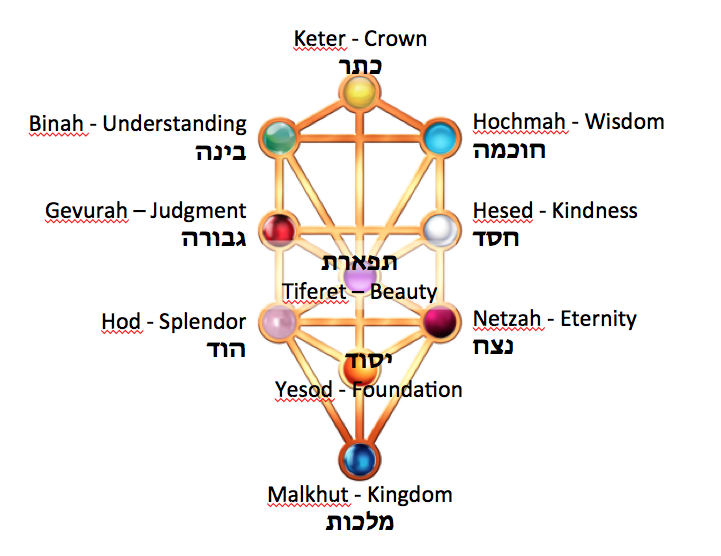
During that month we explored nt only Hinduism, but we also tried to find connections between religions and philosophies from all around the world. We even could find connections with the Tarot and the Kabbalah.

Tree of Life (Kabbalah)
We are on our way to find Peace of Mind and Heart ... and I hope you have found that while we were reading the Bhagavad Gita.

Haiku is not only the poetry of nature, but it is also a way to find that peace. While strolling through nature we become one with nature, become part of nature (as it was once meant to be) and than we experience the beauty of our Earth. We have to cherish her beauty, Earth is the only source to find peace of mind and heart. Isn't that what we all see as our goal?

cherry blossom
long cold night
reborn

© Chèvrefeuille (experimental haiku)

Well ... I hope I didn't sound like a preacher, this was not a sermon, only a flow of thoughts ...

This episode is open for your submissions tonight at 7:00 PM (CET) and will remain open until October 23rd at noon (CET). I will try to publish our new episode, Suzuran, later on. Have fun!


Sunday, October 15, 2017

Carpe Diem #1279 Yekaterinburg


Dear Haijin, visitors and travelers,

Welcome at a new episode of our Haiku Kai. This month we are on trip along memory lane, because we are celebrating our first luster. Isn't that an awesome idea? Carpe Diem Haiku Kai is here providing you inspiration for haiku, tanka and other Japanese poetry forms for five years. And it is a joy to create CDHK for you all. We have made a lot of journeys, old and new, along the roads all over the world.
At the start of 2014 we went on a journey straight through the former USSR as we "hopped" on the Trans Siberian Railway. While on that journey we read "Aleph" written by the renown author Paulo Coelho, one of the best authors on earth. Maybe you have read our CDHK preview last week than you know that next December we will have a marvelous month full of prompts extracted from the novels of Paulo Coelho. It's a long route to prepare that month, but I am happy to do that, because you, my dear Haijin, visitors and travelers are the ones for whom I creating CDHK ... just to inspire you.

Today we go back to Yekaterinburg, one of the places were Paulo Coelho was during his journey with the Trans Siberian Railroad (TSR). Yekaterinburg is the birthplace of Hilal, one of the lead characters of "Aleph". Hilal disappears in Yekaterinburg and Paulo is anxious to find her and hopes she is okay. Short before the TSR enters the station of Yekaterinburg Hilal and Paulo enter the "Aleph", the place were there is no time, were past, present and future meet eachother. What did she see? We know what Paulo saw, he describes that in "Aleph", but Hilal's experience is not described on that same moment.

Hilal however tells Paulo what she had experienced as they find each other back in Yekaterinburg. This place is the turning point of the relation between Hilal and Paulo. From that moment on they are re-living again their path from the past. Hilal and Paulo have known each other in a former life.

The Inquisition

In a former life Hilal was accused of heresy and witchcraft, she was sentenced to dead by fire. She was burned. Paulo was, in his former life, a member of The Inquisition. He could have saved Hilal, but didn't do that. That's the reason why they met again in another life, the life in which they both traveled on the TSR straight through the former USSR.

In a way the former USSR and The Inquisition are the same. In the former USSR people were persecuted if they were agains the communist government and send to camps deep in the coldest region of the USSR, Siberia. Is it a coincedence that Paulo takes the TSR? No ... the former USSR has the same history as Paulo had in his former life as a member of The Inquisition.

her spirit departs
with the dying of her pyre -
smoke rises to the sky

© Chèvrefeuille

Persecution still happens in our time. People are still persecuted for their believes or political ideas. Nothing has changed ... maybe The Inquisition started, back in the 13th century, the wish for a One World Religion and a New World Order. Let us hope ... that this wish will never be fullfilled.

Sorry for the strong ending of this episode, but I had to say it. Maybe we all have to enter the "Aleph" than we can see our past, our present and our future ... and learn from it.

This episode is open for your submissions tonight around 7:00 PM (CET) and will remain open until October 22nd at noon (CET). I will try to publish our new episode, Wheel of Creation, later on.


Thursday, October 12, 2017

Carpe Diem #1276 Tranquil


Dear Haijin, visitors and travelers,

As you maybe know I have (and have had) several special features here at Carpe Diem Haiku Kai. Our trip along memory-lane goes today along one of those special features. It was a feature in which I introduced haiku by renown and unknown haiku poets which I loved and had something with. That special feature was titled "Sparkling Stars" and our prompt comes from one of the episodes in autumn 2014. (You can find that episode HERE)

The title of this episode is extracted from a haiku by Koyu-Ni, which I shared than and will re-share here again:

Koyu-Ni was (as e.g. Chiyo-Ni) a Buddhistic nun (as can be seen at her name "ni" stands for "female monk".) There aren't many haiku known by her.

hana chirite shizuka ni narinu hito-gokoro

the blossoms have fallen:
our minds are now
tranquil

© Koyu-Ni (Tr. R.H. Blyth)

[...] Koyu-Ni died in 1782, her family name was Matsumato. She is one of the more prominent woman poets of the Edo period. She learned haiku from Songi the First. [...]

our logo of this feature (2014)

I than translated this haiku myself and that translation I love to share again:

tranquility -
finally I have found peace,
blossoms have fallen

© Koyu-Ni (Tr. Chèvrefeuille)

I think that in my translation the peace of mind is stronger present. With every gust of wind I am anxious that the fragile Cherry blossoms will be scattered and torn apart, but as all blossoms have fallen than my heart and mind are at peace, there is no anxiety anymore and that gives me that feeling of tranquility.

Life and dead are living together just on a thin line of silk, so close to one another, but that's the circle of life, the beauty of Mother Nature. This is what haiku is ... writing about nature and mankind as being part of it's beauty.


Well .... I think you all can remember this episode and I love to challenge you to create a haiku (or tanka) following the classical rules as described often here at Carpe Diem Haiku Kai.

This episode is NOW OPEN for your submissions and will remain open until October 19th at noon (CET). I will try to publish our new episode, the sacred sanctuary, later on. For now .... have fun!


Tuesday, October 10, 2017

Carpe Diem #1274 Ryuko-ji (compassion)


Dear Haijin, visitors and travelers,

In our CDHK history we have done exciting things all along the virual road. We made several journeys and we have walked pilgrimages all over the world. Back in 2014 we went to Shikoku Island, Japan after our journey straight through the former USSR. On Shikoku Island we visited, like millions of other O-Henro, the 88 temples converted to Kobo Daishi (also known as Kukai). The Shikoku pilgrimage is to Buddhists what the Hajj is for the Muslim. The Buddhists have to make this pilgrimage once in a life time and so it was our duty, as haiku poets, to visit Shikoku.

Today I have chosen one of the temples on Shikoku Island to inspire you with. This temple is named Ryuko-ji and is devoted to the Buddha of Compassion. One of the main ideas of Buddhism. In that episode (HERE) I also told you a little about the "State of Zen" in haiku and I remember that I told you a little bit more about "wordlessness".
"Wordlessness" is (in my opinion) one of the pillars of haiku. Look at our haiku. Three lines, approximately 17 syllables and around 15 or 20 words. It's a very short poem, but in that poem the strenght is the scenes that are tols about without words. So "wordlessness" is part of haiku.

Kobo Daishi (a.k.a. Kukai)
As I am preparing this episode I remember that I experimented with the haiku form last month and I think those experimental haiku are the best "image" or "example" of wordlessness in haiku. Nice to realize that. I hadn't thought about experimental haiku in the way of "wordlessness". Awesome.

Here is an example of what I call "experimental haiku", I think you will remember this one from last month.

stepping
into heaven
incense

© Chèvrefeuille (experimental haiku)

This one fits also the idea of pilgrimage in a way.

Let me try another "wordlessness"-haiku, sounds a bit strange ...

at dawn
dew shimmers
morning glories

© Chèvrefeuille ("wordlessness"-haiku)

This episode is open for your submissions tonight at 7:00 PM (CET) and will remain open until October 17th at noon (CET). I will try to publish our new episode, nakedness, later on.


Monday, October 2, 2017

Carpe Diem #1266 Koharu (Indian Summer)


Dear Haijin, visitors and travelers,

We are on a trip along memory-lane and today we are going back to November 2012, the last episode I posted then, was the first prompt for December 2012, so maybe I could have chosen another, but I like this theme as used today, because here in The Netherlands we have an Indian Summer or as we call it in Dutch "na-zomer".

Back in 2012 koharu was the first prompt at CDHK that was a classical kigo, or seasonword, a part of haiku that we cannot forget. In December 2012 all our prompts were classical kigo for winter and koharu (Indian Summer) was the first classical kigo I introduced. Why did I choose for those kigo then? I will try to explain that. As I started with CDHK I had a "silent" wish to share my knowledge about haiku, and the writing of haiku, with my visitors, you. So it was just a choice to introduce one of the classical rules of haiku ... the use of a kigo or seasonword.

Autumn Flowers (image found on Pinterest
A seasonword, as it already says, is a word that directs you to the season in which the haiku (or tanka) was written. Through those seasonwords you can relate easily to the scene described / painted in the haiku. Let me give you an example:

tulips bloom
in all kinds of colors

in the backyard

© Chèvrefeuille
In this haiku the kigo (seasonword) is tulips a kigo for spring, because tulips are flowers of spring.
Another one:
full moon
above the heath
points the way
© Chèvrefeuille
In this haiku, it is somewhat more difficult to "find" the season, but in the classical use of kigo moon is a kigo for autumn, because according to Japanese folklore, the moon of autumn is the most beautiful moon of the year.
Okay ... after this small piece of background I love to go on to our prompt of today, koharu (or Indian Summer). What is an Indian Summer? Let me give you a short explanation.
Indian Summer (credits)
Indian summer is a period of unseasonably warm, dry weather that sometimes occurs in autumn in the Northern Hemisphere. The US National Weather Service defines this as weather conditions that are sunny and clear with above normal temperatures, occurring late-September to mid-November. It is usually described as occurring after a killing frost. (source: Wikipedia)
Indian Summer
inbetween seasons
roses bloom again
© Chèvrefeuille
To read the prompt from our history you can click HERE.
This episode is open for your submissions tonight at 7:00 PM (CET) and will remain open until October 9th at noon (CET). I will try to publish our new episode, millionaire, later on. For now ... have fun!
 

Tuesday, July 19, 2016

Carpe Diem Tokubetsudesu #88 Back In Time "Revise That Haiku"


Dear Haijin, visitors and travelers,

Welcome at a new episode of Tokubetsudesu. As you know this month all the Tokubetsudesu episodes are about earlier special features here at Carpe Diem Haiku Kai. This week I love to take you back to one of those special features, "Revise That Haiku".

I love to challenge you all to 'revise' a classical haiku written by Shiki (1867-1902). One of the most extraordinary things about nature, from the scientific and intellectual point of view, is its asymmetry. Life is asymmetrical in its essential character, and it is natural for us to rejoice in it, for it is the guarantee of our spiritual freedom. Even the Great Buddha, for all the Law of Karma and the inviolable Wheel of the Law, the snow melts irregularly. On the sunny side, the snow is gone; on the other, there still remains a white mantle. To our human eye at least, it is a secretly felt confirmation of our inner conviction that 'with God all things are possible'.

Where does this lead to? Well ... it's to show you the picture which is (can be) seen in the following haiku by Shiki, which we are going to revise.

Daibutsu no katahada no yuki toki ni keri

the snow has melted
on one shoulder
of the Great Buddha

© Shiki


As you maybe know in this special feature the goal is to revise the given haiku and write/compose a new one. Not an easy task and it needs some courage to revise a haiku by one of the greatest four haiku-poets ever (Basho, Buson, Issa and Shiki), but ... well it challenges you to look in a different way to the classical haiku.

at the sunny side
the snow in the backyard has melted -
snowdrops are blooming

© Chèvrefeuille 


What a joy. Notwithstanding the snow, the print of winter, new life conquers it. The snow is melting and the snowdrops, the first messengers of spring, are starting to bloom.

I hope you will take up this challenge and I love to encourage you all to 'revise' the haiku by Shiki.

This Tokubetsudesu episode is NOW OPEN for your submissions and will remain open until July 24th at noon (CET). I will (try to) publish our new epsidoe, Elder, later on. For now ... have fun!