Friday, June 19, 2015

Carpe Diem Special #152, Rallentanda's fourth "friday flowers"


Dear Haijin, visitors and travelers,

As you all know this month all our CD Specials are haiku written by Rallentanda, our first kukai winner. And today we have a new CD Special, it's the fourth by Rallentanda and this haiku she wrote a week ago. I love to share it here for your inspiration:

winter - friday night
faces glow like flowers in
soft lighting at the pub

© Rallentanda

A beauty I would say. It's a haiku in which a whole story is told. A story of the gathering of people in a warm cozy pub on a winter night. I think you all can imagine the scene Rall has painted with her words and now it's up to you to try to write/compose an all new haiku in the same sense, tone and spirit as the one by Rall.

Here is my attempt to write/compose an all new haiku inspired on the one by Rall:

warm summer night
drinking together with friends
perfume of Honeysuckle


© Chèvrefeuille


This CD Special is open for your submissions tonight at 7.00 PM (CET) and will remain open until June 22nd at noon (CET). I will try to publish our new episode, long day (summer solstice), later on. For now .... have fun, be inspired and share your inspired haiku with us all.

Carpe Diem Tan Renga Challenge #90, Allen Ginsberg's "on the porch"


Dear Haijin, visitors and travelers,

This week's Tan Renga Challenge, in which I challenge you to write a second stanza towards the given first stanza ("hokku"), is very special in my opinion. I was running through my archives and my library and ran towards a well known poet, Allen Ginsberg. Ginsberg is one of the poets from "The Beat Generation" as was e.g. Jack Kerouac. I was reading about Ginsberg and I discovered that he had written haiku once. His haiku were never published, so this is a very special Tan Renga Challenge.

Let me first introduce Allen Ginsberg to you. Irwin Allen Ginsberg (1926 – 1997) was an American poet and one of the leading figures of both the Beat Generation of the 1950s and the counterculture that soon would follow. He vigorously opposed militarism, economic materialism and sexual repression. Ginsberg is best known for his epic poem "Howl", in which he denounced what he saw as the destructive forces of capitalism and conformity in the United States.
In 1957, "Howl" attracted widespread publicity when it became the subject of an obscenity trial, as it depicted heterosexual and homosexual sex at a time when sodomy laws made homosexual acts a crime in every U.S. state. "Howl" reflected Ginsberg's own homosexuality and his relationships with a number of men, including Peter Orlovsky, his lifelong partner. Judge Clayton W. Horn ruled that "Howl" was not obscene, adding, "Would there be any freedom of press or speech if one must reduce his vocabulary to vapid innocuous euphemisms?"
Ginsberg was a practicing Buddhist who studied Eastern religious disciplines extensively. He lived modestly, buying his clothing in second-hand stores and residing in downscale apartments in New York’s East Village. One of his most influential teachers was the Tibetan Buddhist, the Venerable Chögyam Trungpa, founder of the Naropa Institute, now Naropa University at Boulder, Colorado. At Trungpa's urging, Ginsberg and poet Anne Waldman started The Jack Kerouac School of Disembodied Poetics there in 1974.

Credits: Allen Ginsberg (1926-1997)
And I love to share a few haiku (never published in print) written/composed by Ginsberg.

Looking over my shoulder
my behind was covered
with cherry blossoms.

I didn't know the names
of the flowers—now
my garden is gone.

I slapped the mosquito
and missed.
What made me do that?


© Allen Ginsberg

Nice haiku. As I selected these I really saw/read the classics in them. For example that third haiku brought a haiku by Basho in mind:

a mosquito
aiming noisily -
the sound of one hand


© Basho (?)

A few other haiku by Ginsberg:


A frog floating
in the drugstore jar:
summer rain on gray pavements.

On the porch
in my shorts;
auto lights in the rain.

Another year
has past—the world
is no different.

The first thing I looked for
in my old garden was
The Cherry Tree.


© Allen Ginsberg

In this 'series' of haiku by Allen Ginsberg brought also a haiku in mind by one of our classic haiku poets, Buson:

a frog floating
in the water-jar:
rains of summer


© Buson

Allen Ginsberg was a "fan" of the classical haiku poets and the above haiku he wrote, so is said, he wrote while reading one of the four volumes "haiku" by R.H.Blyth.


So it is really a pleasure to share these haiku by Ginsberg with you. Ok ... back to our Carpe Diem Tan Renga Challenge. I love to challenge you all to complete the following Tan Renga starting with a haiku by Allen Ginsberg:

on the porch
in my shorts;
auto lights in the rain

© Allen Ginsberg (1955)

Well ... let me see what I can do with this haiku. To complete the Tan Renga I have to associate on the images shared in the haiku above. As I look at the complete scene than I think it's a summer haiku. It has been a hot day, he sits in his shorts on the porch; and it rains. It's late evening, because of the "auto lights". So how to complete this Tan Renga ...
In the above short biography of Ginsberg we can read that he was a Buddhist ... so can I use that for my second stanza. In the above biography we can read Ginsberg was homosexual ... can I use that maybe?
Hm ... to many thoughts, to many images and associations to choose from, so I decided to complete this Tan Renga in a very simple way ...


on the porch
in my shorts;
auto lights in the rain
                            (Allen Ginsberg)

after a lonely ... hot day
lips on mine ... together again
              (Chèvrefeuille)

Hm .... I like this completion. It completes the scene. After a long hot day alone finally together again, no more tears to shed (the rain), but only intense happiness (auto lights). A warm loving scene I think.

Well .... it's up to you now. Make this Tan Renga complete by writing the second stanza of two lines with approximately 7-7 syllables. This Tan Renga Challenge is NOW OPEN for your submissions an will remain open until next Friday June 26th at noon (CET). Have fun!

Thursday, June 18, 2015

On The Trail With Basho Encore 5 a falling sound


Dear Haijin, visitors and travelers,

Time flies ... it's Thursday again and so it's time for an all new episode of our special feature "On The Trail With Basho Encore" in which I share haiku composed by Matsuo Basho (1644-1694) for your inspiration. All the haiku used in this special feature are used with permission of Jane Reichhold, whom I am very grateful for giving me the opportunity to use her haiku.

This week's "Encore" haiku was written by Basho in spring 1666 short after the unexpected dead of his friend, Yoshitada. Basho was almost 22 years of age when he wrote this haiku. Jane says the following about this haiku:

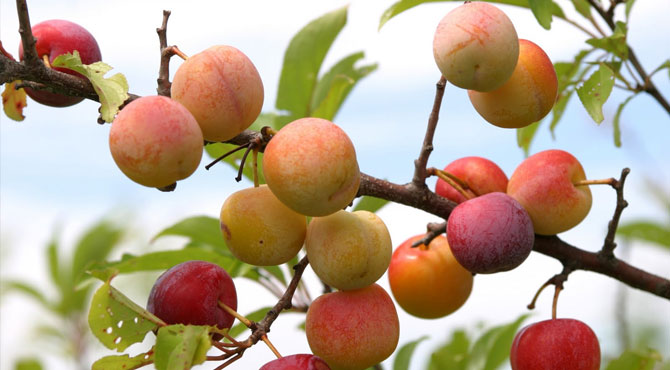
[...] "What the Japanese call ume is most often translated as "plum" because of the Latin name Prunus mume, but the fruit more closely resembles the apricot. Because these fruits ripen during mid-June to mid-July, the rains of this time are called ume no ame ("plum rains"). Even ripe, the fruit is inedible until it has been preserved in a salty, sour liquid similar to olives". [...]

furu oto ya mimi mo su-naru ume no ame

a falling sound
that sours my ears
plum rain

© Basho (Tr. Jane Reichhold)


Credits: Japanese Plums
Here is my attempt to write a haiku in the same sense, tone and spirit as the one I gave by Basho:

rain of summer
cherishes my naked body
after the heat

© Chèvrefeuille

Hm ... not a strong one, but I think it's in the spirit of Basho ... it's certainly, without a doubt in my spirit (smiles). Sorry ... that sounds a bit immodest.

This episode of "Encore" is open for your submissions tonight at 7.00 PM (CET) and will remain open until next Thursday June 25th at noon (CET). Have fun!

Carpe Diem 758 day dreaming


Dear Haijin,visitors and travelers,

Do you sometimes day dream? I certainly do day dream on a regular bases. For example ... a few days ago I day dreamed how it will be to have a special CDHK-day to meet each other in real life. Through the Internet we are connected with each other almost every day. What a joy it would be to meet each other, but I know that will never happen, but  we can meet each other in another way. For example how would it be to once in a say quarter of a year speak each other through Skype or another way through a chat or podcast. These are just a few examples of my day dreams. Do you day fream?

Today our 'summertime' month is halfway and today our prompt is day dreaming. I don't think it's especially something you do in summer, but in a way I can understand why Jane has brought this into her saijiki 'A Dictionary of Haiku', which we use this month to explore modern kigo (seasonwords) for summer. In summer we live most of the time outside and we have, for sure, lazy days and moments in which we are day dreaming. E.g look at the clouds. sometimes they look like mysterious landscapes and than our mind goes on a 'flight'. We are adventurers who are discovering new countries, new forms of life and so on. 

mysterious landscapes
rise and unfold before my eyes
worlds of clouds

© Chèvrefeuille

Ah those mysterious and magical worlds unfolding before your eyes in blue sky speckled with clouds. Clouds like landscapes in which mountain-peeks reach for the sun. Fantasy worlds with strange rivers, trees and animals ... all fantastic images. Maybe this is not really day dreaming, but it certainly feels like that.

Credits: Day Dreaming (to inspire others)
In her saijiki Jane gives a few examples of haiku themed 'day dreming' . And here are a few of her example-haiku for this modern kigo:

as if alive
the surf rolls a log
on the beach

a trail
to the sea horizon
her vision


Two beauties as I may say so. Especially the 2nd haiku I like very much. That last 'her vision' is really awesome. It points directly to day dreaming and I like that scene which Jane paints with her words. It will not be easy to 'catch' day dreaming into an all new haiku therefore I have chosen to write my haiku in the 'baransu' style starting with the first line of the above haiku by myself.

mysterious landscapes
hidden behind the thin mist
a rooster crows

© Chèvrefeuille

Do you see my day dream? Isn't it wonderful?

Another one:

eyes wide open
my mind takes a flight with my imagination
a gathering of poets

© Chèvrefeuille

Well ... I hope this episode inspires you. Let the day dreaming begin and bring you the visions you dream of. Have fun!

This episode is open for your submissions tonight at 7.00 PM (CET) and will remain open until June 21st at noon (CET). I will try to publish our new episode later on. For now ... have fun, be inspired and share your inspired haiku with us all here at our Haiku Kai.


Wednesday, June 17, 2015

Carpe Diem #757 desert


Dear Haijin, visitors and travelers,

I have another nice modern summer kigo for you and maybe I have done that earlier somewhere in our rich CDHK history, but that I don't know for sure. It's again a prompt which will inspire MMT the most I think, because she is living in the desert. You will understand that our prompt for today is desert and these are the haiku which Jane Reichhold uses as an example for this modern summer kigo:

desert
awakened by silence
filled with dark

stars
in the sand
desert gift

your voice
tying me to the desert
toast pops up

© Jane Reichhold

Aren't they gorgeous? I especially like the second haiku shared here, because of the nice "free style" way of composing it. Through this free style this haiku is very strong and intense.


Credits: desert
my own desert
re-decorating the garden
in bright sunlight

© Chèvrefeuille

A few other "desert"-haiku, the first an oldie from my personal weblog Chèvrefeuille's Haiku-blog and a new (re-done) one.

in the desert
the heat, the sand ... my eyes
a Fata Morgana


tears fall
lost and alone in the desert
just the moon and I

© Chèvrefeuille

Ah! The desert, one of our wonderful "eco-systems". I have learned to admire the desert through the posts of MMT. Her photos and haiku have done that to me.

This episode is open for your submissions tonight at 7.00 PM (CET) and will remain open until June 20th at noon (CET). I will try to publish our new episode, day dreaming, later on. For now ... have fun, be inspired and share your haiku with us all.

Tuesday, June 16, 2015

Carpe Diem Tokubetsudesu #48 ferns


Dear Haijin, visitors and travelers,

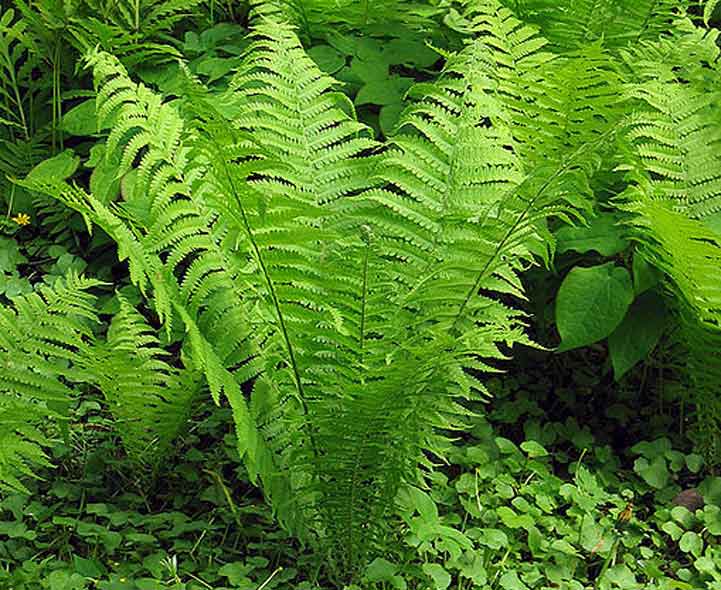
Another week has gone by and it's already Wednesday again ... time for a new episode of Carpe Diem Tokubetsudesu (our former Ghost Writer feature). This week I have chosen to do a new episode of our CD Distillation feature in which the goal is to distill haiku (or tanka) from a other (longer) poem. And this week I have chosen for a poem by Raymond A. Foss titled "Translucent Ferns":

TRANSLUCENT FERNS

The melting frost
ablaze in the warming
the wetness of the morning
changing the light

The ferns turned
from green to brown
from summer to autumn
but in the morning translucent
lit from behind

As the frost bleeds away
the lobes of the fern turned
warming in the light
of the autumn morning
as I rush on by
© Raymond A. Foss

Raymond has given me permission to use his poem and he even send me a haiku he wrote after this poem, a kind of distillation as is the goal for this week's Tokubetsudesu episode:


The ferns alive, clear
translucent before dying
almost like windows…


© Raymond A Foss


It's always a pleasure and a honor to get permission from other poets to use their poem(s) and I am glad that I can use this poem to inspire you.

As you all know we are busy with exploring Jane Reichhold's "A Dictionary of Haiku" and therefore I also will give a few examples of her haiku on ferns.

summer bracken
the shape of the spots
on the resting fawn

wild rivers
the joy unfurls
in ferns

© Jane Reichhold

Credits: Ferns
fragile beauty
through leaves of ferns
I see the sun

© Chèvrefeuille

What a wonderful plant this is, so fragile, so green ... they wave in the summer breeze like fans ... giving a little bit of coolness.

torn ferns
I use their leaves like a fan
Ah! that coolness

© Chèvrefeuille

I hope you did like this episode of Tokubetsudesu and I hope it will inspire you to distill an all new haiku from the poem by Raymond A. Foss. Have fun!

This episode of Tokubetsudesu is open for your submissions tonight at 7.00 PM (CET) and it will remain open until June 19th at noon (CET). I will (try to) publish our new episode, desert, later on.

Monday, June 15, 2015

Carpe Diem #756 summer passing


Dear Haijin, visitors and travelers,

We are still on trail with Jane Reichhold's "A Dictionary of Haiku" in which she has gathered wonderful modern kigo (seasonwords) for all seasons and this month at CDHK specifically summer. As summer is passing the weather changes and the temperatures are becoming less high ... summer is running to an end, as around August first.

Summer passing is our prompt for today and here are a few haiku composed by Jane Reichhold whom I am grateful to that I may use her haiku ... thank you Jane. (I bow my head in admiration for what you have accomplished for us haiku poets).

Jane Reichhold
a cool wind
summer passes
before it begins

late summer
even hotter by the breath
of dragonflies

mid-summer
the sadness of knowing
days grow shorter

© Jane Reichhold

Above haiku by Jane are from the second edition of her "A Dictionary of Haiku" which was published in 2013. Jane send it as a gift and I am so happy that she did and that I have the opportunity and permission to use all of her wonderful haiku. She is, in my opinion, the best and most gifted haiku poetess of our time, and I am grateful that I had the opportunity to get to know her.

naked
between summer flowers
dreaming of next summer

tears shed
on my naked body ...
summer is passing

© Chèvrefeuille


I hope you did like this episode of our CDHK ... it gives me a great feeling of summer. How about you?

This episode will be open for your submissions tonight at 7.00 PM (CET) and will remain open until June 18th at noon (CET). Have fun!