Friday, February 5, 2016

Carpe Diem #912 Movement/Propriocept​ion


Dear Haijin, visitors and travelers,

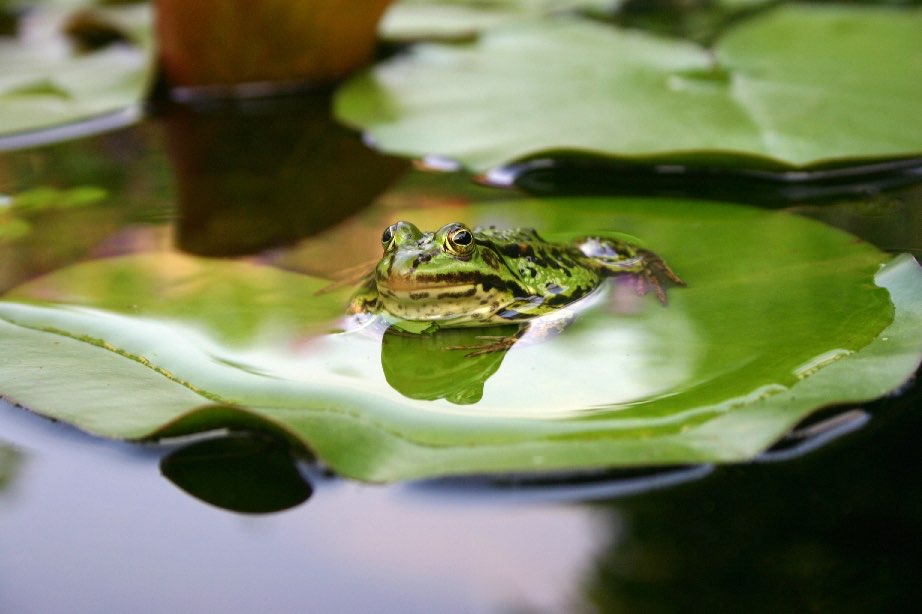
Yesterday Hamish brought back "baransu" (balance) and today he brings again one of the new Haiku Writing Techniques which I dared to create back to CDHK. In today's post he refers to the Haiku Writing Technique Undou (movement) ... a wonderful, but controversial, Haiku Writing Technique which we have explored in several CDHK episodes. Why controversial? Well ... haiku is just the impression of a moment (a moment in time) and movement in haiku was "not done" until Basho came up with his "frogpond" haiku. In which he talks about the movement of the frogs and not their croaking.

Introduction


In that famous haiku by Basho lays the birth of "undou" (movement). "Undou" (movement) however is more than only the movement of a frog. It's the movement of nature, of our world, movement that is everlasting like a "perpetuum mobile" and that, my dear Haijin, visitors and travelers, is why I created "undou" (movement) as a new haiku writing technique.
 I know that Jane Reichhold follows this discussion and maybe, just maybe ... I can convince her that "movement" can be part of haiku.
apple blossom falls
scattered by the late spring breeze
apple blossom falls
© Chèvrefeuille
This is "undou", this is movement. 
Credits: Undou (movement)

Hamish on Movement/Propriocept​ion

Close your eyes and touch your nose. If everything is working properly, this should be easy because your brain can sense your body, as well as its position and movement through space. This is called proprioception. But how does this "sixth sense" work — and what happens when it clashes with other senses?
We're all familiar with the five standard senses, which include vision, hearing, smell, taste and touch. The idea that there are only five of them has been rooted in our minds since the time of Aristotle, who explicitly rejected the idea of a sixth sense. But for centuries scientists have seriously entertained the idea of a sixth sense that allows us to perceive our bodies. There remains a lot of debate about whether this sense, which later became known as proprioception, can be considered an additional sense alongside the five standard ones. After all, the five senses all allow us to experience the outside world, whereas proprioception allows us to understand our physical place within that world.
Sixth sense or not, proprioception is recognized as being vital to our daily experiences and something that contributes to our overall body ownership. As Nature's Allison Abbot says: "Without it, our brains are lost." Proprioception is the master controller of our balance and spatial orientation, involving the senses movement and placing an emphasis on the body's motions, as well as incorporates routine or habitual behaviors to improve movements. Both hand-eye coordination and muscle memory involve kinesthesia — the more you perform certain actions, such as during sports, the better at them you will become.
We introduced the wonderful concept of 'Undou' motion or movement in haiku, sometime ago on Carpe Diem Haiku Kai. It is such an innovative concept that we should bring it back for today's post on Movement. Please compose a haiku with 'Undou' therefore, for today's haiku. 
Movement
 My response

"Movement" (or "undou") is something new in haiku, but not that new as we could read above. However ... movement is still not part of haiku, because of the idea that every haiku is an impression of just one moment as short as an eye-blink ... a static scene.
I ran through my archives and found a nice series of haiku on movement.

seasons come and go
she ... the moon always the same
plays with the waves
dew drops shimmer
on colorful leaves
rainbows sparkle
waterfall of colors
leaves whirl through the street -
departing summer
ankle chimes
listen to the movement
of the young dancer
ballet dancers
ghostly images covered in smoke
modern swan lake
© Chèvrefeuille
A nice series of haiku I think in which "movement" (or "undou") is shown in several ways. I hope you did like this episode and that it will inspire you all to write haiku, tanka or an other Japanese poetry form. Have fun!

This episode is open for your submissions tonight at 7.00 PM (CET) and will remain open until February 8th at noon (CET). I will publish our new episode, Spirituality, later on.

Thursday, February 4, 2016

Carpe Diem Vernacular, with a twist #1 the old pond


Dear Haijin, visitors and travelers,

As you all know not so long ago (last month) I introduced "Carpe Diem Vernacular" to you all. In that special feature I asked you to share haiku in your own language (vernacular). You all embraced that new feature and that made me confident to create another kind of "Carpe Diem Vernacular" ... Today this is the first episode of this idea.
I have called this "new" special feature "Carpe Diem Vernacular ... with a twist" and the goal is to (try to) translate a classical haiku from it's "classic" language to a haiku in your own language. This means that I will challenge you to "translate" a Japanese classical haiku, in Japanese, into your own language.

Let me give you an example:

For this example I have chosen that famous "frogpond" haiku by (my master) Matsuo Basho. Let me first give you the original classical version:

furu ike ya kawazu tobikomu mizu no oto

the old pond;
a frog jumps in —
the sound of the water


© Basho (Tr. R.H.Blyth)

I have to give the English translation, because I don't think you all can read Japanese (Romaji). Translation can be literal, but it can also be done figuratively. Maybe you have  a certain feeling as you read this haiku. Let that feeling be part of your translation, or just translate it literal. That choice is up to you.

Credits: frog / kikker (Dutch website)

I have given it a try myself ... I have tried to translate it figuratively, with feeling so to say:

falling water
resonates through the mountains
frog's shadow


© Chèvrefeuille

In Dutch:

vallend water
echoot door de bergen
kikker schaduw 

© Chèvrefeuille

Why did I choose for this figuratively translation? I imagined that old pond in my mind. And the first image which came in mind was a "waterfall" somewhere in the mountains. Mountains can make the sound of the falling water stronger and than I saw in hte corner of my eye a frog jump away, just a shadow. This "path" brought me to that version of the famous "frogpond" haiku.

For this first episode of "Carpe Diem Vernacular with a twist" I love to challenge you to "translate" this famous "frogpond" haiku. I am looking forward to your "translation".


This episode is NOW OPEN for your submissions and will remain open until next Thursday February 11th at noon (CET). Have fun!


Carpe Diem #911 Equilibrium/Balance


Dear Haijin, visitors and travelers,

A new episode is starting ... and it is a joy to read in the notes of Hamish that he refers to one of the Haiku Writing Techniques which I dare to create myself, baransu (or balance in your haiku). I hope this episode of today will bring baransu again to your attention. Let me give a short explanation of this Haiku Writing Technique.

Introduction

Baransu or bringing balance into your haiku has to do with association. If you write your first line of a haiku, than you have to associate on images in that line to write your second. The same counts for that second line. To write your third line you have to associate on images in your second line. I will give you an example.

"snowflakes fall", on which "image" I can associate? This can be on "snow", "snowflakes", "white" (because of the color of snow) or on "fall", this can be "autumn" of on "falling". Let me give it a thought. I will use "white". The second line can be "a white blanket covers the earth". A nice second line I would say.
Okay let me take a look at the possibilities to associate on for the third line: "white", "blanket", "covers" (maybe the cover of a magazine?) or "earth", earth in winter is mostly dark or black or deep brown. Let me give these ideas a thought. Maybe I will go for the idea of the cover of a magazine. Than that third line would be something like "Christmas edition".


This is the "way" to a "baransu"-haiku. I will bring the three lines together now:

snowflakes fall
a white blanket covers the earth
Christmas edition

© Chèvrefeuille

Not a very strong example of this "baransu" haiku writing technique, but it has brought me a nice haiku I think.

Hamish on Equilibrium/Balance

Like many senses, the sense of balance or equilibrioception has both mental and physical sides. Physically, the act of keeping balance is both a subconscious as well as conscious sense, and it is therefore one of our physiological  senses. The ability to always maintain balance is part of the function of our ears, though we keep balance visually, and astronauts have problems with sense of balance when returning to earth and excess motion, for example on a merry go round can result in loss of balance, as well as vertigo, and indeed too much alcohol.
The broken escalator phenomenon, also known as the Walker Effect, is the sensation of losing balance or dizziness reported by some people when stepping onto an escalator which is not working. It is said that there is a brief, odd sensation of imbalance, despite full awareness that the escalator is not going to move. It has been shown that this effect causes people to step inappropriately fast onto a moving platform that is no longer moving, even when this is obvious to the participant.
Some animals have better equilibrioception than humans, for example a cat uses its inner ear and tail to walk on a thin fence. Equilibrioception in many marine animals is done with an entirely different organ, the statocyst, which detects the position of tiny calcareous stones to determine which way is "up."
Plants could be said to exhibit a form of equilibrioception, in that when rotated from their normal attitude the stems grow in the direction that is upward (away from gravity) while their roots grow downward (in the direction of gravity) this phenomenon is known as Gravitropism and it has been shown that for instance Poplar stems can detect reorientation and inclination.
Here on Carpe Diem Haiku we previously explored the notion of 'balance' ( or baransu) as a haiku technique. Let's bring that technique back for your haiku today. Let's see how you show that sense of balance in your haiku, using techniques previously learnt.


Credits: Sunflower Field

My response

Balance ... it has not only to do with movement, but I think it also has to do with "inner balance". You have to be "in balance" mentally to stay focused on the things you have to do in your life. As I look at myself than I need "inner-balance" to do my work as an oncology nurse. I have very ill patients who need my care and attention and my love, so I can only give that to them if I am in balance myself.
To stay in balance myself I use to write. First novels and later I wrote more and more haiku to keep myself in balance. In my poetry I can find that balance through the scenes in my haiku, but also through being your host here at Carpe Diem Haiku Kai. I wonder ... what if I had not the opportunity to write or being your host? Than I think I would be less successfull in my job as an oncology nurse.

in the light of dawn
sunflowers reach to the blue sky
praising their Creator

© Chèvrefeuille

A nice haiku in which I see "balance" in the strenght of the Sunflowers reaching to the blue sky. As I "analyze" this than I associated on "light of dawn" to come to "sunflowers". And on "blue sky" to come to "Creator" in the third line. A nice "baransu"-haiku I would say.

This episode is open for your submissions tonight at 7.00 PM (CET) and will remain open until February 7th at noon (CET). I will try to publish our new episode, movement, later on. For now ... have fun!

Wednesday, February 3, 2016

Carpe Diem #910 Bitterness/Sour


Dear Haijin, visitors and travelers,

I hope you did like our Tokubetsudesu episode and our first CD-Special. I have read wonderful responses on both episodes and it is promising for the rest of this month. I think the quality of the poetry shared here at CDHK becomes better and better ...
Today we are going further with sharpening our senses in collaboration with Hamish Managua Gunn who created our prompt-list.

Introduction

Today we are looking to bitterness/sour and I must say, both are my favorite tastes. I love the bitterness of (for example) radish and the sour of lemon. As I look at my grandkids, for example, they don't like bitterness, but their favorite candy is what we call here in The Netherlands, zure matten, (in English sour mats. It's a kind of candy with first the sweetness of Sugar, but as this thin layer of Sugar has melted, the sourness of the candy is very strong. I Always must laugh as I see their little faces change when they are tasting the sourness, but they love it.

after sweetness
the sourness of children's candy
their sour faces


© Chèvrefeuille

Credits: Sour Mats (Zure Matten), a sour kind of candy

Hamish on Bitterness/Sour

Without taste, of any kind, we forgo the pleasure of life. Taste means the joy of life, even the bitter taste of sour cabbage or a very dry wine or an English bitter beer. However, bitterness is a sign of toxicity, and the term is used often in daily language, such as ''a bitter pill to swallow,'' or '' sour grapes.''
Descriptions of taste are very often associated with strong emotions. As mentioned in a previous post on Sweetness, the strong link connecting taste with emotion and drive has to do with our evolution: Taste was a sense that aided us in testing the food we were consuming. It was therefore a matter of survival. A bitter or sour taste was an indication of poisonous inedible plants or of rotting protein-rich food. The sweet and salty tastes, on the other hand, are often a sign of food rich in nutrients. Yet the sour lemon is one of the world's most ubiquitous tastes and smells.
Savory dishes can sometimes be sour. Or they can be of the fifth basic taste, an addition to the four better known tastes of sweet, sour, bitter and salty, which is umami, a Japanese word used for “savory.”
Your haiku today should bring alive one of your favorite tastes, or a memory of a strong taste.

My response

Taste ... we all (mostly) have good taste, but in my work as an oncologynurse I see a lot of patients who have lost their taste through the chemo they are given. Must be an awfull idea to loose your taste. I cannot imagine how it would be if I would loose my taste. I like to taste new vegetables, new fruits and so on ... just to find the deeper source of it and the place where it is coming from ...


Hamish asks us to write a haiku which brings alive one of our favorite tastes and that brought me the following haiku:


the taste of cherries
helping me through the cold winter
Sakura blooms again


© Chèvrefeuille
 
Credits: covered in chocolate

And here is another one. A little bit naughty I think, but it fits the theme for today's episode:

my sweet love
covered in chocolate
arouses my senses
© Chèvrefeuille
Well ... I hope you did like this episode. I am looking forward to all of your beautiful responses on this nice post.
This episode is open for your submissions tonight at 7.00 PM (CET) and will remain open until February 6th at noon (CET). I will (try to) publish our new episode, Equilibrium/Balance, later on.
 

Tuesday, February 2, 2016

Carpe Diem Special #195 Hamish Managua Gunn's first "full snow moon"


Dear Haijin, visitors and travelers,

Welcome at the first CD Special of February. As you all know Hamish Managua Gunn (a.k.a. Pirate) won our "winter-kukai". Winning the kukai means that you are the featured haiku poet for a month at CDHK. Today is the first CD Special in which I will tell you a little bit more about Hamish and his poetry.

This is what Hamish says about himself (I found this at Smashwords):

"I am a hermit here in Lappland, a tinker by origin from the Orkney Isles, with simple messages: a view from a peak must be earned by a climb, a night in the desert gives the best sleep, and stories are found deep in forests.
For me, hospitality is sacrosanct – high up on a mountainside when the winds gather, or in the desert when the mirage is no longer real, and especially just after dawn among pine needles, sheltered by mighty branches.
And those who shared their bread with me shared more. What I share in writing is always a tale from one of the four corners of the world, a street corner, souk, ship or café; somewhere I went to in purchase of pure copper for my small copper shoppe. Then the scenes come with me on walks in my forest far in Lappland; there the story forms among trees in storms and soft breeze.
But I travel because I write: if you want to climb a mountain, you must start at the top".

And this is what Hamish says about his writing process: "I visit my forest every morning - and blog only about that also. Words are found in trees. I collect them, a bit like a crossword puzzle".


Hamish Managua Gunn

I think that Hamish, as he says it himself, is really a great thinker and gifted with a great talent to write novels and haiku. Hamish is a steady visitor of Carpe Diem Haiku Kai and he even has been several times my co-host. As you all know ... Hamish is the creator of our prompt-list for this month and has an important role in the episodes of this month.

I am very proud that I can say that Hamish is a very good friend and a very gifted haiku poet as we already saw in our CDHK kukai "Winter" which he won with the following haiku:

midwinternight
a dark sky's lights dance
in the wolf's eyes


© Hamish

This is really a beautiful haiku and I think it was the only choice to be the winner, but that's just my opinion.

I came in contact with Hamish through CDHK and I appreciate what he is doing for CDHK, but more than that I appreciate him for his honesty and clearness in all his writings. He is a poet who stands very close to nature, as we all know he finds his inspiration in his forest and on all his travels. He also is a spiritual guy, as we could read in his essay about shaman-haiku and in his winning haiku.
Hamish is a haiku poet 100%

I have a few haiku to share here for your inspiration. He emailed his own choice of haiku and gave me the opportunity to choose from them. Here is a nice one:

one snowflake and I
share the end of autumn
in silence

© Hamish

This haiku fits also the theme of today's Tokubetsudesu episode and could be easily written for that episode too. In this haiku I sense the devotee of nature ... oneness with nature ... awesome.

Photo provided by Hamish (© DVS Williamson)
With this beautiful full moon image came a wonderful haiku which Hamish emailed earlier ... Another nice haiku written by a gifted haiku poet:

full snow moon
stirs the ladybug
on cold bare branches


© Hamish

Awesome ... in this one the silence is prominent and strong present ... thank you Hamish, ny friend, that you have given me the opportunity to choose from your oeuvre of haiku ... I am honored to host these CD Specials with all your wonderful poetry.

As you all know the goal of the CD-Specials is to try to create an all new haiku or tanka in the same spirit as the one given ... so try to catch the spirit of Hamish's haiku ...

Here is my response, and I can only hope that it is in the same spirit:

bare branches
against the deep blue night sky
moving shadows


© Chèvrefeuille

Not as strong as I had hoped, but I like this one.

This CD-Special is NOW OPEN for your submissions and will remain open until February 5th at noon (CET). Have fun!

Carpe Diem Tokubetsudesu #68 dt.haase's "inviting silence"


Dear Haijin, visitors and travelers,

It is my pleasure to bring to you an all new episode of our special feature Tokubetsudesu. This week I will tell you a little bit more about our "runner-up" of our "winter-kukai", dt.haase. dt.haase is the pseudonym of Dan Haase. Dan is an educator and consultant in Wheaton, Illinois. dt.haase is not a regular visitor of our Kai, but he sometimes shares his wonderful haiku and haiga here.

I searched the Internet, but about dt.haase I couldn't find more background information, but that doesn't matter I love to highlight a few of his wonderful haiga here. The first to share, of course, his haiku (submitted as a haiga for the "winter-kukai")


© dt.haase. "runner-up" of the "winter-kukai"

I have wandered through his website Gathering Wonder and ran into wonderful haibun, haiku and haiga. His oeuvre is broad and I love especially his photo-haiga.

Let me show you another wonderful haiga by dt.haase:


© dt.haase "runner-up" of the "winter-kukai"
A beauty I would say. dt.haase created a lot of haiku, haiga and haibun. On his google website: Wanderer With Words you can find a lot of his work.

It's not a very long episode of Tokubetsudesu, but I think (as you visit the websites by dt.haase) you can see (and read) the beauty of his work.

The title of this Tokubetsudesu episode is "inviting silence" and I love to challenge you to create a haiga (or haiku) in which you try to catch "silence". I have wandered through my archives and found a nice haiga which I created several years ago, maybe you can remember it.

Silence
This episode is open for your submissions tonight at 7.00 PM (CET) and will remain open until February 5th at noon (CET). I will (try to) publish our new episode, Bitterness/Sour, later on. For now ... have fun!

PS.: I will publish our first CD-Special of this month later today. You have to be patient to read the first haiku of our featured haiku poet Hamish Managua Gunn. Sorry !!


Monday, February 1, 2016

Carpe Diem #909 Sweetness


Dear Haijin, visitors and travelers,

What a nice responses I have read already and what a joy to see names of participants of the former years of CDHK. It's always great to see them visit again. This month we are sharpening our senses through the beautiful prompt-list by Hamish Managua Gunn. Today we are exploring sweetness.

As I did in our first episode of this month, "hearing", I will first write an introduction, than the notes by Hamish will follow and to close this episode I will share my response(s) with you all.

Introduction

Sweetness as in sweet like candy refers to our taste, one of the senses which we are developing first even before we are born. A 12 weeks old fetus has a lot of taste buds. They drink from the amniotic and can taste what their mother has eaten. As we look at babies, toddlers than we see that they are all discovering their world with their mouth. During the first years of our life our taste becomes better and we are tasting the differences between candy, vegetables and so on, but as we are becoming older a lot of our taste buds will be gone.

walking along the beach
the taste of salt tickles my tongue
a stormy day


© Chèvrefeuille

Hamish on Sweetness

Who does not have a sweet tooth! Sweetness could be said to be the sense that ensured our survival up to today... our ancient primate ancestors in their natural settings looked for sweetness intensity in the plants and berries they ate. Sweetness intensity indicated energy intensity. while bitterness indicated toxicity.  Our high sweetness detection threshold and low bitterness detection threshold predisposed our primate ancestors to seek out sweet-tasting (and energy-dense) foods and avoid bitter-tasting foods.

Credits: sweetness

Our toxicity now lies in the pollution and stress of daily modern city life, and chocolate is our main anecdote, the most-consumed food material on earth. Those who want even more sweetness can find it in some plants: a number of plant species produce glycosides that are sweet at concentrations much lower than sugar. The most well-known example is licorice root, which is about 30 times sweeter than sucrose. Another commercially important example isstevioside, from the South American shrub  Stevia rebaudiana. It is roughly 250 times sweeter than sucrose. Another class of potent natural sweeteners are the sweet proteins such as thaumatin, found in the West African katemfe fruit.

Sweetness is such a desired taste we often refer to those we love as 'sweetie' or words similar. However, the role of sweet foods and drinks for those without the love they need in their lives is the dark side of the need for the sweet taste of life....

Try to catch sweetness as in "taste" or as in the "one you love" in your haiku (or tanka).

My response

It wasn't an easy task to create a haiku on sweetness, but I think I caught both ideas about sweetness in this cascading haiku:

grandma has passed away
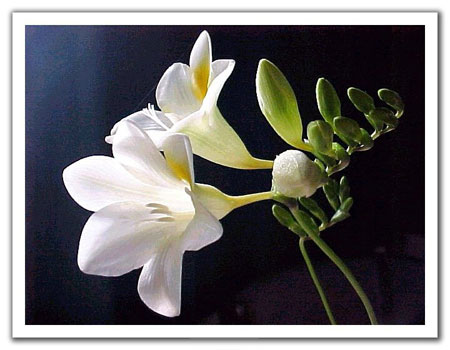
her sweet perfume of freesias -
Ah! that sweet scent


Credits: Freesias

Ah! that sweet scent
memories making my heart cry
grandma’s stewed pears

© Chèvrefeuille

Well ... it's a challenge, but I know you all are such great poets that this challenge will be easy.

This episode is open for your submissions tonight at 7.00 PM (CET) and will remain open until February 4th at noon (CET). I will (try to) publish our next episode, the first Tokubetsudesu episode of this month, later on.