Saturday, February 11, 2017

Carpe Diem #1151 Shikoku Island


Dear Haijin, visitors and travelers,

First this: At the left side of our Kai you can find the link to the download of "Only Footprints" by Candy, the latest exclusive CDHK e-book. Candy has created a wonderful e-book and I hope, as the editor of it, that you all will like it as much as I liked creating it.

Maybe you have noticed it already, but I haven't published our new episode of our new special feature "Namasté", but that had to do with time. After our regular episode I will also publish our new "Namasté" episode.

We are on a journey "criss-cross" through Japan the native country of haiku and today I love to travel on to the island of Shikoku. Maybe you can remember our pilgrimage along the 88 temples on this island. The Shikoku pilgrimage is a once in a lifetime to do pilgrimage of Buddhist, as is the Hadj for the Muslim.

The Shikoku pilgrimage is originated by Kobo Daishi (also know as Kukai), the founder of the Shingon sect of Buddhism, and it brings you along the 88 temples on Shikoku island. During some circumstances that take a bit of time from me I have taken the easy way today. I will reproduce the first episode of our Shikoku pilgrimage back in 2014 here again. I hope you don't "hate" me for that choice (smiles).

Sakura Temple on Shikoku Island

Shikoku is one of the four main islands (Hokkaido, Honshu, Shikoku, and Kyushu) that make up Japan. The island is located between the Seto Inland Sea and the Pacific Ocean. There are four prefectures located there: Tokushima, Kagawa, Ehime, and Kochi. Tokushima has close political, economic, and cultural ties to the Kansai region of Honshu, which includes cities like Osaka and Kyoto. In recent years, three bridges spanning the Seto Inland Sea have created land routes between Honshu and Shikoku. One connects Kobe to the city of Naruto in Tokushima via Awaji Island on the Kobe-Awaji-Naruto Expressway (the Akashi Kaikyo Bridge). The second route connects Okayama Prefecture's Hayashima with the city of Sakaide in Kagawa via the Seto-Chuo Expressway (the six Seto-Ohashi Bridges; this route also features a rail line). The third connects Hiroshima's Onomichi with the city of Imabari in Ehime via the Nishi-Seto Expressway (the three Kurushima-Kaikyo Bridges; this route is also accessible on foot or by bicycle). With the construction of these routes, travel between Honshu and Shikoku via expressway and railway (Seto-Ohashi Bridge) has become more convenient than ever before.

Iya Kazurabashi Bridge, Takushima Prefecture Shikoku
The Pacific side of the island, which consists of the portion located to the south of Shikoku's mountain range that runs east to west, sees more than its share of rain, but the climate of the entire island is relatively warm.
There are plenty of wild and natural spots, scenic and historic places, and traditional festivals.
Naoshima, where nature and contemporary art coexist, Mt. Ishizuchi, one of the highest peaks in West Japan and a popular destination for hikers, the Naruto whirlpools, one of the largest whirlpools in the world, the thatched traditional house known as Chiiori which is located in the Iya valley, known as one of the three most remote places in Japan and the place where the defeated Heike warriors took refuge at the end of the 12th century, the Shimanto River which is called Japan's last clear stream where local people enjoy river recreation., Kompira Shrine which is home to the god of the sea, Dogo Hot Spring which is one of Japan's oldest hot springs with several thousand years of history, Awa Odori summer festival which attracts 1.3 million people annually, Kochi prefecture's summer Yosakoi festival which attracts 1 million people, Kochi's outdoor Sunday Market which is one of Japan's largest, and many many other attractions are what make up Shikoku.

Kan Henro, tradiotnal pilgrim clothing for the Shikoku pilgrimage
mysterious Island
dedicated to the Path of Enlightenment
four countries as one

© Chèvrefeuille

Shikoku Island knows four prefectures and that's reflected in it's name that means "four countries". Back in 2014 I enjoyed this Shikoku pilgrimage very much and I hope you all have nice memories at it too. By the way if you would like to read those episodes again or for the first time? Scroll down in the menu at right side of our Kai and click on the year 2014, February and March. Than you can "re-do" that pilgrimage again or discover the beauty of that pilgrimage.

pilgrims chanting
the Heart Sutra to honor Kukai -
cry of a Vulture
breaks through the serene temple -
pilgrims chanting

© Chèvrefeuille

To enlighten the meaning of the above tanka I have a short explanation for you about this tanka.

Ryozenji Temple, the first temple of the Shikoku pilgrimage, is also known as "Vulture Peak" which refers to one of the sermons the Buddha once gave on a mountain with the same name. It was on that mountain that Buddha started with his religion and wrote the Heart-Sutra and e.g. the Lotus-Sutra.

This episode is NOW OPEN for your submissions and will remain open until February 16th at noon (CET). I will try to publish our next episode later on.


Friday, February 10, 2017

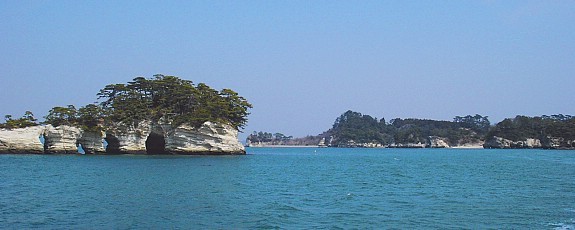
Carpe Diem #1150 Matsushima


Dear Haijin, visitors and travelers,

First my apologies for being late with posting. I hadn't time, because of very busy days at work and at home.

Today I love to guide you to one of the most famous and wonderful spots of Japan. Even Basho praised this spot for its beauty. Today we will visit Matsushima.

Matsushima is a bay in Miyagi prefecture - 25 km from the prefectural capital, Sendai - that is famous for its view of over 260 tiny pine-clad islands - "matsu-shima" meaning "pine islands." It is considered one of Japan's Three Great Sights (Nihon Sankei), and its beauty was immortalized in one of wandering haiku-master Basho's most famous poems.

In 1689, Haiku poet Matsuo Basho visited Matsushima on the trip recorded in Narrow Road to the Deep North. A well-known poem often attributed to Basho claims to record his reaction, signifying that nothing more could be said:
Matsushima ah!
A-ah, Matsushima, ah!
Matsushima, ah!
© Matsuo Basho
This very rural area, with a local population of less than 20,000, is also famous for the delicious oysters farmed in the bay, and for its colorful Obon lantern festival in August.

Matsushima
In Basho's "Oku no Hosomichi", "The Small Road Into The Deep North", he describes in a very detailed way how Matsushima looks.

[...] "Much praise has already been lavished on the wonders of the islands of Matsushima. Yet if further praise is possible, I would like to say that here is the most beautiful spot in the whole country of Japan, and that the beauty of these islands is not in the least inferior to the beauty of Lake Dotei or Lake Seiko in China. The islands are situated in a bay about three miles wide in every direction and open to the sea through a narrow mouth on the south-east side. Just as the River Sekko in China is made full at each swell of the tide, so is this bay filled with the brimming water of the ocean and the innumerable islands are scattered over it from one end to the other. Tall islands point to the sky and level ones prostrate themselves before the surges of water. Islands are piled above islands, and islands are joined to islands, so that they look exactly like parents caressing their children or walking with them arm in arm. The pines are of the freshest green and their branches are curved in exquisite lines, bent by the wind constantly blowing through them. Indeed, the beauty of the entire scene can only be compared to the most divinely endowed of feminine countenances, for who else could have created such beauty but the great god of nature himself? My pen strove in vain to equal this superb creation of divine artifice." [...] (Source: Oku No Hosomichi)

I found also a nice haiku by Sora, Basho's travel companion, about Matsushima:

at Matsushima
borrow your plumes from the crane
O nightingales!
© Sora (Tr. Donald Keene)
This episode is NOW OPEN for your submissions and will remain open until February15th at noon (CET). I hope to be on time tomorrow.

Wednesday, February 8, 2017

Carpe Diem 1149 Imagine Fuji Yama


Dear Haijin, visitors and travelers,

I haven't a lot of time at the moment so I have taken the easy way this time. I love to challenge you with a wonderful image for your inspiration. So you can say this is a Carpe Diem Imagination episode.

I have found a beautiful photo of Fuji Yama, the Holy Mountain of Japan and I hope it can inspire you to create haiku or tanka.

Fuji Yama (photo © Vacationio.com)
To help you a little bit I have a few haiku by Issa and Basho:

little snail
inch by inch, climb
Mount Fuji!

a Mt. Fuji viewing spot
for barley harvesters -
nettle tree

© Issa

is one ridge
clouded with winter showers?
Fuji in snow

especially when
it comes into view -
Fuji in Fifth Month

© Basho

And of course I had to create one myself, so here it is ...

reflections
the snow capped peek
dives into the lake


© Chèvrefeuille

Well ... this episode is NOW OPEN for your submissions and will remain open until February 13th at noon (CET). Have fun!


Carpe Diem #1148 Shinto


Dear Haijin, visitors and travelers,

Welcome at this new episode of Carpe Diem. Today I love to tell you a little bit more about Japan's most important religion ... Shinto. I don't know much about Shinto, but I know it's a religion of nature and the Emperor of Japan is the head of Shinto, he is a direct descendant of the Japanese Sungoddess Amaterasu and that gives him the title Head of Shinto, a kind of highpriest so to say.

To tell you a little bit more about Shinto I decided to surf the WWW and found a nice piece of information about Shinto (Source:http://www.japan-guide.com)


Shinto

Shinto ("the way of the gods") is the indigenous faith of the Japanese people and as old as Japan itself. It remains Japan's major religion alongside Buddhism.

Introduction

Shinto does not have a founder nor does it have sacred scriptures like the sutras or the Bible. Propaganda and preaching are not common either, because Shinto is deeply rooted in the Japanese people and traditions.

"Shinto gods" are called kami. They are sacred spirits which take the form of things and concepts important to life, such as wind, rain, mountains, trees, rivers and fertility. Humans become kami after they die and are revered by their families as ancestral kami. The kami of extraordinary people are even enshrined at some shrines. The Sun Goddess Amaterasu is considered Shinto's most important kami.

The Wedded Rocks, a very important kami for weddings in the Shinto tradition

In contrast to many monotheistic religions, there are no absolutes in Shinto. There is no absolute right and wrong, and nobody is perfect. Shinto is an optimistic faith, as humans are thought to be fundamentally good, and evil is believed to be caused by evil spirits. Consequently, the purpose of most Shinto rituals is to keep away evil spirits by purification, prayers and offerings to the kami.

Shinto shrines are the places of worship and the homes of kami. Most shrines celebrate festivals (matsuri) regularly in order to show the kami the outside world. Please read more on our special information pages about shrines and festivals.

Shinto priests perform Shinto rituals and often live on the shrine grounds. Men and women can become priests, and they are allowed to marry and have children. Priests are aided by younger women (miko) during rituals and shrine tasks. Miko wear white kimono, must be unmarried, and are often the priests' daughters.

Important features of Shinto art are shrine architecture and the cultivation and preservation of ancient art forms such as Noh theater, calligraphy and court music (gagaku), an ancient dance music that originated in the courts of Tang China (618 - 907).

Ise Shrine, the most important shrine of Shinto

Shinto History

The introduction of Buddhism in the 6th century was followed by a few initial conflicts, however, the two religions were soon able to co-exist and even complement each other. Many Buddhists viewed the kami as manifestations of Buddha.

In the Meiji Period, Shinto was made Japan's state religion. Shinto priests became state officials, important shrines receive governmental funding, Japan's creation myths were used to foster a national identity with the Emperor at its center, and efforts were made to separate and emancipate Shinto from Buddhism.

After World War II, Shinto and the state were separated.

Shinto Today

People seek support from Shinto by praying at a home altar or by visiting shrines. A whole range of talismans are available at shrines for traffic safety, good health, success in business, safe childbirth, good exam performance and more.

A large number of wedding ceremonies are held in Shinto style. Death, however, is considered a source of impurity, and is left to Buddhism to deal with. Consequently, there are virtually no Shinto cemeteries, and most funerals are held in Buddhist style.

I like this Japanese religion and I even think it's one of the spiritual layers of haiku and I hope to see that deeper layer back in your haiku or tanka inspired on this episode.

a pebble-stone
taken from the Wedded Rocks
a farewell gift
autumn has gone only one
thing remains a chestnut

© Chèvrefeuille

This episode is NOW OPEN for your submissions and will remain open until February 13th at noon (CET). I hope to publish our next episode later on today.


Carpe Diem Universal Jane #11 renga "Old Jokes With Me"


Dear Haijin, visitors and travelers,

Welcome at a new episode of Universal Jane, our special feature in honor and remembering Jane Reichhold who has meant a lot for our Haiku Kai.
Jane was not only a great haiku and tanka poetess, but she also was a renga master, she even created a renge together with her husband Werner and Matsuo Basho. I love to share that renga here with you all.

This renga is titled "Old Jokes With Me" and it is based on three and two lined renga pieces written by Basho. In this renga the links in bold are by Basho and the links in italic are by Jane and the links in the normal type are by Werner. This example of a renga I have extracted from Jane's "Bare Bones School of Renga" (available through download at Jane's Library here at CDHK). It wasn't very clear which links were written by whom, so I tried to reconstruct this. The only sure links were the ones by Basho. As I followed the "classical" way of renga than I could reconstruct it and I hope I did it right.

Renga ... also one of Jane's prides ... she was a renga master pur sang.


OLD JOKES WITH ME

Matsuo Basho

Jane Reichhold

Werner Reichhold
1 hokku:
it’s so rotten
no other dogs enjoy
old jokes with me  
      
2
pass the wine
raise our spirits

3
always a link
up his sleeves
the brush wets

4
leather socks get dirty 
walking a muddy path

5
somebody’s missing
quick put the moon in
a puddle

6
shy eyes
far-out composing

7
spinning down
when does it get 
to the bottom?

8
so the villagers
laugh at me

9
sleeping outdoors
with friends
summer constellations

10
a hand drumming
pulsates with the sun


11.
a wood thrush manifests
“as power-spirit I come” 
and cries and cries and cries

12
breath wind in mists
a trail through the maze

13
meadow walk
eventually hiding
a snake

14
greeting the traveler
a lamp on the floor

15
curving her breast
the early moon
very hot

 16
impatient call:
“Where can we meet?”

17
sandals in petals
yet he’s so poor
his hat’s a sack

18
squint-eyed bag lady
famous in New Jersey

19
picture postcard
the come hither look
of the naked beauty

20
expanded body freedom
designed for partnership

21
cats in love
satisfied at dawn
he explains

22
“I’m collecting songs
for the Flax-Reaping Anthology.”

23
bundles
the hand ties with a string
words

24
college sonnets saved
in a hope chest

25
more than dreams
the real butterfly 
touches one

26
stem after it 
leaves erect

27
without friends 
he moves
to help himself

28
among that kind
the tall pilgrim stands out

29
relief comes 
first light 
on a cedar tip

30
to an incense stick
he also bows

31
worship service
begins as invocation
crickets chanting

32
it’s so hot it’s so hot 
the same voice at every gate

More about Soliloquy no Renga you can find HERE
33
wet lips
summer-shine 
opens

34
snow-clogged mountain pass 
so steep everyone sweats

35
resting
the hiker hears
a wave of color

36 ageku:
sunset on a spring lake
pleasure brings home a poem

© Basho, Jane Reichhold and Werner Reichhold (summer 1990)

Isn't it awesome to read this renga ? Try to create your renga, a Soliloquy no Renga, inspired on the hokku of this renga

This episode is NOW OPEN for your submissions and will remain open until February 13th at noon (CET)


Tuesday, February 7, 2017

Carpe Diem Extra February 7th 2017 chosen delay


Dear Haijin, visitors and travelers,

Through circumstances I will publish our new episodes of our regular prompt and Universal Jane tomorrow. I haven't time today.

Namasté,

Chèvrefeuille

Carpe Diem #1147 Ise Shrine


Dear Haijin, visitors and travelers,

It is my pleasure to announce that Chèvrefeuille's Publications has created a new exclusive CDHK e-book "Only Footprints" by Candy. Candy was the winner of our 'tribute to Jane' kukai and won the opportunity to create an e-book.
The download link isn't ready now, but that will change later today.

Today we are going further on our journey through Japan, the "Motherland" of Haiku. Today I love to tell you all a little bit more about Ise Shrine. Ise Shrine is one of the most famous shrines of Japan and you sure will remember several haiku poets, e.g. Issa and Basho, which have written haiku in praise of Ise Shrine.

Ise Shrine
The Ise Grand Shrine, located in the city of Ise, Mie Prefecture of Japan, is a Shinto shrine dedicated to the sun goddess Amaterasu. Officially known simply as Jingū, Ise Jingū is a shrine complex composed of a large number of Shinto shrines centered on two main shrines, Naikū and Gekū.
The Inner Shrine, Naikū (also officially known as "Kotai Jingū"), is located in the town of Uji-tachi, south of central Ise, and is dedicated to the worship of Amaterasu, where she is believed to dwell. The shrine buildings are made of solid cypress wood and use no nails but instead joined wood. The Outer Shrine, Gekū (also officially known as "Toyouke Daijingū"), is located about six kilometers from Naikū and dedicated to Toyouke-Ōmikami, the god of agriculture, rice harvest and industry. Besides Naikū and Gekū, there are an additional 123 Shinto shrines in Ise City and the surrounding areas, 91 of them connected to Naikū and 32 to Gekū.
During the Edo period, it is estimated that one out of ten Japanese conducted an Okage Mai-Ri pilgrimage to the shrine. Accordingly, pilgrimage to the shrine flourished in both commercial and religious frequency. Because the shrine is considered sanctuary, no security checkpoints were conducted, as it was considered sacrilege by the faithful. The two main shrines of Ise are joined by a pilgrimage road that passes through the old entertainment district of Furuichi.
The chief priest or priestess of Ise Shrine must come from the Imperial House of Japan and is responsible for watching over the Shrine. The current high priestess of the shrine is Atsuko Ikeda, assisted by former imperial princess Sayako Kuroda.
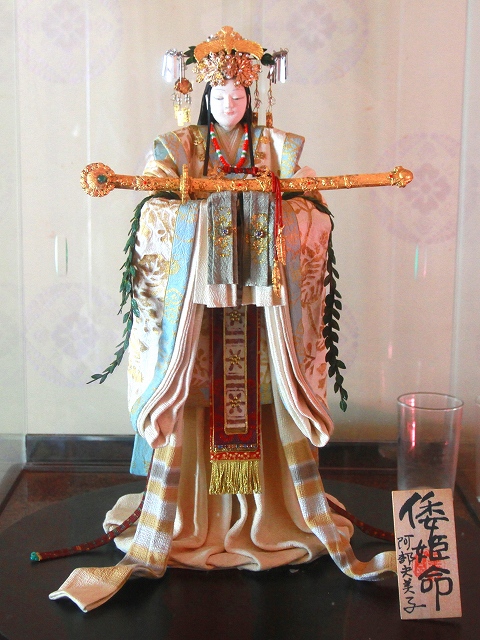
Yamatohime-no-mikoto
According to the Nihon Shoki, around 2000 years ago the divine Yamatohime-no-mikoto, daughter of the Emperor Suinin, set out from Mt. Miwa in modern Nara Prefecture in search of a permanent location to worship the goddess Amaterasu, wandering for 20 years through the regions of Ohmi and Mino. Her search eventually brought her to Ise, in modern Mie Prefecture, where she is said to have established Naikū after hearing the voice of Amaterasu saying "(Ise) is a secluded and pleasant land. In this land I wish to dwell." Before Yamatohime-no-mikoto's journey, Amaterasu had been worshiped at the imperial residence in Yamato, then briefly at Kasanui in the eastern Nara basin. When Princess Yamatohime-no-mikoto arrived at the village of Uji-tachi, she set up fifty bells to designate the area as enshrined for the goddess Amaterasu, which is why the river is called the Isuzu, or "fifty bells".
I ran into a few haiku by Basho about Ise Shrine, he has also made a journey to the Grand Shrine of Ise and (maybe) wrote these haiku:

For holiness,
Everyone has pushed others in the crowd.
The Shrine Removal !

in Ise's shrine cemetery
even more lonely
the moon still is
© Matsuo Basho

The Grand Shrine of Ise is the most important shrine of Shinto, so therefore I will "dive into" Shinto tomorrow.

This episode is NOW OPEN for your submissions and will remain open until February 12th at noon (CET). I will try to publish our new episode, Shinto, later on.