Carpe Diem Haiku Kai is the place to be if you like to write and share Japanese poetry forms like haiku and tanka. It’s a warmhearted family of haiku poets created by Chèvrefeuille, a Dutch haiku poet. Japanese poetry is the poetry of nature and it gives an impression of a moment as short as the sound of a pebble thrown into water. ++ ALL WORKS PUBLISHED ARE COPYRIGHTED AND THE RIGHTS BELONG TO THE AUTHORS ++ !!! Anonymous comments will be seen as SPAM !!!
First I have to apologize for being late with publishing our new regular episode. There were circumstances that needed my attention. We are on the road ... haiku-ing along the Pan American Highway.
A few days ago we entered Southern America and today we have arrived at another wonderful city along this Highway ... Quito, the Capital of Ecuador. Quito has a long history that goes back into the 15th century, but in this century Quito became a "bigger" and more important city.
As I was preparing this episode I ran into a beautiful photo of Quito's ancient center, the El Panicello you can see on this photo. It's a hill of vulcanic rubbish and it's a place of interest in Quito. For this episode I have taken the "easy" way ... I will give you the photo for your inspiration.
Welcome at the last week of this wonderful month full of celebration of autumn. Recently I told you that we will go on a journey again here at CDHK. Next month we will ride the Pan American Highway (from Canada to Argentina) straight through the Americas. So to bring you already in the mood for this journey I have a wonderful image for you taken somewhere along the Pan American Highway. So today I hope to inspire you with only an image ... so this is a CD Imagination Without Limits challenge.
This episode is NOW OPEN for your submissions and will remain open until December 2nd at noon (CET). I will try to publish our new episode later on. For now ... have fun!
During lack of time I have a "short" episode for you. For today I have chosen to challenge you to create haiku or tanka inspired on an image of Matsushima. Matsushima is a city on the northeast coast of Japan's Honshu Island. It’s known for the hundreds of forested islands that dot Matsushima Bay. The grand Zuiganji Temple was built in 1609. Nearby, Entsūin Temple is noted for its moss, rock and rose gardens, and for its colorful fall foliage. From the port, a curved red bridge leads to the wooden Godaidō Temple. Trails criss-cross the pine forest on Fukuurajima Island.
And there is a haiku by Basho about this beautiful place on earth:
In his "Oku No Hosomichi" (Small Road Into The Deep North) Basho describes Matsushima as follows:
[...] "Much praise has already been lavished on the wonders of the islands of Matsushima. Yet if further praise is possible, I would like to say that here is the most beautiful spot in the whole country of Japan, and that the beauty of these islands is not in the least inferior to the beauty of Lake Dotei or Lake Seiko in China. The islands are situated in a bay about three miles wide in every direction and open to the sea through a narrow mouth on the south-east side. Just as the River Sekko in China is made full at each swell of the tide, so is this bay filled with the brimming water of the ocean and the innumerable islands are scattered over it from one end to the other. Tall islands point to the sky and level ones prostrate themselves before the surges of water. Islands are piled above islands, and islands are joined to islands, so that they look exactly like parents caressing their children or walking with them arm in arm. The pines are of the freshest green and their branches are curved in exquisite lines, bent by the wind constantly blowing through them. Indeed, the beauty of the entire scene can only be compared to the most divinely endowed of feminine countenances, for who else could have created such beauty but the great god of nature himself? My pen strove in vain to equal this superb creation of divine artifice." [...] (Source: Oku No Hosomichi)
There is also a haiku by Sora, Basho's travel companion about Matsushima:
at Matsushima borrow your plumes from the crane O nightingales!
This episode is open for your submissions tonight at 7:00 PM (CEST) and will remain open until October 22nd at noon (CEST). I will try to publish our new episode later on. For now ... have fun!
Welcome at the first episode of the last seven (regular) episodes of this Imagination Without Limits month, July 2018. Next month we will go on a trip around the world to discover the folkmusic of many countries. I think that month will be awesome too. I am already busy with my research for it and I have heard wonderful folkmusic. I hope you all will like that upcoming month as much as I enjoy creating it.
Well ... I have found a beautiful image for your inspiration today and I think you will understand my choice of the title "sound of wind", maybe I can give you an idea by creating a new haiku inspired on the one by Basho, but with a slightly difference.
First I have to apologize with being this late with publishing. I had a very busy day at work and my mom became hospitalized again so I hadn't time to publish on time.
Welcome at the first episode of a new month of Carpe Diem Haiku Kai. This month we will go on a journey into the high mountains of the Andes. We will travel by train and we will discover the beauty of the Andes Mountains and its rich history. To start this month I have a wonderful image of the Andes for your inspiration.
This episode is NOW OPEN for your submissions and will remain open until May 7th at noon (CEST). I will try to publish our new episode later on. For now ... have fun!
PS.: I am a little bit behind with commenting, but I will visit all of you a.s.a.p.
This is the last prompt for July 2017. this month we have explored several kigo for summer, classical and non-classical and I hope you did like this month.
Our last prompt for this month is sunset and I have made it myself easy, because I had a busy day. I will share an image of a summer sunset to inspire you.
This episode is open for your submissions tonight at 7:00 PM (CET) and will remain open until August 4th at noon (CET). I will try to publish our new episode, the first of our "modern art"-month, later on. For now .... have fun!
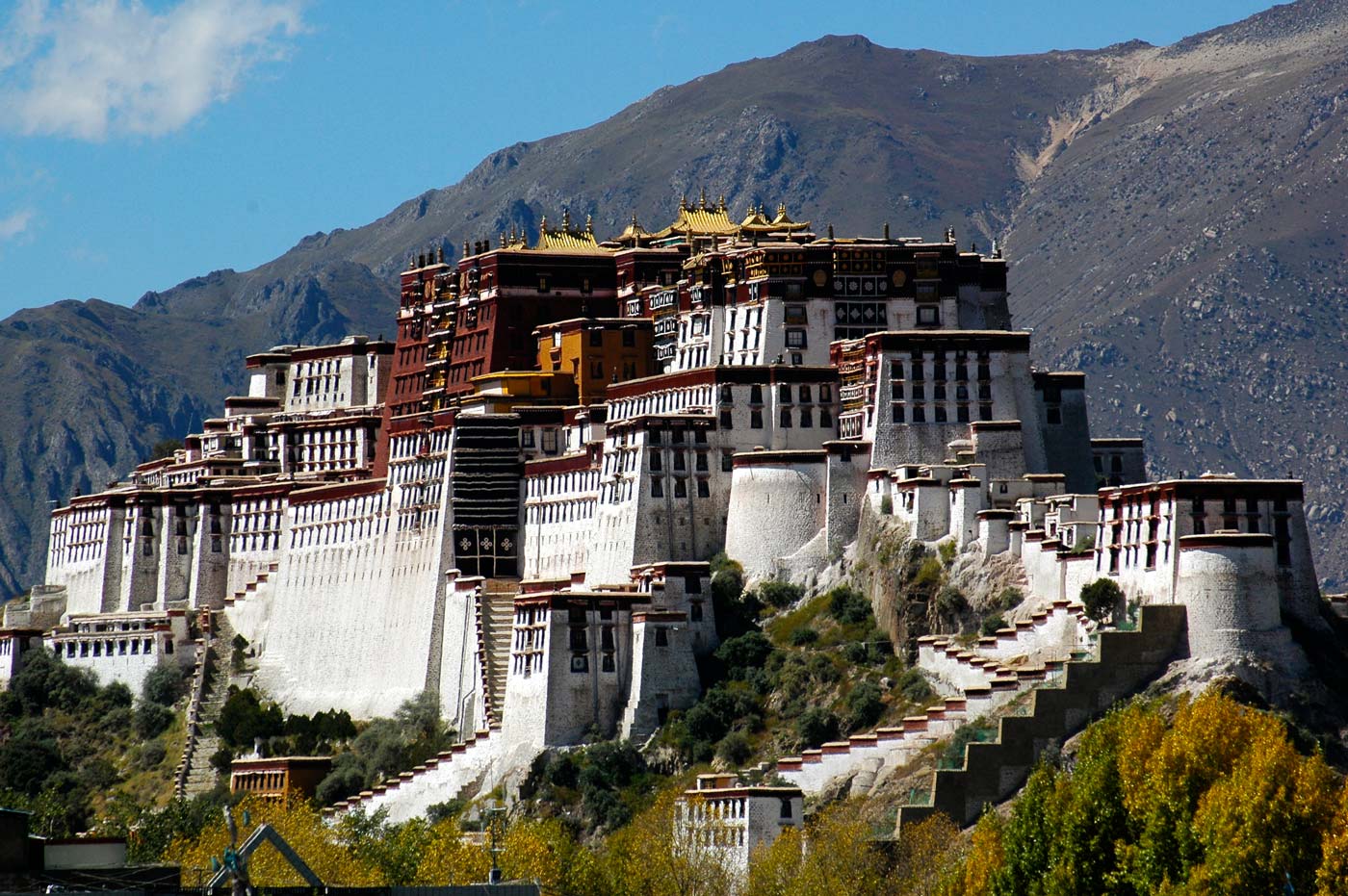
It is with sadness, but also with a kind of joy, that I present to you our new episode, the last episode of our wonderful magical experience through Tibet. To end this month I have chosen to tell you a little bit more about the 14th Dalai Lama, Jetsun Jamphel Ngawang Lobsang Yeshe Tenzin Gyatso (as is his real name).
The Dalai Lamas are the manifestations of the Bodhisattva (Buddha) of Compassion, who chose to reincarnate to serve the humanity. This Dalai Lama is the 14th Dalai Lama. He is the 74th manifestation of Avalokiteshvara Bodhisattva, the enlightened Buddha of compassion. Tibetans normally refer to His Holiness as Yeshe Norbu, the Wishfulfilling Gem, or simply Kundun - The Presence.
The present Dalai lama was recognized as the reincarnation of the 13th Dalai Lama at age two. In order to confirm his identity, Tibetan monks tested Gyatso by asking him to identify certain articles of clothing that belonged to the 13th Dalai Lama. He passed the series of tests, then changed his name, took the throne at age four and became a monk at age six.
The name Dalai lama is a combination of the Mongolic word dalai meaning "ocean" and the Tibetan word (bla-ma) meaning "guru, teacher, mentor". He was a vegetarian for a short time, but he developed jaundice. He had to go back to eating meat. Because of the lack of farming land in Tibet, meat has been a staple of their diet for many centuries.
The Dalai Lama enjoys collecting and repairing watches and is fascinated by science and has said that if he had not become a monk, he would have become an engineer.
In 1989, the Dalai Lama was awarded the Nobel Peace Prize, for his work advocating nonviolent means to free Tibet from China. The residence of the Dalai Lama , Potala Palace and Norbulingka, are both UNESCO World Heritage Sites.
When the Dalai Lama was asked on his website what is the purpose of life, he answered "to be happy".
As you have seen in the above episode I have used two images, one of the Dalai Lama and one of his residence, Potala Palace (Nepal). I love to challenge you to create haiku, tanka or other Japanese poetry form inspired on these images. Say a kind of "Carpe Diem Imagination".
Well ... now it is up to you my dear Haijin, visitors and travelers to let the images inspire you.
This episode is NOW OPEN for your submissions and will remain open until July 3rd at noon (CET). I will (try to) publish our new "weekend-meditation", a new episode of our Time Travel feature, later on. Have fun!
!!!! Open for submissions Sunday April 30th 7:00 PM (CET) !!!!
Dear Haijin, visitors and travelers,
Welcome at a new "weekend-meditation". This week I have a "Namasté, The Spiritual Way"- episode for you. And this time I thought to share a few images for your inspiration. You can choose the image you want to use yourself.
Try to create a haiku, tanka or other Japanese poetry form with the focus on the "deeper spiritual meaning". I think the images I have chosen have all such a deeper meaning, but to explore that and to "get that deeper meaning", you have to meditate and contemplate on those images, or the image of your choice.
Young Mountain Monk
Laughter
Time flies
Tranquility
This episode is open for your submissions Sunday April 30th at 7.00 PM (CET) and will remain open until May 5th at noon (CET). I will post our first episode of May 2017 later on.
I haven't a lot of time at the moment so I have taken the easy way this time. I love to challenge you with a wonderful image for your inspiration. So you can say this is a Carpe Diem Imagination episode.
I have found a beautiful photo of Fuji Yama, the Holy Mountain of Japan and I hope it can inspire you to create haiku or tanka.
As I told you all yesterday I am busy with preparing an exam I have to do tomorrow (January 27th) and it takes more time than I had thought so today I love to trigger your inspiration, your muses with another beautiful image along the Road to Santiago. So I have taken the easy way (again) to save time for my exam.
This month we are on our way to Santiago De Compostela together with Paulo Coelho and his guide Petrus. We have learned a lot and we have seen a lot. This Road to Santiago is really awesome and it turned out to be a spiritual adventure.
Today I love to challenge you to create haiku, tanka or other Japanese poetry form inspired on a photo. I haven't enough time today to create a long episode, so what's easier ... just share an image to inspire you.
I haven't enough time today to create a full episode of today's CDHK month in which we are on our Road to Santiago, a beautiful pilgrimage. While we are walking this Road we are reading "The Pilgrimage by Paulo Coelho.
I love to inspire you today with only an image, say this is an episode of Carpe Diem Imagination. Here is the image to inspire you. It is taken somewhere along the Road to Santiago.
What a joy ... finally we are on our way to Santiago. We have registered at the home of Mme Lourdes and now we are on our way like real peregrino's, pilgrims to Santiago. To start this episode with I have a part of the story we are reading "The Pilgrimage" to inspire you and with that part of the text I enclose a photo from the Pyrenees, because I love to challenge you to create a haiku, tanka or other Japanese poetry form inspired by the piece of text and the photo. So a kind of CD Imagination with a slight piece of CD Distillation (both are features here at CDHK).
[...] "I left the small city, passing through the wall at the Spanish Gate. In the past, the city had been on the preferred route for the Roman invaders, and through that gate had also passed the armies of Charlemagne and Napoleon. I walked along, hearing the band music in the distance, and suddenly, in the ruins of a village not far from the city, I was overwhelmed by emotion, and my eyes filled with tears; there in the ruins, the full impact of the fact that I was walking the Strange Road to Santiago finally hit me.
The view of the Pyrenees surrounding the valley, lit by the morning sun and intensified by the sound of the music, gave me the sensation that I was returning to something primitive, something that had been forgotten by most other human beings, something that I was unable to identify. But it was a strange and powerful feeling, and I decided to quicken my pace and arrive as soon as possible at the place where Mme Lourdes had said my guide would be waiting for me.
Without stopping, I took off my shirt and put it in my knapsack. The straps cut into my bare shoulders a bit, but at least my old sneakers were broken in enough that they caused me no discomfort. After almost forty minutes, at a curve in the road that circled around a gigantic rock, I came upon an old abandoned well. There, sitting on the ground, was a man of about fifty; he had black hair and the look of a gypsy, and he was searching for something in his knapsack. ‘Hola,’ I said in Spanish, with the same timidity that I show whenever I meet someone new. ‘You must be waiting for me. My name is Paulo." [...](Source: The Pilgrimage by Paulo Coelho)
Well .... it's up to you now ... I wasn't inspired, so maybe you can help me to find the inspiration.
This episode is open for your submissions tonight at 7.00 PM (CET) and will remain open until January 9th at noon (CET). I will post our next episode later on.
As you know I am a busy man and I am always busy, but today I have a few things to do personal so I have a short Tokubetsudesu episode for you.
In this Tokubetsudesu episode I love to challenge you to create a haiku, tanka or other Japanese poetry form inspired on a music clip by Karunesh "calling wisdom" (video by makhfii)
Have fun!
This episode is NOW OPEN for your submissions and will remain open until June 19th at noon (CET). I will (try to) publish our new episode, Finland, later on.
Here it is our last episode of April. This month was about haiga and I have seen wonderful haiga and I am glad that you all did like this month. It was a joy to see that there were new participants and that other participants returned. Thank you all for making this month and Carpe Diem Haiku Kai a success.
Today our prompt is passing of spring and it is based on Jane Reichhold's saijiki "A Dictionary of Haiku". I love to thank Jane for giving permission to use her work. Thank you Jane.
Jane's saijiki is really awesome and a great source for prompts passing of spring Jane explains with an example of her beautiful haiku:
passing of
spring
water trickles over rock
into the koi pond
Departing spring ... all trees and bushes green. The warmth of the sun, finally time for the beach ... a joy it's summer.
This episode is NOW OPEN for your submissions and will remain open until May 4th at noon (CET). I will publish our first episode of May, in which we will have all Tan Renga, later on. I don't have the promptlist ready ... I hope to publish it tomorrow.
This Haiga-month is almost over counting this one then we have only two episodes of haiga. I am still in the nightshift and this will not be a very long episode.
For today
our modern kigo to create a haiga about is puddles.
Well ... this prompt don't needs explanation ... we are all familiar with
puddles ... so let me give a few examples of haiku written on puddles by Jane
Reichhold:
floating
clouds
down from the mountain
a puddle of rain
Awesome
isn't it? This photo brings a lot of memories back. Didn't we all do that when
we were children? Jumping in puddles until we were soaked? I even recall that I
did that a few years ago while I was playing outside with my grandchildren. The
oldest asked: "Granddad! May we jump in the puddles?" Of course I
couldn't resist that question and I granted them permission to jump in the
puddles. It was a joy and they were soaked 'til the bone. My youngest grandson
asked me several minutes later if I would jump in the puddles with them. After
some hesitation I laughed and jumped in the puddles myself with my grandsons
... 'til we were all soaked 'til the bone. It was fun and as we came home ...
well we laughed again and drank hot chocolate-milk. What a joy ... to feel a
kid again. Surely worth trying (smiles) to do the same as I did with my
grandsons.
feeling a
kid again
jumping in the puddles of spring -
soaked 'til the bone
This episode is NOW OPEN for your submissions and will remain open until May 4th at noon (CET). I will try to post our new episode, passing of spring, later on. Have fun!
First my excuses for this late posting, I am in the nightshift and hadn't time earlier. So here it is our new episode. This day our prompt is kites and its based on the modern kigo as gathered by Jane Reichhold in her "A dictionary of haiku".
Kites ... are not specific for spring, but in this time of year we see them more often then in winter, so that's why Jane included this modern kigo for spring.
Here are a few examples for kites as created by Jane:
I had a busy day today so I don't have enough time to create a big episode, so I will give you all a short episode for your inspiration. That means ... I will give you only the haiku example by Jane Reichhold (extracted from her online saijiki) which she gives at her website.
Today our prompt is Magnolia, that beautiful bush that blooms earlier in spring (or late in winter). Jane gives just one example:
As I stated in the Theme Week posts I have a few favorites to write haiku about, Magnolia is one of them. So I have a few "magnolia"-haiku for you too.
blossoming
Magnolia
one of its branches scattered -
on the credenza
in the front
yard
last snow is melting
magnolia blooms
This episode is NOW OPEN for your submissions and will remain open until April 30th at noon (CET). I will try to publish our next episode, a new Tokubetsudesu episode, later on. Have fun!
As I announced in an earlier CD-Extra I will bring back the Tan Renga Challenge. To give you (and those who are new here) an idea what a Tan Renga is I will give you a brief explanation and an example.
Maybe you know the Tanka that poem with 5 lines following the syllables count 5-7-5-7-7, A beautiful Japanese poetry form which I just started recently to create. The Tanka is a poem written by one poet and that's the difference with the Tan Renga.
The Tan Renga has also 5 lines following the same syllables count as the Tanka, but the Tan Renga is written by two poets. One poet writes the first stanza of three (3) lines in the following example that will be Jane Reichhold:
Here is the first stanza of this example Tan Renga:
morning sun
the twinkle of stars
still in the dew (Jane
Reichhold)
The goal for the second poet is create the second stanza of two (2) lines through association on the first stanza (as we do in a renga). For this example I have written the second stanza:
her bright
shining eyes
she unpacks her new doll (your host)
This is what you call a Tan Renga. It's possible to leave a blanc line between the two stanzas, but you can also make it unite with each other as I do mostly. Than this is the result:
morning sun the twinkle of stars still in the dew (Jane Reichhold)
her bright shining eyes she unpacks her new doll (your host)
Logo for May 2016 Chained Together
Tan Renga is a short chained poem written by two poets. In our CDHK Tan Renga Challenge I will give the first stanza and than you have to write the second stanza towards it through association. In that way you complete the Tan Renga.
Okay ... back to our episode of today. Today I have another nice prompt for you to create a haiga with. Today that's bird feathers. To inspire you a little bit I will give the examples by Jane Reichhold for this prompt from her modern Saijiki "A Dictionary of Haiku".
bird
feathers
in the night sound
spring rain
fading the
colors
of a peacock feather
an iris blooms
joined by
listening
the breath of disciples
in baby birds
Well a lot to think about I will say, I am looking forward to all of your wonderful responses ... By the way I am behind with commenting I will try to comment on all of your posts a.s.a.p.
This episode is NOW OPEN for your submissions and will remain open until April 29th at noon (CET). I will try to publish our new episode, magnolia, later on.
As I was preparing the prompt-list for April, I ran into a nice prompt which needs some explanation. Today we have prayers for rain as prompt and you all know that praying for rain isn't very real, but ages back there were cultures who used to pray for rain through, for example a so called "rain-dance" as (for example) did the American Natives, Indians. Praying for rain was also seen in the Japanese culture and there are several haiku about praying for rain and rain dances which I love to share here later. First I love to share a few haiku about this prompt by Jane Reichhold.
For a rice
planting culture like Japan, the seasonal rain is very important, it is a
question of life and death! If the rain does not fall enough during the rainy
season we have a "Dry Rainy Season" (kara tsuyu).
the gods of
rain
swaying here and there -
floods versus droughts
This is the
time when farmers turn to the Gods and Buddhas (kami hotoke) for prayer. The
prayers and rituals for rain take many forms in Japan. Some are accompanied by
special dances, some by a lion dance (shishimai), fires are lit on the tops of
mountains and sutras are chanted.
Some Rain
Dances and Lion Dances are part of regional festivals held every year in spring
or early summer and are quite pleasant events for the population, but the real
Rain Rituals take place during the end of summer, when the weather situation
calls for it and the farmers are desperate. They have a quite different severe
atmosphere.
In the
following, I will try and introduce some of these rituals.
In some
areas, large boulders are inscribed with the characters for "Jizo",
but people came to call them "Jizo who loved Rain" ama koi Jizo and
used them for rain rituals.
In the
earliest record of court-sponsored rainmaking, Nihon Shoki includes an entry on
praying to the "all kami " and "all shrines" as well as to
"famous mountains and large rivers," mentioning in particular that
Empress Kōgyoku personally prayed for rain. In Shoku Nihongi, Emperor Monmu
(683-707) offered a horse to the Mikumari kami and prayed for rain in the 4th
month of the 2nd year of his reign (699), indicating that rainmaking festivals
gradually became performed to worship specific deities.
The
practice of attaching the rainmaking function to a specific kami became
conspicuous from the reigns of Emperor Shōtoku to Emperor Kōnin (the second
half of the eighth century), and Niukawakamisha shrine (now, Niukawakami jinja
nakasha) was perceived as the rainmaking deity and named Amashigami.
In the
Heian period, Niukawakami Shrine remained the center of rainmaking festivals
until the reigns of Emperors Kanmu and Heizei (781-809). In the subsequent
reign of Emperor Saga (809-23), Kifunesha shrine (now Kibune jinja) located
close to the Heian capital (present-day Kyoto), however, also became a
rainmaking deity alongside Niukawakami Shrine.
From around
the time of Emperor Saga, rain-halting festivals to pray for the cessation of
rain and the control of wind and rain became popular. In rainmaking and
rain-halting festivals from the mid-Heian period onward, offerings were being
made to eighty-five rainmaking kami, centering around Niukawakami and Kifune
Shrines; to these two shrines, black horses were offered at rainmaking
festivals and white horses were offered at rain-halting festivals. Thereafter,
both types of festivals came to be widely held at non-imperial shrines.
On the
other hand, there are numerous examples of rainmaking rituals among the
populace, including temporary seclusion in a shrine, rainmaking dances,
angering the "Water kami " (suijin) to induce rain, invoking rain by
sprinkling around holy water, and summoning rain clouds by sending up smoke
from a mountaintop.
A student
of Matsuo Basho named Shinshi wrote a poem and after that, it rained.
amagoi ya
ta o mimeguri no kami naraba
rain
rituals -
if the gods are here now
to see the paddies
What a wonderful way of begging for rain and what a great series of haiku this is. Isn't it an awesome idea that "praying for rain" has given us these beauties?
And now it is up to us to create haiku in response on "prayers for rain". Have fun!
I couldn't find a good enough image to create a haiga with so I love to share a video here about a raindance in Africa with music by Adiemus.
This episode is open for your submissions tonight at 7.00 PM (CET) and will remain open until April 28th at noon (CET). I will try to publish our new episode, bird feathers, later on. !!! With this episode the responding time is now increased to 5 days (approximately) as promised in our yesterday's CD-Extra !!!