Showing posts with label Leaving Kumano Kodo. Show all posts

Thursday, March 28, 2019

Carpe Diem #1636 California poppy (modern kigo)


Dear Haijin, visitors and travelers,

What a joy to bring a new episode of our wonderful Haiku Kai. We have left the Kumano Kodo and are exploring the modern and classical kigo (seasonword) for spring. Today I have chosen a modern kigo for spring taken from Jane Reichhold's "A Dictionary of Haiku", section spring, sub-section "plants".

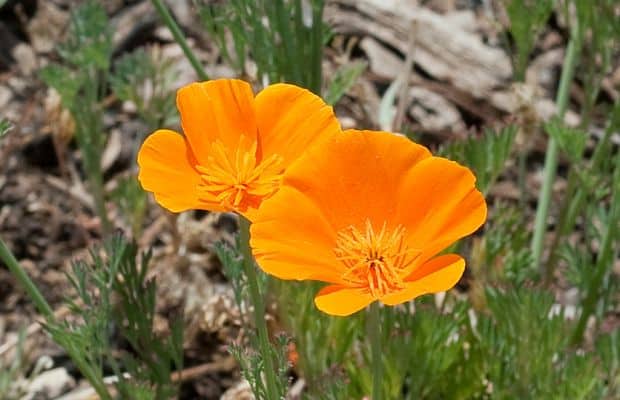
Today our modern kigo is "California poppy". It sounds like the regular poppy, but I had never heard from the California poppy. By the way the chosen haiku example is created by Jane Reichhold and she used it as an example for this modern kigo.

expanding the warmth
the first poppies
in spring sunshine

© Jane Reichhold (Extracted from "A Dictionary of Haiku")


California Poppy Flowers (Eschscholzia californica)

Here is a haiku from my archive about poppies, not about the California poppy, but by the "regular" poppy.

at sunrise
poppies still redder
sacrifice for God

© Chèvrefeuille (2012)

This episode is NOW OPEN for your submissions and will remain open until April 4th at noon (CET). I will try to publish our new weekend meditation later on.


Wednesday, March 27, 2019

Carpe Diem #1635 "Go get yourself a saijiki and read it many times". Kigo: butterfly


Dear Haijin, visitors and travelers,

Welcome at a new episode of CDHK. We have left the Kumano Kodo to explore the modern and classical kigo (seasonword). Yesterday we had a classical kigo and today I will give you another classical kigo to work with.

First I love to give you a little bit more background on the classical kigo (seasonword):

Nature provides us with variuos phenomenon during the seasons, but NOT with words about them.

We humans make up words, classify them, write poetry with them and collect them in almanachs.
The Japanese have been the first to put their seasonal words into collections, call the short poems HAIKU and archived them in books called SAIJIKI, that is why even today as haiku poets we stick to these human conventions and we use these books as reference for our own haiku.


blossoms are a kigo for spring

Traditional Japanese haiku are about the many changes during the seasons (not simply about nature ! but about the seasonal changes of nature), the changes in the life of plants and animals, heaven and earth, but also the changes in the daily life of humans within the society, like festivals and food.

The Japanese saijiki started in a time when the Asian lunar calendar was used in Japan, so even now we have a sort of timeslip of one month between the ... natural phenomenon.. and the .. kigo about them ...
February, equated to the second lunar month, for example is early spring in the Asian Lunar Calendar system but late winter in the reality of the weather conditions in most parts of Japan.
Consider Northern Hokkaido and Southern Okinawa ... and yet Japanese haiku poets use the same saijiki when they write about natural phenomenon. (Source: World Kigo Base)

All these kigo (seasonwords) were gathered in a so called Saijiki: A Japanese saijiki is a handbook of the culture of Japan, a travelouge through their many festivals, a description of their food and drink, a celebration of their nature.
Kigo are not ment to be a weather forecast or a biology textbook, but a reference to these words used in the Japanese poetic cultural context.


Cherry Blossoms

Kigo are not simply seasonal words representing animals, plants and natural phenomenon, they also include local festivals and other human activities, and thus carry a lot of cultural background information.

The first advise of a haiku teacher (sensei) in Japan is always:
Go get yourself a saijiki and read it many times.

Well enough about the background on the kigo and the saijiki. Let me give you our classical kigo for spring to work with today. Today I have chosen for the classical kigo "choo" or "butterfly". Butterflies are seen for the first time in spring ... so that makes it a kigo for spring.

wake butterfly - 
it's late, we've miles
to go together


© Matsuo Basho

A beauty by my sensei, Basho (1644-1694), and here is another one, also by Basho:

wings of a butterfly
how many times do they flutter
over roof and wall


And of course I have also a haiku written by myself:

cobweb scattered
by the fluttering of wings
a blue butterfly

on the verandah
a yellowish butterfly
the light of sun down

© Chèvrefeuille

Wonderful haiku about butterflies, our classical kigo for spring to work with.

This episode is NOW OPEN for your submissions and will remain open until April 3rd at noon (CET). I will try to publish  our next episode later on.


Tuesday, March 26, 2019

Carpe Diem #1634 Hanamatsuri ... the celebration of the birth of Buddha (classical kigo)


Dear Haijin, visitors and travelers,

Welcome at a new episode of our wonderful Kai. As you all know I changed our theme for this month recently. So to day we go on this new path in which we will explore (already) modern and classical kigo (seasonwords) for spring. Spring has started and I am enjoying the view of plum blossom, cherry blossom and more young leaves opening. Yes ... it's spring.

Today's theme is "hanamatsuri" a wonderful Asian festival in which the birth of Buddha is celebrated.

The following text comes from a pamphlet published by the Northwest Ministerial Association, Buddhist Churches of America.

Hanamatsuri, literally flower festival, is celebrated on April 8, commemorating the birth of Siddhartha Gautama. Siddhartha became enlightened as Sakyamuni Buddha and this marks the release of sentient beings from suffering and sorrow.

According to our tradition, the historical Buddha, Sakyamuni, was born in Nepal on April 8, 566 B.C. He was born the son of King Suddohana and Queen Maya. There are many flowery descriptions of the scene at his birth, including celestial birds singing beautiful songs, beautiful flowers, and a sweet gentle rain bathing the baby Buddha. It is not necessarily the beauty of the flowers, the sounds of the celestial birds, nor the sweet gentle rain that fell, but the vibrant fact that on this day was born the greatest of sentient beings who became the Enlightened One, the Buddha.

Hanamatsuri

Every year we celebrate our own birthday. In our youth we are anxious to reach “adulthood,” and in our old age we attempt to cling to our “youth.” What is the meaning and reason for celebrating our birth? Much of the meaning of our own birth is often lost in the gifts and the merriment. The celebration of our birth is an expression of gratitude. This gratitude is extended towards our friends, parents and to life itself. This gratitude grows from an understanding that our birth is the result of many people and that our lives are in- tertwined with all others.

Understanding the Buddha’s teaching of interdependancy of all things will make it clear that our birth is the result of many causes and conditions. Realizing this we can see that our birth is truly a rare and wonderful gift, and we have an obligation to live out this life in accordance with the teachings of the Buddha.

happening to be born
on Buddha’s birthday
a baby deer!

© Basho (Tr. unknown)

This obligation to live our lives out to the fullest becomes even more striking when we look at the symbolism and the significance of the flower. The flower, as with all human beings, has its moment of youth and beauty, but its beauty soon begins to fade and eventually it dies. Our birth is like the blossoming of a beautiful flower, but it is the seed of our own demise. When we can understand our own impermanent nature, then it becomes very clear how we should live our lives.

Isn't it a wonderful festival ... I love the background on this festival and I am glad to bring it to you here at CDHK.

This episode is NOW OPEN for your submissions and will remain open until April 2nd at noon (CET). I will try to publish our new episode later on. For now .... have fun!


Monday, March 25, 2019

Carpe Diem #1633 Wedding


Dear Haijin, visitors and travelers,

Welcome at a new episode of our wonderful Kai. As you know I have changed our theme for this month instead of Kumano Kodo it's now A New Route Leaving Kumano Kodo a journey along modern and classical kigo (seasonwords) for spring. Yesterday I started with "desire" taken from Jane Reichhold's "A Dictionary of Haiku" and today I have another nice modern kigo for spring also taken from "A Dictionary of Haiku".

Today our modern kigo is "wedding". I can hear you think "why is wedding a modern kigo?" Let me try to explain that. In Nature Religions, like Shinto and Paganism for example, it is not done to marry in the dark part of the year (autumn and winter), but in the light part of the year you can marry. So that's why Jane has chosen to bring "wedding" as a modern kigo for spring.
Ofcourse I don't know what kind of religion Jane belonged to, but what I know ... she was a haiku poet and as you all know haiku is rooted in nature ... so maybe that was Jane's reason to bring "wedding" as a spring kigo.

Pagan Wedding (image found on Pinterest)
Here are a few examples of haiku by Jane Reichhold themed "wedding":

rehearsing vows
in the middle of the night
frogs

honeymooners
boats in the harbor
anchored together

© Jane Reichhold

Two beautiful haiku themed "wedding". I am married for 28 years next month and I am still deeply in love with my wife. We had a wonderful (low budget) wedding, but we enjoyed it very much. We celebrated our wedding at our home with all of our loved ones ... yes it was a wonderful day that I will never forget.

early this morning
the sound of church bells
through the mist

© Chèvrefeuille

And I ran into a nice haiku in my archive, that in a way resonates with the above haiku. I revised the original by the way to make the connection a little bit clearer.

croaking frogs
the old mansion is alive
a farmer's wedding

© Chèvrefeuille 

What a joy it was to create this episode for you all. It's a small token of my love for Jane Reichhold and my love for our CDHK family. Have fun!

This episode is NOW OPEN for your submissions and will remain open until April 1st at noon (CET). Have a wonderful day ...!