Showing posts with label spring. Show all posts

Tuesday, April 5, 2022

Carpe Diem Haiku Kai #1360: New Life

https://www.livescience.com/24728-spring.html
New Life, Spring Is Here

 Dear Haijin, visitors and travelers,

It has been a while, more than a month, that I published an episode of our wonderful Haiku Kai. I really hope to change that from today on, but ... well I can't guarantee that.

As you see I have chosen a new theme for this month: New Life, Spring Is Here. Maybe a bit controversial because of all things happening in the world right now. We have the Covid-19 endemic and we have the Ukraine war. Both are not really things that we could associate with New Life, Spring Is Here, but we have to hope that there will be better times soon.
I pray every day for Unconditional Love and Peace ... and yes it's not always easy to pray for it every day again, but I have, we have to pray. We need positive energy to bring the world back to what it once was ... a place were we can live in full happiness.

Next to all this there is that bigger plan (maybe). All resonating around the globe ... are we walking into what is called the New World Order? I don't know, but everything that is happening ... sounds not okay.


As you all know we also have a haiku-place on Twitter and I really try to tweet sometimes a haiku, but everything what is happening right now in our world seems to keep me busy. So I use our twitter-account to give words to my thoughts and feelings. Sometimes in English, sometimes in Dutch.

Our twitter account was never meant for that, but it helps me to cope with the things I see and hear. There is a lot going on ... is it a positive thing or a negative thing? Again ... I don't know.

As I look at things happening in my own country, The Netherlands, I only have "anger" and "sadness". Our government is creating a totalitarian state, they even use secret surveillance on just normal people. They are following our socials, they "listen" to the critical people and if you don't tell or say what our government wants you to say ... than you are an enemy of the state and they will censure you.

A lot of my fellow dutch are speaking out, without holding back. We try to "awaken" the people that are still "sleeping" and follow only what our government wants. It brings polarisation into our community and that ... that makes me sad and angry.

The Netherlands was once an example for the world, we had a wonderful democratic country, but that ... that is all gone. Ofcourse our government tries to keeping up appearances that The Netherlands are still a democracy, but ... My gut-feeling tells me ... there is something wrong, really wrong.

The TRUTH IS OUT THERE ... and I really hope these thoughts and feelings are wrong. I really hope that it is all very different than we thought.

clouds moving
caressing the meadows
raindrops fall

© Chèvrefeuille

What are your thoughts about what is happening in the world? Will there be New Life, because Spring Is Here?

This episode is NOW OPEN for your submissions and will remain open until April 10th 10:00 PM (CEST). You can add your submission to the linking widget hidden in our logo below. Enjoy!


Tuesday, October 6, 2020

Carpe Diem Celebrates Its 8th Anniversary October 2020: Carpe Diem #1832 Narcissus (Daffodils)


Dear Haijin, visitors and travelers,

Today I have chosen a prompt from October 2012. Our prompt today is 'Narcissus (suisen)' a late winter kigo, because Narcissus are early Spring (or late winter) flowers.

I have found a few nice haiku written by Buson on Narcissus:

suisenya bijin koubewo itamurashi

Narcissus
and a lovely woman
with a headache

© Buson (1769)


And this one written by Buson in 1777:

suisenya samuki miyakono kokokashiko

Narcissus!
In the chilly capital,
some here, some there

© Buson

And of course there is the story of the youngster Narcissus who only had eyes for himself and was in love with his reflection in the pond.


Narcissus
in love with his reflection
vainglorious guy

© Chèvrefeuille

It was a joy to take you back to this episode of October 2012, our first month in which we created haiku inspired on a theme.

This episode is NOW OPEN for your submissions and will remain open until October 11th at 10:00 PM (CEST). You can add your submissions to our linking widget hidden behind our logo hereafter.


Sunday, April 28, 2019

Carpe Diem #1652 Cherry Petals (modern kigo)


Dear Haijin, visitors and travelers,

Welcome at the penultimate episode of April 2019. This month I took a week off and I enjoyed it. This month we have explored modern and classical kigo for spring and today I love to challenge you with a modern kigo extracted from Jane Reichhold's modern saijiki "A Dictionary of Haiku".
Today I saw the cherry petals fall from the Sakura in my backyard and that brought me the idea to give you a modern kigo related to that event ... cherry petals.


And here is an example (or two) extracted from Jane Reichhold's "A Dictionary of Haiku" with this modern kigo:

a long journey
some cherry petals
begin to fall

garden waterfall
cherry petals float to earth
in the sound

© Jane Reichhold (taken from: "A Dictionary of Haiku".)

Two beauties I think. Both give tribute to Jane, because she was one of the best modern haiku poets I have ever known. She was renown all over the globe and was once my co-host here at CDHK. She is still missed dearly, but I know her spirit is dwelling here at our wonderful Haiku Kai.

spring breeze
rustles through the cherry trees
it seems to be snowing

© Chèvrefeuille

This episode is NOW OPEN for your submissions and will remain open until May 5th at noon (CEST). I will try to publish our last episode of April later on. Next month it's Tan Renga Challenge month and I hope you all will join in again to create this wonderful small chained verses.


Thursday, April 18, 2019

Carpe Diem #1651 dropwart (seri), Japanese parsley


Dear Haijin, visitors and travelers,

What a wonderful spring day we have had here in The Netherlands. Whole day sunshine a really nice temperature ... it felt almost like a early summer day. Yes it was a gorgeous day. And I hope you all have had such a wonderful day too.

This month it's all about classical and non-classical kigo (seasonwords) for spring and today I have another nice classical kigo taken from the Shiki saijiki, dropwart (seri) or Japanese parsley.

Dropwart (Seri) (Japanese Parsley)
Dropwart is part a broad range of herbs, there are a lot of species of this parsley family. It's a spring kigo that is (was) used all spring, because it grows and blooms in all spring.

I have found a nice example for this classical kigo, a haiku by Yosa Buson (one of the "big five" haiku poets):

furudera ya houroku suteru seri no naka

By an old temple
a broken clay kitchen pot
in a field of water parsley


© Yosa Buson

And here is another "parsley"-haiku:

This is all there is;
the path comes to an end
among the parsley.


© Alan Watts

Two wonderful haiku I think as an example for this classical kigo for spring.

This episode is NOW OPEN for your submissions and will remain open until April 25th at noon (CEST). I will try to publish our new weekend meditation later on.


Sunday, April 14, 2019

Carpe Diem #1647 Japanese-radish flower (daikon no hana)


Dear Haijin, visitors and travelers,

I hope you all have had a wonderful weekend full of inspiration. I am looking forward to all of your wonderful "new masterpieces". Maybe you have written that masterpiece just a few minutes ago or maybe you have written it a while ago, but weren't sure of it was a masterpiece. Well ... in my opinion every haiku, tanka or other Japanese poetry form is a masterpiece, because you have written it. It was your experience with nature, that moment short as the sound of a pebble thrown into water.

This month we are exploring the classical and non-classical seasonwords for spring. Spring is the season of new life. Everywere you look you can see that new life, young green leaves, a diversity of blossoms and flowers ... birds creating their new nest ... to create new life.

wakaba shite    om me no shizuku    nuguwa baya

young leaves
I would like to wipe away
tears in your eyes

© Basho (Tr. Chèvrefeuille)

Young Green Leaves
But let us take a look at our new spring kigo. Today I have chosen for a classical kigo taken from the Shiki saijiki, Japanese-radish flower (daikon no hana), but what kind of plant this is? I have ran through the Internet and found the following description of this plant.

Daikon literally means ‘big root’. This long white crunchy vegetable looks like horseradish, but it’s mild-flavored, similar to watercress. Daikon is also known as winter radish, oriental radish or Japanese radish. By itself, daikon radish is a superb vegetable. It’s a staple of Japanese food culture,  whether pickled, garnished, or served steaming in miso soup. Traditionally know as a yin food, it cools and calms the body.

Japanese-radish flowers (daikon no hana)
Here are a few examples for this classical kigo by my master Matsuo Basho:

kiku no ato daikon no hoka sara ni nashi

After the chrysanthemums,
Apart from radishes,
There is nothing.

mononofu no daikon nigaki hanashi kana

samurai's gathering--
their chat has the pungent taste
of daikon radish

© Matsuo Basho (1644-94)

And now ... it is up to you my dear CDHK family-members. This episode is NOW OPEN for your submissions and will remain open until April 21st at noon (CEST). I will try to publish our new episode later on.


Monday, April 8, 2019

Carpe Diem #1643 beach combing (shiohigari)


Dear Haijin, visitors and travelers,

Before I start this new episode I have an announcement to make. As you all know I love creating our wonderful Haiku Kai, but as you all know too, it takes a lot of my time. I don't have a problem with that, but my family has. Every day I am busy with creating CDHK through research, conceptual posts and so on. So my wife and kids sometimes tell me to put away my laptop and give time to them. Ofcourse I am willing to do that. So earlier today I decided to take a week of this month. This means, one week there will not be a new episode every day. The only thing I do in that week is creating the "Heeding Haiku With Chèvrefeuille" episode at Mindlovemisery's Menagerie. I will take a week off every season from now on. My first week off is this month April 19th until April 27th. I will publish our weekend meditation before that week off on Friday 19th and at the end of that week I will "restart" on Friday 26th with our weekend meditation. I hope this will give me some time to relax and giving more time to my family. I hope you all don't have a problem with that.


beachcombing (image © Marge Lachmuth)

Maybe you think "beachcombing? that sounds modern", but that isn't true, it's a classical kigo for spring taken from the Shiki Saijiki. Beachcombing is a wonderful acitivity, it's a kind of treasurehunt along the beach at low tide. Let me give you the Japanese description of beachcombing (shiohigari):

The Shiohigari is a popular Japanese tradition during spring and summer. In the literal sense of the word, it means "tide hung-out-to-dry hunt". It is an outdoor leisure activity of clam digging that is usually enjoyed by families and group of friends. It is in the months of March to June that it is normally done, but it is best to do it in May and June due to air temperature and water condition. It is also during the golden week that the beaches are the most crowded.  Annually, thousands of Japanese drive down to the beaches to hunt down Asari or Japanese littleneck clams. Then, the clams will be enjoyed later in a sumptuous meal.


Beachcombing (image found on Pinterest)

Here is an example haiku with this kigo by Chiyo-Ni:

On the low-tide beach,
Everything we pick up
Moves.

Or this one created by Basho:

A green willow,
Dripping down into the mud,
At low tide.

And to conclude this episode about "beachcombing" a haiku by a not so renown haiku poet, Rofu:

Ebb-tide;
The crab is suspicious
Of the footprint.

Well ... I think you all understand the meaning of this kigo and how to use it. So have fun!

This episode is NOW OPEN for your submissions and will remain open until April 15th at noon (CEST). I will try to publish our new episode later on.


Tuesday, April 2, 2019

Carpe Diem #1639 blossom haze (hanagumori)


Dear Haijin, visitors and travelers,

Spring ... my favorite season (next to autumn). I love spring and I am always glad to see the first signals od spring. For example: first cherry blossom and snowdrops. Yes spring ... nature leaves its hibernation state and comes alive again.

This month we are exploring the classical and non-classical kigo (seasonwords) for spring and today I have a wonderful classical kigo for you to work with. Today our classical kigo is blossom haze (hanagumori). I will try to explain the meaning of this kigo.

A clouded sky during the Cherry blossom season, blossom haze, is "hanagumori", only in this season used as a kigo for late spring and never used for other flowers in haze or clouds. (Source: Gabi Greve's World Kigo Database)

An example by Shiki:

hanagumori miyako so sumi no Asukayama

blossom haze -
in a corner of the capital
is Asukayama 

© Masaoka Shiki

And another one, more of modern times, by Ayabe Jinki (1929-2015)

tenpura ni kagiru sakana ya hanagumori

this fish is best
as Tempura . . .
cherry blossom haze 

© Ayabe Jinki

blossom haze (hanagumori)

Of course I have given it a try to create a haiku with this classical kigo about blossom haze:

against dark clouds
more fragile than they aready are
cherry blossoms


© Chèvrefeuille

And I found a few other haiku on blossom haze in my archive:

blossom haze -
walking in the middle
of falling petals

Ah! those cherries
have to let go their blossoms -
blossom haze

© Chèvrefeuille (2013)

All beautiful haiku on blossom haze. I hope I inspired you with this new episode on blossom haze, a classical kigo for spring.

This episode is NOW OPEN and will remain open until April 9th at noon (CEST). I will try to publish our new episode later on.


Thursday, March 28, 2019

Carpe Diem #1636 California poppy (modern kigo)


Dear Haijin, visitors and travelers,

What a joy to bring a new episode of our wonderful Haiku Kai. We have left the Kumano Kodo and are exploring the modern and classical kigo (seasonword) for spring. Today I have chosen a modern kigo for spring taken from Jane Reichhold's "A Dictionary of Haiku", section spring, sub-section "plants".

Today our modern kigo is "California poppy". It sounds like the regular poppy, but I had never heard from the California poppy. By the way the chosen haiku example is created by Jane Reichhold and she used it as an example for this modern kigo.

expanding the warmth
the first poppies
in spring sunshine

© Jane Reichhold (Extracted from "A Dictionary of Haiku")


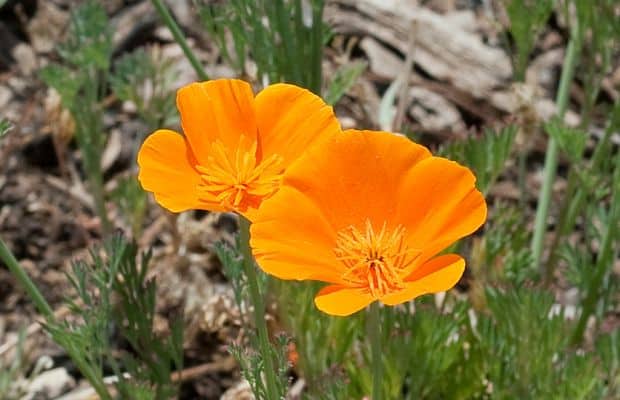
California Poppy Flowers (Eschscholzia californica)

Here is a haiku from my archive about poppies, not about the California poppy, but by the "regular" poppy.

at sunrise
poppies still redder
sacrifice for God

© Chèvrefeuille (2012)

This episode is NOW OPEN for your submissions and will remain open until April 4th at noon (CET). I will try to publish our new weekend meditation later on.


Tuesday, March 26, 2019

Carpe Diem #1634 Hanamatsuri ... the celebration of the birth of Buddha (classical kigo)


Dear Haijin, visitors and travelers,

Welcome at a new episode of our wonderful Kai. As you all know I changed our theme for this month recently. So to day we go on this new path in which we will explore (already) modern and classical kigo (seasonwords) for spring. Spring has started and I am enjoying the view of plum blossom, cherry blossom and more young leaves opening. Yes ... it's spring.

Today's theme is "hanamatsuri" a wonderful Asian festival in which the birth of Buddha is celebrated.

The following text comes from a pamphlet published by the Northwest Ministerial Association, Buddhist Churches of America.

Hanamatsuri, literally flower festival, is celebrated on April 8, commemorating the birth of Siddhartha Gautama. Siddhartha became enlightened as Sakyamuni Buddha and this marks the release of sentient beings from suffering and sorrow.

According to our tradition, the historical Buddha, Sakyamuni, was born in Nepal on April 8, 566 B.C. He was born the son of King Suddohana and Queen Maya. There are many flowery descriptions of the scene at his birth, including celestial birds singing beautiful songs, beautiful flowers, and a sweet gentle rain bathing the baby Buddha. It is not necessarily the beauty of the flowers, the sounds of the celestial birds, nor the sweet gentle rain that fell, but the vibrant fact that on this day was born the greatest of sentient beings who became the Enlightened One, the Buddha.

Hanamatsuri

Every year we celebrate our own birthday. In our youth we are anxious to reach “adulthood,” and in our old age we attempt to cling to our “youth.” What is the meaning and reason for celebrating our birth? Much of the meaning of our own birth is often lost in the gifts and the merriment. The celebration of our birth is an expression of gratitude. This gratitude is extended towards our friends, parents and to life itself. This gratitude grows from an understanding that our birth is the result of many people and that our lives are in- tertwined with all others.

Understanding the Buddha’s teaching of interdependancy of all things will make it clear that our birth is the result of many causes and conditions. Realizing this we can see that our birth is truly a rare and wonderful gift, and we have an obligation to live out this life in accordance with the teachings of the Buddha.

happening to be born
on Buddha’s birthday
a baby deer!

© Basho (Tr. unknown)

This obligation to live our lives out to the fullest becomes even more striking when we look at the symbolism and the significance of the flower. The flower, as with all human beings, has its moment of youth and beauty, but its beauty soon begins to fade and eventually it dies. Our birth is like the blossoming of a beautiful flower, but it is the seed of our own demise. When we can understand our own impermanent nature, then it becomes very clear how we should live our lives.

Isn't it a wonderful festival ... I love the background on this festival and I am glad to bring it to you here at CDHK.

This episode is NOW OPEN for your submissions and will remain open until April 2nd at noon (CET). I will try to publish our new episode later on. For now .... have fun!


Thursday, March 21, 2019

Carpe Diem #1631 A new chapter ... leaving the Kumano Kodo


Dear Haijin, visitors and travelers,

Maybe you have read the CD Extra already than you know that I am a bit sad that the Kumano Kodo doesn't bring you what I had hoped for so I have decided to leave the Kumano Kodo and go on another trail. That trail ... I already mentioned in our CD Extra of today. I will give you new themes for the rest of this month ... those themes have all to do with Spring, New Life, Nature coming to life again and the light returning back to us.

It's maybe an unexpected turn this month, but it really makes me sad that the responses are in a downfall ... Every day I try to create posts to inspire you ... creating those episodes takes my time. Don't understand me wrong, I like to give my time for you ... but as I see the downfall of your responses than I have difficulties to take time in creating for your inspiration.

It's the second time in our wonderful CDHK history that I decide to change the theme in a running month. Maybe you can remember that I did that earlier in the month about the Quran ... it feels like failure ... to change our theme, but ... well it had to be that way I think.


For today I have chosen to inspire you with a wonderful sonnet by William Shakespeare titled: From you have I been absent in the spring. So you can see this as an episode of that special feature "Distillation" in which I challenged you to create a haiku or tanka inspired on a longer poem. Or create a haiku or tanka from the given poem.


Here is the poem by William Shakespeare:

Sonnet 98: From you have I been absent in the spring

From you have I been absent in the spring,
When proud-pied April, dressed in all his trim,
Hath put a spirit of youth in everything,
That heavy Saturn laughed and leaped with him.
Yet nor the lays of birds, nor the sweet smell
Of different flowers in odour and in hue,
Could make me any summer’s story tell,
Or from their proud lap pluck them where they grew:
Nor did I wonder at the lily’s white,
Nor praise the deep vermilion in the rose;
They were but sweet, but figures of delight
Drawn after you, – you pattern of all those.
    Yet seem’d it winter still, and, you away,
    As with your shadow I with these did play.

© William Shakespeare (1564-1616)

A wonderful sonnet by renown Shakespeare. Shakespeare is one of my favorite poets and I hope he can inspire you to create haiku or tanka.

This episode is NOW OPEN for your submissions and will remain open until March 28th at noon (CET). I will try to publish our new weekend meditation later on. For now ... have fun!


Monday, February 18, 2019

Carpe Diem #1608 Tan Renga Challenge Month 2019 (12) Spring is in the air


Dear Haijin, visitors and travelers,

I hope you all have had a wonderful weekend. I was on the nightshift so my weekend was spend mostly at work and in my bed. This weekend was a nice weekend it felt like spring, but ... well I haven't experienced it.

Last weekend I introduced a new feature to you "Poetry Archive" and today's Tan Renga Challenge is one with a haiku by Kim. This new haiku she created last weekend ... Her haiku is a beauty and it describes this last weekend in a certain way. Spring is in the air ...


Spring Is In The Air

Here is the haiku to work with:

the sky is bluer
birds are singing once again
caressed by sunshine

(C) Kim M. Russell

A wonderful (masterpiece) haiku I would say. It's up to you now ... have fun!

This episode is NOW OPEN for your submissions and will remain open until February 24th at noon (CET). Enjoy it ...


Thursday, April 19, 2018

Carpe Diem #1415 Perfume of Spring (one-bun)


Dear Haijin, visitors and travelers,

Welcome at a new episode of our wonderful Kai. This month it's all about haibun (prose and poetry). We have already seen a few different kinds of haibun here at CDHK and today I love to challenge you to create a "one-bun" inspired on our prompt "perfume of spring".

More about "one-bun" you can find in our promptlist for April 2018 (above in the menu).

During circumstances I have chosen to only give you the prompt and the task for today.

perfume of spring
This episode is open for your submissions tonight at 7:00 PM (CEST) and will remain open until April 26th at noon (CEST). I will try to publish our new weekend-meditation later on. For now ... have fun!


Tuesday, March 20, 2018

Carpe Diem #1393 Spring Is Coming


Dear Haijin, visitors and travelers,

Welcome at a new episode of our wonderful Kai. We are exploring the beauty of the poems written by the Mystical Poet Rumi. This Persian poet lived in the 13th century (CE) and wrote really wonderful poems. Today, Wednesday 21st of March, spring starts on the Northern Hemisphere, therefore I have chosen a beautiful poem about Spring to inspire you.

Spring has come:

Again, the violet bows to the lily.
Again, the rose is tearing off her gown!

The green ones have come from the other world,
Tipsy like the breeze up to some new foolishness.

Again, near the top of the mountain
The anemone's sweet features appear.

Hyacinth

The hyacinth speaks formally to the jasmine,
"Peace be with you." "And peace to you, lad!
Come walk with me in this meadow."

Again, there are sufis everywhere!

The bud is shy, but the wind removes
Her veil suddenly, "My friend!"

The Friend is here like water in the stream,
Like a lotus on the water.

The narcissus winks at the wisteria,
"Whenever you say."

And the clove to the willow, "You are the one
I hope for." The willow replies, "Consider
These chambers of mine yours. Welcome!"

The apple, "Orange, why the frown?"
"So that those who mean harm
Will not see my beauty."

Dove (Ringdove)

The ringdove comes asking, "Where,
Where is the Friend?"

With one note the nightingale
Indicates the rose.

Again, the season of Spring has come
And a spring-source rises under everything,
A moon sliding from the shadows.

Many things must be left unsaid, because it's late,
But whatever conversation we haven't had
Tonight, we'll have tomorrow.

© Rumi

Isn't it a beauty ... this poem tells us the story of Spring in wonderful words as only this master, Rumi, can. The beauty of the scenes is really awesome ... and I think it will inspire you in a great way. So have fun!

This episode is NOW OPEN for your submissions and will remain open until March 27th at noon (CET). I will try to publish our new episode later on. For now ... have fun!


Friday, March 9, 2018

Carpe Diem Weekend Meditation #23 Kamishibai, the art of story telling


Dear Haijin, visitors and travelers,

Welcome at a new weekend meditation here at Carpe Diem Haiku Kai. Last weekend I challenged you to revise a few classical, renown, haiku by (my master) Matsuo Basho (1644-1694). And as you maybe know Basho was a great storyteller too. His haibun "The Narrow Road Into The Deep North", is a renown classical work and here at CDHK we have read it together several years ago. Several years ago I also introduced a special feature here at CDHK titled "Kamishibai, the art of story telling". (More about Kamishibai you can find HERE).

This weekend I love to challenge you to create a haibun, be the storyteller like Basho, Of course this is a challenge so there are a few rules:

Your haibun may have a maximum of 250 words (including the haiku). The haiku in your haibun have to be classical, so with 5-7-5 syllables, a seasonword, a cuttingword, an interchangeable first and third line, a deeper meaning and of course nature. The haiku has to be that really short moment similar with the sound of a pebble thrown into water.

Than a last "rule", your haibun must be themed "springtime".

Daffodils (sign of springtime)
Well have a wonderful weekend.

This weekend-meditation is open for your submissions next Sunday March 11th at 7:00 PM (CET) and will remain open until March 18th at noon (CET). I will try to publish our new regular episode around that time too.


Wednesday, May 17, 2017

Carpe Diem Tan Renga Challenge Month 2017 #12 dandelion, dandelion (Ogiwara Seisensui)


Dear Haijin, visitors and travelers,

Today I have another not so well known classical haiku poet who was a contemporary of Shiki and Santoka Taneda, Ogiwara Seisensui (1884-1976), maybe you can remember him, because I have written about him earlier here at CDHK.

Let me tell you a little bit more about him.

Ogiwara Seisensui (1884 - 1976) was the pen-name of Ogiwara Tōkichi, a Japanese haiku poet active during the Taishō and Showa periods of Japan. Seisensui was born in what is now the Hamamatsuchō neighborhood of Minato, Tokyo, as the younger son of a general goods retailer. Both of his siblings died in infancy. Although he attended Seisoku Junior High School, Ogiwara was expelled after publishing a student newspaper criticizing the school's educational methods and administration. After entering Azabu Junior High School, he quit drinking and smoking, seriously engaged in studying, and gained admission to Tokyo Imperial University. While a student majoring in linguistics, he became interested in writing haiku.

Ogiwara Seisensui (1884-1976)

Seisensui co-founded the avant-garde literary magazine Sōun ("Layered Clouds") in 1911, together with fellow haiku poet Kawahigashi Hekigoto. Ogiwawa was a strong proponent of abandoning haiku traditions, especially the "season words" so favored by Takahama Kyoshi, and even the 5-7-5 syllable norms. In his Haiku teisho (1917), he broke with Hekigoto and shocked the haiku world by advocating further that haiku be transformed into free verse. His students included Ozaki Hōsai and Taneda Santōka. His role in promoting the format of free-style haiku has been compared with that of Masaoka Shiki for traditional verse, with the contrast that Seisensui was blessed with both vigorous health, and considerable wealth. He also was able to use new media to promote his style, including lectures and literary criticism on national radio.

Seisensui's wife and daughter perished in the Great Kantō earthquake of 1923, and his mother died the same year. He moved to Kyoto briefly, and lived for a while at a chapel within the Buddhist temple of Tofuku-ji. He also began a period of travel around the country. He remarried in 1929, and relocated to Kamakura, Kanagawa. He moved to Azabu in Tokyo until his house was destroyed during World War II. He then moved back to Kamakura in 1944, where he lived until his death.

Dandelion (image found on Pinterest)

Here is the "hokku" to work with today:

dandelion dandelion
on the sandy beach
spring opens its eyes

© Ogiwara Seisensui

As I look at this haiku and re-read it several times I sense fragility in the scene, but also strength. Dandelions are very strong flowers and they survive almost everywhere.

Here is my completed Tan Renga:

dandelion dandelion
on the sandy beach
spring opens its eyes                           © Ogiwara Seisensui

youngsters full of life
taking their first naked dive
              © Chèvrefeuille

In my second stanza I tried to catch the feeling of fragility and strength by "super-impose" them on youngsters. They are full of life and full of adventure and in the second stanza they are bringing that together through their naked dive. In early spring the sea here in The Netherlands is very cold, so I applaud these youngsters that they dare to take that naked dive.

This episode is open for your submissions tonight at 7.00 PM (CET) and will remain open until May 22nd at noon (CET). I will try to publish our new "weekend-meditation", a new episode of Universal Jane, later on. Have fun!


Friday, May 5, 2017

Carpe Diem Universal Jane #16 Morning Breeze


!!! Open for your submissions next Sunday May 7th at 7.00 PM (CET) !!!

Dear Haijin, visitors and travelers,

Welcome at a new "weekend-meditation" here at CDHK. This week a new episode of our special feature in honor and remembrance of Jane Reichhold, Universal Jane. As you all know this month is Carpe Diem Tan Renga Challenge Month 2017, so I decided to ask you to create Tan Renga starting with one of the haiku by Jane which I will give you. You may choose one or you may use them all to create Tan Renga with.

It's almost a year ago that Jane died, she is still missed, not only by her loved ones, but also by many of the ahiku and tanka poets all around the globe. I miss her for sure. She meant a lot for Carpe Diem Haiku Kai and she was one of our co-hosts. She once said: "Carpe Diem Haiku Kai is the best haiku website in the wortld". I cherish those words for the rest of my life.

So here we go. I have selected four haiku crafted by Jane and published online in her "A Dictionarry of Haiku". (All the haiku are from the Spring part of this "dictionarry" and from the section "celestial".

Clouds
morning breeze
coming in the window
surf sounds

without lights
the brightness of a blue sky
full of stars

balanced at dawn
a full moon slides into the sea
without ripples

stars bend down
into the wind of whitecaps
morning light

(C) Jane Reichhold

Four beautiful haiku I would say. All four can be used as "hokku" for Tan Renga, the goal for this "weekend-meditation"

This "weekend-meditation" is open for your submissions next Sunday May 7th at 7.00 PM (CET) and will remain open until May 12th at noon (CET). I will (try to) publish our next episode, a new Tan Renga Challenge", around that same time. For now ... have a great weekend.


Wednesday, April 26, 2017

Carpe Diem #1198 (theme week 4) Acanthopanax (Ukogi) or Eleutherococcus Sieboldianus or Siberian Ginseng


Dear Haijin, visitors and travelers,

Welcome at the last episode of this month's theme-week. This week I only used plants to inspire you and I enjoyed it a lot. Today another classical spring kigo from the section "plants" Acanthopanax (Ukogi). This plant is also known as Siberian Ginseng, but it has also something Dutch in it. It was discovered by a German fellow named Phillip Franz Von Siebold, who created the Hortus Botanicus in Leiden The Netherlands. (This you can see in the Latin name of this plant, Eleutherococcus Sieboldianus.)

Let me tell you a little bit more about our prompt for today, Acanthopanax (or Eleutherococcus Sieboldianus):

Eleutherococcus Sieboldianus (flowering)
Eleutherococcus is a genus of 38 species of thorny shrubs and trees in the family Araliaceae. They are native to eastern Asia, from southeast Siberia and Japan to the Philippines and Vietnam. 18 species come from China, from central to western parts.

Perhaps the best known in the West is the species E. senticosus used as herbal medicine, and commonly known by such English names as Eleuthero or Siberian ginseng. In Traditional Chinese medicine, this is administered to increase energy, thus traditionally recognized to have attributes akin to true ginseng (Panax). This is also reflected in its formerly used genus name Acanthopanax meaning "thorny ginseng". The word "Eleutherococcus," from Greek, means "free-berried."

The Japanese name ukogi borrows directly from the Chinese name (wujia), and refers somewhat broadly to several plants in the genus. A 10th century herbalogy text, Honzō wamyō, introduced the Chinese wujia as an herb to be pronounced mu-ko-gi, refers specifically to E. sieboldianus (Japanese name: hime-ukogi).

Several species are also grown as ornamental garden shrubs. In Japan, they have been planted as hedges. Particularly in Yamagata Prefecture, a daimyō named Uesugi Yōzan encouraged the planting of the ukogi as fencing around the homes of samurai retainers (E. sieboldianus was planted in the region), and the bitter young buds, leaves and stems have traditionally been picked and eaten as vegetable in the area. However, since the plant is deciduous, it requires sweeping in the fall (high maintenance), and the bare hedges fail to protect the homeowner's privacy.

Acanthopanax tea

As I was preparing this episode I tried (again) to find haiku in which this kigo is used, but (again) I couldn't find any example of a haiku with this kigo, but if it's in the classical Japanese Saijiki than I suppose that there have to be haiku in which this word is used. .... or else .... well than we are the first to use it ...

exhausted samurai
increases his energy with Acanthopanax tea
the sound of water

© Chèvrefeuille

Well ... I hope you did like this episode, with a little Dutch touch, and I hope it will inspire you to creat haiku, tanka or other Japanese poetry form.

This episode is NOW OPEN for your submissions and will remain open until May 1st at noon (CET). I will try to publish our new "weekend-mediatation", a new Namasté episode, later on. For now ... have fun!

Tuesday, April 25, 2017

Carpe Diem #1197 (theme week 3) Butterbur (Fuki no Tou)


Dear Haijin, visitors and travelers,

Welcome at a new episode of CDHK. This week, as you know all, we have a "theme-week" in which I only use classical kigo of plants. Today I have another nice kigo for you. Again by the way a plant I didn't heard of earlier. Our classical kigo for today is Butterbur (Fuki no Tou). Here is a short background on this plant.

Petasites is a genus of flowering plants in the sunflower family, Asteraceae, that are commonly referred to as butterburs and coltsfoots. They are perennial plants with thick, creeping underground rhizomes and large rhubarb-like leaves during the growing season.

Butterbur has been used for over 2000 years to treat a variety of ailments including fever, lung disease, spasms, and pain. Currently, butterbur extract is used for migraine prevention and treatment of allergic rhinitis, which have the most evidence for its effectiveness.

Butterbur (Fuki no Tou)
Well ... another short post I think, because I had (again) a very busy day. I hope you are inspired through this short post and I hope to read a few nice haiku with this kigo.

I have tried it:

nature's medicine
providing us with all we need
no more pain


© Chèvrefeuille

Not as strong as I had hoped, but .... well I have given it a try.

This episode is NOW OPEN for your submissions and will remain open until April 30th at noon (CET). I will try to publish our next episode, Acanthopanax, later on. For now .... have fun!


Monday, April 24, 2017

carpe Diem #1196 (theme week 2) Akebia Blossom (Akebi no hana)


Dear Haijin, visitors and travelers,

Today I had a very busy day so that's why I have chosen to take the easy way today. I love to inspire you with an image of our classical kigo for today, Akebia Blossom. And a little bit background on this beauty.

Akebia is a cold hardy climber with fragrant blooms and sweet purple fruit. It's native to Japan where it grows wild in the forest. In late spring, chocolate-pink blossoms bloom in clusters against delicate lacy foliage. In fall, fat lavender fruit appear. They're incredibly sweet, even more impressive than the flowers. It thrives in dappled sun or full shade (few vines bloom in the shade) and isn't fussy about soil, though it prefers even moisture. Evergreen in mild winters, it loses its leaves in cold climates, but the twining woody branches are handsome even when bare.
It is said that the blossoms are having a chocolate perfume ....

Akebia Blossom (image found on Pinterest)
I have sought for examples of haiku in which this kigo is used, but I couldn't find any. So it looks like we are the first to use it as a kigo.

I wasn't inspired enough, so maybe I will post my own response later on.

This episode is NOW OPEN for your submissions and will remain open until April 29th at noon (CET). I will try to publish our new episode, butterbur, later on. For now .... have fun!


Sunday, April 23, 2017

Carpe Diem #1195 (Theme Week 1) Andromeda flowers (or Ashibi/Asebi no hana)


Dear Haijin, visitors and travelers,

Welcome at the first episode of our April Theme Week. As you all know this month it is all about classical kigo (seasonwords) and this Theme Week will not be that different the only difference is that in this Theme Week I have all plants for classical kigo. Today is our first one Andromeda Flowers, and later this week we will have: Akebia blossom, Butterbur and last but not least Acanthopanax. All these plants/flowers are classical kigo for spring and ... I had never heard of these plants/flowers.

Andromeda Flowers
Look at this beautiful flower isn't it awesome? It looks like a waterfall of flowers in a nice color, so fragile and beautiful. The Andromeda Flowers are often used in bridal bouquets, because of their color, mostly white. So the Andromeda flowers (Pieris Japonica) means virginity, purity and fertility and that fertility you can see in the richness of the flowers and maybe it is also a flower for prosperity.

A lot to cope with I think, but now ... can I create a "classical" haiku (or tanka) with this kigo? Let me give it a try.

sweet perfume
arouses my senses
Andromeda flowers
a waterfall of flowers and color
making love this spring night

© Chèvrefeuille

Not as strong as I had hoped, but well I have  given it a try.

This episode is open for your submissions tonight at 7.00 PM (CET) and will remain open until April 28th at noon (CET). I will try to publish our new episode, Akebia blossom, later on. For now ... have fun!