Showing posts with label Writing and Enjoying Haiku. Show all posts

Monday, July 6, 2020

Carpe Diem Exploring The Beauty Of Haiku #1827 Paradox


Dear Haijin, visitors and travelers,

Welcome at a new episode of our wondeful Kai were we are exploring the beauty of haiku this month. After the Covid-19 crisis we finally can go outside again, not only for the most important things to do like work and groceries, but also to enjoy nature again. Nature ... our most important ingredient of our haiku.

“I am the wisest man alive, for I know one thing, and that is that I know nothing.” -  Plato, The Republic

Why this quote by Plato to start this episode? Well ... as we look at that quote we immediately see the paradox in this and I think what Plato says is true for every one. We are all intelligent people, we  are all wise, but ... we know nothing. That's sounds more negative then I meant it to be, because I think we are wise people, but we learn new things every day again.

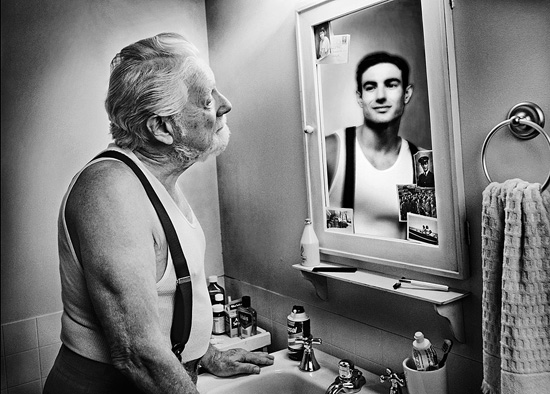
Paradox, optical illusion (image found on Pinterest)

PARADOX

[...] "Paradox is the life of haiku, for in each verse some particular thing is seen, and at the same time, without loss of its individuality and separateness, its distinctive difference from all other things, it is seen as a no-thing, as all things, as an all-thing." [...] (Chèvrefeuille)

Jane Reichhold (1937-2016) wrote in her book "Writing and Enjoying Haiku" the following about "paradox":

One of the aims of haiku is to confuse the reader just enough to attract interest. Using a paradox will engage interest and give the reader something to ponder after the last word. Again, one cannot use nonsense but has to construct a true, connected-to-reality paradox. It is not easy to come up with new ones or good ones, but when it happens, one should not be afraid of using it in a haiku.

Here is an example by Jane herself:

waiting room
a patch of sunlight
wears out the chairs

© Jane Reichhold

And here is an example written by Basho (1644-1694) in which he uses paradox:

black forest
whatever you may say
a morning of snow

© Basho (Tr. Jane Reichhold)

Let us explore "paradox" a little bit further.  Søren Kierkegaard (1813-1855), writes the following about paradox, in the Philosophical Fragments:

[...] "...that one must not think ill of the paradox, for the paradox is the passion of thought, and the thinker without the paradox is like the lover without passion: a mediocre fellow. But the ultimate potentiation of every passion is always to will its own downfall, and so it is also the ultimate passion of the understanding to will the collision, although in one way or another the collision must become its downfall. This, then, is the ultimate paradox of thought: to want to discover something that thought itself cannot think." [...] (Source: Wikipedia)

And what do you think of the paradox in a great painting by one of my favorite Dutch painters, M.C. Escher. Maurits Cornelis Escher (1898-1972) is one of the world's most famous graphic artists. His art is enjoyed by millions of people all over the world, as can be seen on the many web sites on the Internet. One of his most beautiful paintings (in my opinion) is titled "Paradox".

M.C. Escher's Paradox
But ... can we create a haiku with this "paradox"? Let me give it a try:

reaching for the sun
tulips bursting through the earth -
colorful rainbow

© Chèvrefeuille

Is this a "paradox"? I think so, but maybe you have another idea about it. Feel free to share it with us.

This episode is NOW OPEN for your submissions and will remain open until July 11th 10:00 PM (CEST). You can add your submission by clicking on our logo below. Have fun!


Thursday, August 17, 2017

Carpe Diem Writing and Enjoying Haiku #5 creating beauty


!!! Open for your submissions next Sunday August 20th at 7:00 PM (CET) !!!

Dear Haijin, visitors and travelers,

Welcome at a new episode of our "weekend-meditation", our weekly challenge. This week I have chosen for a new episode of our "Writing and Enjoying Haiku feature" as inspired on the book by Jane Reichhold with the same title (as you can see in the logo of this feature).

For this episode I choose the title "creating beauty", because in my opinion every haiku (or tanka) is a small piece of beauty. I think every haiku poet gives his / her own feeling in his / her haiku and because of that every haiku (or tanka) is a beautiful gem. That's one of the reasons I created Chèvrefeuille's Publications, because I think every haiku poet deserves to be published without exception.
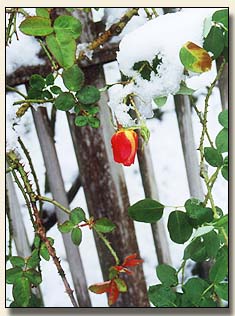
Woodblock Print "Snow Rose"

What is the creative beauty of haiku? (or tanka)?

I think the beauty of haiku (and tanka) is mostly in the smallness, both are short verses, and in those short verses there is need to tell a lot and that's not always easy, but every haiku poet succeeds in it ... so that's the beauty, the creative beauty of haiku (and tanka). Is that the only thing that makes haiku creative beauty? No certainly not .... it's the theme of it nature, shortness of life, spirituality, the strong form, the relaxing sound of the 5-7-5 syllables (those sound like the waves) or the 5-7-5-7-7 form of tanka. But it is also the beauty of the poet, or the beauty of the reader. Haiku is a symbiosis between the creator and the reader ... you can (maybe) say haiku is the Creator and we the haiku poets and the haiku readers are only the instruments for the Creator ...

Haiku, it's a short verse, but you can only create them from the heart, from the soul not from the mind ... haiku you have to sense, feel, touch, smell and so on ... haiku it's a symbiosis of all senses, the poet and the reader ... haiku is TOTAL ART ...

In several posts here at CDHK I have said it already I think ... haiku is ART ... and it's a beautiful Art. Maybe we can play with the lay-out:

waves 
                       run to and fro
                                                      to the beach

                                                      back and forth
                      grass waves on the wind
green ocean

Just two examples, not good haiku maybe, but as an example for playing with the layout of the haiku. Both haiku show "in a way" the movement of the waves and the grass.

Of course you know the one-line haiku, let's take a look at one of the above haiku-examples, but now written on one line:

back and forth grass waves on the wind green ocean

Or maybe we have to try it in the classical way vertically written, as you can see on the image below:

Basho's "Old Pond" vertical
The above image shows you Basho's "Old Pond" written 'vertical' and with a drawing/painting ... a haiga ....

There are so much possibilities with our beloved haiku ... be creative .... play with your haiku or tanka, change the lay-out or create a haiga ...

Haiku (or any other Japanese poetry form) is creating beauty ... So your task for this "weekend-meditation" is to create beauty, play with the haiku, play with the tanka ... enjoy writing haiku.

This "weekend-meditation" is open for your submissions next Sunday August 20th at 7:00 PM (CET) and will be open until August 27th at noon (CET). I will try to publish our next episode around that same time. For now .... have a great weekend and enjoy the creative beauty of haiku (or tanka).


Thursday, July 20, 2017

Carpe Diem Writing and Enjoying Haiku #3 classical haiku


!! Open for your submissions next Sunday July 23rd at 7.00 PM (CET) !!

Dear Haijin, visitors and travelers,

It's almost weekend and that means ... time for a new episode of our "weekend-meditation" feature. This weekend I have a nice episode for you of "Carpe Diem Writing and Enjoying Haiku", inspired on the book by Jane Reichhold (1937-2016).
In the last episode of "Writing and Enjoying Haiku" you had to create haiku without rules, this time, I love to challenge you to create haiku following the rules, the most basic rules of haiku. You may choose your own theme, but you have to follow the following rules:

1. A kigo seasonword)
2. A kireji (cutting-word or punctuation)
3. 5-7-5 syllables (onji)
4. The theme is nature
5. A spiritual, Zen-Buddhistic layer / meaning
6. First and Third line are interchangeable
7. In your haiku you may not use "I", because in haiku the poet isn't visible

All rules ... you (we) have to follow, but as Basho once said "forget the rules". Well for this episode of Writing and Enjoying Haiku you (we) cannot forget the rules.


As you all (maybe) know I am not a haiku poet that follows the rules, I am more like Santoka Taneda and try to create my haiku in the "free-style" way. So this challenge will not be easy for me, but of course I had to give it a try and created this haiku following the rules:

a fragile cobweb
dressed in crystalline dewdrops

treasure at sunrise

© Chèvrefeuille
Pff ... that wasn't easy. In my opinion this is a nice haiku, but it looks somewhat artificial, but after re-reading I had to change my opinion. It has become a real nice haiku. I think all the "rules" are in it, but about the Zen-Buddhistic layer I am not sure. What do you think?

This "weekend-meditation" is open for your submissions next Sunday July 23rd at 7:00 PM (CET) and will remain open until July 28th at noon (CET). I will try to publish our next episode, dunes, also around 7:00 PM (CET) next Sunday. Have a great weekend!


Thursday, June 22, 2017

Carpe Diem's Writing and Enjoying Haiku #1 Introduction

Cover / Logo

!!! Open for your submissions next Sunday June 25th at 7.00 PM (CET) !!!

Dear Haijin, visitors and travelers,

It is with pleasure and pride that I introduce to you an all new feature for the "weekend-meditation". Recently I tried the "Haiku Puzzler" as a "weekend-meditation", but it was a too difficult "puzzler" or you didn't like the idea of a "Haiku Puzzler" for the "weekend-meditation", so I decided to skip the "Haiku Puzzler" and bring up our new feature in honor of Jane Reichhold (1937-2016).
Maybe you know her hands-on-guide for haiku "Writing and Enjoying Haiku", from which I have extracted the title of this new "weekend-meditation" feature.

In "Writing and Enjoying Haiku" Jane brought up the idea of haiku writing as a kind of meditation and a way to find spiritual peace. And that's what the goal is of this new "weekend-meditation" feature.

Jane Reichhold, Queen of Haiku and Tanka
A few years ago I was send a gift by Jane for my birthday, a nice box full of books written by her. For example she gave me "Basho, the complete haiku", one of her best books in my opinion, but she also gave me a copy of her Hands On Guide "Writing and Enjoying Haiku". This small book was an eye-opener ... I had never looked at haiku as a way of finding peace, but after reading it I was overwhelmed by her beautiful mind and her knowledge. So it was then that a seed was sown for a new feature. I never had thought that I would use this idea that soon ... well it was through her death that this idea started to grow and finally blossomed ....

I love to start with a quote taken from the back-cover of Jane's Hands On Guide:

[...] "Writing and Enjoying Haiku shows how haiku can bring a centered, calming atmosphere into one's life, by focusing on the outer realities of life instead of the naggings of the inner mind, by gaining a new appreciation for the world of nature, and by preserving moments, days, and events so that they are not lost forever in the passage of time." [...]

the passage of time
[...] "Though the word "enjoying" is the third word in the title (of this book), for me enjoying anything and everything is the primary function of our lives. True, the function (of this book) is to teach you how to write haiku, but I want you to first learn to touch a point of pleasure within yourself with haiku.
To do this, you will need to open the arms of your mind to take in some haiku already snapped up out of the art and written down." [...]

The above quote is from the introduction of Jane's Hands On Guide and she already gives us a task in these words "learn to touch a point of pleasure within yourself with haiku". Let us start again with being a "rookie" in haiku world and let us learn to appreciate haiku right now by reading a few beauties collected from Carpe Diem Haiku Kai. To learn to appreciate haiku we have to learn how to read again, and re-read again ... making the haiku come to life and let it be part of you, let it be your pleasure ... maybe while reading these examples you have the urge to change something ... feel free to do so ... bring the haiku to life through your mind, your heart and your pencil.

goosefeather pen (image found on Pinterest)
I have the following haiku for you to "contemplate" and "meditate". Read and re-read them and try to bring the scene(s) to life. Try to become one with the haiku.
And as I wrote earlier in this post ... feel free to change the haiku if you have the urge to change them, that you can only achieve through "living" the haiku.

wisteria sways -
pendulous blossoms in breeze
unspoken promise

© Jazzy

petal lanterns —
a waterfall of flowers
her lips touch mine

© Hamish

scent of summer
jasmin blooming on the fence
bees hum in the daisy bush

© Cressida

summer heat
no shadows to turn to
rain at last

© Chèvrefeuille

Four haiku extracted from our CDHK E-book "Petal Lanterns". Written by four of our CDHK family members (including myself).


What is the goal of this "weekend-meditation"? Well to "learn" to read  haiku, to become one with haiku and trying to be the haiku. And if you had the urge to change something than share your "re-done" haiku with us. The second goal is to create haiku (or tanka) in which the reader can find, feel, touch, hear or see the scene as you have seen it and maybe your readers will also try to become one with your haiku, or will give words to their urge to change something.

Well ... I hope you did like this new "weekend-meditation" feature in honor and tribute of Jane Reichhold.

!!! Submissions for this "weekend-meditation" can be linked to the linking widget next Sunday, June 25th at 7.00 PM (CET). and will remain open until June 30th at noon (CET). I will try to publish our new episode, Shambhala, later on. For now ... have fun and have a wonderful creative weekend.