Thursday, February 12, 2015

Carpe Diem Extra 2015 - 8 Wabi Sabi


Dear Haijin, visitors and travelers,

I have understand that our last Haiku Writing Techniques "Sabi and Wabi" wasn't easy to adjust to, so I have decided to make another episode of our Haiku Writing Techniques about this "Sabi and Wabi" idea next Wednesday.
I have asked Jane about this "Sabi and Wabi", but she couldn't tell me more then I already had done in our Haiku Writing Techniques episode. So I will dive into this matter myself and will write a second episode of Haiku Writing Techniques on "Sabi and Wabi".
I hope that I can answer all of your questions on this Haiku Writing Technique.

Namaste,

Chèvrefeuille, your host.

Carpe Diem #667, Tulips


Dear Haijin, visitors and travelers,

Today we have a nice Dutch prompt, however ... Today our prompt is Tulips the flower which we, the Dutch, have made better and better, but the Tulip is not an original biological invention of the Dutch. The Tulip is a wild flower which was brought to The Netherlands from Turkey by Carolus Clusius in the 16th century. Clusius became director of the Leiden Hortus Botanicus and planted the first Tulips in The Netherlands. Why has it become a major symbol of the Dutch? Next to the wooden shoes and windmills? I honestly don't know. The only thing the Dutch have done is making the Tulip better.

Tulips field by Vincent Van Gogh (?)
Our Tulip, now a major export-article, is similar with haiku. Haiku is adopted by the world from Japan. And in every country there are haiku-poets standing up, making a name in haiku and changing the rules of haiku every day again. Haiku rules change, but the basics stay always in use, as is the original Tulip.
Today i love to share a painting by Vincent van Gogh for your inspiration. Van Gogh, i think, is more a post-impressionistic painter, but that is just my idea. Van Gogh has made wonderful paintings, but became famous after his death. 

I once wrote a haiku suite about him, i am translating it now and I hope to share it here with you this month. I composed it as i was just starting to become involved with haiku (and tanka).
Back to our prompt for today, Tulips, here is an Acrostic haiku with Tulips in the lead:

In this “acrostic haiku” POETRY is the Acrostichon and EAST the Liaison. (For more about this form visit: DevianArt)

Perfect way
Of writing haiku
Eastern thoughts
a
s
T
ulip bulbs
Redder than red
Year after year

Not an easy form, but it challenged me so I had to try it. 

Haiku is an impression and more than poetry  think, because you have to tell a lot with just a few words caught in three lines. So it is an impression of the moment you love to share. This is what haiku made an Art ..., but, as Jane says in her 'Writing and Enjoying Haiku', "everyone has a haiku poet hidden inside ... s/he has to come out that cocoon which is our body". Well ... she (Jane) not really said that ... it is more my impression of what she is saying.

Credits: Tulip Fields The Netherlands
We, the Dutch, are very proud on our Tulips which are very famous around the globe. So ... in a way I am very proud that I can and may share an episode about Tulips here at Carpe Diem Haiku Kai. (And I don't have Tulips in my own garden, something to be ashamed of? No ... I don't really like Tulips.)

I couldn't come up with a Tulips haiku today, so I share an "oldie" in which I have changed "flowers" into "tulips". Here it is, it was first published at my personal weblog Chèvrefeuille's Haiku-blog. Feel free to visit it.

I am confused
winter has departed
snow in april

snow in april
without hesitation tulips bloom
colors between white


colors between white
such a strange ambiguity
for Mother Earth

for Mother Earth
no doubts at all today
I am confused

© Chèvrefeuille

I like this cascading-style for haiku and I have composed several of them which you can mostly find at my own weblog as mentioned above. Feel free to visit and maybe you can try this cascading-styled haiku once.

This episode is open for your submissions tonight at 7.00 PM (CET) and will remain open until February 15th at noon (CET). i will try to publish our new episode, our third CD-Special with a haiku by Fuyuko Tomita, later on. For now .... have fun!


Wednesday, February 11, 2015

Carpe Diem #666, Poppies


Dear Haijin, visitors and travelers,

Recently I was given a present by Jane Reichhold ... finally I can read her "Writing and Enjoying Haiku". I started reading it immediately and it was an "eye-opener", not in the idea "all new", but more in the idea "yes I knew it". It's a great book to read and it will certainly make my haiku-ing better. I am very grateful that Jane send it to me and it gives me the opportunity to broaden my ideas and visions on haiku. Awesome!

As I created the prompt-list for February I realized that I had used several of the prompts earlier and so it is with our prompt for today poppies. I remember for example an episode of our "distillation"- feature in which I shared a wonderful poem by John McCrae "In Flanders Fields". I love to share that poem here once again.

In Flanders fields the poppies blow
Between the crosses, row on row,
That mark our place; and in the sky
The larks, still bravely singing, fly
Scarce heard amid the guns below.

We are the Dead. Short days ago
We lived, felt dawn, saw sunset glow,
Loved and were loved, and now we lie
In Flanders fields.

Take up our quarrel with the foe:
To you from failing hands we throw
The torch; be yours to hold it high.
If ye break faith with us who die
We shall not sleep, though poppies grow
In Flanders fields.


© John McCrae


In some way I have the feeling this poem fits our impressionism theme very much, but maybe that's just wishful thinking. It's a very strong poem with a very deep meaning and full of emotions. Yes ... for sure this poem is impressionism.

And I recall an episode on Basho Revisited in which I wrote about a haiku by Basho on White Poppies, here is that haiku by Basho:

shira geshi ya   shigure no hana no   saki tsu ran

white poppy
it must have bloomed
from a wintry shower


© Matsuo Basho

I even can remember that I tried to explain in that episode that Basho was indeed writing in Kanshicho-style (which we have discussed here in one of our episodes of "Ask Jane ...") for several years. After that period Basho re-wrote his haiku in Kanshicho-style to the regular haiku-style.
As you maybe know in every episode of Basho Revisited I try to write a haiku in the same sense, tone and spirit as the one by Basho, whom I see as my master, and here is my attempt to write an all new haiku on this one of the "white poppy":


at sunrise
poppies still redder
sacrifice for God


© Chèvrefeuille

Let us look back at the poem by John McCrae ... then we can see that this haiku I wrote fits the "impression" which is "painted" in the poem "In Flanders Field". A coincidence I think, but it came to my attention as I was preparing this episode.

We are busy with our central theme impressionism this month and all our prompts this month are based on Impressionistic paintings. This episode is inspired on this painting by Claude Monet (1873):

Credits: Landscape with Poppies - Claude Monet (1873)
Wow! What a wonderful painting ... it's really an Impression of a field with poppies and it's so clear that this is the "hand" of Claude Monet. Must be fabulous to paint like Monet, but ... I am not that much a painter with oil-pastel ... I am more a painter with words (smiles). As I stated in one of our "Haiku Writing Techniques" episodes, I think that a haiku is an impression of a moment in time, as short as the sound of a pebble thrown into water. How can haiku be more then that? It's ... just an impression of a moment in time and it's awesome to catch that moment in time with so little words ....

one summer day
poppies coloring the meadows -
raindrops start to fall

© Chèvrefeuille

Is this an impression of the scene I see? Well ... it could be ... 

This episode is open for your submissions tonight at 7.00 PM (CET) and will remain open until February 14th at noon (CET). I will try to publish our new episode, Tulips, later on. For now ... have fun, be inspired and share your "impression", your haiku with us all.


Tuesday, February 10, 2015

Carpe Diem Haiku Writing Techniques #6 Sabi and Wabi


Dear Haijin, visitors and travelers,

It's almost Wednesday again and that's "Haiku Writing Techniques"- day. As you maybe know we are exploring haiku writing techniques and this week I love to look closer at, what is called "Sabi" and "Wabi". For this week's Haiku Writing Techniques I have dived into Jane Reichhold's "Bare Bones School of Haiku", which you can download as an e-book at our Haiku Kai.
In "Bare Bones School of Haiku" Jane explains the origin and writing of haiku and (as you have read it already) in one of her lessons in this book she explains "Sabi" and "Wabi". I love to share that part of "Bare Bones School of Haiku" here with you all.

The Technique of Sabi

I almost hesitate to bring up this idea as a technique because the word sabi has gotten so many meanings over the innumerable years it has been in Japan, and now that it comes to the English language it is undergoing even new mutations. 
As fascinated as Westerners have become with the word, the Japanese have maintained for centuries that no one can really, truly comprehend what sabi really is and thus, they change its definition according to their moods. Bill Higginson, in The Haiku Handbook, calls sabi – "(patina/loneliness) Beauty with a sense of loneliness in time, akin to, but deeper than, nostalgia." Suzuki maintains that sabi is "loneliness" or "solitude" but that it can also be "miserable", "insignificant", and "pitiable", "asymmetry" and "poverty". Donald Keene sees sabi as "an understatement hinting at great depths"
So you see, we are rather on our own with this! I have translated this as: sabi (SAH-BEE)- aged/loneliness - A quality of images used in poetry that expresses something aged or weathered with a hint of sadness because of being abandoned. A split-rail fence sagging with overgrown vines has sabi; a freshly painted picket fence does not." As a technique, one puts together images and verbs which create this desired atmosphere. Often in English this hallowed state is sought by using the word "old" and by writing of cemeteries and grandmas. These English tricks wear thin quickly.

rocky spring
lips taking a sip
from a stone mouth

or

coming home
flower
by flower

The Technique of Wabi 

The twin brother to sabi who has as many personas can be defined as "(WAH-BEE)-poverty- Beauty judged to be the result of living simply. Frayed and faded Levis have the wabi that bleached designer jeans can never achieve." Thus one can argue that the above haiku samples are really more wabi than sabi – and suddenly one understands the big debate. However, I offer one more ku that I think is more wabi than sabi because it offers a scene of austere beauty and poignancy.

parting fog
on wind barren meadows
birth of a lamb

As I look at these two very different ideas sabi and wabi than to me both describe a kind of atmosphere that has to be seen (or read) in the haiku. But that atmosphere isn't easy to catch with a few words, maybe these two ideas are more in use for Tanka, because than you have two more lines to give words to the atmosphere of the moment which you love to catch in your poem. However as I look closer to wabi and the example Jane gives in this description of the jeans than a haiku which I wrote for one of our older prompts "blue" comes in mind immediately.

Sabi or Wabi?
wearing blue jeans
sign of happiness and freedom -
bleached with stones

bleached with stones
jeans almost falling apart
can't throw them away

But this can also be sabi, because all new designer jeans are ragged or ripped ... and they sell ... So for these "torn apart" jeans I think you can use both ideas sabi and wabi.
Well ... it's a little bit strange Haiku Writing Technique, but it will challenge you I think. The goal is to write new haiku with sabi and/or wabi. Have fun!

This episode is open for your submissions tonight at 7.00 PM (CET) and will remain open until February 13th at noon (CET). I will (try to) publish our next episode, poppies, later on. Than will go on with the exploration of impressionism in haiku idea as impression.


Monday, February 9, 2015

Carpe Diem #665, Sunset (over the Habor)


!! I publish this episode earlier, because I am in the nightshift !!

Dear Haijin, visitors and travelers,

Today I have another wonderful impressionistic painting, but this time it's more from a modern artist of whom I couldn't find the name. The painting looks great and is an impression of a harbor in the sunset. Another nice scene as impressionists loved to paint ... we the day going to it's end, the light changes ... until sunset is at it's most beautiful.

Sunset over the Harbor

the sky changes
deep blue to yellowish red -
seagulls cry in the harbor

(C) Chèvrefeuille

There were also composers which were influenced by impressionism, composers like Debussy (1862-1918) for example or Ottorino Respighi (1879-1936) and Ravel (1875-1925).

Impressionism in music was a movement among various composers in Western classical music, mainly during the late 19th and early 20th centuries, whose music focuses on suggestion and atmosphere, "conveying the moods and emotions aroused by the subject rather than a detailed tone‐picture". “Impressionism” is a philosophical and aesthetic term borrowed from late 19th century French painting after Monet’s Impression, Sunrise. Musicians were labeled impressionists by analogy to the impressionist painters who use starkly contrasting colors, effect of light on an object blurry foreground and background, flattening perspective to make us focus our attention on the overall impression.
The most prominent in musical impressionism is the use of “color”, or in musical term, timbre, which can be achieved through orchestration, harmonic usage, texture, etc. Other elements of music impressionism involve also new chord combination, ambiguous tonality, extended harmonies, use of modes and exotic scales, parallel motions, and extra-musically, evocative titles such as Reflets dans l'eau ("Reflections on the water", 1905), Brouillards ("Mists", 1913) etc. Recently I discovered an Italian composer, who also was influenced by impressionism, Ottorino Respighi (1879-1936). And I love to share here a piece of music written by him titled “Siciliana”.

I hope you did enjoy this wonderful impressionistic music by Respighi and I hope it will inspire you to write new haiku too.

dreaming away
to a faraway sunny country -
a Nightingale sings

(C) Chèvrefeuille
This is it for today. This episode will be open for your submissions tonight at 7.00 PM (CET) and will remain open until February 12th at noon (CET). I will (try to) publish our next episode, a new Haiku Writings Techniques episode, later on. For now ... have fun! !! PS. I have made a new e-book Fragile Beauty, you can find it at the right side of our Haiku Kai. !!

Sunday, February 8, 2015

Carpe Diem Time Glass #20, A Frog Jumps In


Dear Haijin, visitors and travelers,
It's time again for a time challenging Time Glass feature in which the goal is to write/compose a haiku within 24 hours and today I have made this challenge a little bit more difficult, because I love to challenge you all to write a haibun with the given prompt and the inspiring image.

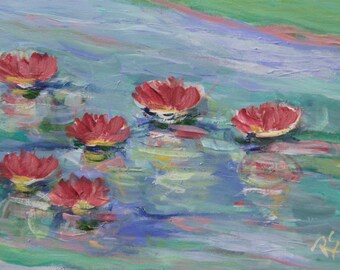
Impression of Waterlilies

And this is our prompt: a frog jumps in which refers to that famous haiku by Basho:

the old pond
a frog jumps into it
the sound of water


(C) Basho (tr. Chèvrefeuille)

Back to the task. Maybe you can remember our Kamishibai Extreme challenge (2014-November). In which I challenged you to write a haibun (prose and haiku) on a given prompt with only 55 words (including the haiku). For this Time Glass episode I will challenge you again to write a haibun, with only 75 words, including the haiku, in just 24 hours.


To inspire you a little bit more, I have a few "frog"-haiku for you:

between dewy leaves
hides a little green frog
for the blue heron


© Chèvrefeuille
against his nature,
a frog in front of the fireplace -
the cry of a stork


© Yozakura
in deep silence
Saburo is walking the path -

a frog jumps away

© Chèvrefeuille


the little child
reaches for the water lilies
without seeing the frog


(c) Chèvrefeuille

Well .... this was our new Time Glass episode and I hope it will inspire you to write a haibun following the above mentioned rules and with the use of the prompt and image(s). You have to respond within 24 hours starting tonight at 7.00 PM (CET) and ending tomorrow (February 9th) at 7.00 PM (CET). So ... you have JUST 24 HOURS to respond. Good luck, have fun and be inspired!

Carpe Diem #664, Tranquility


!! I publish this episode earlier, because I am in the nightshift !!

Dear Haijin, visitors and travelers,

Our first CD-week of February is over and I think I have made a great choice to have impressionism as the leading theme this month. I have read wonderful haiku (and tanka and haibun) in which you all do honor to impressionism. Really great ...
Today we are going on with this wonderful impressionistic prompts and today that's Tranquility and it's based on a painting by Louis Oscar Griffith - Tranquil Afternoon

Tranquil Afternoon - Louis Oscar Griffith

This serene scene is gorgeous I can sense the tranquility of the afternoon; after a day of work, relaxing in the garden, only the birds keeping me company, the rustling of leaves, the warm sultry air of a late summer afternoon. The perfume of nature, lavender or something ... the scent of the earth.

It's a beautiful painting and a nice example of impressionism. It's a nice impression of a garden or park. Look at all those green colors and that beautiful purple-blue of the blooming flowers. In the background you can see the faint image of a lake ... must be an awesome place.

And here is my response on this prompt, again one from my archives, which I have changed a little bit lately:

tranquility
in between worlds
the city park

(C) Chèvrefeuille

I think with this haiku I have "painted" the "impression" as seen in the painting above by Louis Oscar Griffith. And this haiku fits my idea that a haiku IS just an Impression of a moment as short as the sound of a pebble thrown into water.

This episode is open for your submissions tonight at 7.00 PM (CET) and will remain open until February 11th at noon (CET). Have fun!