Sunday, December 6, 2015

Carpe Diem Extra #42 Old Bamboo Wind Chimes


NOW AVAILABLE FOR DOWNLOAD

Old Bamboo Wind Chimes a new CDHK e-book by Georgia (a.k.a. Bastet) the winner of our "Peace of Mind" kukai.

You can find it at the right side of our Kai.

Namaste,

Chèvrefeuille

Saturday, December 5, 2015

Carpe Diem #873 Deeper into the North: men of this world; picking up rice seedlings; backpack and sword


Dear Haijin, visitors and travelers,

While creating an all new episode I remember how Basho hoped to bring his idea of Karumi into the world ... being a traveling haiku poet or more specific a traveling renga-master. He was anxious to tell everyone about his idea of Lightness in haiku art ... maybe that's what I am trying too here at Carpe Diem Haiku Kai. I feel connected with Basho and his love for haiku ... That's the reason why I started with CDHK bringing the wonderful art of haiku into the world ... and I hope that CDHK can bring people to the idea of trying (once in their lifetime) to write haiku.
I know that several of you were haiku poets before I started CDHK, but ... I have heard from several of you that CDHK has brought them more joy and insight in the wonderful art of haiku-ing. And now ... I take you all with me in the footsteps of Basho, the traveling poet, on the Narrow Road Into The Deep North. Today we will go on with our journey and we are walking further into the deep north.

just one leaf
struggles with the wind
like Basho


© Chèvrefeuille

A beautiful haiku in which I give words to my feeling of struggling, because it is not always easy to create new episodes for CDHK, not only by lack of time, but also by lack of inspiration. But ... how can I not publish these daily prompts ... I only would make you all sad and that's for sure not my intention.


++++++++++++++++++++++++++++++++++++++++++++

I have to apologize for something. In our last “regular” episode I told you all that the chestnut haiku wasn’t included in “Narrow Road”, but I was mistaken. The “chestnut”-haiku which I thought was by Basho, wasn’t his. It was written by Sora, his travel companion. So my apologies for that mistake. Here is the “chestnut”-haiku which was included in “Narrow Road” and written by Basho:

men of this world
fail to find the flowers
chestnuts under the eaves


© Basho (Tr. Jane Reichhold)

Well ... let’s go on with our journey to the deep north.


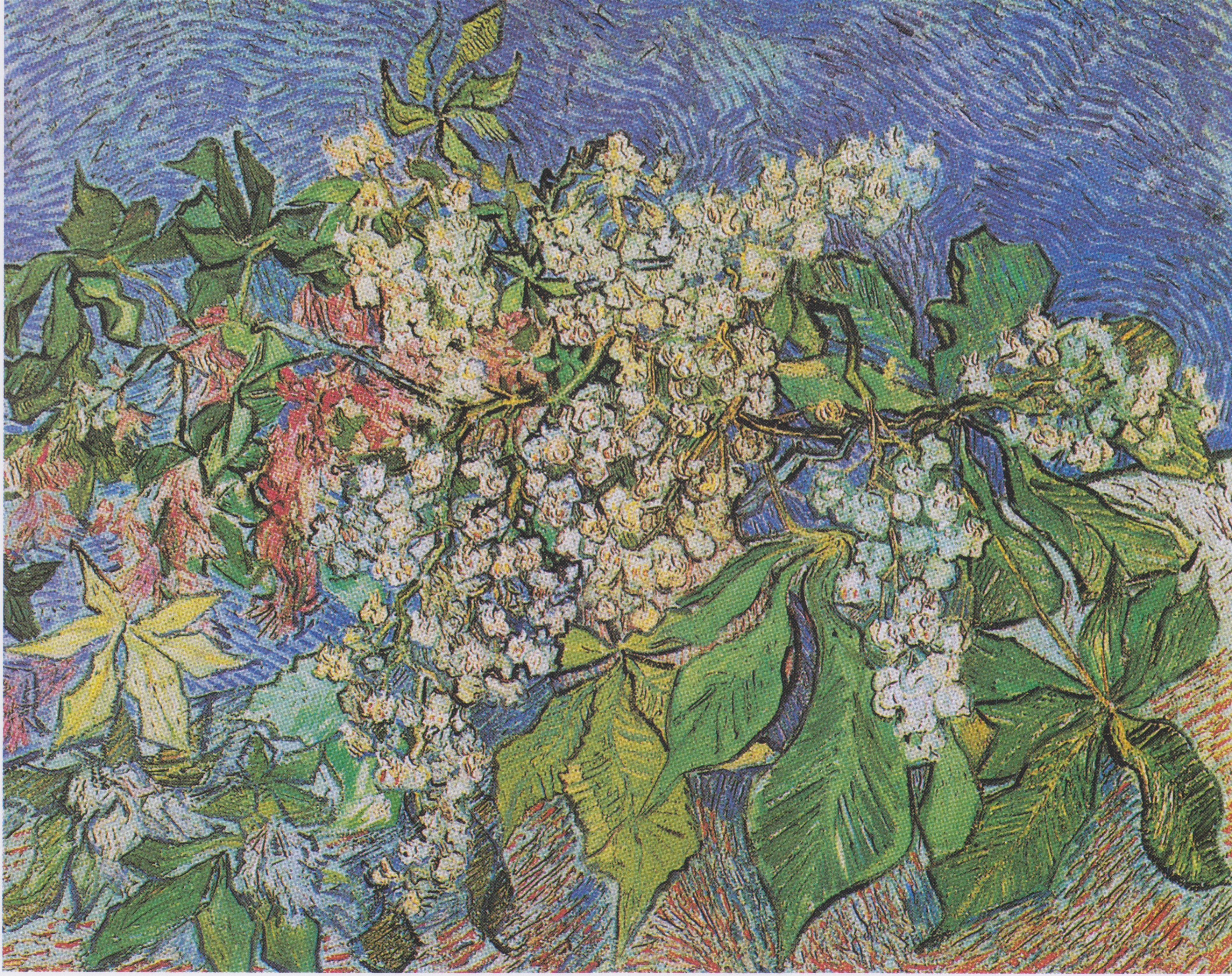
Credits: Chestnut flowers by Vincent Van Gogh

Passing through the town of Hiwada, which was about five miles from the house of the Poet Tokyu, I came to the famous hills of Asaka. The hills were not very far from the highroad, and scattered with numerous pools. It was the season of a certain species of iris called katsumi. So I went to look for it. I went from pool to pool, asking every soul I met on the way where I could possibly find it, but strangely enough, no one had ever heard of it, and the sun went down before I caught even a glimpse of it. I cut across to the right at Nihonmatsu, saw the ancient cave of Kurozuka in a hurry, and put up for the night in Fukushima.

On the following morning I made my way to the village of Shinobu to look at the stone upon whose chequered face they used to dye a certain type of cloth called shinobu-zuri. I found the stone in the middle of a small village, half buried in the ground. According to the child who acted as a self-appointed guide, this stone was once on the top of a mountain, but the travelers who came to see it did so much harm to the crops that the farmers thought it a nuisance and thrust it down into the valley, where it rests now with its chequered face downward. I thought the story was not altogether unbelievable.

picking up rice seedlings
hands move as in days of old
ferns of remembrance


© Basho (Tr. Jane Reichhold)

Crossing the ferry of Moon Halo, I came to the post town of Rapid's Head. The ruined house of the brave warrior Sato was about a mile and a half from this post town towards the foot of the mountains on the left. I pushed my way towards the village of Iizuka, and found a hill called Maruyama in the open field of Sabano. This was the site of the warrior's house. I could not refrain from weeping, when I saw the remains of the front gate at the foot of the hill. There was a lonely temple in the vicinity, and tombs of the Sato family were still standing in the graveyard. I wept bitterly in front of the tombstones of the two young wives, remembering how they had dressed up their frail bodies in armor after the death of their husbands. In fact I felt as if I were in the presence of the Weeping Tombstone of China.

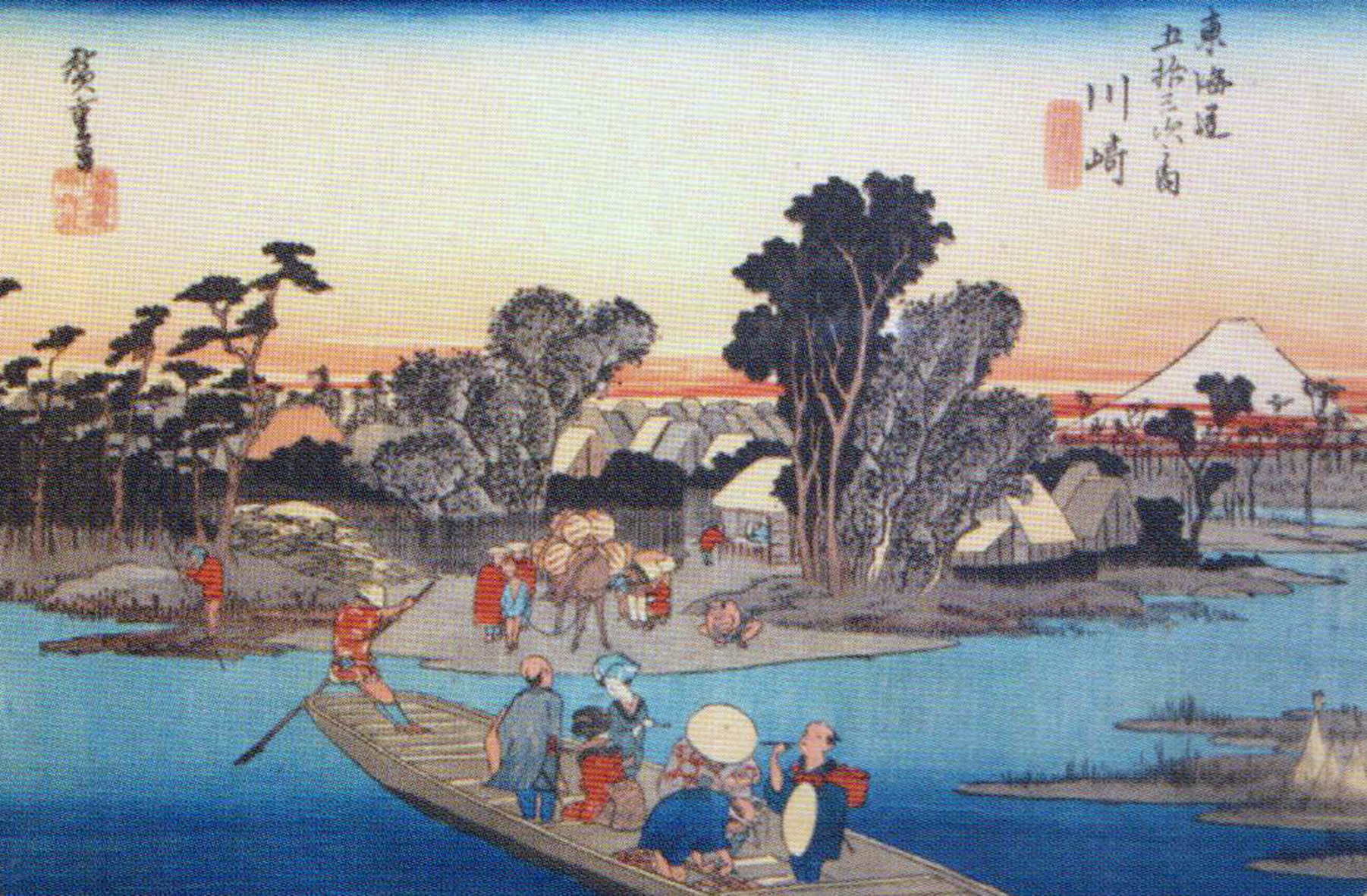
Credits: Japanese ferry (woodblock print)

I went into the temple to have a drink of tea. Among the treasures of the temple were the sword of Yoshitsune and the satchel which his faithful retainer, Benkei, had carried on his back.

backpack and sword
decorated in May
with paper fish banners


© Basho (Tr. Jane Reichhold)

Note: This haiku refers to “Boys’ Day”, which is celebrated on the 5th of May.

I stopped overnight at Iizuka. I had a bath in a hot spring before I took shelter at an inn. It was a filthy place with rough straw mats spread out on an earth floor. They had to prepare my bed by the dim light of the fire, for there was not even a lamp in the whole house. A storm came upon us towards midnight, and between the noise of the thunder and leaking rain and the raids of mosquitoes and fleas, I could not get a wink of sleep. Furthermore, an attack of my old complaint made me so ill that I suffered severely from repeated attacks while I rode on horseback bound for the town of Kori. It was indeed a terrible thing to be so ill on the road, when there still remained thousands of miles before me, but thinking that if I were to die on my way to the extreme north it would only be the fulfillment of providence, I trod the earth as firmly as possible and arrived at the barrier-gate of Okido in the province of Date.

Credits: Hot Springs


+++++++++++++++++++++++++++++++++++++++++

With this episode we are a little bit closer to the mysterious deep north of the Japanese Southern Island Honshu and in the upcoming days we will discover more beauty as we are going further into the deep north.


following the trail
on a journey through the world
to find ourselves


© Chèvrefeuille

a soothing breeze
cicadas sing their song
sound of water


© Chèvrefeuille

And now it is up to you to try to compose an all new haiku, tanka or other Japanese poetry form in the spirit of Basho.

This episode is NOW OPEN for your submissions and will remain open until December 8th at noon (CET). I will (try to) publish our new episode, 
Rainhat Island; since the cherry blossoms, later on. And our journey will continue. For now ... be inspired and share your haiku with us all.

Friday, December 4, 2015

Carpe Diem Special #185 Georgia's first "Autumn Reflections" (Troiku)

Credits: logo CD-Special December 2015

Dear Haijin, visitors and travelers,

It's my pleasure and with pride that I welcome you at the first Carpe Diem Special of December. This month's featured haiku-poetess (and winner of our "peace of mind" - kukai) Georgia (a.k.a. Bastet) of Bastet and Sekhmets Library

Georgia won our "peace of mind" kukai with the following haiku:

rain drips
off the old bamboo wind-chimes
serenity


© Georgia
A real winner I think, and you all thought so too, because you were the judges yourself. For this first CD-Special I have chosen to share a Troiku composed by Georgia with you all. As you maybe know I have invented the "troiku" a creative way of writing haiku. More about Troiku you can find in de menu above.


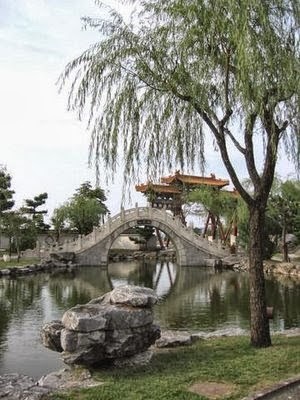
Credits: autumn reflections

autumn reflections
as I cross the sun warmed bridge
geese fly south
autumn reflections
old man contemplates winter
under the hot sun
as I cross the sun warmed bridge
ducks laugh downstream
– diving for trout
geese fly south
the noisy swallows have gone
but the blackbird sings


© Georgia


And the challenge, as you all know, for the CD-specials is to write an all new haiku, tanka or in this specific episode, a troiku, inspired on the given one trying to touch the same sense, tone and spirit. I am looking forward to all of your responses.

This CD-Special is open for your submissions tonight at 7.00 PM (CET) and will remain open until December 7th at noon (CET). I will try to publish our next episode, men of this world;  picking up rice seedlings; backpack and sword, later on.


Thursday, December 3, 2015

Carpe Diem #872 our journey continues: across the field; one patch of a rice field; roots of elegance


Dear Haijin, visitors and travelers,

Our journey continues ... this is the third episode of December in which we are walking together with Basho and his companions the narrow path into the deep north. It's an awesome journey ... and ... how I wish to make that trip somewhere later in my life.


+++++++++++++++++++++++++++++++++++++++++++++


Taking leave of my friend in Kurobane, I started for the Murder Stone, so called because it kills birds and insects that approached it. I was riding on a horse my friend had lent me, when the farmer who led the horse asked me to compose a poem for him. His request came to me as a pleasant surprise.

across the field
the horse pulls toward
the cuckoo


© Basho (Tr. Jane Reichhold)

The Murder Stone was in the dark corner of a mountain near a hot spring, and was completely wrapped in the poisonous gas rising from it. There was such a pile of dead bees, butterflies, and other insects, that the real color of the ground was hardly discernible.

I went to see the willow tree which Saigyo celebrated in his poem when he wrote, "Spreading its shade over a crystal stream." I found it near the village of Ashino on the bank of a rice-field. I had been wondering in my mind where this tree was situated, for the ruler of this province had repeatedly talked to me about it, but this day, for the first time in my life, I had an opportunity to rest my worn-out legs under its shade.

one patch of rice field
when it was planted I left
the willow tree


© Basho (Tr. Jane Reichhold)


Saigyo's Willow

After many days of solitary wandering, I came at last to the barrier-gate of Shirakawa, which marks the entrance to the northern regions. Here, for the first time, my mind was able to gain a certain balance and composure, no longer victim to pestering anxiety, so it was with a mild sense of detachment that I thought about the ancient traveler who had passed through this gate with a burning desire to write home. This gate was counted among the three largest checking stations, and many poets had passed through it, each leaving a poem of his own making. I myself walked between trees laden with thick foliage with the distant sound of autumn wind in my ears and a vision of autumn tints before my eyes. There were hundreds and thousands of pure white blossoms of unohana (Deutzia) in full bloom on either side of the road, in addition to the equally white blossoms of brambles, so that the ground, at a glance, seemed to be covered with early snow. According to the accounts of Kiyosuke, the ancients are said to have passed through this gate, dressed up in their best clothes.

white flowers in my hair
I walk through the gate into the deep north
my only gala dress

©  Sora (Tr. Chèvrefeuille)


Credits: White flowers of the Unohana (Deutzia)

Pushing towards the north, I crossed the River Abukuma, and walked between the high mountains of Aizu on the left and the three villages of Iwaki, Soma, and Miharu on the right, which were divided from the villages of Hitachi and Shimotsuke districts by a range of low mountains. I stopped at the Shadow Pond, so called because it was thought to reflect the exact shadow of any object that approached its shore. It was a cloudy day, however, and nothing but the grey sky was reflected in the pond. I called on the Poet Tokyu at the post town of Sukagawa, and spent a few days at his house. He asked me how I had fared at the gate of Shirakawa. I had to tell him that I had not been able to make as many poems as I wanted, partly because I had been absorbed in the wonders of the surrounding countryside and the recollections of ancient poets. It was deplorable, however, to have passed the gate of Shirakawa without a single poem worth recording, so I wrote:

roots of elegance
on this trip to the far north
rice-planting song


© Basho (Tr. Jane Reichhold)


Credits: barrier-gate of Shirakawa

Using this poem as a starting piece, we made three books of linked verse.

There was a huge chestnut tree on the outskirts of this post town, and a priest was living in seclusion under its shade. When I stood there in front of the tree, I felt as if I were in the midst of the deep mountains where the poet Saigyo had picked nuts. I took a piece of paper from my bag, and wrote as follows:

"The chestnut is a holy tree, for the Chinese ideograph for chestnut is Tree placed directly below West, the direction of the holy land. The Priest Gyoki is said to have used it for his walking stick and the chief support of his house."

chestnut in bloom
without being seen
by travelers


© Basho (Tr. Chèvrefeuille)

(note: this last haiku was included in “Narrow Road”, but wasn’t part of the original. I, however, had to bring it up here ... just because ...)


++++++++++++++++++++++++++++++++++++++++++++++++++++++


What a joy to go on foot straight through the beauty of the wild ancient Japan. It wasn’t an easy journey for Basho who had a chronic disease of his intestines. For this episode I didn’t compose an all new haiku, just because of the few translations by me.

This episode is NOW OPEN for your submissions and will remain open until December 6th at noon (CET). I will (try to) publish our new episode, our first CD-Special by Georgia (winner of the “peace of mind” kukai, later on.


Wednesday, December 2, 2015

Carpe Diem #871 The Narrow Road continues: for a while; a summer mountain; even woodpeckers


Dear Haijin, visitors and travelers,

First this: As you all know our CDHK-family is a real family in which love and respect are great values. As your "patriarch" I am always busy to make CDHK better and this month I hope to create and publish our first e-zine "Souchou" (Japanese for Early Morning). Souchou will be published by Chèvrefeuille's Publications every season (as is traditional). The first edition of Souchou is a "try-out" edition, say number "zero", but I hope that it will become an e-zine which we will make with each other.
Second: Don't forget to submit your haiku (all new and never published with a max of three haiku) for our "Winter" kukai. You can submit haiku until December 23rd 10.00 PM (CET) by emailing them to our email-address: carpediemhaikukai@gmail.com Don't forget to write "winter-kukai" in the subject-line.
Third: I have enough ideas for new prompts, but of course CDHK is made by us all and so please if you have ideas for prompts let me know.

We are on our way together with Basho and Sora on the Narrow Road into the Deep North. We have said farewell to our friends, family and neighbors and we are going on ... finding finally, at the end of the Narrow Road enlightenment.

++++++++++++++++++++++++++++++++++++++


Mount Kurokami was visible through the mist in the distance. It was brilliantly white with snow in spite of its name, which means black hair.

I cut my hair
at Mount Kurokamiyama
and change robes


© Sora (Tr. Gabi Greve)

Credits: Sora

My companion's real name is Kawai Sogoro, Sora being his pen name. He used to live in my neighborhood and help me with such chores as bringing water and firewood. He wanted to enjoy the views of Matsushima and Kisagata with me, and also to share with me the hardships of the wandering journey. So he took to the road after taking the tonsure on the very morning of our departure, putting on the black robe of an itinerant priest, and even changing his name to Sogo, which means Religiously Enlightened. His poem, therefore, is not intended as a mere description of Mount Kurokami. The last determination to persist in his purpose.

After climbing two hundred yards or so from the shrine, I came to a waterfall, which came pouring out of a hollow in the ridge and tumbled down into a dark green pool below in a huge leap of several hundred feet. The rocks of the waterfall were so carved out that we could see it from behind, though hidden ourselves in a craggy cave. Hence its nickname, See-from-behind.

for a while
secluded behind the waterfall
summer retreat begins


© Basho (Tr. Jane Reichhold)


Credits: Urami-no-Taki

A friend was living in the town of Kurobane in the province of Nasu. There was a wide expanse of grass-moor, and the town was on the other side of it. I decided to follow a shortcut which ran straight for miles and miles across the moor. I noticed a small village in the distance, but before I reached it, rain began to fall and darkness closed in. I put up at a solitary farmer's house for the night, and started again early next morning. As I was plodding though the grass, I noticed a horse grazing by the roadside and a farmer cutting grass with a sickle. I asked him to do me the favor of lending me his horse. The farmer hesitated for a while, but finally with a touch of sympathy in his face, he said to me, 'There are hundreds of cross-roads in the grass-moor. A stranger like you can easily go astray. This horse knows the way. You can send him back when he won't go any further.' So I mounted the horse and started off, when two small children came running after me. One of them was a girl named kasane, which means manifold. I thought her name was somewhat strange but exceptionally beautiful.

By and by I came to a small village. I therefore sent back the horse, with a small amount of money tied to the saddle.

I arrived safely at the town of Kurobane, and visited my friend, Joboji, who was then looking after the mansion of his lord in his absence. He was overjoyed to see me so unexpectedly, and we talked for days and nights together. His brother, Tosui, seized every opportunity to talk with me, accompanied me to his home and introduced me to his relatives and friends. One day we took a walk to the suburbs. We saw the ruins of an ancient dog shooting ground, and pushed further out into the grass-moor to see the tomb of Lady Tamamo and the famous Hachiman Shrine, upon whose god the brave archer, Yoichi, is said to have called for aid when he was challenged to shoot a single fan suspended over a boat drifting offshore. We came home after dark.

Komyoji Temple (a.k.a. Unganji Temple)

I was invited out to the Komyoji Temple, to visit the hall in which was enshrined the founder of the Shugen sect. He is said to have travelled all over the country in wooden clogs, preaching his doctrines.

a summer mountain
I pray to the wooden clogs
at departure


© Basho (Tr. Jane Reichhold)

There was a Zen temple called Unganji in this province. The priest Buccho used to live in isolation in the mountains behind the temple. He once told me that he had written the following poem on the rock of his hermitage with the charcoal he had made from pine.

This grassy hermitage,
Hardly any more
Than five feet square,
I would gladly quit
But for the rain.


© Buccho (Tr. Nobuyuki Yuasa)

A group of young people accompanied me to the temple. They talked so cheerfully along the way that I reached it before I knew it. The temple was situated on the side of a mountain completely covered with dark cedars and pines. A narrow road trailed up the valley, between banks of dripping moss, leading us to the gate of the temple across a bridge. The air was still cold, though it was April.

I went behind the temple to see the remains of the priest Buccho's hermitage. It was a tiny hut propped against the base of a huge rock. I felt as if I was in the presence of the Priest Genmyo's cell or the Priest Houn's retreat. I hung on a wooden pillar of the cottage the following poem which I wrote impromptu.

even woodpeckers
do not damage this hut
a summer grove


© Basho (Tr. Jane Reichhold)


++++++++++++++++++++++++++++++++++++


I realize that these episode(s) will be somewhat longer than I commonly do, but it's a joy to bring the whole "Narrow Road" here to become really part of it. I do understand that it will not be easy to write haiku inspired on these episodes, but that's the goal ... however there is no need to use the theme of the episode ... remember that these posts are just for inspiration ...

I was inspired enough to write a few haiku ....

mystifying
walking this spiritual road
finding the light


© Chèvrefeuille

Logo CDHK special feature from the past

And I ran through my archives to find a few haiku I wrote in the years behind us, maybe you can remember that I had a special feature about 'The Narrow Road" at the beginning of CDHK and there I found the following haiku:


the sound of water
soothing - like meditating
behind the waterfall

searching wisdom
I pray to Mother Earth
before leaving

summer mountains
I bow for high wooden clogs -
Nightingale's song

on a journey
seeking for ancient knowledge
deep inside myself

© Chèvrefeuille

I hope you enjoyed the read and I hope (of course) that it will inspire you to create/compose an all new haiku or tanka.

This episode is open for your submissions tonight at 7.00 PM (CET) and will remain open until December 5th at noon (CET). I will (try to) publish our new episode, across the field, later on.

Tuesday, December 1, 2015

Carpe Diem Haiku Writing Techniques #21 The Technique of Mixing It Up


Dear Haijin, visitors and travelers,

Welcome at a new episode of our Carpe Diem Haiku Writing Techniques in which I introduce several haiku writing techniques in cooperation with Jane Reichhold. We have had several nice techniques already, but the technique of this week is an awesome one I think. This week's CDHWT episode is about "Mixing It Up", an example:

summer afternoon
reflected clouds fall apart
like shards


© Chèvrefeuille

I don't know if this is a haiku in which this technique is used, but as I look closer to this haiku than it is possible that it describes an action of the author, but also as an action of nature. That's what this technique is about.

Let me give you a short explanation of this haiku writing technique:


What is meant here is mixing up the action so the reader does not know if nature is doing the acting or if a human is doing it. As you know, haiku are praised for getting rid of authors, authors' opinions, and authors' action. One way to sneak this in is to use the gerund (-ing added to a verb) combined with an action that seems sensible for both a human and for the nature/nature to do. Very often when you use a gerund in a haiku you are basically saying, "I am. . . " making an action but leaving unsaid the "I am". The Japanese language has allowed poets to use this tactic so long and so well that even their translators are barely aware of what is being done. It is a good way to combine humanity's action with nature in a way that minimizes the impact of the author but allows an interaction between humanity and nature.
Jane Reichhold
Here is an example by Jane Reichhold:

end of winter
covering the first row
of lettuce seeds
 
© Jane Reichhold
And here is an example by Basho in which he uses this technique:

meigetsu ya ike o megurite yomosugara

full moon
walking around the pond
all night


© Basho (Tr. Jane Reichhold)

This poem can be read with the idea that the moon "walks" around the pond as it seems to go from east to west or that the author walked around the pond the whole night enjoying the full moon. There is an association between the bright, that surface of the moon and the light-reflecting surface of a round pond.

A wonderful technique to use I think. So I am looking forward to your responses.

This episode of CDHWT is open for your submissions tonight at 7.00 PM (CET) and will remain open until December 4th at noon (CET). I will (try to) publish our next episode, for a while, later on.

Carpe Diem #870 prologue: a door of grass; spring departing; how glorious


Dear Haijin, visitors and travelers,

Welcome at the first episode of December 2015. This month we will walk the narrow road to the deep north together with Matsuo Basho. As I have promised I will bring all the 50 haiku from "The Narrow Road Into The Deep North" this month, so for starters I have the first three haiku of this world famous haibun by Basho for you all and for your inspiration. I also will try to bring Basho's world alive again ... through telling you all a little bit more about the places Basho visits in his haibun.
By the way all haiku within the episode are by Matsuo Basho in a translation by Jane Reichhold.

+++++++++++++++++++++++++++++++++++++++

Days and months are the travelers of eternity. So are the years that pass by. Those who steer a boat across the sea, or drive a horse over the earth till they succumb to the weight of years, spend every minute of their lives travelling.
There are a great number of the ancients, too, who died on the road. I myself have been tempted for a long time by the cloud-moving wind- filled with a strong desire to wander. It was only toward the end of last autumn that I returned from rambling along the coast. I barely had time to sweep the cobwebs from my broken house on the River Sumida before the New Year, but no sooner had the spring mist begun to rise over the field than I wanted to be on the road again to cross the barrier-gate of Shirakawa in due time. The gods seem to have possessed my soul and turned it inside out, and the roadside images seemed to invite me from every corner, so that it was impossible for me to stay idle at home.
Even while I was getting ready, mending my torn trousers, tying a new strap to my hat, and applying moxa to my legs to strengthen them, I was already dreaming of the full moon rising over the islands of Matsushima. Finally, I sold my house, moving to the cottage of Sampu, for a temporary stay. Upon the threshold of my old home, however, I wrote a linked verse of eight pieces and hung it on a wooden pillar.
kusa no to mo   sumi kawara yo zo   hina no ie
a door of grass
the resident changes for a time
a house of dolls

It was early on the morning of March the twenty-seventh that I took to the road. There was darkness lingering in the sky, and the moon was still visible, though gradually thinning away. The faint shadow of Mount Fuji and the cherry blossoms of Ueno and Yanaka were bidding me a last farewell. My friends had got together the night before, and they all came with me on the boat to keep me company for the first few miles. When we got off the boat at Senju, however, the thought of three thousand miles before me suddenly filled my heart, and neither the houses of the town nor the faces of my friends could be seen by my tearful eyes except as a vision.


Credits: Cherry Blossoms in Yanaka
spring departing
birds cry and in the fishes'
eyes are tears

With this poem to commemorate my departure, I walked forth on my journey, but lingering thoughts made my steps heavy. My friends stood in a line and waved good-bye as long as they could see my back.
I walked all through that day, ever wishing to return after seeing the strange sights of the far north, but not really believing in the possibility, for I knew that departing like this on a long journey in the second year of Genroku I should only accumulate more frosty hairs on my head as I approached the colder regions. When I reached the village of Soka in the evening, my bony shoulders were sore because of the load I had carried, which consisted of a paper coat to keep me warm at night, a light cotton gown to wear after the bath, scanty protection against the rain, writing equipment, and gifts from certain friends of mine. I wanted to travel light, of course, but there were always certain things I could not throw away either for practical or sentimental reasons.  
 
Credits: The shrine of Muro no Yashima
 
I went to see the shrine of Muronoyashima. According to Sora, my companion, this shrine is dedicated to the goddess called the Lady of the Flower-Bearing Trees, who has another shrine at the foot of Mt.Fuji. This goddess is said to have locked herself up in a burning cell to prove the divine nature of her newly-conceived son when her husband doubted it. As a result, her son was named the Lord Born Out of the Fire, and her shrine, Muro-no-yashima, which means a burning cell. It was the custom of this place for poets to sing of the rising smoke, and for ordinary people not to eat konoshiro, a speckled fish, which has a vile smell when burnt.
I lodged in an inn at the foot of Mount Nikko on the night of March the thirtieth. The host of my inn introduced himself as Honest Gozaemon, and told me to sleep in perfect peace on his grass pillow, for his sole ambition was to be worthy of his name. I watched him rather carefully but found him almost stubbornly honest, utterly devoid of worldly cleverness. It was as if the merciful Buddha himself had taken the shape of a man to help me in my wandering pilgrimage. Indeed, such saintly honesty and purity as his must not be scorned, for it verges closely on the perfection preached by Confucius.

Credits: Mount Nikko Shirane

On the first day of April, I climbed Mt. Nikko to do homage to the holiest of the shrines upon it. This mountain used to be called Niko. When the high priest Kukai built a temple upon it, however, he changed the name to Nikko, which means the bright beams of the sun. Kukai must have had the power to see a thousand years into the future, for the mountain is now the seat of the most sacred of all shrines, and its benevolent power prevails throughout the land, embracing the entire people, like the bright beams of the sun. To say more about the shrine would be to violate its holiness.

how glorious
young green leaves
flash in the sun

+++++++++++++++++++++++++++++++++++++++++++++

I wonder how would it be to really live in his time and see the beauty of ancient Japan? Of course I can imagine that, but ... well it would be awesome to walk in his footsteps for real. I hope to bring that feeling into this month's episodes.

Several years ago, and I think I have told you this earlier, I read "Narrow Road" and wrote my own "Narrow Road" inspired by Basho's famous haibun and this was my first haiku which I wrote after the preface of my own narrow road:


the last night
I couldn't sleep -
a Nightingale sings


© Chèvrefeuille


followed by a verse with farewell words:

a farewell verse
scribbled on a receipt
don't forget me


© Chèvrefeuille

This last haiku I used also in one of my novels I wrote several years ago.

As you all know these episodes are to inspire you to write all new haiku. Of course no obligations this month to follow the spirit of Basho, but it would (of course) be great to read all new haiku inspired on "Narrow Road", which can be seen as Basho's path to enlightenment ... this famous haibun has a very deep spiritual meaning and I hope to bring that spiritual meaning to life also.

This episode (published a little bit later than planned) is NOW OPEN for your submissions and will remain open until December 4th at noon (CET). I will (try to) publish our new episode, a new episode of Haiku Writing Techniques, later on.