Wednesday, January 25, 2017

Carpe Diem #1135 that moment ...


Dear Haijin, visitors and travelers,

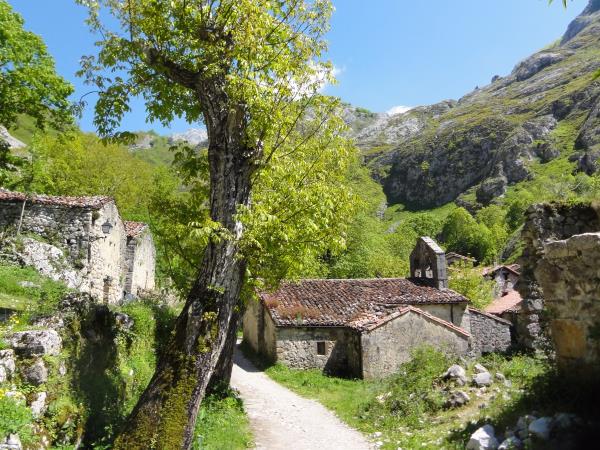
This will be another short episode, because I have to prepare an exam I have to do next Friday. It is not an easy exam so ... I need that time, but of course I cannot let you without inspiration. Therefore I have chosen to share a scene which Paulo encounters while on his road to Santiago.
As you all know haiku is only an impression of a moment as short as the sound of a pebble thrown into water. I love to challenge you to use the given scene to create haiku or tanka ... life in that short moment ... feel the power of haiku.


A beautiful scene in the above image ... in this scene you can see a bit of the scene Paulo saw.


[...] "We arrived one afternoon at the ruins of an old castle of the Order of the Knights Templar. We sat down to rest, and while Petrus smoked his usual cigarette, I drank a bit of the wine leftover from lunch. I studied the view that surrounded us: a few peasant houses, the tower of the castle, the undulating fields ready for sowing. To my right appeared a shepherd, guiding his flock past the walls of the castle, bound for home. The sky was red, and the dust raised by the animals blurred the view, making it look like a dream or a magic vision. The shepherd waved to us, and we waved back. The sheep passed in front of us and continued down the road. .... It was an impressive scene … " [...] (Source: The Pilgrimage by Paulo Coelho)

I think this will do it ... I hope I have inspired you to create haiku or tanka based on a moment as short as the sound of a pebble thrown into water.

This episode is NOW OPEN for your submissions and will remain open until January 30th at noon (CET). Have fun!


Tuesday, January 24, 2017

Carpe Diem #1134 beyond control


Dear Haijin, visitors and travelers,

Do you know the feeling that you are loosing control? That time (for example) is like grains of sand through your fingers? Or ... that technical problem I had earlier this month ... I couldn't control that, and it made me "mad and angry", because I couldn't do what I love to do ... keeping CDHK alive and running. Those few days when I couldn't use my PC were beyond my control ... Life is beyond control. No one can hold control on life or the world ... that battle we always will loose.
But ... maybe we have to let go control? And just accept the things we will encounter on our path? I think this is one of the lessons the Road to Santiago will teach us or has taught us.

We are on our way to Santiago De Compostela, walking that famous route, St. James Way or The Camino, the Road to Santiago. This month we were on route to Santiago together with Paulo Coelho and his guide Petrus. We are reading "The Pilgrimage" and there are only a few days left before this month will be over ... maybe we will succeed in our goal, maybe not .... well ... that's beyond control ... we will see let go of it .... we have had the precious experience to wander through the northern part of Spain we only can be happy ...

let go
the caged bird
reborn


© Chèvrefeuille

Along The Road to Santiago
Beyond control ... that's the title of this episode .... And it refers to something I read in "The Pilgrimage". During his journey, his pilgrimage, Paulo encounters several difficulties beyond control. One day he is attacked by a horrible dog and he remains with wounded hands. That same dog encounters him many times and one day he goes to a gypsy fortuneteller to ask her why this dog is so many times on his path. It turns out that this dog is his demon, his back-pack, he still has to carry. That dog will leave him alone only when he conquers his fears, his pride, his greed and more.

This scene looks familiar I think. Maybe not ... Maybe you know that classical novel by John Bunyan, Pilgrim's Progress, a Christian allegory in which the leading character, Christian, has to carry a heavy burden until he reaches Calvary. Than he feels how the presence of the Holy Spirit reveals him the love and care of Jesus Christ. Right at that moment his burden comes loose, it's taken away by his saviour.

In this similarity we can see also that we aren't in control ... the Cosmos, Higher Spirit or what ever name you choose is in control. Again I sense that to go beyond control is letting go ...

Let us take a look at a quote from "The Pilgrimage":

[...] ‘In the life on the Road to Santiago, certain things happen that are beyond our control. When we first met, I told you that I had read in the gypsy’s eyes the name of the demon you would have to confront. I was surprised to learn that the demon was a dog, but I did not say anything to you about it at the time. Only after we arrived at that woman’s house – when for the first time, you showed the love that consumes – did I see your enemy.
‘When you chased away that woman’s dog, you did not place him anywhere. You didn’t hurl the spirits into a drove of pigs that was thrown over a precipice, as Jesus did. You simply chased the dog away. Now his force wanders along behind you, without a destination. Before finding your sword, you are going to have to decide whether you want to be enslaved by that force or
whether you will dominate it.’ [...] (Source: The Pilgrimage by Paulo Coelho)

Along the Camino

[...] ‘A threat leads to nothing if it is not accepted. In fighting the good fight, you should never forget that. Just as you should never forget that both attacking and fleeing are part of the fight. What isn’t a part of the fight is becoming paralyzed by fear.’ [...] (Source: The Pilgrimage by Paulo Coelho)

The above quotes show you what I mean I think. We can be in control, with letting go. Defeat your demons and become free .... go beyond control ... let go ...

This episode is NOW OPEN for your submissions and will remain open until January 29th at noon (CET). Have fun!


Carpe Diem honors Jane Reichhold (1937-2017) G.) whisper of rain

photo © Sandra Simpson

Dear Haijin, visitors and travelers,

Welcome at the last episode of our special Theme Week in honor of Jane's 80th birthday. We have given her the attention she deserves and now we are going on with our lives. Jane decided to end her life last summer ... and if she would have been alive she would have become 80 on January 18th 2017. Because of that respectable age I decided to create this wonderful Theme Week to inspire you, but most of all to honor Jane. Jane has meant a lot for the haiku and tanka world, but also for several of us personally and I am proud that I can say that she was my friend, my mentor and my inspiration.

Today to close this Theme Week I have chosen a few of her haiku from her "A Dictionary of Haiku" (the online version), the following series of haiku are all extracted from the summer section of "A Dictionary of Haiku":


coming to sea cliffs
the off-shore breeze raises
a flower fragrance


curving with the land
a rainbow of clouds

moves out to sea


sunrise finds
fog in the valleys
fingers in sand


whisper of rain
on a sunny day the surf

wets my feet


sweeping the porch
bright prints of raindrops
followed by splashes


cloudy sunrise
all the bird song colors

on rounded raindrops


darkening beach
the warmth of a person's eyes
for the sinking sun

scattered in sand
embers of a saltwood fire
face to face with stars

shell beach
wind blowing through
a train whistle


© Jane Reichhold

A wonderful series of haiku themed "summer" and I hope that through this last episode of this special Theme Week to honor Jane Reichhold she will be in your heart forever ... for sure she will be in my heart forever ... and she will be here always at Carpe Diem Haiku Kai to inspire us.

a whisper of rain awakens me gently morning on the beach © Chèvrefeuille

This episode is NOW OPEN for your submissions and will remain open until January 29th at noon (CET). Have fun !

Monday, January 23, 2017

Carpe Diem #1133 walking the Road


Dear Haijin, visitors and travelers,

This month we are on our way to Santiago De Compostela together with Paulo Coelho and his guide Petrus. We have learned a lot and we have seen a lot. This Road to Santiago is really awesome and it turned out to be a spiritual adventure.

Today I love to challenge you to create haiku, tanka or other Japanese poetry form inspired on a photo. I haven't enough time today to create a long episode, so what's easier ... just share an image to inspire you.

The Road to Santiago
This episode is NOW OPEN for your submissions and will remain open until January 28th at noon (CET).


Carpe Diem honors Jane Reichhold (1937-2017) F.) Sierra Mountains (tanka)

photo © Sandra Simpson

Dear Haijin, visitors and travelers,

Welcome at the penultimate episode of our special Theme Week to celebrate Jane Reichhold's 80th birthday. Jane has meant a lot for Carpe Diem Haiku Kai. She was co-host and she once said that Carpe Diem Haiku Kai is hte best website about haiku and other Japanese poetry forms around the globe. Of course that made me proud, but also humble. Who am I that I can and may do this ...

Yesterday I inspired you with haiku, so this day we will find ou inspiration in her tanka.

the dreamer
never dreaming
to live a dream
leaving everyone else
behind in the future

long meadow
is too short to hold
the emptiness
of leaving a family
longing for their faces

high in the mountains
suspended over the valley
even spirits
smoothing the paths
toe to heel, toe to heel

ocean breezes
a coolness blowing inland
my message
meets hers mid-air
the tie that binds

© Jane Reichhold (taken from: She Alone)

Sierra Mountains (image found on Pinterest)

In "She Alone" Jane describes a trip her daughter, Heidi, made into the Sierra Mountains. Between the stories Jane created tanka, so you can say that this is a tanka-haibun.

high up in the mountains
the air becomes thin and rich
taking my breath away
she ... the beauty of my life
brings me to a higher state

© Chèvrefeuille

This episode is NOW OPEN for your submissions and will remain open until January 28th at noon (CET). Have fun!


Carpe Diem #1132 ‘The wrong answer will indicate the right one.’ (Petrus)


Dear Haijin, visitors and travelers,

We are almost at the goal of our pilgrimage of this month, Santiago De Compostela. We have walked the Road together with Paulo and his guide Petrus while we were reading "The Pilgrimage". During our walk we learned a few exercises, and maybe just as Paulo did, we don't see or know the purpose of these exercises, but than ... there is this situation, a problem to resolve or something and finally we see the purpose of these exercises.

While Paulo and Petrus are on their way they encounter a sacred cross that has broken and fallen. Paulo shakes his head, but doesn't do anything to resolve this. Petrus however commands him to repair the cross. And than Paulo experiences in a spiritual way what the Saviour has felt.

Wooden cross somewhere along the Road to Santiago

[...] ‘The wrong answer will indicate the right one.’ The impossible solution would be to try to drag the cross to a different place; I no longer had the strength to do that. It was also impossible to try digging deeper into the ground. So if the impossible answer was to go deeper into the earth, the possible answer was to raise the earth. But how?
And suddenly … I could raise the earth!
I began to collect all the stones nearby and placed them around the hole, mixing them with the earth I had removed. With great effort, I lifted the foot of the cross a little and supported it with stones to raise it higher off the ground. In half an hour, the ground was higher, and the hole was deep enough.  Now I just had to get the cross into the hole. It was the last step, and I had to make it work. One of my hands was numb, and the other was giving me a great deal of pain. My arms were wrapped in bandages. But my back was all right; it had just a few scratches. If I could lie down beneath the cross and raise it bit by bit, I would be able to slide it into the hole.
I stretched out on the ground, feeling the dust in my nose and eyes. With the hand that was numb, I raised the cross a fraction and slid underneath it. Carefully, I adjusted my position so that its trunk rested squarely on my back. I felt its weight and knew that it would be heavy to lift but not impossible. I thought about the Seed Exercise, and very slowly I squirmed into a fetal position, balancing the cross on my back. Several times I thought it was going to fall, but I was working slowly; I was able to sense the direction it might take and correct for it by repositioning my body. I finally achieved the position I wanted, with my knees in front of me and the cross balanced. For a moment, the foot of the cross shook on the pile of stones, but it did not fall out of place.

wooden cross somewhere along the Road to Santiago
‘It’s a good thing I don’t have to save the universe,’ I thought, oppressed by the weight of the cross and everything it represented. A profoundly religious feeling took possession of me. I remembered that another person had carried the cross on his shoulders and that his damaged hands had not been able to free themselves from the wood or the pain as mine could. This religious feeling was loaded down with pain, but I forgot about it immediately because the cross began to shake again.
Then, slowly raising myself up, I began a rebirth. I couldn’t look behind me, and sound was my only means of orientation. But just a while ago I had learned how to listen to the world, as if Petrus had guessed that I was going to need this kind of knowledge. I felt the weight of the cross and sensed that the stones were accommodating each other. The cross rose bit by bit, as if to help me in this test. It was as if the cross, itself, wanted to return to its position, framing that section of the Road to Santiago.
One final push was all that was needed. If I could get into a seated position, the trunk of the cross would slide down my back into the hole. One or two of the stones had been dislodged, but the cross was now helping me, since its foot remained in place where I had built up the wall. Finally, a pull on my back indicated that the base was free. It was the final moment, just as at the waterfall when I had had to fight my way through the current: the most difficult moment, because it is then that we fear failure and want to give up before it occurs. Once again I sensed how absurd the task was, trying to raise a cross when all I really wanted to do was find my sword. But none of these thoughts was important. With a sudden thrust, I raised my back, and  the cross slid into place. At that moment I recognized once again that fate had been directing the work I had done.
I stood there expecting the cross to fall in the other direction, scattering the stones I had placed. Then I thought that maybe my push had not been strong enough and that the cross was going to fall back on top of me. But what I heard was the muffled sound of something hitting against the bottom of the hole.
I turned carefully. The cross was upright, and it was still trembling from the impact. Some stones were rolling down their slope, but the cross was not going to fall. I quickly put the stones back in place and embraced  the cross so that it would stop wavering. I felt alive and hot, certain that the cross had been my friend throughout all of my work. I stepped away slowly, improving the placement of the stones with my feet. I stood there admiring my work for a long time, until my wounds began to hurt. Petrus was still asleep. I went over to him and nudged him with my foot. He awoke with a start and looked at the cross. ‘Very good,’ was all that he said." [...]
(Source: The Pilghrimage by Paulo Coelho)


In this piece from The Pilgrimage we read that Paulo uses the Seed Exercise to bring the cross in an upright position. Sometimes we need such an impossible situation to learn how to cope with it. Than we will remember that what we need to accomplish it.

In a way you can compare this with what is know as the impossible question, the koan, which we all will know, because of the fact that haiku (and tanka) can be such a koan, an impossible question that cannot be answered except through an "aha-erlebnis", a moment of clarity of mind.

The Road to Santiago ... it's a beautiful road to walk, but it certainly isn't an easy road ... It will "torture" you, but it also will "surprise" you. The nature along the Road is breathtaking and the hospitality of the people along the Road is legendary ... yes it is an once in your lifetime experience and I hope you have felt this during this month.

along the road
poppies start blooming again -
the scent of straw


© Chèvrefeuille


a whispered prayer -
pilgrims on their way to Santiago
walking the Path of God
reaching out to their deepest thoughts
seeking the Light


seeking the Light
while chanting psalms or mantras
pilgrims on their way
enjoying Mother Earth's beauty -
a whispered prayer
© Chèvrefeuille

This episode is NOW OPEN for your submissions and will remain open until January 27th at noon (CET).

Sunday, January 22, 2017

Carpe Diem honors Jane Reichhold (1937-2017) E.) Fuji No Yama

photo © Sandra Simpson

Dear Haijin, visitors and travelers,

What a joy to bring you a new episode of our special Theme Week "Carpe Diem honors Jane Reichhold'. As you all know the haiku and tanka world has a lot to be grateful of and I think we can be grateful for all that Jane has meant for the haiku and tanka world. Jane was one of the best modern haiku poetesses I know and she was part of our Haiku Kai family for a few years. If she would still be alive we had celebrated her 80th birthday, but as you all know Jane died last year. So this Theme Week is special because we are celebrating her 80th birthday with a lot of wonderful poems created by her.

Today I love to share a few of her haiku to inspire you. This time I have chosen you bring a few spring haiku written by her. These haiku I have extracted from her "A Dictionary of Haiku", a modern saijiki.

spring clouds above Fuji No Yama, the holy mountain of Japan
morning breeze
coming in the window
surf sounds


changing forms
all around the Buddha
clouds in a blue sky

clouds
flooding the river
with spring

spring cloud melt
flooding river willows
green leaves

© Jane Reichhold (A Dictionary of Haiku, spring part)

A lovely series of haiku of spring by Jane. And the image of Mount Fuji No Yama, the holy mountain of Japan, brings me also the possibility to tell you a little bit of our upcoming month. I remember that I had other plans for February, but recently I read a wonderful story, more a diary, about Japan, the land of the rising sun. That story triggered me and it brought me an idea for next month. Next month, February, we will travel through Japan. We will visit places which are important for us haiku poets, but we also will discover that wonderful country where our beloved haiku (and tanka) was born.


Image found on Pinterest
cherry blossoms bloom
in praise of the gods Fuji No Yama

© Chèvrefeuille

This episode is NOW OPEN for your submissions and will remain open until January 27th at noon (CET). Have fun!