Showing posts with label Celtic culture. Show all posts

Wednesday, July 27, 2016

Carpe Diem #1007 Yew


Dear Haijin, visitors and travelers,

This wonderful month full of the mysteries of nature is running towards its end and with the tree we will explore today that end is coming in sight. Today we will explore the Yew (the last used tree in the sacred Ogham alphabet). Yew is a gorgeous, ever green, tree / bush, but beware ... it's very poisonous, even the sawdust.

Yew tree
The Yew is considered to be the most potent tree for protection against evil, a means of connecting to your ancestors, a bringer of dreams and otherworld journeys and a symbol of the old magic. In hot weather it gives off a resinous vapor which shamans inhaled to gain visions. Yew wood was regarded as especially magical to the Celts, due to its connection with the dead and the ancestors which were deeply respected. 

inhaling Yew
the shaman flies away
visions returned

© Chèvrefeuille

The Yew tree is the last of the 20 trees in the Tree Ogham, a Celtic system in which the Druids encoded their wisdom. Each spiritual insight is represented by a tree, the first letter of which creates an alphabet system. Each letter is written as a line on, or crossing, a central stem line. These symbols can be found on the edges of some standing stones in Ireland and Wales, but they were probably, for magical and communication purposes, carved on sticks of Yew. It was used as a silent communication system by the Druids.

secrets hidden
on a stick of Yew wood
sacred wisdom

© Chèvrefeuille

The Yew tree, or Yew wood, the Tree ogham Idho , is the link to spiritual guidance through your ancestors, guides and guardians in the Otherworld. The Yew is here to remind us that there are other levels of existence beyond this material plane. By understanding the illusionary nature of the life we have created for ourselves, we can live our lives more consciously. Often death is fraught with a sense of loss, but the Yew can teach us to see death as a form of transformation and that it is never final.

fragile wings
pointing the way to transformation -
the summerbreeze


© Chèvrefeuille

Yew tree (2)

The knowledge we gain from the Yew makes it an extremely important tree for healing. It can help us overcome our fear of our own death and, by freeing us from this fear, bring us a greater stillness in our lives. Death heralds the ending of something. It may be a physical death, or the death of our old selves, an old way of life or an old way of looking at things. Each end, each death, is a new beginning, hope, future and transformation. Sometimes things need to end or die before the new can begin, and understanding rebirth always requires seeing beyond our limitations.

In recent years it has been found that taxol, a chemical found in the bark of the Yew, inhibits cell growth and cell division, and may have some promise in the fight against cancer. The biggest problem is that such a huge amount of bark is needed to produce even small amounts of taxol.

Our ancestors preferred the Yew above all other trees. It has always been held sacred and understood as a link with death and rebirth. It was used by early man for making weapons, tools of death, and now thousands of years later it is providing a possibility of averting death for cancer patients. It is a powerful reconnection to humankind for this tree when you consider that each person with cancer has to face their own death, whether they are cured or not. 

One of the most valuable abilities of the Yew is to provide the opportunity for people to turn and face death, to progress beyond fear to a communication with what is beyond our reality, which will bring understanding, clear insight, enriched by a deeper experience of life.

For closure of this episode about Yew I love to share a "pi-ku" which I found in my archives and fits this episode in my opinion.

the sun rises
the heat
already tangible
mist
spirals above the stream
another day starts in mysterious ways 


© Chèvrefeuille
  

This episode is NOW OPEN for your submissions and will remain open until August 1st at noon (CET). I wil (try to) publish our new episode, Ogham, later on. For now ... have fun!


Friday, July 22, 2016

Carpe Diem #1004 Gorse


Dear Haijin, visitors and travelers,

It's a very "packed" time here at Carpe Diem, we have our regular episodes, our Tan Renga Challenge, our Theme Week and our first Summer Retreat is running. It's almost to much, but I enjoy it ... this episode will be a short one by the way as will our Theme Week episode for today. Just because of the weather, it is to hot to be in the house ... it's still around 30 degrees Celsius here in the Netherlands.

Today we are having an encounter with another tree / bush from the Ogham, which we use this month to explore the mysterious nature. That nature we are all in love with as haiku poets. Today our mysterious tree /bush is Gorse:

Gorse
There are several species of gorse that flower at different times of the year making it a much-loved plant for the bees and giving it the appearance of being in bloom all year long. There is an old saying that goes, “When the gorse is out of bloom, kissing is out of season.”

Gorse is often associated with love and fertility. It was for this reason that a sprig of gorse was traditionally added to a bride’s bouquet and gorse torches were ritually burned around livestock to protect against sterility. However, one should never give gorse flowers to another as a gift for it is unlucky for both the giver and receiver.
Gorse wood was used as very effective tinder. It has a high oil content which means it burns at a similar high temperature to charcoal. The ashes of the burnt gorse were high in alkali and used to make soap when mixed with animal fat.
In Celtic tradition, gorse was one of the sacred woods burned on the Beltane bonfires, probably the one that got them started. It was a shrub associated with the spring equinox and the Celtic god of light, Lugh, doubtlessly because of its ever blooming vibrant yellow flowers.
In Brittany, the Celtic summer festival of Lughnastdagh, named after the god, was known as the Festival of Golden Gorse.
The flowers have a distinct vanilla-coconut aroma and are edible with an almond-like taste. They can be eaten raw on salads or pickled like capers. They have also been used to make wine and to add color and flavor to Irish whiskey. However, consuming the flowers in great numbers can cause an upset stomach due to the alkalis they contain.
The prickly nature of gorse gave it a protective reputation, specifically around livestock. As well as providing an effective hedgerow, gorse made an acceptable flea repellent and the plant was often milled to make animal fodder.

one golden sea
gorse blossom as far as I can see
bellowing cows


© Chèvrefeuille

This episode is NOW OPEN for your submissions and will remain open until July 27th at noon (CET). I will post our next episode, Heather, later on.


Thursday, July 21, 2016

Carpe Diem #1003 Fir


Dear Haijin, visitors and travelers,

Today I have a short regular episode for you. As you know we are busy to explore the mysterious beauty of nature and we are trying to do that through the ancient Celtic Ogham (tree) alphabet.
Today I have a nice tree for you and I even think it needs no more explanation. So I will only give the "spiritual" meaning today to inspire you. Fir ... is the tree for today and it's a beautiful tree that can become huge and that we will see back in its meaning. A true mystery this tree ...

Fir is a very tall slender tree that grows in mountainous regions on the upper slopes. Fir cones respond to rain by closing and the sun by opening. Fir can see over great distance to the far horizon beyond and below. Fir indicates high views and long sights with clear vision of what is beyond and yet to come. Also known as the Birth Tree. The needles are burned at childbirth to bless and protect the mother and baby.

Fir can see into the future and is a very useful tree in divination. So this tree is really wonderful ... and not only in its meaning, but also as seen in nature. 

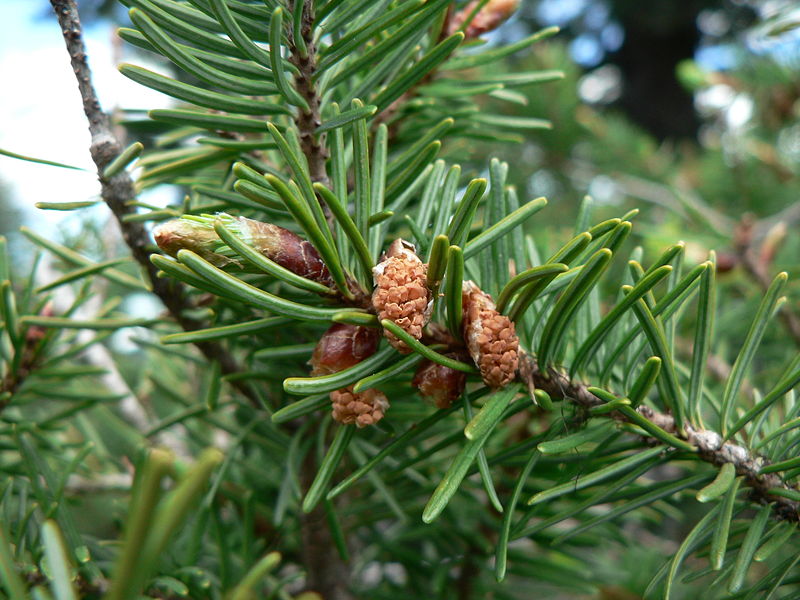
Fir (cones)
This episode is NOW OPEN for your submissions and will remain open until July 26th at noon (CET). Have fun!


Sunday, September 6, 2015

Carpe Diem #813 Cassiopeia


Dear Haijin, visitors and travelers,

I hope you did like the CD-Special "new style" and I hope it has inspired you all. Today we are going further with our "space odyssey" and we have arrived at the constellation Cassiopeia, the mother of Andromeda.
Cassiopeia is visible with the naked eye whole year through on the Northern Hemisphere it looks some what like a "W" as you can see hereafter.

Credits: Cassiopeia
And as I promised at the start of this month I love to tell you something more about the mythology behind these constellations so here is the story behind Cassiopeia.

The constellation is named after Cassiopeia, the queen of Aethiopia. Cassiopeia was the wife of Cepheus, King of Ethiopia and mother of Princess Andromeda. Cepheus and Cassiopeia were placed next to each other among the stars, along with Andromeda. She was placed in the sky as a punishment for her boast that her daughter Andromeda was more beautiful than the Nereids or, alternatively, that she herself was more beautiful than the sea nymphs. As punishment, she was forced to wheel around the North Celestial Pole on her throne, spending half of her time clinging to it so she does not fall off, and Poseidon decreed that Andromeda should be bound to a rock as prey for the monster Cetus, who was ravishing the Ethiopian coast. Andromeda was then rescued by the hero Perseus, whom she later married.
Cassiopeia has been variously portrayed throughout her history as a constellation. In Persia, she was drawn by al-Sufi as a queen holding a staff with a crescent moon in her right hand, wearing a crown, as well as a two-humped camel. In France, she was portrayed as having a marble throne and a palm leaf in her left hand, holding her robe in her right hand. This depiction is from Augustin Royer's 1679 atlas.
Credits: Depiction of Cassiopeia in her chair/throne

In the ancient Celtic world Anu was the mother goddess and considered to be the mother of all the gods; the Tuatha de Danann. Other references say that she is the mother earth goddess or the Goddess of fertility. On the Cork Kerry border are two mountains called the Paps of Anu (pap is another word for breast.) On the top of each mountain are stone structures or cairns that when viewed from a distance make the two mountains look like a pair of breasts. Anu was known, in the Celtic World, by several similar names: Danu or Don being the most popular alternatives. She was a Mother-Goddess, the wife of the Sun God, Belenos, and considered to be the ancestor of all the Gods, the Tuatha dé Danann, who found themselves obliged to reside in the Otherworld when Miled brought the Celts to the British Isles. She still looks down on us from the night's sky where she appears as Llys Don, better known as the constellation of Casseopeia.
Credits: Anu as the mother of all gods (Celtic Mythology)
I love these stories and that's one of the reasons why I have chosen this month's theme. It's really an awesome month I think this ... our "space odyssey" ... and it will bring us to far away places ...

Of course I am hoping that I can inspire you all with these prompts, but it is not always that easy as I feel my self this time. I couldn't come up with a haiku inspired on Cassiopeia, so I wrote another haiku:

in the twilight
mist creeps low over the field -
stars twinkle


© Chèvrefeuille
This episode is open for your submissions tonight at 7.00 PM (CET) and will remain open until September 9th at noon (CET). I will (try to) post our new episode, Corona Australis (Southern Crown), later on. For now ... just have fun!
 

Sunday, November 23, 2014

Carpe Diem #611, Sylph, spirit of the wind


Dear Haijin, visitors and travelers,

I hope you did like our little Vission Quest of the last three days. I liked it a lot and I have seen, read and re-read wonderful haiku, however ... I am behind with commenting on all of your nice posts, so be patient, because I will comment a.s.a.p.

Today we are going to explore the realm of spirits and the one I like the most, because of my country I think, we have here a lot of windy days, I have chosen for Sylph, spirit of the wind. I am a big fan of Celtic culture, spirituality and religion (I even have written a novel in which I have used a lot of this wonderful culture) ... so I have "dived into" the Celtic culture of spirits and Sylph, the spirit of wind, I have found the following about:

Sylphs are the spiritual beings that inhabit the spirit realm of the element Air. Their activities are manifest in the gatherings of clouds, in the blowing of the wind, the downpour of rain and the formation of snow. They are also responsible for the growth and maturity of all the plant life we see around us. In folklore, Sylphs appeared in many myths and legends. Some tales tell us that if you listened carefully, they would talk to you on the wind as it passed through caves and caverns.
It’s been suggested that the Muses of Greek mythology were Sylphs who had assumed human form in order to guide humans on a spiritual path. They are associated with the activity of the mind and can influence and inspire human actions. It is generally though that they are attracted to poets and artists and instills them with visions of spiritual beauty. Sylphs are ruled by a King being (known as Paralda), and in form they appear to humans as in the classic image of the fairies.

Credits: Sylph, the spirit of the wind
 
The name Sylph comes from the Greek word "silphe", meaning "butterfly" or "moth". They were first named by the Rosicrucian's and Cabalists in their folklore. The sylph is a female spirit of the element, air. Sylphs are like invisible angels, whose voices could be heard in the wind. Sylphs defend the high mountain peaks and wilderness mountains that are home to them. Sylphs look like tall, lithe humans with huge, feathered wings sprouting from their backs. These wings are almost two times it’s body length, but they fold up behind the sylph. They have large, hawk-like eyes and sharp, angular faces. A sylph can live to be hundreds of years old, often reaching one thousand, but never seeming to grow old. The smaller sylph are sometimes called cherubs or fairies. Sylphs are loners, and are content to fly with the birds.
Air is traditionally assigned to the East, the direction of dawn. The Goddesses Danu, Arianrhod, Athena and the God’s Mercury and Buddha, among others, are associated with Air.
Air represents intelligence, inspiration, freshness and freedom.

What an awesome creatures they are, Sylphs ....

whispering through leaves
the sweet sound of the spirits of the wind -
butterflies dance

© Chèvrefeuille

I hope you did like this episode about Sylph, the spirit of the wind. Sylphs stand also for inspiration .... so let the Sylphs inspire you to write/compose an all new haiku ...

This episode will be open for your submissions tonight at 7.00 PM (CET) and will remain open until November 26th at noon (CET). Have fun!


Tuesday, August 12, 2014

Carpe Diem Ghost Writer #21, Hamish Gunn's Imagination GW-post


Dear Haijin, visitors and travelers,

As you all know I think we have every Wednesday a so called Ghost Writer post and today I have a nice GW-post for you all. It's a bit different we the other GW-posts, but it is also an example of an other way to be Ghost Writer for CDHK.

Managua Hamish Gunn of Cabin Fever has emailed me a few wonderful photos for inspiration. So this GW-post is similar with our Imagination features in which I share a photo, picture, painting or something else for your inspiration.

Here is Managua Hamish Gunn's photo which I have chosen:

© Managua Hamish Gunn
As I saw this photo the very first time (a few days ago) the first thing which came in mind was the Ancient Celtic Oracle called "Ogham". This photo shows you Luis (in Gaelic) or Rowan. This tree is a very sacred tree in the Ogham tradition of the Druids and it stands for protection against the evil eye. In the Celtic culture the people used branches of Rowan (including leaves and fruits) above their door to shield their homes against evil. Rowan is also the Ancient Celtic name for December.

So this GW-post asks you to be inspired by this photo. Have fun!

Here is my attempt:

natural shield
to keep the Devil outside -
Rowan's branch

© Chèvrefeuille

Now it is up to you to write haiku inspired on the photo. This episode is NOW OPEN for your submissions and will stay open until August 15th at noon. I will try to post our next episode, paradise, later on today.


Saturday, June 14, 2014

Carpe Diem Special #97, BrunuhVille's "Riversong"


Dear Haijin, visitors and travelers,

What a joy to prepare another CD Special with the wonderful inspirational music by BrunuhVille, our featured composer this month.


Did you hear that natural sound of the babbling brook at the start of this inspirational piece of music? It's really such a sweet sound and that inspired me to write the next haiku

babbling mountainbrook
seduces with her sweet voice -
sparkling sunlight

© Chèvrefeuille

Or this one ... more fairy-tale like:

sparkles of sunlight
splashes like crystal
game of fairies

© Chèvrefeuille

Well .... I hope this will inspire you to write your own haiku inspired on the music by BrunuhVille. This episode is open for your submissions tonight at 7.00 PM (CET) and will remain open until June 17th at noon (CET). I will post our new episode, Nights of Summer, later on today.
For now ... have fun! By the way please let me know if you like this music. I have the idea that this music came to early for CDHK ... so I think that I don't gonna make a whole month with music by BrunuhVille.


Wednesday, March 20, 2013

Carpe Diem #150, Haru Higan (Spring Equinoxe)


Dear Haijin, visitors and travelers,

A new mile stone in our Carpe Diem history ... today we have our 150th prompt. I think this is a wonderful prompt. Today we share haiku on Haru Higan (Spring Equinox). Meteorlogical Spring starts (on the Northern hemisphere) on March 1st, but astrological Spring starts on March 21th and that's today.


Credits: Druids celebrating Spring Equinox at Stonehenge

The most common equinox are Summer - and Winter equinoxe, but Spring and Autumn also have equinox. Spring equinox is called Vernal Equinox or 'Alban Eilir' and on that day druids celebrating the coming of the light back to the world. It's, for druids and pagans, one of the most important celebrations. After the dark period of Autumn and Winter finally light is returning to the world and nature's coming to life again.

In ancient Egypt Achnaton, a pharao, promoted the One-God Religion of the Sun and in that religion the returning of the light was also an important issue.
Druids, as you may know, are a kind of religious man (and woman) in the Celtic culture. I have sought the Internet for some background on this Spring Equinox, which in Celtic druidry is called 'Alban Eilir' and I found this:


The name for the festival of the Spring Equinox in Druidry is Alban Eilir, which means 'The Light of the Earth'. As the Sun grows warmer, so life begins to show through the soil. Small signs at first - the daffodils and crocuses - then more green as the bluebells and wood anemones spread through the woodland. Plants are seen by some as inanimate greenery with no actual feelings and life force. But Druids see life in all living things, from rocks and stones, to rivers and springs, plants and trees - all life is sacred. Have you ever thought about how you recognize the beginning of Spring? Is it the plant life? The weather? How does a plant know when it is time to grow? It cannot tell the time or see a calendar. Yet it knows. If it has senses, then it has consciousness, if it has consciousness then it is more than an inanimate life form. So it is the return of life to the Earth that is celebrated at Alban Eilir, the time of balance.
One of the inner mysteries of Druidry is the Druid's egg. Life-giving, it is the egg protected by the hare, which is the symbol of Alban Eilir - still celebrated by the giving of Easter eggs by the Easter bunny.

So we know now a little bit more about the Spring Equinox in our region of the world, but how is it  celebrated in Japan? Let's look a bit closer to the meaning of the Spring Equinox in Japan.


Higanbune (festival boat)

In Japan the Spring Equinox, Haru Higan, or Vernal Equinox is one of the most traditional Japanese National Holidays. These holidays seem to have a double origin. One is the celebration of seasonal change typical of an agricultural society: This is the day when the day-time and the night-time are equal length. The actual date of the Vernal Equinox day may change from year to year due to leap year. Based on the Buddhist teaching, this Vernal Equinox is also called Higan no Chu-Nichi, as is Autumn Equinox on September 23rd. On Haru Higan Many Japanese visit their family tombs on this day in the middle of the week of Higan to pay their respects to their ancestors. People weed their family tombs, and leave flowers, incense and ohagi (sweet rice balls covered with red bean paste). It is tradition that ancestors' spirits prefer round food! Japanese consider this period the changing of the season, because it is usually around Higan that the cold front hanging over the Japanese islands weakens, and the weather changes to spring.
Thus we have a saying "Atsusa samusa mo Higan made" ("Heat and cold last until Higan").

At those festivals boats are used to celebrate the returning of the sun, this is called higanbune. And it was a custom to go walk around, enjoy one's shadow, pray at the temples and shrines and to pray foor good fortune. This custom is known as 'praying to the sun' (I couldn't retrieve the Japanese translation) and it's part of the Spring Equinox and the Autumn Equinox. In the Spring Equinox festivities it was called 'welcoming the sun' ( hi mukae, himukae) and in the Autumn Equinox festivities it was called 'saying goodbye to the sun'. During this day Japanese people are visiting friends for a snack, talk and a drink.

I have found a few nice haiku on Haru Higan which I love to share with you all here on Carpe Diem. First a haiku by Issa:


higan made to wa moosedomo samusa kana


"fair weather by Spring's Equinox"
so they say ..
liars!


(c) Issa - 1823


Winter was long in Issa's snowy, mountainous province. Shinji Ogawa notes that there is a Japanese proverb which states, "Hot or cold only lasts till an equinox." In Issa province of Shinano, present-day Nagano Prefecture, this saying doesn't at all hold true. Literally, Issa is saying, "Only until the spring equinox [will the cold weather last], they say...[and yet] it's cold!" My rather free translation attempts to evoke Issa's emotion and humor.


Or what do you think of this one written by Origa (nom de plume of Olga Hooper) in 2008:


vernal equinox -
the rising moon is lit
by the setting sun


(c) Origa - 2008


On Haru Higan Many Japanese visit their family tombs on this day in the middle of the week of Higan to pay their respects to their ancestors. 

And what are we doing on this Spring Equinox? As far as I know in my country (The Netherlands) we're not celebrating this equinox. We are celebrating the Summer solstice and the Winter solstice. But ... back to this nice (and difficult) prompt Haru Higan to do some haiku composing myself.


celebrating the sun
with narcissus flowers in my hair -
Spring Equinox


Spring Equinox
day and night the same lenght
departing Winter


departing Winter
visiting my ancestors graves
paying my respects


paying my respects
to Mother Nature ... flowers in my hair
Vernal Equinox


I am looking forward to all of your inspired haiku on this prompt for today. Come on celebrate Spring Equinox (or in the Southern hemisphere, the Autumn Equinox) with Carpe Diem. Have fun, be inspired and creative and share your haiku with our haiku community.


This prompt will stay on 'til March 22th 11.59 AM (CET) and I will publish our next episode, Haru fukashi (deep Spring), later on today.