Showing posts with label Magnolia Blossoms. Show all posts

Thursday, April 21, 2016

Carpe Diem Theme Week 3: Magnolia Blossoms, haiku by Soseki Natsume; episode 5 leafless tree


Dear Haijin, visitors and travelers,

It's my pleasure to bring another nice haiku by Soseki Natsume, one of the modern age haiku poets and a contemporary of Shiki. Soseki was not only a great novelist, but also a great haiku poet and in this theme week we are discovering the beauty of his haiku.

Today I have a nice set of haiku by Soseki Natsume for your inspiration and I will try to tell a little bit about these haiku.

The crow has flown away:
swaying in the evening sun,
a leafless tree.

Over the wintry
forest, winds howl in rage
with no leaves to blow.

© Soseki Natsume

As I read these haiku the first thing which came in mind was that world famous haiku by Basho:

kare eda ni karasu no tomarikeri aki no kure

on a bare branch
a crow has stopped
autumn dusk


© Basho (Tr. Stephen Wolfe)

The haiku by Soseki Natsume is very similar with the one by Basho. In my opinion this shows us that Soseki tried to create his haiku in the same way as Basho, with the same intention ... unconditional love for all and everything. This idea fits Soseki's ideas which he described in his "Zen Haiku: Poems and Letters of Natsume Soseki", which I mentioned in our yesterday's post for the Theme Week.

And that second haiku by Soseki brought another haiku by Basho in mind, it even sounds like the last haiku Basho wrote, his jisei (death poem):

tabi ni yande yume wa kareno o kakemeguru

ill on a journey -
dreams keep on wandering
over the heath


© Basho (Tr. Chèvrefeuille)

But I first thought about this haiku by Basho:

matsukaze ya noki o megutte aki kurenu

wind through the pines -
swirls still around the eaves
departing autumn

© Basho (Tr. Chèvrefeuille)


What a joy to dive into the depth of the mind of Soseki Natsume and finding his deeper connection with one of the four greatest haiku poets, Matsuo Basho.

I hope this episode will inspire you to create a haiku, tanka or other Japanese poetry form, in the same spirit as Soseki Natsume. Have fun!

I couldn't come up with a new haiku, so I dived into my archive and found a haiku which fits these haiku by Soseki:

apple blossoms fall
one by one, each on its own path -
the crow of a rooster

© Chèvrefeuille

I re-worked an old haiku which I have written several years ago and I think that "re-worked" haiku fits the scenes and the feeling of Soseki's haiku above:

mysterious -
leaves falling year after year
without notice

© Chèvrefeuille

This episode of our Third Theme Week is NOW OPEN for your submissions and will remain open until April 23rd 10.00 PM (CET). Have fun!


Wednesday, April 20, 2016

Carpe Diem Theme Week 3: Magnolia Blossoms, haiku by Soseki Natsume; 4 watch birth and death


Dear Haijin, visitors and travelers,

Welcome at a new episode in our Carpe Diem Theme Week "Magnolia Blossoms, haiku by Soseki Natsume". This is already the fourth episode, so we are halfway this third Theme Week.

As I was preparing this Theme Week I dived into the life of Soseki Natsume, a contemporary of Shiki, and found wonderful haiku, but I also found several books and novels he wrote. The haiku for today is extracted from the novel "Zen Haiku: Poems and Letters of Natsume Soseki", by Natsume Soseki translated by Soiku Shigematsu.

watch birth and death:
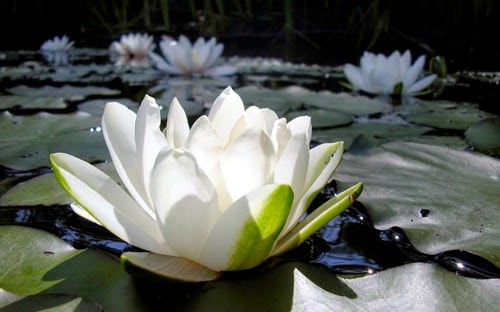
the lotus has already
opened its flower.


© Soseki Natsume (Tr. Soiku Shigematsu)

From the back-cover of this novel:

"One of the greatest of Japan's modern novelists, Natsume Soseki was also an outstanding poet, calligrapher, and painter. For this translation, the translator has carefully chosen from Soseki's haiku those conveying the author's unique sense of both the individualism and universality of Zen, as well as it's vitality. To these have been added selections from Soseki's extended conversations with Zen monks, as well as anecdotes from his life and examples of his own calligraphy and painting."

Soseki, meaning stubborn in Chinese, was a nom de plume. Here's a haiku of springtime and the refusal to conform that just occurred to me as my car idled at a weeded wonderland of a road median today:

weeds push
to crack the street--
nature rebels


About "watch birth and death", the above haiku, I found a review by Ivan M. Granger at Poetry Chaikhana: 

This poem is a powerful haiku.

[...] "We've got birth, death... and flowering. What else is there?


Birth and death, they are a given, unavoidable. Often seekers assume that in the limited timeline strung between those two points, they must race to make the lotus flower of awareness open. But Soseki's Zen practice has revealed a fundamental truth: By contemplating birth and death with a truly still mind, one realizes that the lotus does not need to be opened; independent of death and birth and the thin space of time between them, the lotus is already open! Awareness naturally and always IS. We don't become awakened, we just notice that we already are awakened. "The lotus has already / Opened its flower." [...] (Ivan M. Granger)

What can I say more about the beauty of this haiku? I rest my case ...

And now it's up to you, my dear Haijin, visitors and travelers, to create an all new haiku, tanka or other Japanese poetry form inspired on this beautiful haiku by Soseki Natsume (or Natsume Soseki).

My response:

As you maybe know I love to create haiku about cherry blossoms, sunflowers, clouds and more, but I also created a few about lotuses. I dived into my archive to share a few of those with you in response on this CD Theme Week episode.

spirit grows -
from the bottom of the pond
into the light
the Lotus reaches from the deep -
spirit grows

uncertain of its goal
rising from the depths of the pond
lotus flowers

hummingbird
chases for honey in the Lotus
in Buddha's hands

in deep prayer
eyes closed in devotion -
Lotus starts to bloom

green dragonfly
almost invisible on the Lotus leaves -
the sound of raindrops 

© Chèvrefeuille


And to conclude this wonderful episode of our third CD Theme Week in which we explore the beautiful haiku by Soseki Natsume I have another haiku, this time a cascading one:

lotus flowers
rising from the depths of the pond
everlasting love

everlasting love
like a river flows onwards
uncertain of its goal

uncertain of its goal
rising from the depths of the pond
lotus flowers

© Chèvrefeuille

It has become a little to long episode I think, but I wasn't aware of the many haiku and tanka I wrote about Lotuses ... sorry I was on a roll.

This episode of our Third CD Theme Week "Magnolia Blossoms, haiku by Soseki Natsume" is NOW OPEN for your submissions and it will remain open until April 22nd at 10.00 PM (CET). Have fun, be inspired and share your haiku, tanka or other Japanese poetry form with us all here at Carpe Diem Haiku Kai, the place to be if you like to write and share haiku.


Monday, April 18, 2016

Carpe Diem Theme Week 3: Magnolia Blossoms, haiku by Soseki Natsume; 2: plum flower temple


Dear Haijin, visitors and travelers,

It's my pleasure to bring to you our second episode of the Third Carpe Diem Theme Week "Magnolia Blossoms, haiku by Soseki Natsume".

This Theme Week is a little bit different than the other two Theme Weeks we had, but I think Soseki Natsume deserves his own Theme Week here at Carpe Diem Haiku Kai. This week I will share haiku written by Soseki and I hope to tell you all a little bit more about this haiku poet and contemporary of Shiki.

Yesterday I shared a haiku by Soseki on Magnolia Blossoms and one way or the other it turned out that Soseki has written more haiku themed with blossom. So I have another nice haiku by him for you:

Plum flower temple:
Voices rise
From the foothills.

© Sōseki Natsume (Tr. Soiku Shigematsu)

A beautiful haiku I would say. As I read this one I immediately thought about a temple which is known for its beautiful plum trees, Tenman-Gu Shrine in Hofu (Yamaguchi Prefecture, Japan).

Credits: Plum Flower Temple, Tenman-Gu Shrine
This Tenman-Gu Shrine fits the "back-bone" of Carpe Diem Haiku Kai, because I am promoting haiku as an art and I try to help you all to improve your haiku writing skills. Tenman-Gu Shrine is dedicated to the god of learning. Of course I don't pretend to be your master, but I love to share my knowledge about haiku in a respectful way with the world.

Back to this haiku by Soseki ... did he create this haiku when he was viewing the plum blossoms at Tenman-Gu Shrine? It could be ... I wasn't there, but as I look at this image above than I realize that I would be inspired for sure at such a sight.

breathtaking
a sea of colorful plum blossoms
departing winter

© Chèvrefeuille

This Theme Week episode is NOW OPEN for your submissions and it will remain open until April 20th 10.00 PM (CET). Have fun!