Showing posts with label Soseki Natsume. Show all posts

Saturday, February 1, 2020

Carpe Diem Weekend Meditation #114 Renga With ... beach diamonds


!! Open for your submissions next Sunday February 2nd at 7:00 PM (CET) !!

Dear Haijin, visitors and travelers,

Welcome at a new weekend meditation here at Carpe Diem Haiku Kai, that nice special feature for the weekend. I think you all have noticed that I didn't publish on last Thursday and Friday, my excuses for that, I had a very busy (and tough) week, so I hadn't time to publish on those days.

This weekend I love to challenge you to create a Renga with several haiku poets. Your task is to add the two-lined stanza towards it. You can choose your own "line-up", but have to start with the haiku I will give first. So this Renga With ... is a kind of Hineri, with a twist.

Here are the six haiku to use, the first given haiku has to be your hokku (starting verse) and is a beauty created by Jane Reichhold (1937-2016).

beach diamonds
a new day crystallized
in sunny surf foam

© Jane Reichhold

cold spring breeze
makes the cherry blossom shiver
one heartbeat long

© Chèvrefeuille


The wind from Mt. Fuji
I put it on the fan.
Here, a souvenir from Edo

© Basho (Tr. Ryu Yotsuya)

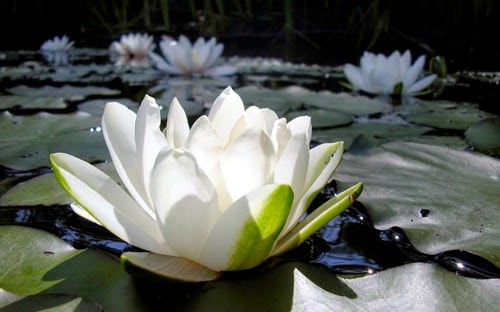
watch birth and death:
the lotus has already
opened its flower.

© Soseki Natsume (Tr. Soiku Shigematsu)


dervishes whirling
- seeking a higher consciousness
third eye opens

© Chèvrefeuille

flute melodies
across green ocean waves
spring meadows

© Jane Reichhold

Six wonderful haiku to work with I think, not an easy task, but I think and belief that you all can do it. Enjoy this Renga With ...

This weekend meditation is open for your submissions next Sunday February 2nd at 7:00 PM (CET) and will remain open until February 9th at noon (CET). Have a great weekend.


Tuesday, February 5, 2019

Carpe Diem #1600 Tan Renga Challenge Month 2019 (4) cold wintry wind


Dear Haijin, visitors and travelers,

Welcome at a new milestone here at CDHK. Today I have the 1600th regular episode for you and I think that's awesome. As I started CDHK back in 2012 I couldn't have dreamed that there would be 1600 regular episodes of our wonderful Kai, but we did it. It is not only my milestone it's also your milestone. Without you I couldn't make CDHK. Thank you all for being part of CDHK's haiku loving family.

Arigatou (Thank You)
This month it is Tan Renga Challenge Month and I love creating this minth, because Tan Renga we make together, as we do all the time here at CDHK, but Tan Renga is a real nice way to create together.

Yesterday I had a wonderful haiku by Ken Gierke and I hope it inspired you in an awesome way. Today I have chosen to challenge you with a classical haiku by Natsume Soseki:

the cold wintry wind
is blowing so hard that
the sun sinks into the ocean

© Soseki

More about him you can find in our CDHK library. I created an exclusive CDHK E-book about him titled "Magnolia Blossom" back in 2016 (?).

the sun sinks into the ocean (image found on Pinterest)

The above haiku is a real beauty in my opinion and I think it can become a nice Tan Renga. Here is my attempt:

the cold wintry wind
is blowing so hard that
the sun sinks into the ocean 
              © Soseki

awakens the silvery moon
to give light to the world 
                   © Chèvrefeuille

Wow ... I think this Tan Renga is a beauty (how immodest). I like it very much. And now it is up to you to create your Tan Renga by adding your two lined stanza.

This episode is NOW OPEN for your submissions and will remain open until February 12th at noon (CET). I will try to publish our new episode later on.


Monday, September 3, 2018

Carpe Diem's Tan Renga Challenge September 2018 Chained Together III (2) winds howl in rage


Dear Haijin, visitors and travelers,

Welcome at a new episode in our Carpe Diem TRC month. This month it's all Tan Renga challenges in our regular episodes. Tan Renga is a nice way of writing together, like in a renga. Tan Renga looks similar with Tanka, but is not written by one poet, but by two poets. (More on Tan Renga above in the menu).

Today's episode is a haiku by Natsume Soseki (1867-1916), your task is to complete the Tan Renga by adding your two-lined stanza (approximately 7-7 syllables).

Cover of our exclusive CDHK E-book about haiku by Soseki
In May 2016 we had a nice Theme Week about Natsume Soseki's haiku. (See for our exclusive CDHK E-book our Library)

Here is the haiku to work with and create a Tan Renga with:

over the wintry forest
winds howl in rage
with no leaves to blow

©️ Natsume Soseki

And here is my continuation of this nice haiku by Soseki:

body poppers dance on the square
while the first flakes of snow fall


©️ Chèvrefeuille

Hm ... not as strong as I had hoped, but in a way I love this continuation. It makes the scene in the haiku much stronger, but also very dfferent, because "body popping" is a modern dance style. I don't think the had "body popping" in Soseki's time. (see for some "popping" the video hereafter)


Well ... it's up to you now.

This episode is open for your submissions tonight at 7:00 PM (CEST) and will remain open until September 10th at noon (CEST). I will (try to) publish our new TRC-episode later on.


Sunday, April 15, 2018

Carpe Diem's Crossroads #6 A Leafless Tree (Soseki Natsume)


Dear Haijin, visitors and travelers,

Welcome at a new episode of our special feature "crossroads" in which I challenge you to create a "fusion" haiku from two haiku given. I love this feature, and I think you all do love it, because I have read wonderful "fusion"-haiku in the episodes before this one.

This week I love to challenge you to create a "fusion" haiku from two haiku written by Soseki Natsume, a haiku poet we have seen here at CDHK in one of our "theme-weeks" back in 2016. Let me first tell you a little bit more about him.

Natsume Sōseki (1867-1916), born Natsume Kinnosuke, was a Japanese novelist of the Meiji period (1868–1912). He is best known for his novels Kokoro, Botchan, I Am a Cat and his unfinished work Light and Darkness. He was also a scholar of British literature and composer of haiku, kanshi, and fairy tales. In Japan, he is often considered the greatest writer in modern Japanese history. He has had a profound effect on almost all important Japanese writers since.

Soseki Natsume

Born as Natsume Kinnosuke in the town of Babashita in the Edo region of Ushigome (present Kikui, Shinjuku), Sōseki began his life as an unwanted child, born to his mother late in her life, forty years old and his father then fifty-three. When he was born, he already had five siblings. Having five children and a toddler had created family insecurity and was in some ways a disgrace to the Natsume family. In 1868, a childless couple, Shiobara Masanosuke and his wife, adopted him until the age of nine, when the couple divorced. He returned to his family and was welcomed by his mother although regarded as a nuisance by his father. His mother died when he was fourteen, and his two eldest brothers died in 1887, intensifying his sense of insecurity.

In 1887, Sōseki met Masaoka Shiki, a friend who would give him encouragement on the path to becoming a writer, which would ultimately be his career. Shiki tutored him in the art of composing haiku. From this point on, he began signing his poems with the name Sōseki, which is a Chinese idiom meaning "stubborn". In 1890, he entered the English Literature department, and quickly mastered the English language. In 1891 he produced a translation into English of the classical work Hōjōki. Sōseki graduated in 1893, and enrolled for some time as a graduate student and part-time teacher at the Tokyo Normal School.

Basho once said: "Go to the pine-tree and learn from it".

I love his work and I remember that in that "theme week" I mentioned I told you about two haiku by him that gave me the idea that he was familiar with the work of Basho. Those two haiku I love to give you here for our "crossroads" episode.

the crow has flown away:
swaying in the evening sun,
a leafless tree.

over the wintry
forest, winds howl in rage
with no leaves to blow.

© Soseki Natsume

Two wonderful haiku that show that Soseki was familiar with Basho's haiku, because you can easily "see" two renown haiku by Basho in this set by Soseki Natsume.

a leafless tree
sways in the autumn wind
no sound is heard


© Chèvrefeuille

Well ... what do you think of this "fusion" - haiku? I like this one (how immodest) but has it brought in the idea of fusing the two haiku by Soseki?

This episode of "crossroads" is NOW OPEN for your submissions and will remain open until April 23rd at noon (CEST). Have fun!


Wednesday, May 25, 2016

Magnolia Blossoms, haiku by Soseki Natsume.


Dear Haijin, visitors and travelers,

It's with great joy that I can announce to you all that I have finished a new exclusive Carpe Diem Haiku Kai e-book. In this e-book "Magnolia Blossoms" I have gathered all the posts and responses on our third Theme Week "Magnolia Blossoms, haiku by Soseki Natsume".

This new e-book is now available for download at the right side of our Kai. I hope you will like this new e-book.

Namaste,

Chèvrefeuille, your host

Friday, April 29, 2016

Carpe Diem's Tan Renga Challenge restarted. (starting with number 100) "magnolia blossoms" by Soseki Natsume


Dear Haijin, visitors and travelers,
 
As I promised in an earlier post I will 'restart' the Carpe Diem Tan Renga Challenge in which the goal is to complete a Tan Renga by writing the 2nd stanza of two lines (7-7 syllables approx.) to a given haiku. Tan Renga is a short chained renga written by two (2) haiku poets and looks similar to tanka.
In an earlier post I gave a short explanation and an Example of a Tan Renga (that post you can find HERE).
 
In this 'restarting' episode I have chosen a haiku written by Soseki Natsume which I used in our last CD Theme Week 'Magnolia Blossoms, haiku by Soseki Natsume'.
 
Here is the first (3-lined) stanza of the Tan Renga you have to complete:
 
the sky I see
seems full of
magnolia blossoms
© Soseki Natsume 
Cherry Blossoms and Magnolia Blossoms (Woodblock by Hoitsu)

I think you will remember this haiku by Soseki Natsume and I love to challenge you to create the second stanza of this Tan Renga by associating on the scene in the haiku by Soseki Natsume.
Here is my attempt to complete this Tan Renga:
 
the sky I see
seems full of
magnolia blossoms                
© Soseki Natsume
colorful clouds of fantasy
a new day rises
                         © Chèvrefeuille
 
Not as strong as I had hoped. I am looking forward to your completions of this Tan Renga Challenge. This Tan Renga Challenge is NOW OPEN for your submissions and will remain open until May 6th at noon (CET). Have fun!    
 

Saturday, April 23, 2016

Carpe Diem Theme Week 3: Magnolia Blossoms, haiku by Soseki Natsume: episode 7


Dear Haijin, visitors and travelers,

Here it is our last episode in our third Carpe Diem Theme Week "Magnolia Blossoms, haiku by Soseki Natsume".
I have tried to introduce to you Soseki Natsume (1867 - 1916) and the beauty of his haiku. For closing this 3rd CD-Theme Week I have another nice haiku by Soseki, but I also love to share a little bit of background on him and his relation to Shiki.

Soseki Natsume
Soseki Natsume is best known as a novelist. However, he also wrote many good haiku. Soseki Natsume wrote his haiku under the pseudonym “Soseki”. For more reasons than one he should be regarded as one of the most important haijin after Shiki.

Soseki and Shiki were good pals. They were born in the same year. They both liked rakugo comedy. They first met each other in 1889 at a higher middle school in Tokyo through the school’s literary circle. Shiki was astounded by the extraordinary quality of Soseki’s writings in classical Chinese, most notably his kanshi (poems in Chinese). He first caught sight of them in the magazine of the circle which he edited and got in touch with Soseki. They became bosom friends until the death of Shiki 13 years later. Soseki learned haiku from Shiki in the same year and thus became one of the earliest practitioners in this genre after Shiki reformed it into a proper branch of modern literature. He adopted Soseki as his haigo (haiku penname) and used it for the first time this year. It later became his general penname, especially for his novels. Incidentally, the penname Shiki was created also in the same year. In other words, the two glittering haiku names made their debut in 1889.

Soseki’s first recorded haiku appeared in his letter to Shiki dated 13 May 1889 in which he wrote two haiku to console the friend who had just coughed out blood because of pulmonary tuberculosis. Until his death in 1916 Soseki wrote 2426 haiku in total (some say it is 2600). One of the two haiku in the mentioned letter goes:

kaero to naka zu ni warae hototogisu

home…
laugh, not cry
cuckoo

© Soseki Natsume

Three years later he wrote another haiku with the classical kigo hototogisu (cuckoo):

naku nara ba mangetsu ni nake hototogisu

if you want to sing
sing under the full moon
cuckoo

© Soseki Natsume

Both are beauties and as we could read above Soseki and Shiki were bosom friends. Is Soseki the most important Haijin after Shiki? I don't know, but he is surely a great Haijin. In my opinion there are several other Haijin that are very important after Shiki, but that's just my opinion.


Autumn Leaves and Five Stories Pagoda reflections

For this last episode of our Theme Week I have another haiku for you in which we can read how much Soseki Natsume was into Zen. 

tō gojū gokai o nokoshi kasumikeri

a pagoda with five stories
leaving only the fifth story visible—
the haze

© Soseki Natsume

Five-storied pagodas (to goju) are commonly seen in Japanese Buddhist temples. They have five layers of roofs, with each representing one of the five traditional elements (godai).

reflections
scattered by autumn leaves
the old pond


© Chèvrefeuille

I hope you did like this Third Theme Week and as you all know I will create an exclusive Carpe Diem Haiku Kai e-book about this Theme Week in which I not only will gather the posts, but also your responses. If you don't want to be published in the exclusive CDHK e-book please let me know by sending an email to: carpediemhaikukai@gmail.com

This last episode of the Third CDHK Theme Week "Magnolia Blossoms" is open for your submissions tonight at 7.00 PM (CET) and will remain open until April 27th 10.00 PM (CET). !!! This is the new "time-frame" for the CDHK Theme Week episodes as mentioned in yesterday's CD-Extra !!!


Friday, April 22, 2016

Carpe Diem Theme Week 3: Magnolia Blossoms, haiku by Soseki Natsume; episode 6: "autumn's shadow"


Dear Haijin, visitors and travelers,

This third Carpe Diem Theme Week is almost over. We have only two episodes to go and than this Theme Week about the haiku by Soseki Natsume is over.

Soseki Natsume was always on search for a new style of haiku writing in which he tried to bring surrealism and fantasy together. It was his lifetime goal as Basho had with his karumi styled haiku. So I did some research on this idea and I ran into a wonderful article at Roadrunner, a haiku e-zine  about this idea by Soseki Natsume. In the mentioned article Soseki's ideas were briefly spoken about, Here is part of that article in a slightly revised setting.

Soseki Natsume, a contemporary of Shiki, was very busy with re-creating the haiku style. He brought surrealism and fantasy together in his haiku. Natsume Sōseki, considered one of Japan’s greatest writers, published “Ten Nights of Dream” in 1908.
Susan Napier, in her book “The Fantastic in Modern Japanese Literature: The Subversion of Modernity”, explains how Sōseki’s Ten Nights of Dream, published in 1908, “[i]n its effective development of a surreal atmosphere of Otherness, combined with its imaginative use of the notion of dream itself, [. . . ] creates a liminal literary world which is clearly that of the twentieth century. It is a world which Freud or Jung would certainly have recognized in terms of its suffocating representation of such peculiarly modern anxieties as crises of identity and free-floating guilt, expressed through archetypal imagery”. She goes on to note that “ . . . Sōseki and other writers of Japanese fantasy created works that appeal to non-Japanese readers at the same time as they used specifically Japanese elements to portray concerns particular to modern Japan”.

cover of Ten Night's Dreams
And here are a few haiku to inspire you in which Soseki Natsume tried to use this idea of surrealism and fantasy:

Into a man
as tiny as a violet
may I be reborn!

In the basin,
as I wash my face, there rises
autumn’s shadow.

The piercing cold—
I marry a plum blossom
in a dream.

© Soseki Natsume (Tr. Makoto Ueda)

And now the challenge for this episode ... try to use this idea of Soseki to write haiku from the view of surrealism and fantasy.

This episode is NOW OPEN for your submissions and will remain open until April 24th at 10.00 PM (CET). Have fun, be inspired and share your haiku in the spirit of Soseki with us all.


Thursday, April 21, 2016

Carpe Diem Theme Week 3: Magnolia Blossoms, haiku by Soseki Natsume; episode 5 leafless tree


Dear Haijin, visitors and travelers,

It's my pleasure to bring another nice haiku by Soseki Natsume, one of the modern age haiku poets and a contemporary of Shiki. Soseki was not only a great novelist, but also a great haiku poet and in this theme week we are discovering the beauty of his haiku.

Today I have a nice set of haiku by Soseki Natsume for your inspiration and I will try to tell a little bit about these haiku.

The crow has flown away:
swaying in the evening sun,
a leafless tree.

Over the wintry
forest, winds howl in rage
with no leaves to blow.

© Soseki Natsume

As I read these haiku the first thing which came in mind was that world famous haiku by Basho:

kare eda ni karasu no tomarikeri aki no kure

on a bare branch
a crow has stopped
autumn dusk


© Basho (Tr. Stephen Wolfe)

The haiku by Soseki Natsume is very similar with the one by Basho. In my opinion this shows us that Soseki tried to create his haiku in the same way as Basho, with the same intention ... unconditional love for all and everything. This idea fits Soseki's ideas which he described in his "Zen Haiku: Poems and Letters of Natsume Soseki", which I mentioned in our yesterday's post for the Theme Week.

And that second haiku by Soseki brought another haiku by Basho in mind, it even sounds like the last haiku Basho wrote, his jisei (death poem):

tabi ni yande yume wa kareno o kakemeguru

ill on a journey -
dreams keep on wandering
over the heath


© Basho (Tr. Chèvrefeuille)

But I first thought about this haiku by Basho:

matsukaze ya noki o megutte aki kurenu

wind through the pines -
swirls still around the eaves
departing autumn

© Basho (Tr. Chèvrefeuille)


What a joy to dive into the depth of the mind of Soseki Natsume and finding his deeper connection with one of the four greatest haiku poets, Matsuo Basho.

I hope this episode will inspire you to create a haiku, tanka or other Japanese poetry form, in the same spirit as Soseki Natsume. Have fun!

I couldn't come up with a new haiku, so I dived into my archive and found a haiku which fits these haiku by Soseki:

apple blossoms fall
one by one, each on its own path -
the crow of a rooster

© Chèvrefeuille

I re-worked an old haiku which I have written several years ago and I think that "re-worked" haiku fits the scenes and the feeling of Soseki's haiku above:

mysterious -
leaves falling year after year
without notice

© Chèvrefeuille

This episode of our Third Theme Week is NOW OPEN for your submissions and will remain open until April 23rd 10.00 PM (CET). Have fun!


Wednesday, April 20, 2016

Carpe Diem Theme Week 3: Magnolia Blossoms, haiku by Soseki Natsume; 4 watch birth and death


Dear Haijin, visitors and travelers,

Welcome at a new episode in our Carpe Diem Theme Week "Magnolia Blossoms, haiku by Soseki Natsume". This is already the fourth episode, so we are halfway this third Theme Week.

As I was preparing this Theme Week I dived into the life of Soseki Natsume, a contemporary of Shiki, and found wonderful haiku, but I also found several books and novels he wrote. The haiku for today is extracted from the novel "Zen Haiku: Poems and Letters of Natsume Soseki", by Natsume Soseki translated by Soiku Shigematsu.

watch birth and death:
the lotus has already
opened its flower.


© Soseki Natsume (Tr. Soiku Shigematsu)

From the back-cover of this novel:

"One of the greatest of Japan's modern novelists, Natsume Soseki was also an outstanding poet, calligrapher, and painter. For this translation, the translator has carefully chosen from Soseki's haiku those conveying the author's unique sense of both the individualism and universality of Zen, as well as it's vitality. To these have been added selections from Soseki's extended conversations with Zen monks, as well as anecdotes from his life and examples of his own calligraphy and painting."

Soseki, meaning stubborn in Chinese, was a nom de plume. Here's a haiku of springtime and the refusal to conform that just occurred to me as my car idled at a weeded wonderland of a road median today:

weeds push
to crack the street--
nature rebels


About "watch birth and death", the above haiku, I found a review by Ivan M. Granger at Poetry Chaikhana: 

This poem is a powerful haiku.

[...] "We've got birth, death... and flowering. What else is there?


Birth and death, they are a given, unavoidable. Often seekers assume that in the limited timeline strung between those two points, they must race to make the lotus flower of awareness open. But Soseki's Zen practice has revealed a fundamental truth: By contemplating birth and death with a truly still mind, one realizes that the lotus does not need to be opened; independent of death and birth and the thin space of time between them, the lotus is already open! Awareness naturally and always IS. We don't become awakened, we just notice that we already are awakened. "The lotus has already / Opened its flower." [...] (Ivan M. Granger)

What can I say more about the beauty of this haiku? I rest my case ...

And now it's up to you, my dear Haijin, visitors and travelers, to create an all new haiku, tanka or other Japanese poetry form inspired on this beautiful haiku by Soseki Natsume (or Natsume Soseki).

My response:

As you maybe know I love to create haiku about cherry blossoms, sunflowers, clouds and more, but I also created a few about lotuses. I dived into my archive to share a few of those with you in response on this CD Theme Week episode.

spirit grows -
from the bottom of the pond
into the light
the Lotus reaches from the deep -
spirit grows

uncertain of its goal
rising from the depths of the pond
lotus flowers

hummingbird
chases for honey in the Lotus
in Buddha's hands

in deep prayer
eyes closed in devotion -
Lotus starts to bloom

green dragonfly
almost invisible on the Lotus leaves -
the sound of raindrops 

© Chèvrefeuille


And to conclude this wonderful episode of our third CD Theme Week in which we explore the beautiful haiku by Soseki Natsume I have another haiku, this time a cascading one:

lotus flowers
rising from the depths of the pond
everlasting love

everlasting love
like a river flows onwards
uncertain of its goal

uncertain of its goal
rising from the depths of the pond
lotus flowers

© Chèvrefeuille

It has become a little to long episode I think, but I wasn't aware of the many haiku and tanka I wrote about Lotuses ... sorry I was on a roll.

This episode of our Third CD Theme Week "Magnolia Blossoms, haiku by Soseki Natsume" is NOW OPEN for your submissions and it will remain open until April 22nd at 10.00 PM (CET). Have fun, be inspired and share your haiku, tanka or other Japanese poetry form with us all here at Carpe Diem Haiku Kai, the place to be if you like to write and share haiku.


Tuesday, April 19, 2016

Carpe Diem Theme Week 3: Magnolia Blossoms, haiku by Soseki Natsume; (3) ginkgo leaves are falling


Dear Haijin, visitors and travelers,

Welcome at the third episode of our third Theme Week. This week I will introduce haiku written by Soseki Natsume to you. And today, I haven't a lot of time, I have a nice haiku for your inspiration and maybe the included image can inspire you too.

Credits: Kencho-ji Temple (Kamakura, Kanagawa Prefecture, Japan)
The haiku by Soseki Natsume which I love to share here is about this Kencho-ji Temple and he wrote it in response on a haiku by Shiki, his contemporary.

when they strike the bell
these gingko leaves are falling -
Temple Kencho-ji

© Soseki Natsume

A wonderful haiku I would say. Strong in its scene and very strong in its choice of the words. Here is my response on this beauty by Soseki Natsume. I wasn't inspired so I dived into my archives to find a response that fits the spirit of Soseki Natsume.

on his death-bed
he smiles as he sees the Gingko-tree -
blooming Lotuses

© Chèvrefeuille

spider's cobweb
hides the smiling face of Buddha -
a gust of wind

© Chèvrefeuille

Gingko Tree
This episode is NOW OPEN for your submissions and will remain open until April 21st at 10.00 PM (CET). Have fun!


Monday, April 18, 2016

Carpe Diem Theme Week 3: Magnolia Blossoms, haiku by Soseki Natsume; 2: plum flower temple


Dear Haijin, visitors and travelers,

It's my pleasure to bring to you our second episode of the Third Carpe Diem Theme Week "Magnolia Blossoms, haiku by Soseki Natsume".

This Theme Week is a little bit different than the other two Theme Weeks we had, but I think Soseki Natsume deserves his own Theme Week here at Carpe Diem Haiku Kai. This week I will share haiku written by Soseki and I hope to tell you all a little bit more about this haiku poet and contemporary of Shiki.

Yesterday I shared a haiku by Soseki on Magnolia Blossoms and one way or the other it turned out that Soseki has written more haiku themed with blossom. So I have another nice haiku by him for you:

Plum flower temple:
Voices rise
From the foothills.

© Sōseki Natsume (Tr. Soiku Shigematsu)

A beautiful haiku I would say. As I read this one I immediately thought about a temple which is known for its beautiful plum trees, Tenman-Gu Shrine in Hofu (Yamaguchi Prefecture, Japan).

Credits: Plum Flower Temple, Tenman-Gu Shrine
This Tenman-Gu Shrine fits the "back-bone" of Carpe Diem Haiku Kai, because I am promoting haiku as an art and I try to help you all to improve your haiku writing skills. Tenman-Gu Shrine is dedicated to the god of learning. Of course I don't pretend to be your master, but I love to share my knowledge about haiku in a respectful way with the world.

Back to this haiku by Soseki ... did he create this haiku when he was viewing the plum blossoms at Tenman-Gu Shrine? It could be ... I wasn't there, but as I look at this image above than I realize that I would be inspired for sure at such a sight.

breathtaking
a sea of colorful plum blossoms
departing winter

© Chèvrefeuille

This Theme Week episode is NOW OPEN for your submissions and it will remain open until April 20th 10.00 PM (CET). Have fun!


Sunday, April 17, 2016

Carpe Diem Theme Week 3: Magnolia Blossoms haiku by Soseki Natsume; 1: magnolia blossoms


Dear Haijin, visitors and travelers,

Welcome at the third edition of the Carpe Diem Haiku Kai Theme Week in which we explore a week long a theme. This Theme Week I have chosen to introduce a not so well known haiku poet to inspire you.
As you all (maybe) know I create an exclusive CDHK e-book after every Theme Week in which I also gather the responses of our haijin, visitors and travelers by. For this Theme Week I will do that also. By participating in this Theme Week you grant me permission to use your haiku. Of course I will take care for the copyright and so on.


Let me first tell you something about Soseki Natsume:

Sōseki Natsume (February 9, 1867-December 9, 1916) was born Natsume Kinnosuke. He is widely known as the foremost Japanese novelist of the Meiji period. He was a scholar of British literature and a composer of haiku, Chinese-style poetry, and fairy tales. From 1984 to 2004, his portrait was featured on the Japanese 1000 yen note.

Natsume Kinnosuke was born in Babashita in the Edo region. He was adopted by a childless couple, but after their divorce, he was returned to his biological mother at age 9. However, his mother died only five years later.
While attending First Tokyo Middle School, he was enamored with Chinese literature. He went on to study architecture at Tokyo Imperial University.
In 1887, he met Masaoka Shiki who encouraged him to become a writer. From that point on, he chose the pen name Sōseki which means "stubborn" in Chinese. In 1893, he became a part-time teacher at the Tokyo Normal School while he studied as a graduate student.
Natsume began teaching at Matsuyama Middle School in 1895. During this time, he began publishing his haiku and Chinese poetry.

In 1900, he became the first Japanese English literary scholar and lived in poverty, loneliness, and mental problems while attempting to solify his knowledge of English literature at the University College, London. After his return to Japan, he became a professor of English literature at Tokyo Imperial University.

He died of a stomach ulcer in 1916.

Soseki Natsume
Here is the haiku for your inspiration it's also the haiku who gave the title to this third Theme Week "Magnolia Blossoms"

the sky I see
seems full of
magnolia blossoms

© Soseki Natsume

A very nice haiku I would say and I hope it will inspire you to create haiku, tanka, haiga, haibun or another Japanese poetry form.

Here is my response:

blossoming Magnolia
one of its branches scattered -
on the credenza

© Chèvrefeuille

Magnolia
Well ... I hope you did like this first episode of our new Carpe Diem Theme Week "Magnolia Blossoms, haiku by Soseki Natsume" and I am looking forward to your responses. Have fun ... and remember there will be an new exclusice CDHK e-book after this Theme Week.

This episode is NOW OPEN for your submissions and will remain open until April 19th 10.00 PM (CET). See you tomorrow for our second episode of CD Theme Week.