Showing posts with label Tibet a magical experience. Show all posts

Wednesday, June 28, 2017

Carpe Diem #1211 The 14th Dalai Lama


Dear Haijin, visitors and travelers,

It is with sadness, but also with a kind of joy, that I present to you our new episode, the last episode of our wonderful magical experience through Tibet. To end this month I have chosen to tell you a little bit more about the 14th Dalai Lama, Jetsun Jamphel Ngawang Lobsang Yeshe Tenzin Gyatso (as is his real name).

The 14th Dalai Lama
The Dalai Lamas are the manifestations of the Bodhisattva (Buddha) of Compassion, who chose to reincarnate to serve the humanity. This Dalai Lama is the 14th Dalai Lama. He is the 74th manifestation of Avalokiteshvara Bodhisattva, the enlightened Buddha of compassion. Tibetans normally refer to His Holiness as Yeshe Norbu, the Wishfulfilling Gem, or simply Kundun - The Presence.

The present Dalai lama was recognized as the reincarnation of the 13th Dalai Lama at age two. In order to confirm his identity, Tibetan monks tested Gyatso by asking him to identify certain articles of clothing that belonged to the 13th Dalai Lama. He passed the series of tests, then changed his name, took the throne at age four and became a monk at age six.

The name Dalai lama is a combination of the Mongolic word dalai meaning "ocean" and the Tibetan word (bla-ma) meaning "guru, teacher, mentor". He was a vegetarian for a short time, but he developed jaundice. He had to go back to eating meat. Because of the lack of farming land in Tibet, meat has been a staple of their diet for many centuries.
The Dalai Lama enjoys collecting and repairing watches and is fascinated by science and has said that if he had not become a monk, he would have become an engineer.

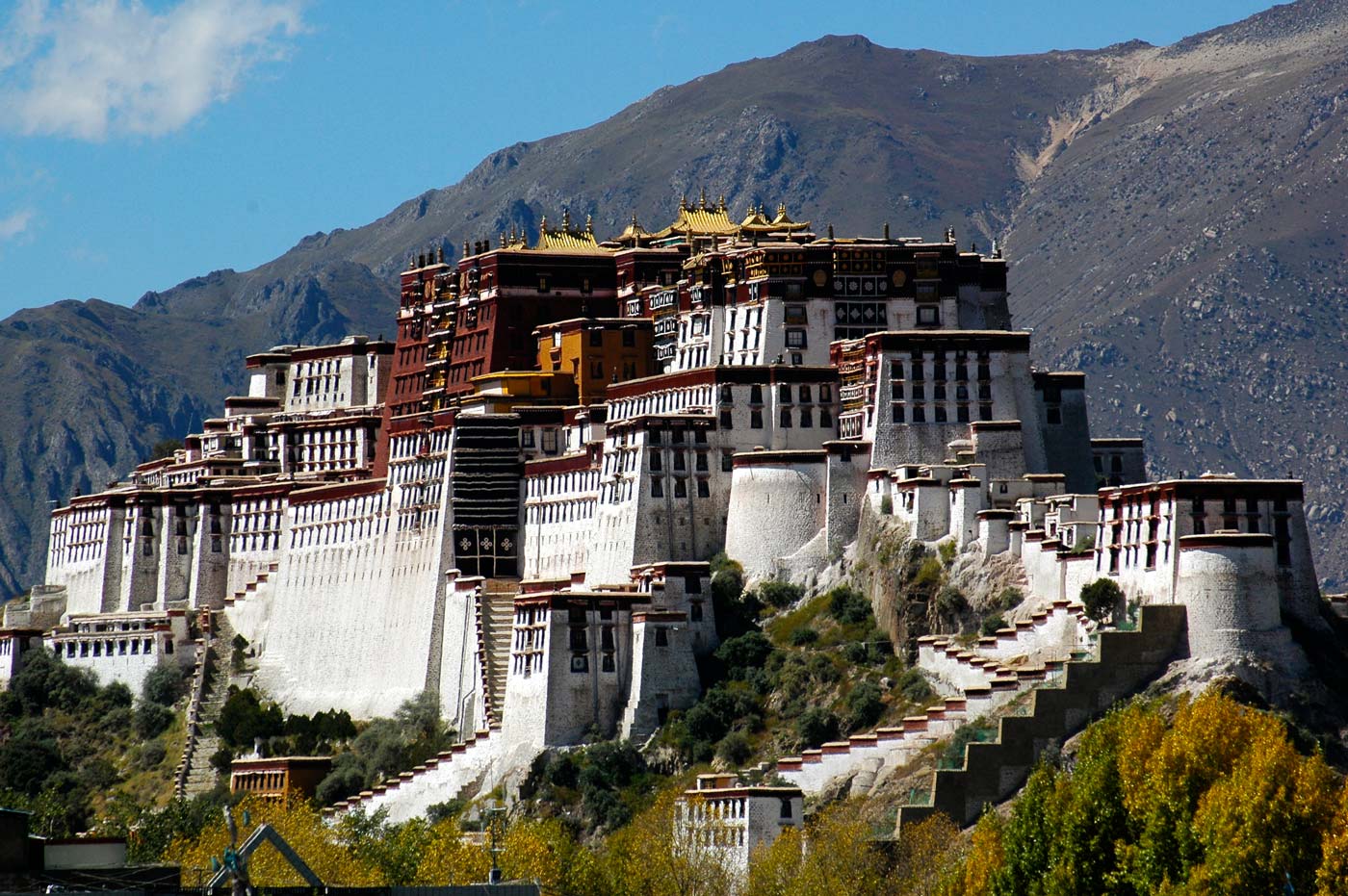
Potala Palace, the residence of the Dalai Lama

In 1989, the Dalai Lama was awarded the Nobel Peace Prize, for his work advocating nonviolent means to free Tibet from China. The residence of the Dalai Lama , Potala Palace and Norbulingka, are both UNESCO World Heritage Sites.

When the Dalai Lama was asked on his website what is the purpose of life, he answered "to be happy".

As you have seen in the above episode I have used two images, one of the Dalai Lama and one of his residence, Potala Palace (Nepal). I love to challenge you to create haiku, tanka or other Japanese poetry form inspired on these images. Say a kind of "Carpe Diem Imagination".

like an eagle's nest
high up in the Himalayas
a safe haven

© Chèvrefeuille

full of compassion
notwithstanding the annexation
the Dalai Lama smiles

© Chèvrefeuille

Well ... now it is up to you my dear Haijin, visitors and travelers to let the images inspire you.

This episode is NOW OPEN for your submissions and will remain open until July 3rd at noon (CET). I will (try to) publish our new "weekend-meditation", a new episode of our Time Travel feature, later on. Have fun!

Background information found HERE.


Tuesday, June 27, 2017

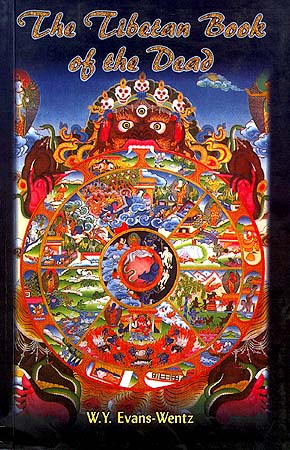
Carpe Diem #1210 Tibetan Book Of Dead (Bardo Thodol)


Dear Haijin, visitors and travelers,

This wonderful journey through Tibet is almost over and i think we have had a really wonderful and magical experience here. So it is with sadness that I am creating this penultimate (regular) episode. Today I love to inspire you through the Tibetan Book of Dead, not that one we had for our first Theme Week last year, but that original one in which the rituals are described to give peace to the dying and in which the soul is guided to the right realm were it will wait to be reborn.

Earlier this week I wrote an episode about Shambhala, that magical kingdom somewhere in the Himalayans. Shambhala isn't a physical place in my opinion it is the place were our souls are waiting to become reborn. Another episode was about reincarnation and those two prompts are interconnected with our prompt for today ... the Tibetan Book Of Dead. (Downloadable  HERE)

Tibetan Book Of The Dead

Let me tell you a little bit more about The Tibetan Book Of Dead:

It is meant to be a guide for those who have died as they transition from their former life to a new destination. The work has been traditionally attributed to Padma-Sambhava, an Indian mystic who was said to have introduced Buddhism to Tibet in the 8th century. Legend has it that while visiting Tibet, Padma-Sambhava found it necessary to conceal sanskrit works he had arranged to be written.The Tibetans of that time were not ready for the spiritual teachings contained therein, so he hid his texts in strange and remote locations, leaving them to be discovered at a later time when their spiritual message could be received by those with an open mind.

The most famous of those that discovered and revealed Padma-Sambhava's writings was Karma Lingpa who was born around 1350 CE. According to his biography, Karma Lingpa found several hidden texts on top of a mountain in Tibet when he was fifteen years old. Within those texts, he found a collection of teachings entitled: The Self-Emergence of the Peaceful and Wrathful Deities from Enlightened Awareness. These teachings contained the texts of the now famous Great Liberation upon Hearing in the Bardo. The Tibetan Book of the Dead was first published in 1927 by Oxford University Press, London. (Source: holybooks.com)

Tibetan Book Of The Dead (original)
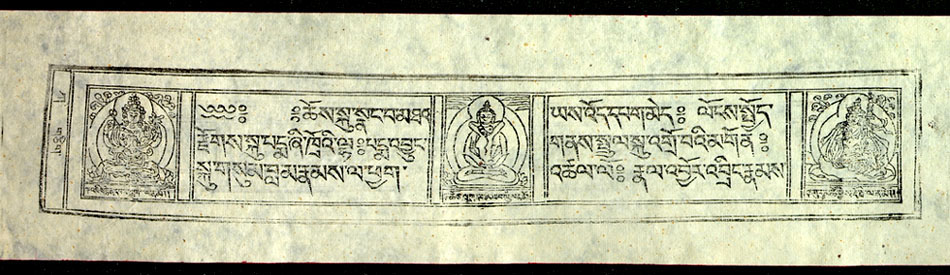
The above image shows  the part of The Tibetan Book Of The Dead in which the passed away man or woman will be facing the demons to challenge him / her to be "weighted". I think this phase is similar with what in other religions is called "judgement" or "limbo", but that I don't know for sure.

Here is a "quote" from this part of The Tibetan Book Of The Dead:

[...] "O nobly-born, listen undistractedly. Not having been able to recognize when the Peaceful [Deities] shone upon thee in the Bardo above, thou hast come wandering thus far. Now, on the Eighth Day, the blood-drinking Wrathful Deities will come to shine. Act so as to recognize them without being distracted." [...]

aftermath
life weighted by the gods
to be reborn


© Chèvrefeuille

Well ... it is not an easy task I think this time, but I am looking forward to your responses on this prompt.

By the way ... next month we will have all kigo for summer for prompts, classical and non-classical. So that will be another great month of Carpe Diem Haiku Kai. I hope to publish our new prompt-list later this week.

This episode is NOW OPEN for your submissions and will remain open until July2nd at noon (CET). I will try to publish our new episode, Dalai Lama, later on. For now .... have fun!


Monday, June 26, 2017

Carpe Diem #1209 reincarnation the Tibetan Vision


Dear Haijin, visitors and travelers,

Welcome at a new episode of our wonderful Haiku Kai. this month it is all about Tibet, a Magical Experience, we have seen already the beauty of Tibet and we have read wonderful poems written by the renown Tibetan poet and yogi Milarepa and today we are going to look a little bit closer to one of the "pillars" of Budhism, reincarnation.
In our first CDHK Theme Week the one about the Tibetan Book of Living and Dying, we have already had a quick look at reincarnation, but for this episode I decided to dive into the matter of reincarnation (especially Tibet ideas) a bit more. However ... I couldn't really find a good background on this and so I had to decide to search the Internet. I ran into a nice essay about Tibetan ideas on reincarnation which I love to share here with you.

As you maybe know in Tibetan Buddhism the only one who can recognize a reincarnation is His Holiness The Dalai Lama. His last recognition (as far as I know) was on July 9th 2013. He then recognized a Tibetan boy born in Nepal as the reincarnation of one of his teachers and former head of Nyingma, the oldest tradition of Tibetan Buddhism.
The Tibetan spiritual leader gave his seal of recognition to Ngawang Tenzin Choekyi Lodoe Rabsel, a Tibetan boy born to Choeling Trulku Ngawal Choepal Gyatso and Paylung Tsewang Dolma in Kathmandu on July 25, 2013.

The announcement was made on July 6, 2015 to coincide with the 80th birthday of His Holiness the Dalai Lama.

Ngawang Tenzin Choekyi Lodoe Rabsel, the recognized reincarnation of Trulshik Rinpoche of
It is a bit stronge to see a young boy (above) as the reincarnation of one of the Heart Lamas of Nyingma, the oldest tradition of Tibetan Buddhism. As this little boy was recognized as a reincarnated spiritual teacher he was just 2 years. From the moment of recognition the life of this young boy and his family will change drastical. However the parents of this young boy will be grateful and honored that their son will become one of the leading Tibetan Lamas.

Tibetan reincarnation (tulku)?

The reincarnation system (tulku), a distinguishing characteristic of Tibetan Buddhism, is based on the theory that Buddha's soul never vanishes, but reincarnates in succession to lead his followers and to accomplish his mission. One of the first reincarnations among the Buddhist monks in Tibet is Karma Pakshi. In 1193, before Dusum Chenpa, a religious leader, the first Karmapa of the Karma Kagyu tradition of Tibetan Buddhism, passed away, he told his disciples that he would return as a reincarnated being. His disciples soon led a search for his infant reincarnation in accordance with his will. Several years later, Karma Pakshi turned out as the first reincarnation in Tibet and trained to be Karma Kagyu leader. After Karma Pakshi's reincarnation, the reincarnation system was adopted by other sects gradually to keep a consistent religious leadership. By applying the system, heirs for hundreds of Gyalwas (Living Buddhas) were selected, among whom the Dalai Lama and the Panchen Lama are the most prestigious. The Yellow Hat sect, Gelugpa tradition of Tibetan Buddhism also applied the system to hand down the titles conferred on the third Dalai Lama and the fourth Panchen Lama to keep their established religious and secular title and power. By the end of the Qing Dynasty there were 160 high lamas registered with the Board for Mongolian and Tibetan Affairs, each applying the reincarnation system to identify their next successors.
Lhamo Latso Lake

Religious methods and rituals are used to identify a reincarnation of a late high lama. A search party headed by another high lama begins the search. After a religious retreat, lamas, dispatched in disguise, scour Tibet for special signs: new mothers who had unusual dreams, children who have special knowledge without being taught, and special physical traits, such as big ear lobes. The lamas refer to oracles, portents, dreams and  the late lama's prophesy in order to aid them in their search. Some lamas are sent to Lhamo Latso, the Oracle Lake, to look for prophetic visions to help locate the reincarnation.
Once the High Lamas have found the home and the boy they believe to be the reincarnation, the boy undergoes a series of tests to affirm the rebirth. They present a number of artifacts, only some of which belonged to the previous Dalai Lama, and if the boy chooses the items which belonged to the previous Dalai Lama, this is seen as a sign, in conjunction with all of the other indications, that the boy is the reincarnation.

Many believe the Dalai Lama to be an earthly manifestation of Avalokiteśvara (Chenrezig). Eventhough this thought was only recently formulated by the fifth Dalai Lama, Ngawang Lobsang Gyatso ( 1617 -1682 ). It is said that Padmasambhava prophesied that Avalokiteśvara will manifest himself in the Tulku lineages of the Dalai Lamas and the Karmapas. Another Tibetan source explains that Amitabha Buddha gave to one of his two main disciples, Avalokiteśvara, the task to take upon himself the burden of caring for Tibet. In Tibetan Buddhism, Tara came into existence from a single tear shed by Chenrezig. When the tear fell to the ground it created a lake, and a lotus opening in the lake revealed Tara. In another version of this story, Tara emerges from the heart of Chenrezig. In either version, it is Chenrezig’s outpouring of compassion which manifests Tara as a being.

Avalokiteshvara
As I was preparing this episode I also sought for haiku on reincarnation and I ran into a nice haiku written by Martha Magenta:
reincarnation
each raindrop
lost at sea


© Martha Magenta

And I found another nice haiku on reincarnation by Rajkumar Mukherjee:

future born in me
with love of present for past
who knows what he holds


© Rajkumar Mukherjee

By the way I couldn't find a way to contact them to ask their permissions, so if you know these two poets or you are one of these two poets, please let me know if you are okay with it.

Reincarnation (Dutch website)
Here are a few poems I wrote on reincarnation or related themes:

several lives
once lived and re-lived -
Lotus blooms again
reaching for a new day of life
cherished by the sun
the final frontier
to become newly born -
conquering death
phoenix spreads its wings
after the dark cold winter night
finally spring
© Chèvrefeuille

This episode is open for your submissions tonight at 7:00 PM (CET) and will remain open until July 1st at noon (CET). I will try to publish our new episode, Tibetan Book of Death, later on.


Sunday, June 25, 2017

Carpe Diem #1208 Shambhala, the mystical and mysterious kingdom


Dear Haijin, visitors and travelers,

I hope you have had a wonderful weekend and I hope you are ready for an all new week of haiku-ing here at Carpe Diem Haiku Kai. I had a good weekend, I was on the night-shift, but that is part of my job of course.

Today I love to tell you a little bit more about Shambhala, or Shambala (I don't know which to use, because there are several different ways of writing it). As you (maybe) know I have written a novel several years ago, a kind of fantasy-storty like Tolkiens Ring, and in that novel I used also Shambala as a kind of after world, or heaven. And that is exactly what Shambala is I think. Shambala, as legend tells us, is a mystical kingdom somewhere in the Himalayans, but I don't think it's a real kingdom actually, I think it's more a "kingdom" like "Heaven" and you only can reach that kingdom through dead and living in the righteous way.

The 14th Dalai Lama (Lhamo Dondrub)

As the 14th Dalai Lama noted during the 1985 Kalachakra initiation in Bodhgaya, Shambhala is not an ordinary country:

[...] “Although those with special affiliation may actually be able to go there through their karmic connection, nevertheless it is not a physical place that we can actually find. We can only say that it is a pure land, a pure land in the human realm. And unless one has the merit and the actual karmic association, one cannot actually arrive there.” [...]

Shambhala ... the mystical invisible place of peace somewhere in the Himalayans.

Shambhala, which is a Sanskrit word meaning “place of peace” or “place of silence”, is a mythical paradise spoken of in ancient texts, including the Kalachakra Tantra and the ancient scriptures of the Zhang Zhung culture which predated Tibetan Buddhism in western Tibet. According to legend, it is a land where only the pure of heart can live, a place where love and wisdom reigns and where people are immune to suffering, want or old age. (Sounds like Heaven or the New Jerusalem).

The legend of Shambhala is said to date back thousands of years, and reference to the mythical land can be found in various ancient texts. Hindu texts such as Vishnu Purana mention Shambhala as the birth place of Kalki, the final incarnation of Vishnu who will usher in a new Golden Age. The Buddhist myth of Shambhala is an adaptation of the earlier Hindu myth. However, the text in which Shambhala is first discussed extensively is the Kalachakra.
The Kalachakra refers to a complex and advanced esoteric teaching and practice in Tibetan Buddhism. Shakyamuni Buddha is said to have taught the Kalachakra on request of King Suchandra of Shambhala.
As with many concepts in the Kalachakra, the idea of Shambhala is said to have outer, inner, and alternative meanings. The outer meaning understands Shambhala to exist as a physical place, although only individuals with the appropriate karma can reach it and experience it as such. The inner and alternative meanings refer to more subtle understandings of what Shambhala represents in terms of one's own body and mind (inner), and during meditative practice (alternative). These two types of symbolic explanations are generally passed on orally from teacher to student.

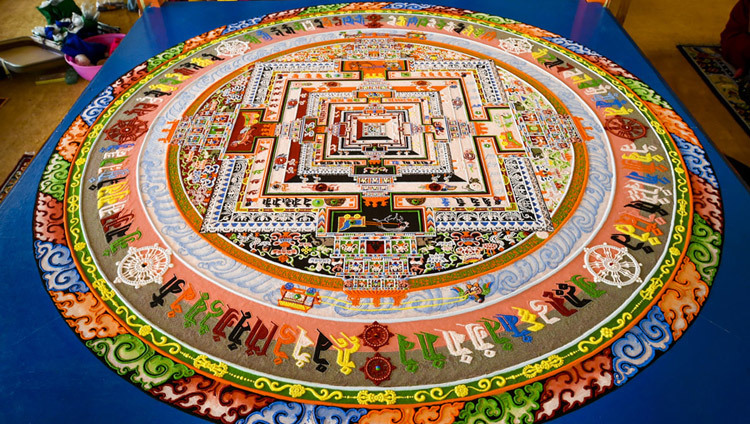
Kalachakra sand mandala (33th Kalachakra Empowerment 2014)
The concept of Shambhala plays an important role in Tibetan religious teachings, and has particular relevance in Tibetan mythology about the future.  The Kalachakra prophesies the gradual deterioration of mankind as the ideology of materialism spreads over the earth. When the “barbarians” who follow this ideology are united under an evil king and think there is nothing left to conquer, the mists will lift to reveal the snowy mountains of Shambhala. The barbarians will attack Shambhala with a huge army equipped with terrible weapons. Then the king of Shambhala will emerge from Shambhala with a huge army to vanquish "dark forces" and usher in a worldwide Golden Age.
Though the Kālachakra prophesies a future war, this appears in conflict with the vows of Buddhist teachings that prohibit violence. This has led some theologians to interpret the war symbolically – the Kālachakra is not advocating violence against people but rather refers to the inner battle of the religious practitioner against inner demonic tendencies.

Over many centuries, numerous explorers and seekers of spiritual wisdom have embarked on expeditions and quests in search of the mythical paradise of Shambhala, and while many have claimed to have been there, no one has yet provided any evidence of its existence or been able to pinpoint its physical location on a map, however most references place Shambhala in the mountainous regions of Eurasia.
In Altai folklore, Mount Belukha is believed to be the gateway to Shambhala. Modern Buddhist scholars seem to conclude that Shambhala is located in the higher reaches of the Himalayas. Some legends say that the entrance to Shambhala is hidden inside a remote, abandoned monastery in Tibet, and guarded by beings known as the Shambhala Guardians.

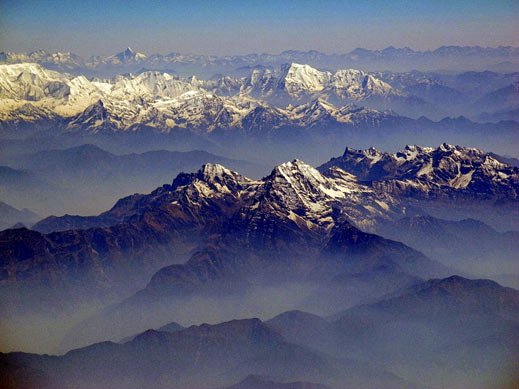
Somewhere in the Himalayans according to legends you will find Shambhala
It's a wonderful story, a mysterious kingdom hidden somewhere in the Himalayan Mountains ... well it all sounds like a dream, but ... well if there is nothing left to dream of what will be there ...?

It was really a joy to do the research for this episode and I have found a lot about Shambhala all over the Internet. I used several sources for this episode. I will give you the URL's at the end.

high in the mountains
through the streets of Shambhala
the cry of an eagle
welcoming new citizens
who finally found their path


© Chèvrefeuille

I love it as a tanka works ... in this case it wasn't easy to create it, but ... well ....

Used sources:

Wikipedia
Ancient Origins
Collective Evolution

This episode is open for your submissions tonight at 7:00 PM (CET) and will remain open until June 30th at noon (CET). I will try to publish our new episode, reincarnation, later on.


Tuesday, June 20, 2017

Carpe Diem Theme Week "The Songs of Milarepa" (3) The Shepherd


Dear Haijin, visitors and travelers,

Maybe you can remember our CDHK month in which I used prompts extracted from "Manuscript Found In Accra", by Paulo Coelho in July 2013, or maybe you know "The Prophet" written by Khalil Gibran. Both are books in which people question prophets or spiritual people, or just wise people. This Theme Week "The Songs of Milarepa" the prompts are extracted from "Hundred Thousand Songs by Milarepa". This book is written in the same way as the both I mentioned above.

In "The Songs of ..." Milarepa answers different questions by people around him and today I love to share a part of "The Songs of ..." in which a young shepherd asks him a question:

[...] A young shepherd boy came to Milarepa and said:, "Dear Lama, last night I tried to find out what my mind is and how it works. I observed it carefully and found that I have only one mind. Even though one wants to, one cannot kill this mind. However much one wishes to dismiss it, it will not go away. If one tries to catch it, it cannot be grasped; nor can it be held by pressing it. If you want it to remain, it will not stay; if you release it, it will not go. You try to gather it; it cannot be picked up. You try to see it; it cannot be seen. You try to understand it; it cannot be known. If you think it is an existing entity and cast it off, it will not leave you. If you think that it is non-existent, you feel it running on. It is something illuminating, aware, wide-awake, yet incomprehensible. In short, it is hard to say what the mind really is. Please be kind enough to explain the meaning of the mind." 

Tibetan shepherd
In response, Milarepa sang: 

Listen to me, dear shepherd, the protector [of sheep)!
By merely hearing about sugar's taste, 
Sweetness cannot be experienced; 
Though one's mind may understand 
What sweetness is, 
It cannot experience directly; 
Only the tongue can know it. 
In the same way one cannot see in full the nature of mind, 
Though he may have a glimpse of it 
If it has been pointed out by others.
If one relies not on this one glimpse, 
But continues searching for the nature of mind, 
He will see it fully in the end. 
Dear shepherd, in this way you should observe your mind. 

© Milarepa

The boy then said, "In that case, please give me the Pointing-out-Instruction*, and this evening I will look into it. I shall return to-morrow and tell you the result." Milarepa replied, "Very well. When you get home, try to find out the color of the mind. Is it white, red, or what? What is its shape? Is it oblong, round, or what? Also, try to locate where in your body it dwells."
The next morning when the sun rose, the shepherd drove the sheep before him, and came to Milarepa, who asked, "Did you try last night to find out what the mind is like?" The boy replied, "Yes, I did." 
"What does it look like?" [...] (Source: The Hundred Thousand Songs of Milarepa, page 123 & 124)

*) Lit.: "Through the 'Pointing-out-Instruction' one may glimpse it." The Pointing-out-Instruction is an essential practice of Mahamudra. The main concern of Mahamudra is the unfoldment of the essence of one's mind. To accomplish this, the disciple is given by his Guru the "Pointing-out" demonstration. This can be done in different ways with different gestures-a smile, a blow, a push, a remark, etc. This is strikingly similar to the “koan”-tradition of Zen, though the style and process appear somewhat different.

An amazing song ... I hope to read wonderful haiku and tanka inspired on this Song by Milarepa in which we can see the hidden spiritual meaning of our nature, of our beautiful little poems.

This episode is NOW OPEN for your submissions and will remain open until June 25th at noon (CET). I will try to publish our last episode of this Carpe Diem Theme Week, an other song by Milarepa, later on. For now ... have fun!


Monday, June 19, 2017

Carpe Diem Theme Week "The Songs of Milarepa"(2) "flying clouds"


Dear Haijin, visitors and travelers,

Welcome at our second episode of this month's Theme Week "The Songs of Milarepa". This week I will share a few of the poems (or part of the poems) written by the renown Tibetan poet and yogi Milarepa. All poems (or partial poems) are extracted from "The Hundred Thousand Songs of Milarepa. In this wonderful book the life of Milarepa is told and his wisdom shared. Milarepa's Songs are full of secret and sacred wisdom ... and for sure it isn't easy to "run" through his wisdom to find a poem suited for here at Carpe Diem Haiku Kai, but today I found another nice poem. The part I share here is about the wisdom of Milarepa which he shared to converse Lodun, a Scholar.


Versatile are flying clouds, 
Yet from the sky they're not apart. 
Mighty are the ocean's waves, 
Yet they are not separate from the sea. 
Heavy and thick are banks of fog, 
Yet from the air they're not apart.
Frantic runs the mind in voidness, 
Yet from the Void it never separates. 
He who can "weigh" Awareness 
Will understand the teaching 
Of Mind-Riding-on-the-Breath.
He who sees wandering 
Thoughts sneaking in like thieves, 
Will understand the instruction 
Of watching these intruding thoughts. 
He who experiences his mind wandering outside, 
Will realize the allegory 
Of the Pigeon and the Boat at Sea*.

© Milarepa

*Flying off from a boat in the sea, a pigeon cannot fly very far before it is forced to return to the boat because no landing-place is in sight. This metaphor alludes to the fact that wandering thoughts, no matter how wild and uncontrollable they are, will eventually return to the Mind-Essence, as there is nowhere else to go.


Imagine this ... see the story unfold in front of you and she the meaning of this partial poem. All is One and inseparable. Isn't that what we, haiku (and tanka) poets see in the world, the nature around us? Are we not all one with nature ... all created with God-stuff.

through the mist
I hear the cry of an eagle
seeking for prey
aware of his surroundings
he catches a little mouse

© Chèvrefeuille

Hmm ... not as strong as I had hoped, but well ... I have given it a try. And now ... it is up to you. This episode is NOW OPEN for your submissions and will remain open until June 24th at noon (CET). I will (try to) publish our new episode, our third Theme Week episode, later on. For now .... have fun!


Sunday, June 18, 2017

Carpe Diem's Theme Week: The Songs Of Milarepa (1) Introduction


Dear Haijin, visitors and travelers,

Welcome at this month's Theme Week. This month while we are discovering magical and spiritual Tibet I have included a nice Theme Week. This Theme Week it's all about Tibet's renown poet and yogi Milarepa and is titled "The Songs of Milarepa".

Maybe you can remember our first Theme Week in which we explored the Tibetan Book of Living and Dying. In the e-book that followed after that Theme Week I included a "song by Milarepa". In this Theme Week that starts today I have gathered a few wonderful "songs" by Milarepa to inspire you. So let's go!


Let me first introduce to you Milarepa:

Milarepa is one of the most widely known Tibetan Saints. In a superhuman effort, he rose above the miseries of his younger life and with the help of his Guru, Marpa the Translator, took to a solitary life of meditation until he had achieved the pinnacle of the enlightened state, never to be born again into the Samsara (whirlpool of life and death) of worldly existence. Out of compassion for humanity, he undertook the most rigid asceticism to reach the Buddhic state of enlightenment and to pass his accomplishments on to the rest of humanity. His spiritual lineage was passed along to his chief disciples, Gambopa and Rechung. It was Rechung who recorded in detail the incidents of Milarepa's life for posterity. The narrative of his life has thus been passed down through almost a millennium of time and has become an integral part of Tibetan culture.
Milarepa extemporaneously composed innumerable songs throughout his life relevant to the dramatic turns of events of himself and his disciples in accordance with an art form that was in practice at the time. These songs have been widely sung and studied in Tibet ever since and have been recorded as the Hundred Thousand Songs of Milarepa. His faithful devotion, boundless religious zeal, monumental forbearance, superhuman perseverance, and ultimate final attainment are a great inspiration today for all. His auspicious life illumined the Buddhist faith and brought the light of wisdom to sentient beings everywhere. (Source: Cosmic Harmony)

Red Rock Jewel Valley (Tibet/India)
Milarepa was not only a poet, but also a yogi who sang his teachings for his followers. These songs are gathered in "Hundred Thousand Songs of Milarepa", of course he didn't compose that much songs, but he composed a lot of them.

The song I love to share here for your inspiration is part of "The Tale of Red Rock Jewel Valley" in which Milarepa has to conquer demons. Here is the song to inspire you:

This lonely spot where stands my hut 
Is a place pleasing to the Buddhas, 
A place where accomplished beings dwell, 
A refuge where I dwell alone. 

Above Red Rock Jewel Valley 
White clouds are gliding; 
Below, the Tsang River gently flows; 
Wild vultures wheel between. 

Bees are humming among the flowers, 
Intoxicated by their fragrance; 
In the trees birds swoop and dart, 
Filling the air with their song. 


Image source
In Red Rock Jewel Valley 
Young sparrows learn to fly, 
Monkeys love to leap and swing, 
And beasts to run and race, 
While I practice the Two Bodhi-Minds
and love to meditate. 

Ye local demons, ghosts and gods, 
All friends of Milarepa, 
Drink the nectar of kindness and compassion, 
Then return to your abode

© Milarepa (Tr.: Garma C. C. Chang; Shambhala Publications, 1977)

And here is my inspired haiku. I hope you like it:

deep silence
inhaling the sounds of nature -
white clouds dance

© Chèvrefeuille

Well ... I hope I have inspired you. This was our introductory episode of this Theme Week: "Songs Of Milarepa". I am looking forward to the upcoming days and your responses of course.

PS.: More reading? Follow this link and find out more about Milarepa.

This episode is NOW OPEN for your submissions and will remain open until June 23rd at noon (CET). I will (try to) publish our nex Theme Week episode, later on. For now ... have fun


Wednesday, June 14, 2017

Carpe Diem #1207 Non-Resistance


Dear Haijin, visitors and travelers,

Welcome at a new episode of our journey through magical and spiritual Tibet. Today I love to look closer to the character of the Tibetan people. Somewhere in the early fifties of the last century China annexated Tibet. The Tibetans until than didn't had a well trained army, only a small group of strong monks and some foreigners were at hand to defend the country.
The Tibetans aren't a violent race, they all are very loving and spiritual beings so China could annexate the country without any resistance. Since than the Tibetans show their thoughts about China without anger, but from out of a kind of spiritual unconditional love ... non-resistance is their power.

The Dalai Lama, like Ghandi, is a leader who shows His thoughts on the annexation of His country by the Chinese, from a non-resistance, non violent idea. Through His travels all around the globe and His temporary place to live in Nepal, He shows how strong His people are.
Several days ago I told you about the Tibetan smile ... that smile is a stronger weapon than any other weapon. Non-resistance is a stronger weapon than any other weapon.

The Beauty of Tibet
This is not a political weblog, but I love to share my thoughts about this annexation of Tibet by the Chinese. Tibet is one of the most beautiful countries on Earth, the strong spiritual way of living in Tibet makes that this country deserves to be a country again with its own spiritual leader, with its own spiritual government. The Chinese overruled this beautiful country because they couldn't handle that Tibet was a rich and spiritual country. The Chinese saw this small country (compared with China) as a threat for their own communistic policy. As we look at China nowadays than there is no need to see Tibet as a threat for their wealth, because China is one of the fastest growing economies. There is no longer need to have Tibet ... they have to give Tibet back their sovereignty ... they have to give Tibet back to their rightful owners ... the Tibetan people.

Sorry for this small piece of text about my thoughts on the case of Tibet and China, I just had to write it, share it with you all.

flowers in their hair
the Tibetan people proud and strong
conquering with a smile

© Chèvrefeuille

This episode is open for your submissions tonight at 7:00 PM (CET) and will remain open until June 19th at noon (CET). I will try to post our new "weekend-meditation", a new Time Travel episode, later on. For now .... have fun and be inspired.


Tuesday, June 13, 2017

Carpe Diem #1206 Yoga (especially Tibetan 5 rites Yoga)


Dear Haijin, visitors and travelers,

Welcome at a new episode of our Haiku Kai. This month we are on a virtual journey through Tibet. That wonderful spiritual country in the Himalayans, Recently Hamish pointed it me to the Tibetan Yoga of the five (5) rites, a very strong and powerful way of Yoga in which you can revive yourself to the max. There are even some great results of rejuvenation told. I love to introduce to you this beautiful kind of Yoga.

Tibetan Yoga, the Five Rites
Tibetan Yoga comprises of 5 simple, yet dynamic yogic exercises called 5 Tibetan Rites, meditation, praanayam and positive thinking.
The Five Tibetan Rites is a yoga routine based on a ritual of exercises done by the Tibetan Lamas, which helped them to live very long and healthy life and to stay ever young. (They were developed over centuries in the monasteries of Tibet. In 1930 a retired British army officer, who learnt these from the Lamas, brought them to the west). They are now practiced around the world and are said to prevent aging. The entire routine can be completed in less than 20 minutes. An important part of the Tibetan exercises is a conscious synchronization of breathing while performing physical activity.
They balance the 7 chakras & regulate the hormonal output. They effect our digestive system, cardio vascular system, nervous system and respiratory system.

These low profile yogic secrets of the Lamas will unearth all the energies and an awesome power lying dormant within you, aligning it with the cosmic energy to give you the best of both mind & body.
Meditation
History of Tibetan Yoga
Tibetan Yoga is the union of mind, body and spirit, & is based on Buddhism. The Godly Tibetan Lamas believe in living each moment to the fullest, i.e. to be consciously and totally present in every moment. These Lamas lived for 100 years and more but looked & felt like they were 50 years old. Their secret of eternal youth & vitality was a set of 5 simple yogic exercises called the ‘5 Rites' which were developed over centuries in the monasteries of Tibet.

What are those five Tibetan Rites? Let me tell you a little bit more about them. In this Tibetan Rites Yoga there are also a 6th and 7th rite, but those I will not bring here.
Tibetan rite 1
Tibetan Rite 1
"Stand erect with arms outstretched, horizontal with the shoulders. Now spin around until you become slightly dizzy. There is only one caution: you must turn from left to right." A tip for this is to look at the end of your right hand as a reference point.
Tibetan rite 2
Tibetan rite 2
"Lie full length on rug or bed. Place the hands flat down alongside of the hips. Fingers should be kept close together with the finger-tips of each hand turned slightly toward one another. Raise the feet until the legs are straight up. If possible, let the feet extend back a bit over the body toward the head, but do not let the knees bend. Hold this position for a moment or two and then slowly lower the feet to the floor, and for the next several moments allow all of the muscles in the entire body to relax completely. Then perform the Rite all over again."
"While the feet and legs are being raised it is a good idea also to raise the head, then while the feet and legs are being lowered to the floor lower the head at the same time."
Tibetan rite 3
Tibetan rite 3
"Kneel on a rug or mat with hands at sides, palms flat against the side of legs. Then lean forward as far as possible, bending at the waist, with head well forward—chin on chest. The second position of this Rite is to lean backward as far as possible. Cause the head to move still further backward. The toes will prevent you from falling over backward. The hands are always kept against the side of the legs. Next come to an erect (kneeling) position, relax as much as possible for a moment, and perform Rite all over again."
Tibetan rite 4
Tibetan rite 4
"Sit erect on rug or carpet with feet stretched out in front. The legs must be perfectly straight -- back of knees must be well down or close to the rug. Place the hands flat on the rug, fingers together, and the hands pointing outward slightly. Chin should be on chest -- head forward."
"Now gently raise the body, at the same time bend the knees so that the legs from the knees down are practically straight up and down. The arms, too, will also be vertical while the body from shoulders to knees will be horizontal. As the body is raised upward allow the head gently to fall backward so that the head hangs backward as far as possible when the body is fully horizontal. Hold this position for a few moments, return to first position, and RELAX for a few moments before performing the Rite again."
"When the body is pressed up to complete horizontal position, tense every muscle in the body."
Tibetan rite 5
Tibetan rite 5
"Place the hands on the floor about two feet apart. Then, with the legs stretched out to the rear with the feet also about two feet apart, push the body, and especially the hips, up as far as possible, rising on the toes and hands. At the same time the head should be brought so far down that the chin comes up against the chest. Next, allow the body to come slowly down to a ‘sagging’ position. Bring the head up, causing it to be drawn as far back as possible."
"The muscles should be tensed for a moment when the body is at the highest point, and again at the lowest point."

There are several claims of participants in these rites that they regained health, strenght and even regained youth. If that's true I don't know, but if it is true than for sure these rites are worth trying.
Isn't it awesome?
regaining youth
through the Tibetan rites
secrets reveiled
© Chèvrefeuille
This episode, sorry for the lenght of it, is open for your submissions tonight at 7:00 PM (CET) and will remain open until June 18th at noon (CET). I will try to publish our next episode, non-resistance, later on. For now ... have fun. Maybe try the rites yourself it takes only 20 minutes to do them all five.
 

Monday, June 12, 2017

Carpe Diem #1205 Smile


Dear Haijin, visitors and travelers,

What a joy to bring you all a new episode in our wonderful magical experience through Tibet. As I was preparing the prompt-list for this month, our prompt for today was one of the few I was looking forward to, because this is a joyful prompt ... Today our prompt is smile.

Tibetans are called the smiling people, they always are friendly and are smiling. Their smile is really beautiful and even in the smile of the smallest of them all, the little children, you can see the spiritual energy of the Tibetans. Their smile full of compassion, full of unconditional love ...

The Tibetans are a strong, loving and non-violence race. The Dalai Lama, their spiritual (and constitutional) leader can be proud. Tibetans are the best friends you can have I think, because they will always be there for you. They will even help you earlier than they would help themselves.

Smile
The Tibetan smile full of compassion ... full of love ... I hope you can and will see that around you not even in the people around you, but also in our wondetful natural surroundings, our nature ... nature smiles always, you only have to be aware of it ... enjoy nature ... look at the beauty of nature and see in it that wonderful loving and compassionate smile of the Tibetans.

Smiling ... it's powerful and so spiritual. A smile says more than thousand words. Smile also points towards humor and the Tibetan people have a beautiful humor notwithstanding the annexation by China. Tibetans ... well they are the strongest people of the world.

she smiles
while planting her seeds
in the stone hard soil


smiling
bowing and laughing
compassion


© Chèvrefeuille
This episode is open for your submissions tonight at 7.00 PM (CET) and will remain open until June 17th at noon (CET). I will (try to) publish our new episode, yoga, later on. For now ... be inspired and keep on smiling ...!

Sunday, June 11, 2017

Carpe Diem #1204 Yaks (an other reprise)


Dear Haijin, visitors and travelers,

I hope you all have had a wonderful weekend. I was on the nightshift, so my weekend I spent mostly sleeping. This weekend we had by the way two wonderful days with summer warmth, and than it's not easy to sleep during the day (because of the nightshift).

As I was preparing our promptlist for this month I had a few prompts that we have had here earlier, one of those prompts, Yaks, will have its reprise today. So I have chosen the easy way and have partially taken that earlier post on Yaks to use here again.

"What is the spiritual meaning of the yak?" To me it seems there is no spiritual meaning, but it turned out otherwise.
 Yak is a sign of the primal zodiac and it's about the same as Taurus. So let us take a look at this primal zodiac sign.
Stubborn determination is the hallmark of the Yak. Those born under this sign simply do not accept “no” for an answer. Hard work and dedication to a cause will earn you the highest respect in a Yak’s eyes. Members of this sign tend to see things as “black or white”, meaning that there is rarely a middle ground to any situation. People’s actions are either right or wrong, things are either good or bad, people are either hard workers or lazy slobs. The word “compromise” does not exist in the vocabulary of a Yak. They know how they feel and have no reason to question it.
Yaks hate change. They prefer a steady, dependable routine where they can focus their efforts on moving forward one day at a time. Working is where they feel the most comfortable, whether in their career or on their homes, in their gardens, or on their hobbies. Yaks tend to live for their future goals rather than for the moment, and it can take a lot of convincing to get them to take a break. It’s too bad, too, because a well-rested and serene Yak can be one of the best companions to have around. Finding a balance between work and life, or rather living for the future versus living for the present, should be an important goal for everyone born under this sign.
Tibetan Landscape With Yaks (photo found on 123rf)

Yaks keep a small, but loyal group around them. They don’t like going out much and prefer quiet, familiar places when they do. Yaks don’t do small-talk well, they simply don’t have the time or patience for it. Those who know them well appreciate their ability to cut straight to the point and not sugar-coat conversations. If you can get a Yak friend to relax you will find that they are quite intelligent, loyal, and even fun to have around. If anyone outside the group were to try and cause trouble, the Yak would be the first to put an end to the situation - with force. Yaks will defend their closest friends and family with shocking force, but only when they deem it necessary.

Love is complicated for the Yak. Their difficulty in accepting others points of view can make long-term relationships difficult. Yaks are not rude or dismissive, but they know what they believe and will violate all social rules just to prove that they are right. In time, most members of this sign learn to suppress this trait in social situations, but they still have a hard time making long-term commitments until they have accepted that their way is not the only way or have managed to find a partner that will let them be the boss. Yaks often have admirers, but they are terrible at flirting. Striking up a casual conversation is not the most comfortable task for a Yak, though in time most figure out how to relax enough to be socially graceful. Age and experience do wonders for this side of a Yak’s personality.
The short spiritual meaning and spiritual power of the Yak is Healing stillness or numbness.
Well enough about the spiritual meaning of Yaks. In Tibet the Yaks are used as mules. They can hold a lot of weight and are comfortable to ride on. They also are really great in walking through the rough scene of the Himalayans.
As I look at images of Yaks than I only can say "what a beautiful beast" this is.
silence deepens
as the yak comes closer
overwhelming
© Chèvrefeuille
This episode is open for your submissions tonight at 7.00 PM (CET) and will remain open until June 16th at noon (CET). I will (try to) publish our new episode, Smile, later on. For now ... just have fun!


Thursday, June 8, 2017

Carpe Diem #1203 Pedicularis


Dear Haijin, visitors and travelers,

Welcome at a new episode of CDHK. My excuses for being late with publishing, but I had a very busy day. Today we are looking again at the alternative health care of Tibet, the Tibetans have a very strong knowledge of natural medicines and the Pedicularis, our prompt for today, is very strong medicinal herb. It was believed until several years ago that it didn't excist anymore, but it was found in the Himalayans especially in the region of Tibet.

Pedicularis grows on the high grounds in the Himalayans and is used for several health issues:

The flowers are used in Tibetan medicine, they are said to have a bitter taste and a cooling potency. Antidote, anti-inflammatory, antidiarrhoeal and febrifuge, they are used in the treatment of poisoning, inflammation of the stomach/intestines, diarrhoea and to heal obstinate wounds and sores.

Pedicularis can be used as a kind of tiobacco, but also as tea. When used as tea it tastes like Brocolli. It's a shame that this alternative medical knowledge isn't known around the globe, because I think that Mother Nature provides us with all the things we need including medicine.

Pedicularis (image found on Pinterest)
As I am doing the research for this month the richness of natural medicines from Tibet is awesome, I think I could easily create a month full of prompts themed Tibetan Natural care. So maybe that's an idea for a CDHK month too.

provided by Mother Earth
all kinds of beautiful herbs
to become healthy


© Chèvrefeuille

This episode is NOW OPEN for your submissions and will remain open until June 13th at noon (CET). I will try to publish our new "weekend-meditation", a new episode of our "haiku puzzler", later on. For now ... have fun!