Saturday, February 7, 2015

Carpe Diem Extra 2015-7 reminder


Dear Haijin, visitors and travelers,

As you all know Jane Reichhold is one of our (a kind of) co-hosts here at Carpe Diem Haiku Kai. She has her own feature "Carpe Diem's Ask Jane ..." and so it's possible to ask questions about haiku, tanka, renga and all other things according to our beloved haiku.

For those questions I have created a special emailaddress and if you email your question I will send them to Jane to answer them. Do you have questions for Jane? Please feel free to ask them.

You can email your questions to:

carpediemhaikukaiaskjane@gmail.com

Feel free ...

Namaste,

Chèvrefeuille, your host.

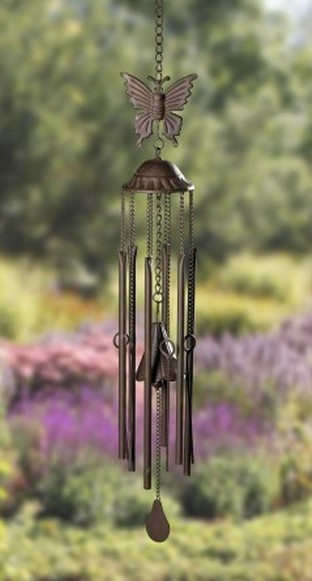
Carpe Diem Special #131, Fuyuko Tomita's "black-iron wind bell"


!! I publish this CD-Special episode early, because I am in the nightshift !!

Dear Haijin, visitors and travelers,

What a joy it was to read all of your responses on our first CD-Special by Fuyuko Tomita and I am proud that she is a fellow Dutchman and a great haiku-poetess. I don't have a lot of her haiku, but there is for sure a haiku which I can share here with you all. In fact this is one of her haiku which were published in a Dutch mindfulness magazine Happinez. As I read that article this haiku caught my attention immediately ... so here it is:

Kurogane no fuurin byakuya o nariyamazu

Black-iron wind bell
in the white summer night
tinkles on and on
© Fuyuko Tomita

Credits: Black-Iron Windbell
And here is my response on this haiku by Fuyuko trying to become close to her spirit ... not easy I think, but ... well I have said that very often and every time I came up with a nice haiku ..., however this time I have looked through my archives.

evening walk
the sound of a wind chime
deep silence


© Chèvrefeuille
And a cascading haiku from my archives at my base weblog:

in the spring breeze
the wind chime sounds
with every step


with every step
the melody of spring rain
follows me
follows me
the melody of a Buddhist chant
Om Mani Padme Hum


Om Mani Padme Hum
resonates in my heart and soul
in the spring breeze
© Chèvrefeuille

I hope I have inspired you to write/compose an all new haiku (or tanka) and I am looking forward what your muses will bring you ...
This CD-Special episode is open for your submissions tonight at 7.00 PM (CET) and will remain open until February 10th at noon (CET). I will (try to) publish our next episode, Tranquility, later on. For now ... have fun, be inspired and share .... have a great weekend.

Carpe Diem Little Creatures #17, Ippyo's "all the Chrysanthemums"


Dear Haijin, visitors and travelers,

Another week has gone and it's time again for our bi-weekly "Little Creatures" feature in which I challenge you all to watch at the small little things of nature. This week's theme is however not about a small little thing, but it's about Chrysanthemums (a real kigo for autumn and even for winter) and Chrysanthemums aren't really little flowers.

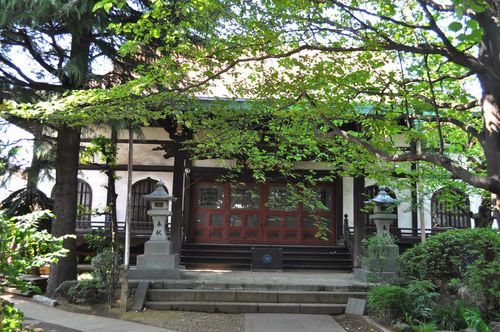
As I was preapring this new episode of "Little Creatures" I ran into a nice article published in a magazine named "Early Modern Japan" Fall 2003. This article is titled "The Evening Banter of Two Tanu-ki: Reading the Tobi Hiyoro Sequence" and written by Scot Hislop. In this article the author is looking closer to a han-kasen performed by Issa and Ippyo. In one of the links of this han-kasen Ippyo writes/composes the "haiku" which will be our leading verse for this episode of "Little Creatures", but let me first tell you a little bit more about this Tobi Hyoro Sequence.


Credits: Hongyoji Temple Nippori

The Tobi Hiyoro Sequence.

The Tobi hiyoro sequence was composed by Issa and Ippyō and was included in Nishi kasen, a
text compiled by Ippyō. There are slightly variant texts but I have followed the version presented in Maruyama Kazuhiko’s Issa to sono Shūhen. The date on which Issa and Ippyō started to compose this text is, according to Ippyō’s preface and Issa’s diary, the seventh day of the tenth month of Bunka 12 (1815). The prefatory notes to the text in Issa zenshū state that even though it is only a han-kasen (a han-kasen sequence consists of 18 links. It follows the format of the first half of a kasen sequence), the distinctive features of Issa’s style of composition show through clearly in it. It is also important to pay attention to how close Issa’s style is to Ippyō’s. Here is the "preface" of this han-kasen
Preface

去年こぞの冬、わが物見塚もの みづかに旅寝せし信濃の一茶が、たぬ きの夜話といふは
Last winter, Issa from the province of Shinano came to pass the night at my “Monomi-zuka.” The following is the evening banter of tanuki...

(Ippyō was the priest of Hongyōji, a temple located near Nippori in Edo. There are now several kuhi (rocks upon which hokku/haiku have been inscribed) with Issa’s hokku on them within the precincts. “Monomi-zuka” refers to the remains of a watchtower that was built by Ōta Dōkan, a famous 15th century poet, castle builder, and general.)


The "haiku" which is our lead this episode was the 13th link of this Tobi Hyoro Sequence and was written by Ippyo. Here I will share that link from the Tobi Hyoro Sequence:

泰平(たいへい)と天下の菊が咲 (さき)たちて 一瓢

all the chrysanthemums
under heaven have peacefully
begun to bloom
(c) Ippyō (1815)

It's surely an idea to read this article your self and if you want to read it, please let me know than I can email it to you. (Or you can find this article to which I am referring here at: https://kb.osu.edu )

Ok ... back to our "Little Creatures" episode ... as you all know the goal of this feature is to write an all new haiku based on this post following the classical rules which you can find in Carpe Diem's Lecture 1 (in the menu above) and as you all (maybe) know, that's not my "cup of tea" to follow those classical rules, but for these Little Creatures episodes I just have to do that myself too.


Here is my attempt to write an all new (classical) haiku inspired on this post. I tried to bridge the gap with our Impressionism-month and especially with Vincent van Gogh.

such a bad feeling
he needs to beat insanity -
white Chrysanthemum


(C) Chèvrefeuille

Well ... I hope you all did like this "Little Creatures" episode and I hope that it will (and can) inspire you to write/compose an all new haiku in the classical way ... have fun! This "Little Creatures" episode is open for your submissions today at noon (CET) and will remain open until next Saturday February 14th at noon (CET).

Friday, February 6, 2015

Carpe Diem Extra 2015-6, prompt-list March


Dear Haijin, visitors and travelers,

As you all know I see cdhk as a family of haiku-poets so I love to ask you all something. We are still in the first week of February, but I am already busy with doing some research for next month, March. I have a few ideas but I need a few more. One of my ideas is to make March our first CDHK-haiga month.
I love to ask you all for prompt-suggestions for March. Do you have ideas? Please share them in the comments-field.

I am busy with creating a new e-book and I hope to make it available for downloading this month. I will also create an e-book with haiku by myself, I have already a title 'fragile beauty' and it's an anthology of my cherry blossom haiku.

I am looking forward to your ideas for March.

Warm greetings,

Chèvrfeuille, your host.

Carpe Diem Time Machine #3, Blue


!! I publish this episode earlier, because I am in the nightshift !!

Dear Haijin, visitors and travelers,

Today (Saturday February 7th) I present our third episode of our Time Machine feature in which we are "playing-again" with prompts from our rich history of Carpe Diem Haiku Kai. As you all know this month it's all about Impressionism and Impressions and I love to follow that also in these Time Machine episodes (our next Time Machine episode is on February 21st).
Today's Time Machine goes back to November 7th (what a coincedence) 2012. At that time, Carpe Diem Haiku Kai was only Carpe Diem a daily haiku-meme which I had started in October 2012. There were nice responses and a small group of regular visitors. In that period of November I had a whole week planned with prompts about the rainbow and at November 7th it was the color Blue as is our prompt for today's Time Machine episode. (You can find that episode HERE)

Ok ... today's "playing-again" is Blue and is inspired on the following painting:

Credits: City Garden in Blue by Mary Clanahan (digital impressionism)
I think this is a wonderful "modern" impressionistic painting digitally made by Mary Clanahan ... it shows you a city in Blue ... it's really more like an impression than a real painting ... but I like the brightness of the colors and I think this is one of her greatest paintings ever. Must be easy to write an all new haiku inspired on this painting ...

coloring sky
mysterious and magical
is it day or night?

(C) Chèvrefeuille

the blue city mirrored
in the transparency of the pond
sparkling rainbow

(C) Chèvrefeuille

Well ... I think this was a nice way to "play again" with a prompt from our rich CDHK history and I hope you all did like it.

This episode is open for your submissions tonight at 7.00 PM (CET) and will remain open until February 9th at noon (CET). I will (try to) publish our next episode, the second haiku by our featured haiku-poetess Fuyuko Tomita, later on. For now ... have fun ... be inspired and share your haiku with us all.


Carpe Diem Tan Renga Challenge #72, "Cherry Blossom Rain" by JazzBumpa


Dear Haijin, visitors and travelers,

What a joy to bring to you an all new episode of our Tan Renga Challenge and this week I have a wonderful haiku written/composed by JazzBumpa of Retirement Pastels. He wrote this in response on our Haiku Writing Technique of last Wednesday, comparison. It's (in my opinion) a masterpiece and worth sharing with you all and to challenge you with it by writing a second stanza of two-lines (7-7 syll.) towards it. You may of course use the classical count, but that's not an obligation. Poetry as haiku is ... has to give you the freedom to let your inspiration flow ... so, as Basho once said: "Now you know the rules, forget them immediately, because haiku writing/composing must come from within and not from rules".

cherry blossom rain
young girls with pink parasols
watched by eager boys


© JazzBumpa


Isn't it a beauty? I think this haiku has enough to give you the inspiration to write the second stanza of this Tan Renga.
Sakura blooming 2014 (photo by Chèvrefeuille)
cherry blossom rain
young girls with pink parasols
watched by eager boys
                              (JazzBumpa)

she blushes up to her ears
getting her first kiss ever
                           (Chèvrefeuille)

Isn't it great? I remember my first kiss ever as if it was yesterday. That strange new feeling of butterflies in your stomach, the blush up to your ears ... your heart pounds wild ... adrenaline kick ...

Great memories I think. Now it's up to you to write a second stanza to complete or continue the scene of the first stanza. Have fun!

This episode of our Tan Renga Challenge is open for your submissions today at noon (CET) and will remain open until next Friday February 13th at noon (CET).

Thursday, February 5, 2015

Carpe Diem #663, Starry Night (Van Gogh)


!! I publish this episode earlier, because I am in the nightshift !!

Dear Haijin, visitors and travelers,

First of all I love to thank you all for your positive reactions on the "orphanage-project" by Leslie and I am looking forward to all of your contributions for that project. You can email your contribution to the emailaddress I have given in that CD-Extra episode (2015-5). (carpediemhaikukai2015orphanage@gmail.com)

Ok ... let us do some haiku-ing. Today I have chosen for a beautiful painting by my fellow Dutchman Vincent Van Gogh, he was a post-impressionist, but in his paintings the base of impressionism you can see. He had a wonderful eye for little details, as we have as haiku poets. This painting which I have chosen is known as Starry Night.


A while ago I remember that I responded on a theme at Magpie Tales with the same prompt Starry Night (that response you can find HERE at my personal weblog).
And as I was doing research for this episode I ran into a few nice haiku which I love to share here with you all.

one by one
fireflies escape my glass jar...
starry night


The calm midnight sky
Deep in the mind of van gogh
I will sit and stare


(c) John Carter

Another nice haiku written by "Ercan" of Poetry Portfolio, a collective of poets:

In the starry night
Swirling blue clouds in the sky
As the tree rise high

©
Ercan


I love to tell you all a little bit more about the history behind this wonderful painting. At that time Van Gogh was institutionalized in  Saint-Paul-de-Mausole lunatic asylum. In that time he painted a lot of paintings.
Although The Starry Night was painted during the day in Van Gogh's ground-floor studio, it would be inaccurate to state that the picture was painted from memory. The view has been identified as the one from his bedroom window, facing east, a view which Van Gogh painted variations of no fewer than twenty-one times, including The Starry Night. "Through the iron-barred window," he wrote to his brother, Theo, around 23 May 1889, "I can see an enclosed square of wheat . . . above which, in the morning, I watch the sun rise in all its glory."
Van Gogh depicted the view at different times of day and under various weather conditions, including sunrise, moonrise, sunshine-filled days, overcast days, windy days, and one day with rain. The hospital staff did not allow Van Gogh to paint in his bedroom, but he was able to make sketches in ink or charcoal on paper, and eventually he would base newer variations on previous versions. The pictorial element uniting all of these paintings is the diagonal line coming in from the right depicting the low rolling hills of the Alpilles mountains. In fifteen of the twenty-one versions, cypress trees are visible beyond the far wall enclosing the wheat field. Van Gogh telescoped the view in six of these paintings, most notably in Wheat Field with Cypresses and The Starry Night, bringing the trees closer to the picture plane.
Starry Night over the Rhone (another painting of this project by Van Gogh)
One of the first paintings of the view was Mountainous Landscape Behind Saint-Rémy, now in Copenhagen, which Van Gogh identified in a letter to his sister Wil from 16 June 1889 as hanging in his studio to dry. Two days later, he wrote to his brother that he had painted "a starry sky." The Starry Night is the only nocturne painting in the series of views from his bedroom window. In early June Vincent wrote to Theo, "This morning I saw the countryside from my window a long time before sunrise with nothing but the morning star, which looked very big." Two scholars working independently of each other have determined that Venus was indeed visible in Provence in the spring of 1889. So the brightest "star" in the painting, just to the viewer's right of the cypress tree, is actually Venus.
The moon is stylized, as astronomical records indicate that the moon was waning gibbous at the time Van Gogh painted the picture. Even if the phase of the moon had been a waning crescent at the time, Van Gogh's moon is not astronomically correct. The one pictorial element that was definitely not visible from Van Gogh's cell is the village, which is based on a sketch made from a hillside above the village of Saint-Rémy.

I love this story and I can almost feel and see the despair in his life, trying to become healthy again after his nervous breakdown (the time in which he cut of his ear) seeking the beauty of the night or the late evening. How lonely he must have felt than ...
This however has given him the strenght and inspiration to paint this gorgeous Starry Night.

from the asylum
he observed the starry night -
seeking for the light

(c) Chèvrefeuille

And now it is up to you my dear Haijin. This episode is open for your submissions tonight at 7.00 PM (CET) and it will remain open until February 8th at noon (CET). I will (try to) publish our next episode, a new episode of our Time Machine feature, Blue, later on. For now ... have fun, be inspired and share.