Showing posts with label Kobayashi Issa. Show all posts

Thursday, October 10, 2019

Carpe Diem #1761 Sparrows (Renga With ...)


Dear Haijin, visitors and travelers,

What a wonderful month this is ... our 7th anniversary ... I like it. I am so glad to see that you all are celebrating with me that CDHK exist seven years ... I never could have dreamed that CDHK would be alive and kicking after 7 years ... but here we are ... celebrating our 7th birthday. We have seen participants from all over the world. The most participants from the start are still here, but we also seen participants leave to never come back, but those who left and returned ... thank you.

Thank you all for your rich poems, your active participation and the love you share with us in that small Japanese poem ... haiku. This month we are celebrating this beautiful small poem with a tribute to all small creatures on Earth and today I love to challenge you with another small, sometimes a real pain in the ass, bird ... the sparrow.


Sparrows ... those small little (pricks), but there are a lot of haiku written about them. One haiku master especially created a lot of haiku about the sparrows ... and I think you all know him, Kobayashi Issa. Issa is one of the "big five" haiku masters next to Basho, Buson, Chiyo-Ni and Shiki. He had a very tough life, he lost several of his kids to death and his wife too. He was a Buddhist-Shinto believer and honored nature in a great way. Issa honored even those mosqitos and other smal creatures like the sparrows.

For this episode I love to challenge you to create a Renga, or better said: a Junicho. The Junicho is a renga of 12 stanza, this is the renga format we always use in the Renga With specials ... so I will give you six (6) haiku written by Issa to work with. Your task is to add your two-lined stanza (approx. 7-7 syllables) and create a Junicho with him. (By the way, the name Junicho came in use in the 20th century, so it's a young form of renga).


Kobayashi Issa

I will give you the six haiku by Issa. You can create your own "line-up" and the first stanza (hokku) and the last stanza (ageku) have to be connected with each other, this is "to close the chain".

spring peace--
after rain, a gang war
garden sparrows

don't let the plum blossom guard
cut your tongues...
Sparrows! *

(* note: Issa alludes to an old Japanese fairy tale in which a mean old woman cut a sparrow's tongue with scissors because the sparrow pecked at her starch. Here, Issa warns the chirping sparrows that their tongues might be in similar jeopardy, hinting that the guard is a mean old grouch.)

are the sparrows too
having a private party?
plum blossoms

while I watch
he's off to make a living alone...
baby sparrow


Sparrows on Bamboo (woodblock print by Ohara Koson)

living in harmony--
the sparrow has
both parents!

on the tip of the
newly sprouted bamboo...
a baby sparrow

© Kobayashi Issa (Tr. David G. Lanoue)

Six beautiful haiku crafted by Issa for your enjoyment and inspiration. Create your renga with Issa today and share it as a tribute to the sparrows and to celebrate our 7th birthday.

This episode is NOW OPEN for your submissions and will remain open until October 17th at noon (CEST). Have fun!


Wednesday, October 2, 2019

Carpe Diem #1756 Fly ...


Dear Haijin, visitors and travelers,

What a joy ... we are celebrating our 7th anniversary and I am so glad that I can celebrate that with you all, ... my dear friends and haiku-family-members. This month we will look at the small creatures in nature, and than I don't mean only insects, but also small plants, flowers, fishes and more ... The choice was easy ... haiku is the smallest poetry form on Earth, so it's the perfect way to honor the small creatures of Creation ... Mother Nature cherish not only the big creatures, but also the small creatures ... so why not do a whole month about the small things of nature.


In our first episode I took a wonderful haiku by Basho and I have read beautiful haiku inspired on the first prompt "Sheperd's Purse". Today I love to look at another small creature in nature ... Issa wrote a lot of haiku about this small creature ... the fly. Here are a few examples of haiku by Issa:

don't be mean
to that horsefly
skylight!

let him pass
like a mosquito, a fly...
solitary priest

thin legs--
while cooling myself appraised
by a horsefly

© Issa (Tr. David G. Lanoue)

Three beautiful haiku by Issa in which he clearly shows that he is appreciating all matters of nature great and small. Issa wrote a lot of haiku on small creatures ... so we will see him often this month.


Horsefly
Let us celebrate our anniversary with a wonderful haiku in tribute of  the fly ...

between lettuce
I spot a mating pair of flies -
no salad today

© Chèvrefeuille

I just had to bring a little joy or humor in this one.

This episode is NOW OPEN for your submissions and will remain open until October 9th at noon (CEST). I will try to publish our new episode, dragonfly, later on. For now ... have fun!


Friday, May 17, 2019

Carpe Diem Weekend Meditation #85 Photo-shopping Haiku (2) Cherry Blossom


!! Open for your submissions next Sunday May 19th at 7:00 PM (CEST) !!

Dear Haijin, visitors and travelers,

Welcome at a new CDHK Weekend Meditation. That special feature that gives you the opportunity to meditate and contemplate before you can submit your response. Before I give you the new "weekend meditation" task I have an announcement to make.

As you maybe remember ... last month I took a week off ... That gave me the opportunity to take a rest and have more time for those around me. I also told you last month that I will take a week off every month and next week is that week. This weekend meditation is the start of this week off and next Friday May 24th I will publish our new weekend meditation. So next week I will not publish our regular episodes. It gives you also time to take your time to respond without the pressure of a new episode every day.

Okay back to this weekend meditation. Several weeks ago I intoduced to you a new feature here at CDHK "Photo-Shopping Haiku". (description of this new feature HERE).


Cherry Blossom

For this weekend meditation "Photo-Shopping Haiku" I have chosen a beautiful haiku to "photo-shop" by Kobayashi Issa:

even an old man
has New Year's eyes...
cherry blossoms

© Kobayashi Issa (Tr. David G. Lanoue)

Give it a thought and try to 'photo-shop" it to a "better version of itself" just by "a little change". Have fun!

This weekend meditation is open for your submissions next Sunday May 19th at 7:00 PM (CEST) and will remain open until May 26th at noon (CEST). Have a wonderful weekend!


Thursday, May 16, 2019

Carpe Diem #1666 Tan Renga Challenge Month May 2019 (13) dangling prayer beads


Dear Haijin, visitors and travelers,

Welcome at a new episode in our Tan Renga Challenge Month May 2019. Yesterday I gave you a hineri episode with gorgeous haiku crafted by Jane Reichhold. Today I have chosen a beauty by one of the Big Five Haiku Masters, Kobayashi Issa, to work with.

During lack of time I will give you only the haiku to work with:

prayer beads dangling
a harvest moon prayer...
mountain home

© Kobayashi Issa

Prayer Beads Dangling
This episode is NOW OPEN for your submissions and will remain open until May 23rd at noon (CEST). I will try to publish our weekend meditation later on.


Sunday, January 27, 2019

Carpe Diem #1593 flowers out of season (kaeribana)


Dear Haijin, visitors and travelers,

I hope you all  have had a wonderful weekend full of inspiration. I had to work this weekend, but nevertheless I had a wonderful weekend. Our youngest grandson (4 yrs) stayed with us and that was a real joy. And today we had two of our older grandkids visiting us. So I had a wonderful weekend.

This month full of classical and modern seasonwords (kigo) for winter is almost over. We have four days to go this month, so four kigo for winter to share with you for inspiration. Today I have chosen a classical kigo ... flowers out of season (kaeribana). Literally this kigo means "returnig flowers", so this one is a kigo for late winter.

Here I have a classical example by Kobayashi Issa:

yama-gawa no ushiro tsumetashi kaeri-bana

by a mountain stream
catching a chill...
out-of-season blooms

© Issa (Tr. David Lanoue)

kaeri-bana (crocus)
The first flowers we can see at the end of winter are "snowdrops", "crocus" and maybe "daffodils" and of course more kinds of flowers.

I think this classical kigo will inspire you to create your masterpieces. So try to create a classical haiku (or tanka) following the classical rules ... and let it be one of your new masterpieces ...

This episode is NOW OPEN for your submissions and will remain open until February 3rd at noon (CET). I will try to publish our new episode later on. For now .... have fun! Have a great week!


Tuesday, January 15, 2019

Carpe Diem #1585 icicles (tsurara)


Dear Haijin, visitors and travelers,

Welcome at a new episode of our wonderful Kai. The place to be if you like to write and share haiku or other kinds of Japanese poetry. This month we are exploring modern and classical seasonwords for winter. And today I have a nice classical kigo (seasonword) for you.

The prompt for today is Icicles (tsurara) and that's a classical kigo for "late winter", but in my opinion that's not completely true, because Icicles we see through whole winter.

I have found a wonderful haiku on 'icicles' written by Issa:

yûkaze ya yashiro no tsurara hi no utsuru

night wind --
the shrine's icicles
reflect the lights

© Kobayashi Issa

Icicles (image found on Pixabay)

Well ... now it's my turn ...

icicles hanging
at the gutter of the old mansion
sun's reflections

© Chèvrefeuille

I think icicles are the most beautiful thing of winter, they are so fragile and look like crystals.

This episode is NOW OPEN for your submissions and will remain open until January 22nd at noon (CET). I will try to publish our new episode later on. For now ... have fun!


Monday, January 7, 2019

Carpe Diem #1579 bonfire (takibi)


Dear Haijin, visitors and travelers,

We are exploring the modern and classical kigo (seasonwords) for winter. Yesterday we had a nice modern kigo from Jane Reichhold's "A Dictionary of Haiku", the online version. Today I have a nice classical kigo for you to work with. Today our kigo is "bonfire (takibi)". In this time of year, the Holidays, I think there are several bonfires all around the world in this time of year. So no need to explain this kigo ...

To inspire you I have a wonderful "bonfire" video for you. In this video you can see a bonfire, but also hear a sweet children's song from Japan.


I hope you enjoyed this music video and that it has awakened your muse.

I found a nice haiku themed "bonfire" by Mamta Agarwal:

sit around bonfire, 
sparks rise and fly like glow worms; 
charred logs fall with thud. 

© Mamta Agarwal

And here a haiku written by myself:

bonfire
the scent of pine trees overwhelms the senses -
back to school again

© Chèvrefeuille

Bonfire (takibi)
To conclude this episode I have another nice "bonfire" haiku by Kobayashi Issa, one of the five greatest haiku poets:

foot of the mountain--
without a cheer
my New Year's bonfire

© Kobayashi Issa

Well ... I hope I have awakened your muses.

This episode is NOW OPEN for your submissions and will remain open until January 14th at noon (CET). I will try to publish our new episode later on.


Friday, July 27, 2018

Carpe Diem Weekend Meditation #43 Troiku Challenge: My Lucky Tea


!! Open for your submissions next Sunday July 29th at 7:00 PM (CEST) !!

Dear Haijin, visitors and travelers,

We have had a wonderful week here at CDHK and now we can take a rest ... it's time for a new weekend meditation. This weekend I have chosen for a Troiku Challenge. Maybe you can remember what that means. I will give you two haiku to work with. First you have to create a so called "fusion"-haiku and second ... with that "fusion"-haiku you have to create a Troiku. Troiku is a nice creative way of working with haiku that I invented back in 2012. More on Troiku you can find above in the menu.

For this Troiku Weekend-Meditation I have chosen two haiku by Kobayashi Issa (1763-1828), one of the five greatest haiku poets ever. His haiku are k niwn for the simple choice of words, but also for it's emotions. Issa had a tough life in which he had to deal with several very sad things. For example his children died on a very young age.

Mount Fuji (Japan, Honshu Island)

Here are the haiku to work with:

tonight's moon--
how many mountains resemble
the ones back home?

going outside
plum blossoms dive in...
my lucky tea

© Kobayashi Issa (Tr. David G. Lanoue)

By the way "lucky tea" is the first cup of tea on New Year's Day.

Two beauties by Issa. I hope these will awaken your muse and will inspire you to create first a "fusion"-haiku and than a Troiku with your "fusion"-haiku. Enjoy your weekend.

This weekend meditation is open for your submissions next Sunday July 29th at 7:00 PM (CEST) and will remain open until August 5th at noon (CEST). I will try to publish our new regular episode around that same time. For now .... have fun!


Thursday, April 12, 2018

Carpe Diem #1410 Rainbow (short-haibun)


Dear Haijin, visitors and travelers,

Welcome at a new episode of our Kai. This month I ask you all to create haibun ... "go and tell your story" you all did a wonderful task in the first weeks April. I am proud ... it makes me humble, because haibun isn't really my "cup of tea" and I am for sure not a great haibun poet.

Today I have another wonderful theme to work with ... "rainbow". Maybe you can remember our "rainbow" Theme Week "color your life" back in 2016. We explored the meaning of the colors of the rainbow and maybe, just maybe it can help you to create your short-haibun this time.

I have a wonderful haiku by Kobayashi Issa for you, that haiku you have to use or at least a "revision" of it. Write your short-haibun, with a maximum of 100 words (including the haiku) and share it with us all.


Here is the haiku by Issa:

evening's fall colors -
the rainbow in the valley
fades away

© Kobayashi Issa (1763-1828)

A real beauty by one of the greatest haiku poets ever. Issa had a tough life, but his poems aren't affected by it.

This episode is NOW OPEN for your submissions and will remain open until April 19th at noon (CEST). I will try to publish our new weekend-meditation later on.


Sunday, February 19, 2017

Carpe Diem #1158 Kashiwabara, birth-place of Kobayashi Issa


!!! Sorry for being late with publishing, there were a few technical problems !!!!

Dear Haijin, visitors and travelers,

First this: Maybe you remember the episode about the results of our "autumn" kukai (HERE) In that episode I invited you to create haiku themed on Cherry Blossom for our next kukai. This kukai runs until March 4th 10.00 PM (CET). You can still submit your haiku (only haiku and a maximum of three (3) haiku) to our email-address: carpediemhaikukai@gmail.com Please write "kukai cherry blossom" in the subject-line.

Second: As you have noticed earlier this week I published a survey for our fifth CDHK anniversary to get some insight in our haiku family members. (HERE)

Third: Earlier this week I told you that I will change a few things, just for my own health, my own time. These changes are not that big, but I will share the changes here:

1. Starting March 2017: I will only publish on weekdays.
2. I will bring Universal Jane and Namasté alternating eachother weekly on Fridays.
3. (NEW) To give you the change to be inspired in the weekend I will bring back the special feature "Time Glass", also on Fridays. The former idea was to respond within 24 hours, but because of the weekend inspiration I have changed that into 72 hours (three days).

Kashiwabara, Shinano Province, Nagano Prefecture

Kobayashi Issa (1763 – 1828) was a Japanese poet and lay Buddhist priest of the Jōdo Shinshū sect known for his haiku poems and journals. He is better known as simply Issa, a pen name meaning Cup-of-tea. He is regarded as one of the five haiku masters in Japan, along with Bashō, Buson, Chiyo-Ni and Shiki — "the Big Five."
Issa was born and registered as Kobayashi Nobuyuki, with a childhood name of Kobayashi Yatarō, the first son of a farmer family of Kashiwabara, now part of Shinano-machi, Shinano Province (present-day Nagano Prefecture).
As a big fire swept the post station of Kashiwabara on July 24, 1827, according to the Western calendar. Issa lost his house and had to live in his storehouse, which is still kept in the town. Issa died on November 19, 1828, in his native village.
Issa's storehouse where he lived in the last years of his life
As I was preparing this episode I discovered that Issa was also a painter. This I didn’t know about him.

Kashiwabara, Shinano Province (nowadays Nagano Prefecture) was a long stretched, so called, poststation. Issa lived close to the poststation that burned down in 1827. He lost his house to that fire and had to go living in his storehouse.
Kashiwabara is one of the most attractive places to go skiing. I wonder if all the tourists are aware of the history that Issa, one of the best haiku poets ever, lived in this mountain village.
One of Issa's drawings (including a haiku):

niwa no chô ko ga haeba tobi haeba tobu

garden butterfly
as the baby crawls, it flies―
crawls close, flutters on

(c) Issa
Issa wrote a lot of haiku, more than 20.000. His body of work is 20 times bigger than that of the most famous haiku poet (and my haiku master) Matsuo Basho, who wrote around 1000 haiku.
The region were Issa lived is now one of the most beloved places to go on holiday every season. That's not strange, because the region around Kashiwabara is really wonderful as you can see on the images I have used in this episode.

Kashiwabara, birth-place of Issa, is a wonderful place to be.
To conclude this episode of Carpe Diem, in which we visited the birth place of Kobayashi Issa, I have a few nice haiku written by Issa about the Shinano Mountains.


Shinano's deep wooded mountains
even in Fifth Month...
cherry blossoms

sleeping side by side
Shinano's mountains too...
evening snow

deep wooded mountains--
home-grown in Shinano
glorious blossoms

Eighth Month--
a rainy night, pre-harvest moon
in the mountains of Shinano
(c) Kobayashi Issa (Tr. David G. Lanoue)

Grave of Issa in Kashiwabara
 I just had to create a few haiku myself inspired on this episode:
mountain peaks
covered in all colors of the rainbow
departing summer
I am a dreamer
wandering through Kashiwabara
I feel like Issa
(c) Chèvrefeuille
This episode is NOW OPEN for your submissions and will remain open until February 24th at noon (CET). I will (try to) publish our next episode about the birthplace of Chiyo-Ni later on.


Monday, July 27, 2015

Carpe Diem #784 hirune (nap)


Dear Haijin, visitors and travelers,

This month full of classical kigo for summer is running to its end and we have only a few days left this month. Right now I am busy with preparing our new prompt-list for August. In August we are going on an adventure ... we will sail the Nile from its delta to its well and during that journey we will see a lot of beauty .... I hope you all will like that journey, that adventure. We will explore the "afriku" further as invented by Adjei Agyei Baah, our featured haiku poet from Ghana. Next month our featured haiku poetess will be our winner of the second kukai "summertime", Laura Williams a.k.a. Lolly and of course we will have a special Tokubetsudesu episode about Jen (a.k.a. Paloma) of Blog It or Lose It. But that's all for next month. I hope to publish our new prompt-list later on this week. Here is our logo for next month already:


Ok ... back to our prompt of today. Today our classical kigo (seasonword) is hirune or nap. A nice kigo I think and I think you all will understand that this is a wonderful kigo for summer. For this episode I have gathered a nice series of haiku by different haiku poets. Our first haiku is one which Basho wrote a while before he died on October 12th 1694.

hiya hiya to kabe wo fumae te hiru ne kana

a midday nap
putting the feet against the wall
it feels cool

© Basho (Tr. R.H. Blyth)

chilly coolness
my feet on the wall
a midday nap

© Basho  (Tr. Jane Reichhold)

'A midday nap' is not a well known haiku of Basho, but in my opinion it's a wonderful one. He goes back to the essential element of summer heat ... to cool down. In this haiku the cooling down comes from the cool wall to which he is putting his feet. It's just the simple experience of the cool wall on a hot summer day.

this summerday
the heat makes me drowsy -
the cool stone wall

© Chèvrefeuille


And here are the other haiku which I would like to share here to inspire you:

hiru neru ni yoshi to iu hi ya niji hajime

a noon nap
on a good day...
first rainbow


© Kobayashi Issa (1763-1828)

lying on the beach
dreaming away in a midday nap
departing spring

© Chèvrefeuille

midday nap
a hot summer day break
against the cool wall

© Chèvrefeuille

hana ni kite hana ni ineburu itoma kana

viewing cherries,
he takes a nap;
what a leisure time!


© Yosa Buson (1716-1784)

kyarakusaki hito no karine ya oborozuki

fragrance of incense
around a man while he naps--
a cloudy moon.


© Yosa Buson

suwari taru fune ni neteiru atsusa kana

in a boat grounded at low tide,
taking a nap
in the summer heat!

© Yosa Buson

utataneno samureba haruno higuretari

a short nap,
then awakening--
the spring day darkened.

© Yosa Buson


And for closure I love to share a haiku by Soen Nakagawa, one of our featured haiku poets last year. I think you will remember this one:

aiming my penis
out over the steppes
awoken from a nap

© Soen Nakagawa (1907-1984)

To this haiku he adds, “The word penis had never been used before in a haiku, and I was criticized for exposing such a thing! But a penis is just a penis. Nowadays there is confusion regarding sex. But in truth, sexual energy, like digestive energy, is God’s fine energy, Buddha’s energy, cosmic energy.”

All wonderful haiku on hirune or nap and I hope this episode will inspire you to write an all new haiku or tanka ... I have given it a try too, so here is my attempt:

awakening
in the arms of a stranger
after a nap


© Chèvrefeuille

This episode is NOW OPEN for your submissions and will remain open until July 30th at noon (CET). I will try to post our next episode, a new Tokubetsudesu, later on. For now ... have fun!


Friday, July 24, 2015

Carpe Diem #782 Suzuran (Lilly of the Valley)


Dear Haijin, visitors and travelers,

First of all ... thank you all for your love and prayers for my dad and my family. My dad is recovering from his heart attack and we hope he can be home after the weekend.
Than this ... I haven't had time to create a Tan Renga Challenge and a new episode of "On The Trail With Basho Encore". Next week I hope to do them again.
Than I have another announcement to make. As you maybe know I am also a co-host at MindLoveMisery's Menagerie (MLMM) where I hosted the Fairy Tale prompt. Yes you read it right "hosted". Because of changes in the hosting team of MLMM I will be the host for their haiku feature starting July 29th.
Than another announcement ... as I told you all earlier there will be a new version of ous CDHK e-book "On The Trail With Basho" ... well that new version is NOW Available at the left side of our Haiku Kai.
Suzuran (Lilly of the Valley)

Back to our episode of today. We are exploring classical kigo (seasonwords) for summer and today our prompt is Suzuran or Lilly of the Valley. I have spend a lot of time to find haiku with this classical kigo suzuran, but couldn't find one. So I took another path. Lilly of the Valleys is a kind of orchid, so I have a few haiku by Issa for your inspiration:

kaza shimo no ran ni tsuki sasu ka yari kana

downwind, an orchid
in moonlight...
smudge pot smoke

ran no ka ya ikoku no yô ni mika no tsuki

scent of orchids--
like a foreign country
the sickle moon


© Kobayashi Issa

This episode is open for your submissions tonight at 7.00 PM (CET) and will remain open until July 27th at noon (CET). I will try to publish our new episode, our last CD Special by Adjei Agyei Baah, later on. Have fun!

Wednesday, June 3, 2015

Carpe Diem #748 clouds


Dear Haijin, visitors and travelers,

It's my pleasure to present an all new episode of our "summertime" month in which we are discovering modern kigo for summer as gathered by Jane Reichhold. I am deeply grateful to Jan that she is part of CDHK and that she has granted me permission to use her "A Dictionary of Haiku" and her haiku. Thank you Jane from the bottom of my heart that you have given me that permission. I am just your humble host and I am grateful that I can  and may be your host at CDHK. Thank you all for being part of this haiku loving family.

Today our prompt is clouds and in my humble opinion clouds are the masters of art in nature. As I look at the sky and see all those wonderful clouds than I realize how little I am ... clouds are sharing their art through all different images they create. As I look at today's sky than the clouds are heavy and loaded with rain, but they also grant me an insight in a wonderful fantasy world. I see different animals and landscapes in them .... and my fantasy goes on the run (I don't know if I say that correct).

As I started creating this episode I loved to change our background and that's what I have done. Wonderful clouds are passing by in our background and that makes me happy and I hope you become happy too as you look at the new background of our Haiku Kai. (background image's credits)


In her "A Dictionary of Haiku" Jane share's a wonderful series of haiku on clouds and I just couldn't choose the right one, so I have chosen a few of her "clouds"-haiku to share here for your inspiration.

dancing lights
clouds sprinkle the sun
across water

curving with the land
a rainbow of clouds
moves out to sea

after the rain
breathing deeply
white valley clouds


© Jane Reichhold

Awesome haiku and there are more beauties to share for example these by Basho:

Glorious the moon . . .

therefore our thanks dark clouds
Come to rest our necks

Clouds come from time to time -
and bring to men a chance to rest
from looking at the moon.


© Basho (Tr. Bellenson)

Or these by Kobayashi Issa:


on the river's bank
already it's a moonlit night...
billowing clouds

emerging under
the peaks of clouds...
a little boat


© Issa (Tr. David G. Lanoue, www.haikuguy.com)


All beauties I would say ... how can I possibly compose a haiku (or two) in the same beauty? I think that isn't possible, but ... well you know me .... I had to try. So here are my haiku inspired on clouds.

mysterious clouds
changing images through the wind
ah! what a sight

© Chèvrefeuille

Or this cascading haiku set:


fantasy world unfolds
while the wind tears clouds apart
in sunny colors

in sunny colors
clouds moving, changing everlasting
fantasy world unfolds


© Chèvrefeuille

Ah ... beautiful ... a bit immodest maybe, but I like these haiku a lot .... What do you think of these haiku?

This episode is open for your submissions tonight at 7.00 PM (CET) and will remain open until June 6th at noon (CET). I will (try to) publish our next episode, rain, later on. For now .... have fun!

Saturday, February 7, 2015

Carpe Diem Little Creatures #17, Ippyo's "all the Chrysanthemums"


Dear Haijin, visitors and travelers,

Another week has gone and it's time again for our bi-weekly "Little Creatures" feature in which I challenge you all to watch at the small little things of nature. This week's theme is however not about a small little thing, but it's about Chrysanthemums (a real kigo for autumn and even for winter) and Chrysanthemums aren't really little flowers.

As I was preapring this new episode of "Little Creatures" I ran into a nice article published in a magazine named "Early Modern Japan" Fall 2003. This article is titled "The Evening Banter of Two Tanu-ki: Reading the Tobi Hiyoro Sequence" and written by Scot Hislop. In this article the author is looking closer to a han-kasen performed by Issa and Ippyo. In one of the links of this han-kasen Ippyo writes/composes the "haiku" which will be our leading verse for this episode of "Little Creatures", but let me first tell you a little bit more about this Tobi Hyoro Sequence.


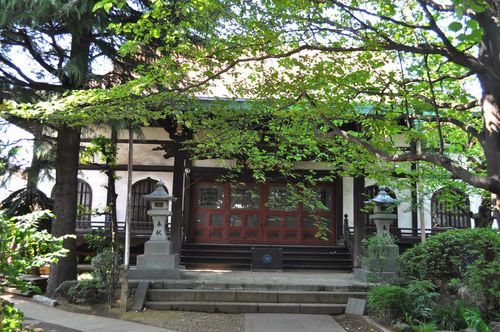
Credits: Hongyoji Temple Nippori

The Tobi Hiyoro Sequence.

The Tobi hiyoro sequence was composed by Issa and Ippyō and was included in Nishi kasen, a
text compiled by Ippyō. There are slightly variant texts but I have followed the version presented in Maruyama Kazuhiko’s Issa to sono Shūhen. The date on which Issa and Ippyō started to compose this text is, according to Ippyō’s preface and Issa’s diary, the seventh day of the tenth month of Bunka 12 (1815). The prefatory notes to the text in Issa zenshū state that even though it is only a han-kasen (a han-kasen sequence consists of 18 links. It follows the format of the first half of a kasen sequence), the distinctive features of Issa’s style of composition show through clearly in it. It is also important to pay attention to how close Issa’s style is to Ippyō’s. Here is the "preface" of this han-kasen
Preface

去年こぞの冬、わが物見塚もの みづかに旅寝せし信濃の一茶が、たぬ きの夜話といふは
Last winter, Issa from the province of Shinano came to pass the night at my “Monomi-zuka.” The following is the evening banter of tanuki...

(Ippyō was the priest of Hongyōji, a temple located near Nippori in Edo. There are now several kuhi (rocks upon which hokku/haiku have been inscribed) with Issa’s hokku on them within the precincts. “Monomi-zuka” refers to the remains of a watchtower that was built by Ōta Dōkan, a famous 15th century poet, castle builder, and general.)


The "haiku" which is our lead this episode was the 13th link of this Tobi Hyoro Sequence and was written by Ippyo. Here I will share that link from the Tobi Hyoro Sequence:

泰平(たいへい)と天下の菊が咲 (さき)たちて 一瓢

all the chrysanthemums
under heaven have peacefully
begun to bloom
(c) Ippyō (1815)

It's surely an idea to read this article your self and if you want to read it, please let me know than I can email it to you. (Or you can find this article to which I am referring here at: https://kb.osu.edu )

Ok ... back to our "Little Creatures" episode ... as you all know the goal of this feature is to write an all new haiku based on this post following the classical rules which you can find in Carpe Diem's Lecture 1 (in the menu above) and as you all (maybe) know, that's not my "cup of tea" to follow those classical rules, but for these Little Creatures episodes I just have to do that myself too.


Here is my attempt to write an all new (classical) haiku inspired on this post. I tried to bridge the gap with our Impressionism-month and especially with Vincent van Gogh.

such a bad feeling
he needs to beat insanity -
white Chrysanthemum


(C) Chèvrefeuille

Well ... I hope you all did like this "Little Creatures" episode and I hope that it will (and can) inspire you to write/compose an all new haiku in the classical way ... have fun! This "Little Creatures" episode is open for your submissions today at noon (CET) and will remain open until next Saturday February 14th at noon (CET).