Carpe Diem Haiku Kai is the place to be if you like to write and share Japanese poetry forms like haiku and tanka. It’s a warmhearted family of haiku poets created by Chèvrefeuille, a Dutch haiku poet. Japanese poetry is the poetry of nature and it gives an impression of a moment as short as the sound of a pebble thrown into water. ++ ALL WORKS PUBLISHED ARE COPYRIGHTED AND THE RIGHTS BELONG TO THE AUTHORS ++ !!! Anonymous comments will be seen as SPAM !!!
It is a pleasure to bring a new episode of Tan Renga Challenge Month to you. This time I have chosen for a haiku by a classical haiku poet named Tan Taigi (1709-1771), a contemporary of Yosa Buson. Tan Taigi and Buson by the way were friends and Buson created several haiga inspired on the poems by Tan Taigi.
Let me first tell you a little bit more about Tan Taigi.
Tan Taigi was a haiku
poet of the mid-Edo-period. At the age of 40 he became a priest at the temple
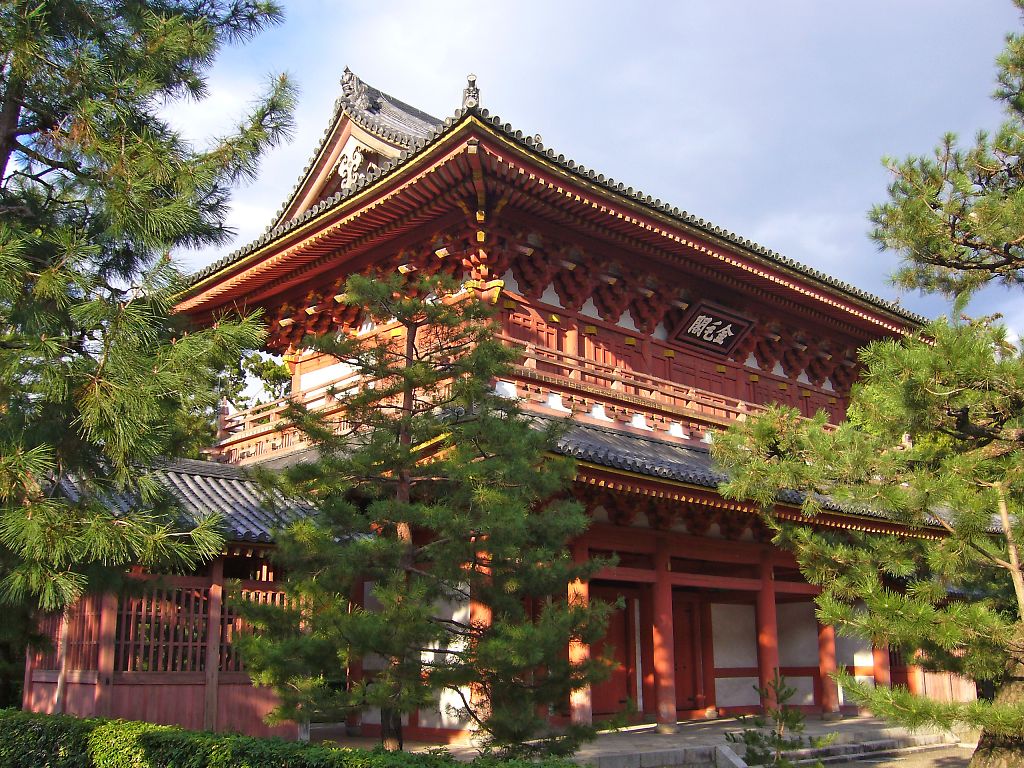
Daitoku-Ji in Kyoto. Later in his life, he stayed in a hermitage called Fuya-An
(Hermitage with no night) in the precincts of the courtesan pleasure quarters
Shimabara in 1748 and lived as a friend of Yosa Buson. He liked to socialize
and drink sake and used to say
"When praying to Buddha I write haiku, when praying to the Shinto gods I write haiku".
Because of his heavy drinking he suffered a brain
hemorrhage and died in the Year 1771. He is buried at the temple Korin-ji in
Kyoto.
Here is the "hokku" by Tan Taigi to reform into a Tan Renga by adding the second stanza of two lines of approx. 7-7 syllables. You have to use the scene, images or associations you have with the "hokku". Such a still water even the dragonfly splash it with the tail
As I first read this haiku I had some trouble to understand the scene, but after a while and re-reading it again I think the understanding came. So here is my attempt to create a Tan Renga of this "hokku".
such a still water even the dragonfly splash it with the tail (Tan Taigi)
throwing flat pebbles across circles get bigger and smaller (Chèvrefeuille)
Not as strong as I had hoped, but in a way I like the scene as it turns into the movement of the water.
This episode is NOW OPEN for your submissions and will remain open until May 31st at noon (CET). I will publish our new "hokku" on our Twitter account.
PS.: As you maybe have noticed I have taken away a few of the CDHK e-books from our homepage. You can find them now in our CDHK Library
As I was preparing the prompt-list for April, I ran into a nice prompt which needs some explanation. Today we have prayers for rain as prompt and you all know that praying for rain isn't very real, but ages back there were cultures who used to pray for rain through, for example a so called "rain-dance" as (for example) did the American Natives, Indians. Praying for rain was also seen in the Japanese culture and there are several haiku about praying for rain and rain dances which I love to share here later. First I love to share a few haiku about this prompt by Jane Reichhold.
For a rice
planting culture like Japan, the seasonal rain is very important, it is a
question of life and death! If the rain does not fall enough during the rainy
season we have a "Dry Rainy Season" (kara tsuyu).
the gods of
rain
swaying here and there -
floods versus droughts
This is the
time when farmers turn to the Gods and Buddhas (kami hotoke) for prayer. The
prayers and rituals for rain take many forms in Japan. Some are accompanied by
special dances, some by a lion dance (shishimai), fires are lit on the tops of
mountains and sutras are chanted.
Some Rain
Dances and Lion Dances are part of regional festivals held every year in spring
or early summer and are quite pleasant events for the population, but the real
Rain Rituals take place during the end of summer, when the weather situation
calls for it and the farmers are desperate. They have a quite different severe
atmosphere.
In the
following, I will try and introduce some of these rituals.
In some
areas, large boulders are inscribed with the characters for "Jizo",
but people came to call them "Jizo who loved Rain" ama koi Jizo and
used them for rain rituals.
In the
earliest record of court-sponsored rainmaking, Nihon Shoki includes an entry on
praying to the "all kami " and "all shrines" as well as to
"famous mountains and large rivers," mentioning in particular that
Empress Kōgyoku personally prayed for rain. In Shoku Nihongi, Emperor Monmu
(683-707) offered a horse to the Mikumari kami and prayed for rain in the 4th
month of the 2nd year of his reign (699), indicating that rainmaking festivals
gradually became performed to worship specific deities.
The
practice of attaching the rainmaking function to a specific kami became
conspicuous from the reigns of Emperor Shōtoku to Emperor Kōnin (the second
half of the eighth century), and Niukawakamisha shrine (now, Niukawakami jinja
nakasha) was perceived as the rainmaking deity and named Amashigami.
In the
Heian period, Niukawakami Shrine remained the center of rainmaking festivals
until the reigns of Emperors Kanmu and Heizei (781-809). In the subsequent
reign of Emperor Saga (809-23), Kifunesha shrine (now Kibune jinja) located
close to the Heian capital (present-day Kyoto), however, also became a
rainmaking deity alongside Niukawakami Shrine.
From around
the time of Emperor Saga, rain-halting festivals to pray for the cessation of
rain and the control of wind and rain became popular. In rainmaking and
rain-halting festivals from the mid-Heian period onward, offerings were being
made to eighty-five rainmaking kami, centering around Niukawakami and Kifune
Shrines; to these two shrines, black horses were offered at rainmaking
festivals and white horses were offered at rain-halting festivals. Thereafter,
both types of festivals came to be widely held at non-imperial shrines.
On the
other hand, there are numerous examples of rainmaking rituals among the
populace, including temporary seclusion in a shrine, rainmaking dances,
angering the "Water kami " (suijin) to induce rain, invoking rain by
sprinkling around holy water, and summoning rain clouds by sending up smoke
from a mountaintop.
A student
of Matsuo Basho named Shinshi wrote a poem and after that, it rained.
amagoi ya
ta o mimeguri no kami naraba
rain
rituals -
if the gods are here now
to see the paddies
What a wonderful way of begging for rain and what a great series of haiku this is. Isn't it an awesome idea that "praying for rain" has given us these beauties?
And now it is up to us to create haiku in response on "prayers for rain". Have fun!
I couldn't find a good enough image to create a haiga with so I love to share a video here about a raindance in Africa with music by Adiemus.
This episode is open for your submissions tonight at 7.00 PM (CET) and will remain open until April 28th at noon (CET). I will try to publish our new episode, bird feathers, later on. !!! With this episode the responding time is now increased to 5 days (approximately) as promised in our yesterday's CD-Extra !!!