Carpe Diem Haiku Kai is the place to be if you like to write and share Japanese poetry forms like haiku and tanka. It’s a warmhearted family of haiku poets created by Chèvrefeuille, a Dutch haiku poet. Japanese poetry is the poetry of nature and it gives an impression of a moment as short as the sound of a pebble thrown into water. ++ ALL WORKS PUBLISHED ARE COPYRIGHTED AND THE RIGHTS BELONG TO THE AUTHORS ++ !!! Anonymous comments will be seen as SPAM !!!
I hope you all have had a wonderful weekend full of inspiration. I had to work this weekend, but nevertheless I had a wonderful weekend. Our youngest grandson (4 yrs) stayed with us and that was a real joy. And today we had two of our older grandkids visiting us. So I had a wonderful weekend.
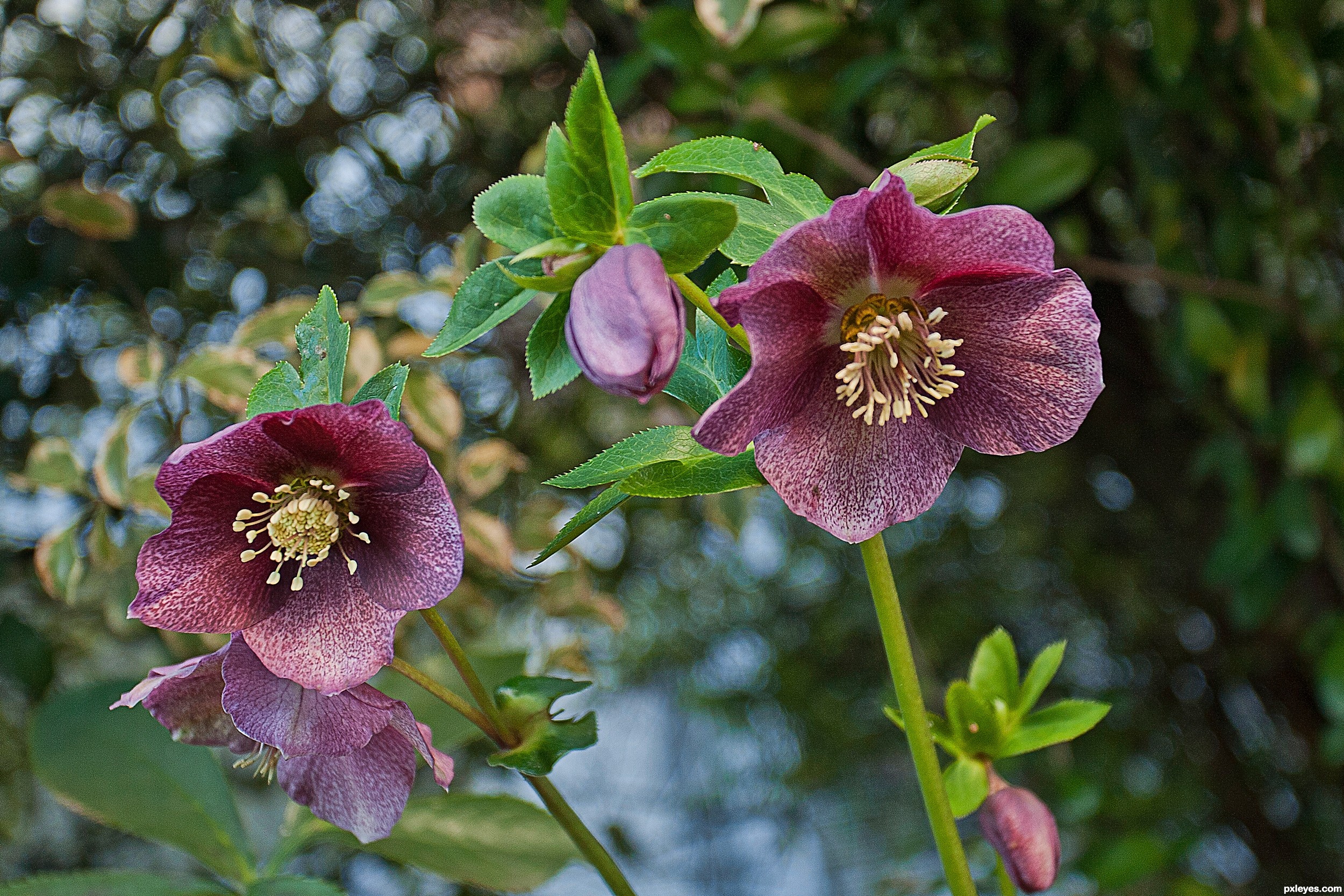
This month full of classical and modern seasonwords (kigo) for winter is almost over. We have four days to go this month, so four kigo for winter to share with you for inspiration. Today I have chosen a classical kigo ... flowers out of season (kaeribana). Literally this kigo means "returnig flowers", so this one is a kigo for late winter.
Here I have a classical example by Kobayashi Issa:
yama-gawa no ushiro tsumetashi kaeri-bana by a mountain stream catching a chill... out-of-season blooms
The first flowers we can see at the end of winter are "snowdrops", "crocus" and maybe "daffodils" and of course more kinds of flowers.
I think this classical kigo will inspire you to create your masterpieces. So try to create a classical haiku (or tanka) following the classical rules ... and let it be one of your new masterpieces ...
This episode is NOW OPEN for your submissions and will remain open until February 3rd at noon (CET). I will try to publish our new episode later on. For now .... have fun! Have a great week!
As I was preparing the prompt-list for April, I ran into a nice prompt which needs some explanation. Today we have prayers for rain as prompt and you all know that praying for rain isn't very real, but ages back there were cultures who used to pray for rain through, for example a so called "rain-dance" as (for example) did the American Natives, Indians. Praying for rain was also seen in the Japanese culture and there are several haiku about praying for rain and rain dances which I love to share here later. First I love to share a few haiku about this prompt by Jane Reichhold.
For a rice
planting culture like Japan, the seasonal rain is very important, it is a
question of life and death! If the rain does not fall enough during the rainy
season we have a "Dry Rainy Season" (kara tsuyu).
the gods of
rain
swaying here and there -
floods versus droughts
This is the
time when farmers turn to the Gods and Buddhas (kami hotoke) for prayer. The
prayers and rituals for rain take many forms in Japan. Some are accompanied by
special dances, some by a lion dance (shishimai), fires are lit on the tops of
mountains and sutras are chanted.
Some Rain
Dances and Lion Dances are part of regional festivals held every year in spring
or early summer and are quite pleasant events for the population, but the real
Rain Rituals take place during the end of summer, when the weather situation
calls for it and the farmers are desperate. They have a quite different severe
atmosphere.
In the
following, I will try and introduce some of these rituals.
In some
areas, large boulders are inscribed with the characters for "Jizo",
but people came to call them "Jizo who loved Rain" ama koi Jizo and
used them for rain rituals.
In the
earliest record of court-sponsored rainmaking, Nihon Shoki includes an entry on
praying to the "all kami " and "all shrines" as well as to
"famous mountains and large rivers," mentioning in particular that
Empress Kōgyoku personally prayed for rain. In Shoku Nihongi, Emperor Monmu
(683-707) offered a horse to the Mikumari kami and prayed for rain in the 4th
month of the 2nd year of his reign (699), indicating that rainmaking festivals
gradually became performed to worship specific deities.
The
practice of attaching the rainmaking function to a specific kami became
conspicuous from the reigns of Emperor Shōtoku to Emperor Kōnin (the second
half of the eighth century), and Niukawakamisha shrine (now, Niukawakami jinja
nakasha) was perceived as the rainmaking deity and named Amashigami.
In the
Heian period, Niukawakami Shrine remained the center of rainmaking festivals
until the reigns of Emperors Kanmu and Heizei (781-809). In the subsequent
reign of Emperor Saga (809-23), Kifunesha shrine (now Kibune jinja) located
close to the Heian capital (present-day Kyoto), however, also became a
rainmaking deity alongside Niukawakami Shrine.
From around
the time of Emperor Saga, rain-halting festivals to pray for the cessation of
rain and the control of wind and rain became popular. In rainmaking and
rain-halting festivals from the mid-Heian period onward, offerings were being
made to eighty-five rainmaking kami, centering around Niukawakami and Kifune
Shrines; to these two shrines, black horses were offered at rainmaking
festivals and white horses were offered at rain-halting festivals. Thereafter,
both types of festivals came to be widely held at non-imperial shrines.
On the
other hand, there are numerous examples of rainmaking rituals among the
populace, including temporary seclusion in a shrine, rainmaking dances,
angering the "Water kami " (suijin) to induce rain, invoking rain by
sprinkling around holy water, and summoning rain clouds by sending up smoke
from a mountaintop.
A student
of Matsuo Basho named Shinshi wrote a poem and after that, it rained.
amagoi ya
ta o mimeguri no kami naraba
rain
rituals -
if the gods are here now
to see the paddies
What a wonderful way of begging for rain and what a great series of haiku this is. Isn't it an awesome idea that "praying for rain" has given us these beauties?
And now it is up to us to create haiku in response on "prayers for rain". Have fun!
I couldn't find a good enough image to create a haiga with so I love to share a video here about a raindance in Africa with music by Adiemus.
This episode is open for your submissions tonight at 7.00 PM (CET) and will remain open until April 28th at noon (CET). I will try to publish our new episode, bird feathers, later on. !!! With this episode the responding time is now increased to 5 days (approximately) as promised in our yesterday's CD-Extra !!!
It's with great joy that I am preparing this new episode of Carpe Diem. Today we have our 900th regular episode of Carpe Diem and that makes me proud and humble, because I can make Carpe Diem only with your participation and input. So thank you all for being part of Carpe Diem and making it a big success.
As I started with CDHK in October 2012 I hadn't thought to be here more than three years later ... I dreamed of it, but I hadn't expected to be still alive and kicking in 2016.
Today we are going on with our classic meets modern month and today our prompt is a classical kigo for winter, daikan (great cold). Let me take you back to one of our earlier posts this month "Shoukan" (less cold):
In nature
(especially on the Northern Hemisphere) January is the coldest month of winter
and in Japan they have nuanced it. In Japan you have Daikan (great cold) and
Shoukan (less cold).
In Japan
there are a lot nuances in winter and I love to share their ideas here with
you. Shoukan(less cold) fall on the 15th day after Touji(winter solstice). It
is on about January the 6th. Kan(cold season) continues from Shoukan to the day
before of Risshun(the first day of spring). So they (the Japanese) refer to the
period of these 30 days as Kan-no-uchi(midwinter) from Kan-no-iri(beginning of
midwinter) to Kan-ake(the end of cold season). Daikan(great cold) is on the
15th day, around January 20th after Shoukan. It is by far the coldest through
the year. It is wrong to refer to these 15 days between Shoukan and Daikan as
Shoukan. Either Shoukan or Daikan shows only one day of the twenty four
designated seasonal days.
As you can read above today (as I am creating this episode) it's daikan (great cold) and it points towards the coldest moment of winter and that's around this date. So there is not much to tell about "daikan". Let's go create haiku ...
I found a nice haiku in which this classical kigo is used:
daikan no heso utsukushiku shoo kannon
the
beautiful navel
of this Sacred Kannon
in the great cold
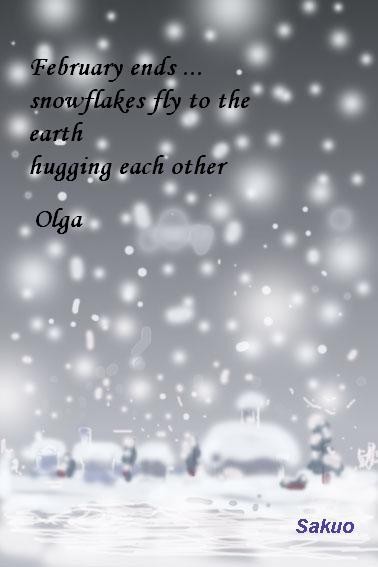
"Daikan" faces to February and that means that the great cold of winter is almost gone and that we are heading for spring. This theme I found in another haiku:
coldest day
of the year -
the moon lifts the tide
to overflowing
Not as strong as I had hoped but I think it's a nice example of "daikan".
And to make a nice closure to this episode about daikan (great cold) I found another haiku about "daikan" which refers to an ancient Japanese dish for this time of year.
This episode is open for your submissions tonight at 7.00 PM (CET) and it will remain open until January 23rd at noon (CET). I will (try to) publish our new episode, a new CD-special episode, later on. Have fun!
Dear Haijin, visitors and travelers, Welcome at a new episode of Carpe Diem Haiku Kai. This month we will explore classical and modern kigo (seasonwords), but first this:
As you all know I hope to start a new Renga Party soon, you can sign in to participate until January 12th 10.00 pm (CET). Later this week I hope to start with this 2nd Carpe Diem Renga Party. Than as you have seen in one of the earlier posts the voting for the kukai "Winter" has started. I have already had several emails with points ... so don't forget to vote. Yesterday I published a call for submissions for our second issue of Souchou, Carpe Diem's own e-zine, you can (if you like to be published in this second issue of Souchou) email your contributions to our special email-address: carpediemhaikukaisouchou@gmail.com before March 1st 10.00 PM (CET). Okay ... back to our episode of today. Today I have another nice classical kigo for you, Harusamu (cold spring). And this is what I found about this classical kigo for (late) winter. Harusamu
(cold spring) points towards the month February (in Japanese called: Nigatsu).
Nigatsu means “footsteps of Spring”. It’s a very nice classical kigo. In
classical Japan it is believed that spring starts on about February 4th,
which is said to be the first day of spring. Even if the Japanese hear only the
sound of the word haru (spring), they become happy and have great expectations
for the coming days, though the temperature of this month is still low and it
remains the coldness of winter.
The Japanese feel excited to hear the word harusamu (cold spring), even if it
is cold. But the word yokan (the lingering cold of early spring) emphasizes the
coldness of winter which is lingering on. As the snow begins to melt and the
ice is getting thinner and thinner, the workings of animals and plants become active.
People feel like to be released from the closed winter life, which makes them
open the windows and go out.
Everyone feels the revival of life and is filled with joy, looking the scenes
in which nekoyanagi (pussy willow), crocuses, katakuri (flower of dogtooth),
yukiwarisou (mealy primrose), fuki-no-tou (butterbur sprout) are glittering in
the sun of early spring. It is not too much to say that people have been
admiring ume-no-hana (ume flower) the best since the old days. Being not only
noble and beautiful but also sweet-scented, ume-no-hana, which is the first to
bloom in spring, has been composed in many poems as the symbol of early spring.
By seeing ume flowers, perhaps the Japanese people feel the footsteps of spring
close to them.
A beautiful haiga I would say above. Here is a haiku by Issa which fits this classical kigo very well:
And I found a nice haiku written by Gabi Greve in which we can see this kigo also in a very nice context ... with the plum blossom. As you all maybe know the Plum blooms in late winter so this haiku fits the theme of this episode in an excellent way.
ume ichi rin ichi rin dake ja haru samushi
one plum blossom just one blossom - spring is still cold
Harusamu (cold spring) ... it's that thin line between winter and spring, because in late winter it can be very cold, but it can also be very cold in early spring as is this kigo saying. I have looked into my archives to find haiku which are fitting this kigo, harusamu (cold spring) and I found a few nice haiku published once on my own personal weblog and here on Carpe Diem Haiku Kai. So it is possible that you have read these haiku earlier.
first snow
of the year
covers fragile blossoms
tears in my eyes
such a sad
event
young cherry blossoms frozen
in a cold spring night
Tulips in
the snow
coloring a white blanket -
returning cold
I hope you did like this episode. This episode is NOW OPEN for your submissions and will remain open until January 14th at noon (CET). I will (try to) publish our next episode, a new Tokubetsudesu episode, later on. I hope I will have the time, because I am in the nightshift the upcoming nights.
What a joy to bring you another wonderful classical kigo (seasonword) in this month of Carpe Diem in which classic meets modern. As you all know (maybe) in every haiku you have to use a kigo or seasonword. A kigo is a word that points to the season in which the haiku "plays". And this month of our "kigo-cocktail" today we have Fuyusoubi (winter rose), a nice classical kigo for winter.
I am not certain if "Fuyusoubi" is really a flower or it means "rose in winter", because I found several images with frosted roses or roses with snow on it, but I also found an image titled "winter rose", but it seams to be not a rose at all.
All very nicely written by known and not so known haiku poets. Roses and winter in my opinion not a good match, but as we have read (and seen) above roses and winter can go together. It's another challenge I think to create a haiku with "Fuyusoubi" in it, but ... well you know me ...
a last rose more fragile than ever clothed in snow
Fuyusoubi (winter rose) ... not an easy kigo, but I enjoyed preparing this episode for you all.
This episode is open for your submissions tonight at 7.00 PM (CET) and will remain open until January 11th at noon (CET). I will (try to) post our next episode, another CD-Special in our trip along memory lane, later on.