Carpe Diem Haiku Kai is the place to be if you like to write and share Japanese poetry forms like haiku and tanka. It’s a warmhearted family of haiku poets created by Chèvrefeuille, a Dutch haiku poet. Japanese poetry is the poetry of nature and it gives an impression of a moment as short as the sound of a pebble thrown into water. ++ ALL WORKS PUBLISHED ARE COPYRIGHTED AND THE RIGHTS BELONG TO THE AUTHORS ++ !!! Anonymous comments will be seen as SPAM !!!
This episode is NOW OPEN for your submissions and will remain open until May 28th at noon (CET). I will publish our new "hokku" on our Twitter account.
During lack of time I will publish our new episode in our Tan Renga Challenge month later on today. I have spend a lot of time to create our new exclusive CDHK E-book of our second Theme Week "Color Your Life", about the colors of the Rainbow.
This new exclusive CDHK E-book is Now Available for download at the left of our Kai. I hope you all will like it.
I don't know what went wrong, but I have still two lines for this last episode of our 4th Theme Week about the Latifa Prayer, that powerful and wonderful Sufi prayer with roots in Islam. So I have (again) a "double" episode, sorry for that.
Introduction:
The first line I love to share here of this "double" episode is "I Love". What is Love? I think its an energy that "sleeps" deep down in our heart, waiting to come to bloom. Love we have in several meanings. Love as in loving another human for his / her inner beauty (and outer beauty), an unconditional love I mean in this case. But there is also something we call love, but is more about sex without that unconditional love ... just because someone needs to have sex.
I think in the Latifa Prayer it's about that first kind of love, unconditonal love for all and everything. That love stays a mystery ... you can not go on a quest for that kind of love .... that kind of love overcomes you unexpected.
lotus
flowers
rising from the depths of the pond
everlasting love
like a river flows onwards
uncertain of its goal
Love is about your deepest desires, let your heart speak ... and not your mind.
The last line of the Latifa Prayer "I am prepared" connects you to all and everyone around, it connects you with the desires you want. I will connect you to your Higher Self.
Earlier this week I told you that there is a kind of Latifa Prayer Meditation and I love to share that meditation here with you. It's an easy way to meditate and it will make you happy or happier than you already are.
Are you ready? Are you relaxed and in a nice comfortable position? Let me take you ... into the Latifa Prayer Meditation. As I am doing this meditation I always play relaxing music like e.g. the music of Karunesh . Just relaxation music. I am not a guy that sits in the "meditation-position" I love to lean back against the wall or lay down on the couch or my bed. First I start to regulate my breathing to open my energy fields, my chakras. This takes mostly a few minutes. Than starts the Latifa Prayer Meditation:
1. At
first you place your right hand on your left flank by the help of your left
hand. Always use your left hand to help your right hand. Than you say out loud: I exist. You breathe steady and softly and think
about the reason why you exist. Questions will appear in your mind. Answer
them.
2. Bring
(by the help of your left hand), your right hand to your right flank. Say to
yourself: I desire. Think about the things you desire and be aware.
3. Bring
your right hand to your left lung. Say to yourself: I hope. Think about all the things you wish and want in
life. Because of this you are going to be able to make space in your mind.
4. Bring
your right hand to your right lung. Say out loud: I believe and I trust.Believe and trust will make you stronger and
will help you to let go of your hope and be certain about the things you doubt.
5. Place
your right hand on your neck. Say: I let go. This area consists of all the
things you keep to yourself like sadness, anger and your own voice. Because of
letting these things slip out of your mind, you will breath better. Thinking of
your own believes helps you to achieve this exercise.
6. Place
your right hand on the centre of your chest. Tell yourself: I love. Loving is
one of the strongest and purest feelings we have. Give your heart a chance to
speak. Bring out your deepest desires.
7. To
finish the prayer you bring your right hand above your bellybutton. Place your
left hand on top of it and say the words: I am prepared. Being prepared will
connect you with your own voice. The things you want and desire. (Source)
I hope you liked this meditation and of course that it has brought you positive energy.
Well ... this was our fourth Carpe Diem Theme Week, I hope you did like this week.
This episode is NOW OPEN for your submissions and will remain open until May 26th at noon (CET). Have fun. !! Next month our Fifth Theme Week is titled "Ascension" !!
My excuses (again) for being this late with publishing our new episode of our Tan Renga Challenge Month. I am in the nightshift, so time is a bit different.
Yesterday we had a "hokku" by Hando, a classical haiku poet, and today I have a nice "hokku" by one of our own CDHK family members. Today I have chosen a "hokku" by Tournesol. Tournesol is the penname of Cheryl Lynn, a very gifted haiku poetess. Tournesol is a long time member of our Kai and she has really gorgeous haiku written.
This "hokku" brought nice memories ... As a little child I liked throwing pebbles in the water and I remember that my dad learned me to let those flat pebbles bounce on water ... yeah sweet memories.
on a windless day sic circles take shape a pebble skips (Tournesol)
sweet memories rise up smiles and tears in battle (Chèvrefeuille)
A nice response I would say, but that's not up to me to say.
This episode is NOW OPEN for your submissions and will remain open until May 27th at noon (CET). Our new "hokku" you can find already on our Twitter account.
Yesterday I told you all that I hadn't time enough to create a new episode for our Theme Week therefore today I love to share two episodes in one. So in this episode we will look at line 4 and 5 respectively: "I believe and I trust" and "I let go".
Introduction:
Both lines are in the middle of the Latifa Prayer and that's no coincidence I think, because these two lines belong (in a way) together. To "let go", you have to "believe and trust" that it will become okay. Without believe and trust you cannot let go. Why?
I will give it a try to explain that thought to you. Let me give you an example: "My grandson was bullied for a long time at his school. It hurt him that much that he had a time that he tried not to go to school or as he was bullied he ran away from school. One day, while he had to be at school, he stood for my home. (We live in the close surroundings of his school). He was crying and he was angry. He told me of the bullying. I just listened to his story and than I tried to analyze (together with him) what was happening at times he was bullied? He told me that he (mostly) started with yelling to the bullies or that he ran to his teacher to tell them what was going on".
And this is what I finally told him. "You have to ignore those bullies than they will have no fun with bullying". My grandson looked at me. "How can I do that? How do I ignore them?" "As they are saying things to you you walk away with head held high. You have to be proud on yourself, because you are special and they don't know that, but you do". Than he was a little while silent and I saw how his mind was "running". Than there was the smile, that beautiful strong and proud smile. "Thank you granddad I think I do understand what you have said. As I believe and trust in an on myself than the bullies will leave me and than I can let go and be happy".
From that moment on he was a proud boy and he even started to enjoy school. Of course sometime the bullies tried it again, but they never succeeded in their bullying as they did earlier.
I think this example shows us that we can "let go" the sadness and sorrows of our life just to believe and trust on ourselves and that some Higher power is guiding us.
The Altai Mountains
My response
In a way these two lines make the "I Hope" line of the Latifa Prayer even stronger than it already is. This shows us (I think) that the Latifa Prayer is a very strong prayer and that's why we may use it. You don't need to say that prayer every day, but the Latifa Prayer meditation you can do easily every day.
Maybe you remember that Mongolian Myth "The Cry of an Eagle" in which an almost the same situation occurs with Maidar. I read that Mongolian Myth again and I enjoyed reading it again. So for my response on this part of the Latifa Prayer I reproduce the haiku from that story here:
whispering leaves
telling all wisdom of the steppes -
cry of an eagle
Well ... it was a joy again to create these post and I hope I have inspired you. This episode is open for your submissions tonight at 7.00 PM (CET) and will remain open until May 25th at noon (CET).
Welcome at a new episode of our Tan Renga Challenge Month. Today I have a nice "hokku" by Hando (penname of Thomas Hand), who was in our history once a featured haiku poet. It wasn't an easy task to find haiku by him, but I had the luck that I have done a few episodes about him somewhere in our CDHK history from which I could choose.
Here is the "hokku":
listening with another
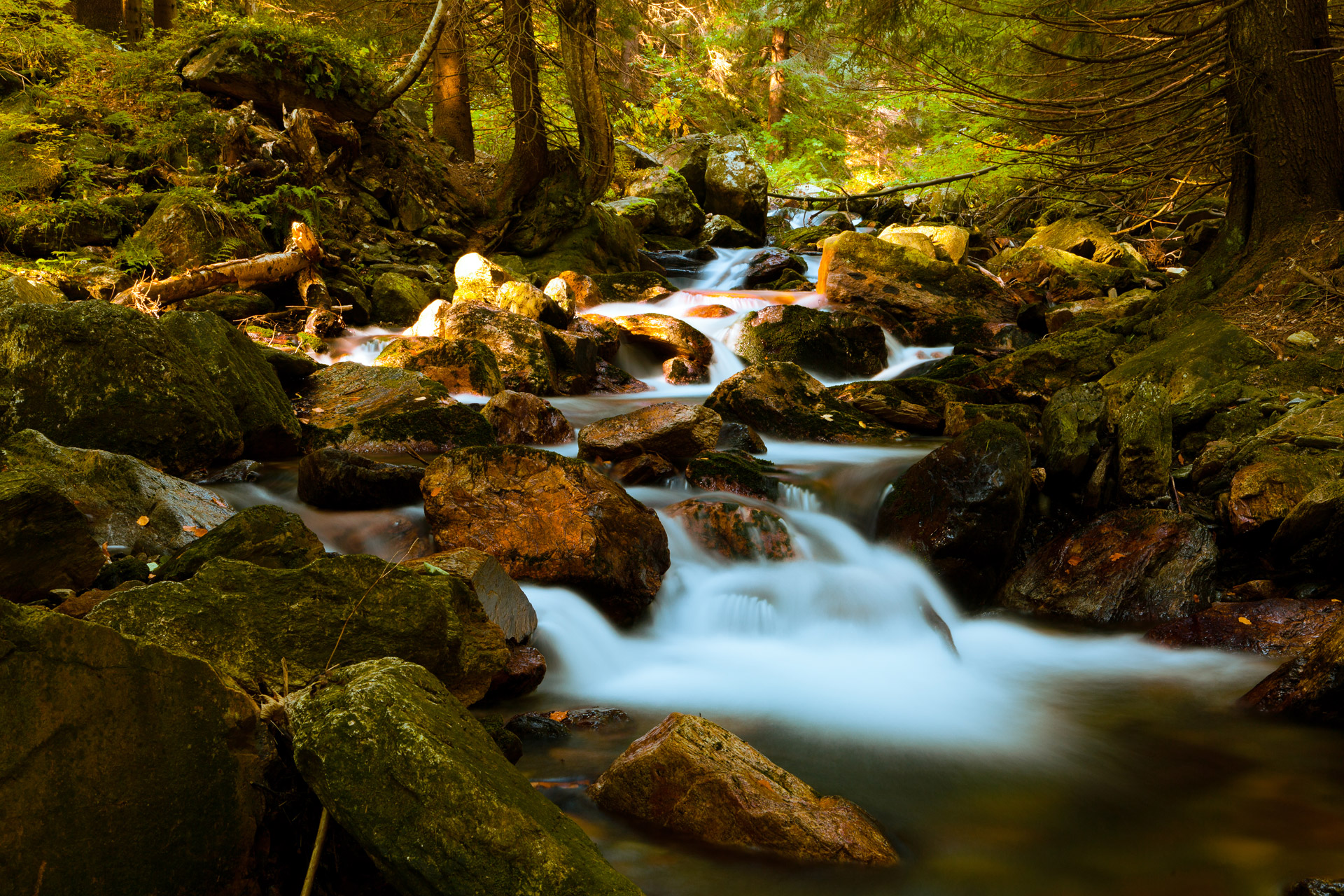
to the music of the mountain stream
here is no other
And here is my response on this beautiful "hokku" by Hando:
listening with another to the music of the mountain stream here is no other (Hando)
the silence becomes deeper only the rustling of leaves (Chèvrefeuille)
Awesome ... a wonderful place to meditate I would say. A place to try the Latifa Prayer meditaion maybe?
This episode is open for your submissions tonight at 7.00 PM (CET) and will remain open until May 25th at noon (CET). I have published our new "hokku" on our Twitter account. Have fun!