Sunday, June 25, 2017

Chèvrefeuille's Gift To You To Celebrate Our First Luster Of Carpe Diem Haiku Kai #5 Use That Quote


Dear Haijin, visitors and travelers,

I had some spare time so time again for a new episode of "Chèvrefeuille's Gift ..." This episode I love to challenge you to create a haiku or tanka inspired on a quote given. Maybe you can remember our special feature "Use That Quote"?

Today I have a nice quote for you by one of my favorite philosophers Rabindranath Tagore:

[...] "Clouds come floating into my life, no longer to carry rain or usher storm, but to add color to my sunset sky." [...]
© Rabindranath Tagore
Rabindranath Tagore

Rabindranath Tagore (1861 – 1941), was a Bengali polymath who reshaped Bengali literature and music, as well as Indian art with Contextual Modernism in the late 19th and early 20th centuries. Author of Gitanjali and its "profoundly sensitive, fresh and beautiful verse", he became the first non-European to win the Nobel Prize in Literature in 1913. Sometimes referred to as "the Bard of Bengal", Tagore's poetic songs were viewed as spiritual and mercurial; however, his "elegant prose and magical poetry" remain largely unknown outside Bengal.
Tagore wrote wonderful prose, poetry and songs. In his "Gitanjali" (Song Offerings) he included lots of beauties with a deep spiritual meaning. For his "Gitanjali" he got the Nobel Prize in Literature and I just love to reproduce one of his songs taken from the "Gitanjali":

On the day when the lotus bloomed, alas, my mind was straying, and I knew it not. My basket was empty and the flower remained unheeded.
Only now and again a sadness fell upon me, and I started up from my dream and felt a sweet trace of a strange fragrance in the south wind.
That vague sweetness made my heart ache with longing and it seemed to me that it was the eager breath of the summer seeking for its completion.
I knew not then that it was so near, that it was mine, and that this perfect sweetness had blossomed in the depth of my own heart.


Well ... I hope you did like this "gift" and that it will inspire you to create haiku, tanka or other Japanese poetry form inspired on the quote given.
This episode is NOW OPEN for your submissions and will remain open until June 30th at noon (CET).
 

Saturday, June 24, 2017

Carpe Diem Extra June 24th 2017 "writer's block"


Dear Haijin, visitors and travelers,

I love to ask you something if you don't mind? I have a kind of "writer's block", because I have not a clue what theme I could use for our next month of haiku-ing. Do you have an idea for prompts for our upcoming month July. Please share them with me through the comments field.

Thank you for participating in CDHK.

Namasté,

Chèvrefeuille your host

Thursday, June 22, 2017

Carpe Diem's Writing and Enjoying Haiku #1 Introduction

Cover / Logo

!!! Open for your submissions next Sunday June 25th at 7.00 PM (CET) !!!

Dear Haijin, visitors and travelers,

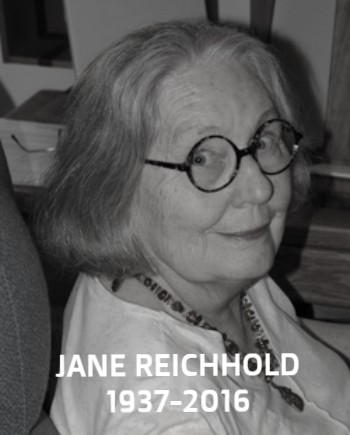
It is with pleasure and pride that I introduce to you an all new feature for the "weekend-meditation". Recently I tried the "Haiku Puzzler" as a "weekend-meditation", but it was a too difficult "puzzler" or you didn't like the idea of a "Haiku Puzzler" for the "weekend-meditation", so I decided to skip the "Haiku Puzzler" and bring up our new feature in honor of Jane Reichhold (1937-2016).
Maybe you know her hands-on-guide for haiku "Writing and Enjoying Haiku", from which I have extracted the title of this new "weekend-meditation" feature.

In "Writing and Enjoying Haiku" Jane brought up the idea of haiku writing as a kind of meditation and a way to find spiritual peace. And that's what the goal is of this new "weekend-meditation" feature.

Jane Reichhold, Queen of Haiku and Tanka
A few years ago I was send a gift by Jane for my birthday, a nice box full of books written by her. For example she gave me "Basho, the complete haiku", one of her best books in my opinion, but she also gave me a copy of her Hands On Guide "Writing and Enjoying Haiku". This small book was an eye-opener ... I had never looked at haiku as a way of finding peace, but after reading it I was overwhelmed by her beautiful mind and her knowledge. So it was then that a seed was sown for a new feature. I never had thought that I would use this idea that soon ... well it was through her death that this idea started to grow and finally blossomed ....

I love to start with a quote taken from the back-cover of Jane's Hands On Guide:

[...] "Writing and Enjoying Haiku shows how haiku can bring a centered, calming atmosphere into one's life, by focusing on the outer realities of life instead of the naggings of the inner mind, by gaining a new appreciation for the world of nature, and by preserving moments, days, and events so that they are not lost forever in the passage of time." [...]

the passage of time
[...] "Though the word "enjoying" is the third word in the title (of this book), for me enjoying anything and everything is the primary function of our lives. True, the function (of this book) is to teach you how to write haiku, but I want you to first learn to touch a point of pleasure within yourself with haiku.
To do this, you will need to open the arms of your mind to take in some haiku already snapped up out of the art and written down." [...]

The above quote is from the introduction of Jane's Hands On Guide and she already gives us a task in these words "learn to touch a point of pleasure within yourself with haiku". Let us start again with being a "rookie" in haiku world and let us learn to appreciate haiku right now by reading a few beauties collected from Carpe Diem Haiku Kai. To learn to appreciate haiku we have to learn how to read again, and re-read again ... making the haiku come to life and let it be part of you, let it be your pleasure ... maybe while reading these examples you have the urge to change something ... feel free to do so ... bring the haiku to life through your mind, your heart and your pencil.

goosefeather pen (image found on Pinterest)
I have the following haiku for you to "contemplate" and "meditate". Read and re-read them and try to bring the scene(s) to life. Try to become one with the haiku.
And as I wrote earlier in this post ... feel free to change the haiku if you have the urge to change them, that you can only achieve through "living" the haiku.

wisteria sways -
pendulous blossoms in breeze
unspoken promise

© Jazzy

petal lanterns —
a waterfall of flowers
her lips touch mine

© Hamish

scent of summer
jasmin blooming on the fence
bees hum in the daisy bush

© Cressida

summer heat
no shadows to turn to
rain at last

© Chèvrefeuille

Four haiku extracted from our CDHK E-book "Petal Lanterns". Written by four of our CDHK family members (including myself).


What is the goal of this "weekend-meditation"? Well to "learn" to read  haiku, to become one with haiku and trying to be the haiku. And if you had the urge to change something than share your "re-done" haiku with us. The second goal is to create haiku (or tanka) in which the reader can find, feel, touch, hear or see the scene as you have seen it and maybe your readers will also try to become one with your haiku, or will give words to their urge to change something.

Well ... I hope you did like this new "weekend-meditation" feature in honor and tribute of Jane Reichhold.

!!! Submissions for this "weekend-meditation" can be linked to the linking widget next Sunday, June 25th at 7.00 PM (CET). and will remain open until June 30th at noon (CET). I will try to publish our new episode, Shambhala, later on. For now ... have fun and have a wonderful creative weekend.


Wednesday, June 21, 2017

Carpe Diem Theme Week "The Songs of Milarepa" (4) like a summer flower


Dear Haijin, visitors and travelers,

Welcome at this last episode of our Theme Week about "The Songs of Milarepa", a renown Tibetan poet and yogi. I think I have made a nice selection this week and today I love to share another beauty written by Milarepa.

This song is part of the bigger song "The Fleeting Bubbles" a song about Dharma:

Youth is like a summer flower -
Suddenly it fades away.

Old age is like a fire spreading
Through the fields - suddenly 'tis at your heels.

The Buddha once said, "Birth and Death
Are like Sunrise and sunset -
Now come, now go."


Youth is like a summer flower (image found on Pinterest)

Sickness is like a little bird
Wounded by a sling.
Know you not, health and strength
Will in time desert you?

Death is like an oil-dry lamp
(After the last flicker).

Nothing, I assure you,
In this world is permanent.

© Milarepa

In this poem you can read what we all know ... we all live in a fleeting world, nothing is permanent. Nothing is permanent at all ... so enjoy your life ...

It was really a joy to create this Theme Week for you all and I hope you did like it. This episode is NOW OPEN for your submissions and will remain open until June 26th at noon (CET). I will try to publish our new "weekend-meditation" later on. For now .... have fun!

Tuesday, June 20, 2017

Carpe Diem Theme Week "The Songs of Milarepa" (3) The Shepherd


Dear Haijin, visitors and travelers,

Maybe you can remember our CDHK month in which I used prompts extracted from "Manuscript Found In Accra", by Paulo Coelho in July 2013, or maybe you know "The Prophet" written by Khalil Gibran. Both are books in which people question prophets or spiritual people, or just wise people. This Theme Week "The Songs of Milarepa" the prompts are extracted from "Hundred Thousand Songs by Milarepa". This book is written in the same way as the both I mentioned above.

In "The Songs of ..." Milarepa answers different questions by people around him and today I love to share a part of "The Songs of ..." in which a young shepherd asks him a question:

[...] A young shepherd boy came to Milarepa and said:, "Dear Lama, last night I tried to find out what my mind is and how it works. I observed it carefully and found that I have only one mind. Even though one wants to, one cannot kill this mind. However much one wishes to dismiss it, it will not go away. If one tries to catch it, it cannot be grasped; nor can it be held by pressing it. If you want it to remain, it will not stay; if you release it, it will not go. You try to gather it; it cannot be picked up. You try to see it; it cannot be seen. You try to understand it; it cannot be known. If you think it is an existing entity and cast it off, it will not leave you. If you think that it is non-existent, you feel it running on. It is something illuminating, aware, wide-awake, yet incomprehensible. In short, it is hard to say what the mind really is. Please be kind enough to explain the meaning of the mind." 

Tibetan shepherd
In response, Milarepa sang: 

Listen to me, dear shepherd, the protector [of sheep)!
By merely hearing about sugar's taste, 
Sweetness cannot be experienced; 
Though one's mind may understand 
What sweetness is, 
It cannot experience directly; 
Only the tongue can know it. 
In the same way one cannot see in full the nature of mind, 
Though he may have a glimpse of it 
If it has been pointed out by others.
If one relies not on this one glimpse, 
But continues searching for the nature of mind, 
He will see it fully in the end. 
Dear shepherd, in this way you should observe your mind. 

© Milarepa

The boy then said, "In that case, please give me the Pointing-out-Instruction*, and this evening I will look into it. I shall return to-morrow and tell you the result." Milarepa replied, "Very well. When you get home, try to find out the color of the mind. Is it white, red, or what? What is its shape? Is it oblong, round, or what? Also, try to locate where in your body it dwells."
The next morning when the sun rose, the shepherd drove the sheep before him, and came to Milarepa, who asked, "Did you try last night to find out what the mind is like?" The boy replied, "Yes, I did." 
"What does it look like?" [...] (Source: The Hundred Thousand Songs of Milarepa, page 123 & 124)

*) Lit.: "Through the 'Pointing-out-Instruction' one may glimpse it." The Pointing-out-Instruction is an essential practice of Mahamudra. The main concern of Mahamudra is the unfoldment of the essence of one's mind. To accomplish this, the disciple is given by his Guru the "Pointing-out" demonstration. This can be done in different ways with different gestures-a smile, a blow, a push, a remark, etc. This is strikingly similar to the “koan”-tradition of Zen, though the style and process appear somewhat different.

An amazing song ... I hope to read wonderful haiku and tanka inspired on this Song by Milarepa in which we can see the hidden spiritual meaning of our nature, of our beautiful little poems.

This episode is NOW OPEN for your submissions and will remain open until June 25th at noon (CET). I will try to publish our last episode of this Carpe Diem Theme Week, an other song by Milarepa, later on. For now ... have fun!

Monday, June 19, 2017

Carpe Diem Theme Week "The Songs of Milarepa"(2) "flying clouds"


Dear Haijin, visitors and travelers,

Welcome at our second episode of this month's Theme Week "The Songs of Milarepa". This week I will share a few of the poems (or part of the poems) written by the renown Tibetan poet and yogi Milarepa. All poems (or partial poems) are extracted from "The Hundred Thousand Songs of Milarepa. In this wonderful book the life of Milarepa is told and his wisdom shared. Milarepa's Songs are full of secret and sacred wisdom ... and for sure it isn't easy to "run" through his wisdom to find a poem suited for here at Carpe Diem Haiku Kai, but today I found another nice poem. The part I share here is about the wisdom of Milarepa which he shared to converse Lodun, a Scholar.


Versatile are flying clouds, 
Yet from the sky they're not apart. 
Mighty are the ocean's waves, 
Yet they are not separate from the sea. 
Heavy and thick are banks of fog, 
Yet from the air they're not apart.
Frantic runs the mind in voidness, 
Yet from the Void it never separates. 
He who can "weigh" Awareness 
Will understand the teaching 
Of Mind-Riding-on-the-Breath.
He who sees wandering 
Thoughts sneaking in like thieves, 
Will understand the instruction 
Of watching these intruding thoughts. 
He who experiences his mind wandering outside, 
Will realize the allegory 
Of the Pigeon and the Boat at Sea*.

© Milarepa

*Flying off from a boat in the sea, a pigeon cannot fly very far before it is forced to return to the boat because no landing-place is in sight. This metaphor alludes to the fact that wandering thoughts, no matter how wild and uncontrollable they are, will eventually return to the Mind-Essence, as there is nowhere else to go.


Imagine this ... see the story unfold in front of you and she the meaning of this partial poem. All is One and inseparable. Isn't that what we, haiku (and tanka) poets see in the world, the nature around us? Are we not all one with nature ... all created with God-stuff.

through the mist
I hear the cry of an eagle
seeking for prey
aware of his surroundings
he catches a little mouse

© Chèvrefeuille

Hmm ... not as strong as I had hoped, but well ... I have given it a try. And now ... it is up to you. This episode is NOW OPEN for your submissions and will remain open until June 24th at noon (CET). I will (try to) publish our new episode, our third Theme Week episode, later on. For now .... have fun!


Sunday, June 18, 2017

Carpe Diem's Theme Week: The Songs Of Milarepa (1) Introduction


Dear Haijin, visitors and travelers,

Welcome at this month's Theme Week. This month while we are discovering magical and spiritual Tibet I have included a nice Theme Week. This Theme Week it's all about Tibet's renown poet and yogi Milarepa and is titled "The Songs of Milarepa".

Maybe you can remember our first Theme Week in which we explored the Tibetan Book of Living and Dying. In the e-book that followed after that Theme Week I included a "song by Milarepa". In this Theme Week that starts today I have gathered a few wonderful "songs" by Milarepa to inspire you. So let's go!


Let me first introduce to you Milarepa:

Milarepa is one of the most widely known Tibetan Saints. In a superhuman effort, he rose above the miseries of his younger life and with the help of his Guru, Marpa the Translator, took to a solitary life of meditation until he had achieved the pinnacle of the enlightened state, never to be born again into the Samsara (whirlpool of life and death) of worldly existence. Out of compassion for humanity, he undertook the most rigid asceticism to reach the Buddhic state of enlightenment and to pass his accomplishments on to the rest of humanity. His spiritual lineage was passed along to his chief disciples, Gambopa and Rechung. It was Rechung who recorded in detail the incidents of Milarepa's life for posterity. The narrative of his life has thus been passed down through almost a millennium of time and has become an integral part of Tibetan culture.
Milarepa extemporaneously composed innumerable songs throughout his life relevant to the dramatic turns of events of himself and his disciples in accordance with an art form that was in practice at the time. These songs have been widely sung and studied in Tibet ever since and have been recorded as the Hundred Thousand Songs of Milarepa. His faithful devotion, boundless religious zeal, monumental forbearance, superhuman perseverance, and ultimate final attainment are a great inspiration today for all. His auspicious life illumined the Buddhist faith and brought the light of wisdom to sentient beings everywhere. (Source: Cosmic Harmony)

Red Rock Jewel Valley (Tibet/India)
Milarepa was not only a poet, but also a yogi who sang his teachings for his followers. These songs are gathered in "Hundred Thousand Songs of Milarepa", of course he didn't compose that much songs, but he composed a lot of them.

The song I love to share here for your inspiration is part of "The Tale of Red Rock Jewel Valley" in which Milarepa has to conquer demons. Here is the song to inspire you:

This lonely spot where stands my hut 
Is a place pleasing to the Buddhas, 
A place where accomplished beings dwell, 
A refuge where I dwell alone. 

Above Red Rock Jewel Valley 
White clouds are gliding; 
Below, the Tsang River gently flows; 
Wild vultures wheel between. 

Bees are humming among the flowers, 
Intoxicated by their fragrance; 
In the trees birds swoop and dart, 
Filling the air with their song. 


Image source
In Red Rock Jewel Valley 
Young sparrows learn to fly, 
Monkeys love to leap and swing, 
And beasts to run and race, 
While I practice the Two Bodhi-Minds
and love to meditate. 

Ye local demons, ghosts and gods, 
All friends of Milarepa, 
Drink the nectar of kindness and compassion, 
Then return to your abode

© Milarepa (Tr.: Garma C. C. Chang; Shambhala Publications, 1977)

And here is my inspired haiku. I hope you like it:

deep silence
inhaling the sounds of nature -
white clouds dance

© Chèvrefeuille

Well ... I hope I have inspired you. This was our introductory episode of this Theme Week: "Songs Of Milarepa". I am looking forward to the upcoming days and your responses of course.

PS.: More reading? Follow this link and find out more about Milarepa.

This episode is NOW OPEN for your submissions and will remain open until June 23rd at noon (CET). I will (try to) publish our nex Theme Week episode, later on. For now ... have fun