Showing posts with label Hineri. Show all posts

Tuesday, November 19, 2019

Carpe Diem Tan Renga Wednesday (6) at dawn (hineri)


Dear Haijin, visitors and travelers,

It is Wednesday again ... so time for new episode of our special feature "Tan Renga Wednesday". This week I love to challenge you to create the "hokku" (the three lined stanza) instead of the "ageku" (two-lined stanza).

I will give you the two lined stanza and than it is up to you to create the "hokku" to make the Tan Renga complete.

Here is the two-lined 2nd stanza:

at dawn birds start to sing
praising their Creator ... as always


© Chèvrefeuille

A nice 2nd stanza I dare to say, so it's now up to you to create the first part, three lined stanza, of this Tan Renga.

At Dawn

This episode is NOW OPEN for your submissions and will remain open until November 26th at noon (CET). I will try to publish our new episode later on. For now ... be creative.


Wednesday, February 20, 2019

Carpe Diem #1611 Tan Renga Challenge Month 2019 (15) Full Snow Moon


Dear Haijin, visitors and travelers,

Welcome at a new episode of our wonderful Kai were we are creating Tan Renga this month. I have read wonderful continuations and completions and I hope to see that again with our challenge for today.

Today I have another Tan Renga Challenge Hineri episode for you all. As you all know Hineri means with a twist, so today's challenge is to create not only the 2nd (two-lined) stanza, but also the 3rd (three-lined) stanza and 4th (two-lined) stanza through association. For today's Hineri Tan Renga Challenge I have chosen a haiku by one of our longtime members of our haiku family, Hamish Managua Gunn. Hamish is not only a wonderful haiku poet, but also a wonderful author. He was my co-host for a while and I have warm memories of him.

Full Snow Moon (Supermoon February 2019)

Here is the haiku to work with:

full snow moon
stirs the ladybug
on cold bare branches

© Hamish

A wonderful haiku that Hamish created back in 2016. This one is a beauty and I think it's a nice haiku to work with ... so I am looking forward to your responses.

This episode is NOW OPEN for your submissions and will remain open until February 27th at noon (CET). I will try to publish our new episode later on. For now ... have fun!


Thursday, February 14, 2019

Carpe Diem #1607 Tan Renga Challenge Month 2019 (11) an open window


Dear Haijin, visitors and travelers,

Welcome at a new episode of our Tan Renga Challenge Month 2019 ... this month we are only busy with creating Tan Renga and I can see that you all enjoy it. Today I have a new Hineri episode for you. Hineri means "with a twist" and for today's Tan Renga Challenge this means that you not only have to write the second stanza, but also a third and fourth stanza ... so it is a four verse Renga to create (3 lines; 2 lines; 3 lines and 2 lines).

Back in 2018 I started with a new feature "crossroads" in which I challenged you to create a "fusion-ku" from two given haiku. Somewhere in April 2018 I created a "fusion-ku" and that "fusion-ku" is the haiku to start with.

Butterfly (photo © Chèvrefeuille)

Here is that haiku:

the sound of the surf
enters my home through the open window
and a butterfly

© Chèvrefeuille (2018)

And now it is up to you to create the 2nd stanza (2-lines), the 3rd stanza (3-lines) and the 4th stanza (2lines) inspired / associated on the given haiku.

This episode is NOW OPEN for your submissions and will remain open until February 21st at noon (CET). I will try to publish our new weekend meditation later on. For now ... have fun!


Friday, February 8, 2019

Carpe Diem #1602 Tan Renga Challenge Month 2019 (6) the night of firefly


Dear Haijin, visitors and travelers,

Welcome at a new episode of our Tan Renga Challenge Month 2019. My apologies for being late with publishing I was on the evening shift and hadn't the opportunity to create a new episode of our wonderful Haiku Kai.

This month it's Tan Renga Challenge Month and that means every regular episode the task is to complete a Tan Renga (chained verse created by two poets) with a given haiku. Today I love to challenge you a little bit more. Today the Tan Renga Challenge is a Hineri (with a twist) challenge and that means you have to create a Tan Renga and two other stanza, so you have to create not only the second stanza of two lines, but also a third stanza (three lines) and a fourth stanza (two lines).

To start this Tan Renga Challenge Hineri I have a wonderful haiku by Katsura Nobuko (1914-2004) a female haiku poet. I had never heard from her, but she has written nice haiku. The haiku I have chosen is a love-haiku and a nice one I think to create your Tan Renga Hineri.

Katsura Nobuko (1914-2004)

Let me first tell you a litte bit more about her:

Nobuko Katsura was born Nobuko Niwa in Osaka on 1 November 1914. After graduating from High School, she began writing haiku under the direction of the poet Sojo Hino, editor of the 'Kikan' (The flagship). Later she founded the Marumero (Quince) haiku group with Kenkichi Kusumoto. In March 1945 during the WWII when the American planes bombed Osaka, Nobuko's house caught fire and she was just able to gather her haiku manuscripts before fleeing from the fire. The rescued manuscripts were later published in her first volume, 'Gekkoo shoo’ (Beams of the moon 1949).

In 1954 she helped Katoo Chiyoko edit the magazine 'Josei haiku' (Women's haiku). After 'Gekkoo shoo', she published 'Nyoshin' (The female body) in 1955, 'Banshun' (Late spring) in 1967, 'Shinroku' (Young leaves) in 1974, and several other collections. In 1970 she founded the magazine 'Sooen' (The grass garden), which is still publishing today. She has also been a vice-president of the Modern Haiku Association of Japan. Her ninth collection of haiku 'Kaei' (The shadows of flowers) came out in 1998. Nobuko’s style of writing developed through the years – from the slightly erotic notions in her early poems to the calmer yet full of emotions and sensuality haiku of her later career. (Source: The Living Haiku Anthology)

Firefly

Here is the haiku to start with:

I wear loosely
and meet the man
at the night of firefly


© Katsura Nobuko (1914-2004)

A wonderful haiku in which we can easily see the theme ... love. Really a nice haiku to start our Tan Renga Challenge Hineri with.

This episode is NOW OPEN for your submissions and will remain open until February 14th at noon (CET). I will try to publish our new weekend meditation later on. For now .... have fun!


Tuesday, November 20, 2018

Carpe Diem #1549 a pillow of wind (Renga With Basho ... Hineri)


Dear Haijin, visitors and travelers,

Welcome at a new episode of our wonderful Kai. This month we are celebrating autumn, the most wonderful season in my opinion, with all themes about autumn. Today I have a nice "Renga With Basho ... Hineri" for you. As you all know 'hineri' means 'twist' and in this Renga With Basho ... Hineri I have made it even more difficult I think.

First this by the way: Through all the circumstances at the hospital I am far behind with visiting and commenting on your submissions. I hope to visit you all a.s.a.p. but I cannot tell you when and how.


As you all know Matsuo Basho (1644-1694) was a great renga-master and has written a lot of "hokku" to start a renga with and all his "hokku" became renown as haiku. For today's episode I have chosen six haiku themed autumn by Basho of course all were taken from Jane Reichhold's "Basho, The Complete Haiku" as I do every time as I create an episode of "Renga With Basho ..."

Because of our "autumn" themed month I have chosen all autumn haiku to create your renga with. As I said above this is a "Renga With Basho ... Hineri" episode, so with a twist. This time you have to use the fourth haiku as the "hokku" (starting verse) and ... and this is a new challenge I think, the sixth haiku must be the sixth haiku in your renga too. The other four haiku you can line-up in your own choice. Of course I also challenge you to make the "chain" complete with your "ageku" (closing verse). You have to add the two-lined stanza with approximately 14 syllables.

Here are the six haiku to use for your "Renga With Basho ... Hineri", let us take pride in the honor to create a Renga with the master:

autumn's wind
mouth at the sliding door
a piercing voice


asleep
the good-looking bush clover

has a flowery face

that handsome man
clearly is no longer living
a rain-hidden moon


Japanese Cedar (bonsai)

autumn has come
visiting my ear on
a pillow of wind
*

is it a spider
with a voice crying
the autumn wind


end of the month
no moon hugging an ancient cedar
in the storm
**

© Basho (Tr. Jane Reichhold; taken from "Basho, The Complete Haiku")

* this one must be your "hokku"
** this one must be your 6th haiku

A wonderful series of haiku to work with I think. I am looking forward to your renga with Basho. Have fun!

This episode is open for your submissions tonight at 7:00 PM (CET) and will remain open until November 27th at noon (CET). I will try to publish our new episode later on.


Friday, October 5, 2018

Carpe Diem Weekend Meditation #53 Renga With Basho #10 "summer's night"


!! Open for your submissions next Sunday October 7th at 7:00 PM (CEST) !!

Dear Haijin, visitors and travelers,

Welcome at the first edition of our anniversary month's weekend meditations. This month I love to challenge you every weekend meditation to create a renga with one of the four greatest haiku poets ever: Basho, Issa, Buson and Shiki. This first weekend meditation I have a Renga With Basho episode with a twist, so this is a Renga With Basho Hineri episode.

I have chosen six (6) haiku written by Basho and you have to use one of them as the "hokku". As you have read this weekend meditation is titled "summer's night". "Summer's Night" is the first line of one of the six given haiku, that haiku you have to use as "hokku". The other five you can give your own line-up.
The goal is to add the two-lined stanza of approximately 14 syllables and make the renga complete. Your closing verse, the "ageku", has to close the chain through association on the "hokku".


Here are the six (6) haiku to work with and create your "renga (hineri)" together with Basho:

a bamboo shoot
when I was a child it was
fun to sketch
(*)

day after day
barley ripens

a singing skylark

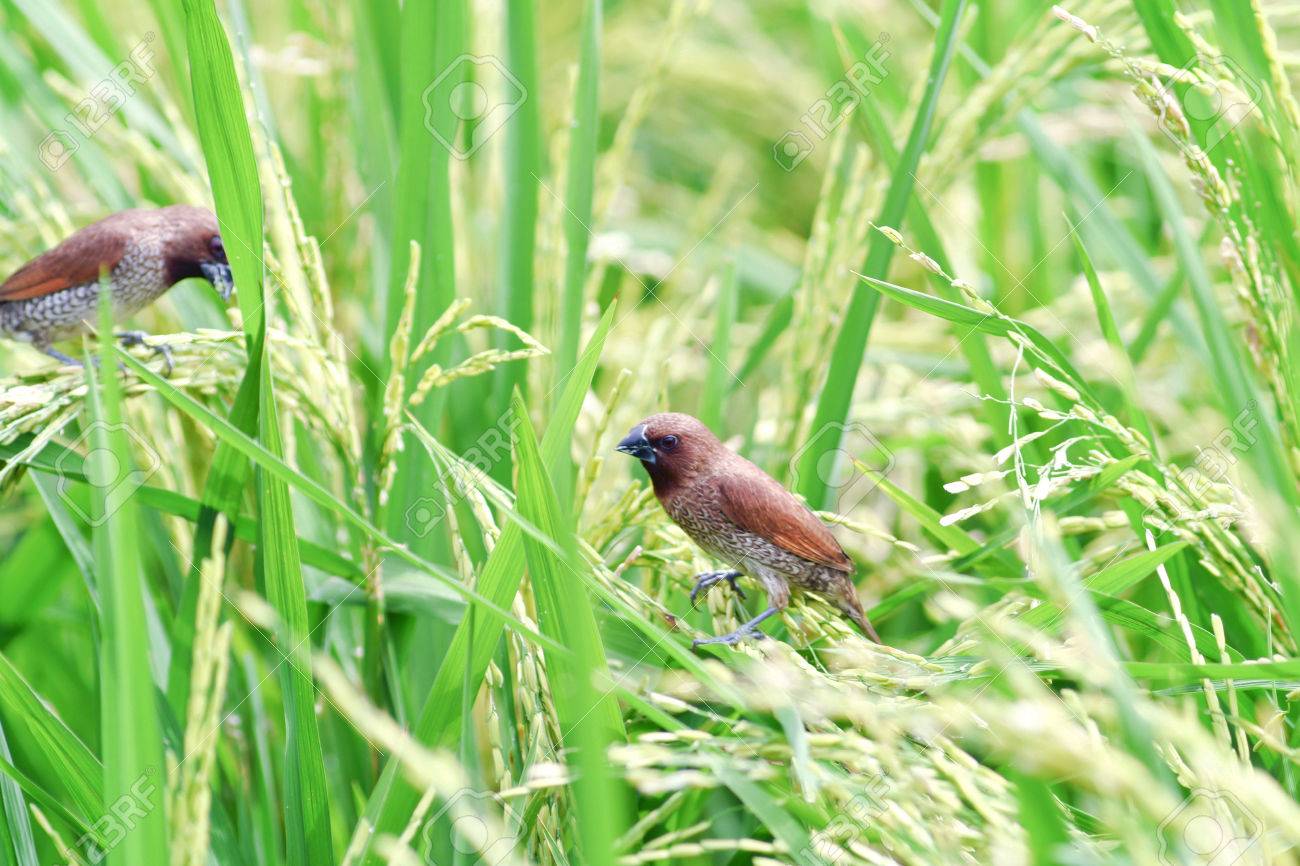
Rice Paddy Sparrows (found on 123RF)

rice paddy sparrows
shelter in the tea plants
when chased away

summer's night
the tree spirit follows in
the sound of wooden shoes
(**)

clapping my hands
the echo as it dawns
of a summer moon

Shuukaidoo (Begonia Grandis)

begonia flowers
blooming in the colors
of a watermelon


© Basho (Tr. Jane Reichhold, taken from "Basho, the complete haiku")

(*) Basho was also a haiga artist
(**) This haiku is your starting verse or "hokku"


A nice selection of haiku by Basho to work with I think. This is the opportunity to create a renga with one of the greatest haiku poets ... so have fun!

This weekend meditation is open for your submissions next Sunday October 7th at 7:00 PM (CEST) and will remain open until October 14th at noon (CEST). Enjoy your weekend.


Sunday, September 16, 2018

Carpe Diem Tan Renga Challenge September 2018 Chained Together III (11) the dim glow of a campfire


Dear Haijin, visitors and travelers,

After an easy going weekend I have a new TRC for you. Today I have chosen another episode of our Hineri feature. So today I will give you the 2nd stanza of approximately 14 syllables spread over two lines. This time I don't have chosen a quote by a haiku poet, but by a young Japanese novelist.

First I will give you the quote to work with and than some background on this young Japanese novelist and I will end this episode with the two lined stanza I created inspired on the quote.

[...] "He felt so lost, he said later, that the familiar studio felt like a haunted valley deep in the mountains, with the smell of rotting leaves, the spray of a waterfall, the sour fumes of fruit stashed away by a monkey; even the dim glow of the master's oil lamp on its tripod looked to him like misty moonlight in the hills."[...]

© Akutagawa Ryūnosuke

Akutagawa Ryunosuke (1892-1927)

Akutagawa Ryūnosuke, pseudonym Chōkōdō Shujin or Gaki, (born March 1, 1892, Tokyo, Japan—died July 24, 1927, Tokyo), prolific Japanese writer known especially for his stories based on events in the Japanese past and for his stylistic virtuosity.
As a boy Akutagawa was sickly and hypersensitive, but he excelled at school and was a voracious reader. He began his literary career while attending Tokyo Imperial University (now the University of Tokyo), where he studied English literature from 1913 to 1916.
The publication in 1915 of his short story “Rashōmon” led to his introduction to Natsume Sōseki, the outstanding Japanese novelist of the day. With Sōseki’s encouragement he began to write a series of stories derived largely from 12th- and 13th-century collections of Japanese tales but retold in the light of modern psychology and in a highly individual style. He ranged wide in his choice of material, drawing inspiration from such disparate sources as China, Japan’s 16th-century Christian community in Nagasaki, and European contacts with 19th-century Japan. Many of his stories have a feverish intensity that is well-suited to their often macabre themes.
In 1922 he turned toward autobiographical fiction, but Akutagawa’s stories of modern life lack the exotic and sometimes lurid glow of the older tales, perhaps accounting for their comparative unpopularity. His last important work, “Kappa” (1927), although a satiric fable about elflike creatures (kappa), is written in the mirthless vein of his last period and reflects his depressed state at the time. His suicide came as a shock to the literary world.
Akutagawa is one of the most widely translated of all Japanese writers, and a number of his stories have been made into films. The film classic Rashomon (1950), directed by Kurosawa Akira, is based on a combination of Akutagawa’s story by that title and another story of his, “Yabu no naka” (1921; “In a Grove”).

Rashomon (movie by Akira Kurosawa)

I wrote the two lined stanza to work with inspired on the above quote of Akutagawa Ryūnosuke (1892-1927)

Haunted valley deep in the mountains
The dim glow of a campfire

© Chèvrefeuille

I think this 2nd stanza will inspire you to create the first stanza of the Tan Renga. Have fun!

This episode is NOW OPEN for your submissions and will remain open until September 23rd at noon (CEST). I will try to publish our next episode later on today.


Tuesday, September 11, 2018

Renga With Basho Hineri #8 missing a wife


Dear Haijin, visitors and travelers,

Welcome at a new episode of Renga With Basho. This time I have another Renga With Basho Hineri (with a twist) for you. Matsuo Basho (1644-1694) one of the most famous classical haiku poets has written a lot of haiku during his lifetime (around 1000 haiku). All wonderful but there is one haiku written by him that isn't finished, the third line is missing. If that haiku wasn't really finshed or that third line has been lost we don't know, but that unfinished haiku gives us the opportunity to be creative. How creative? Well ... we have the opportunity to create the third line of the haiku that was started by the master himself. That opportunity I will give you in this Renga With Basho Hineri episode.

I will give you six (6) haiku written by Basho, one of them is that unfinished haiku. The goal is to create a renga by adding your two-lined stanza (approximately 14 syllables) as we have done earlier, but you have to complete that unfinished haiku too. Of course you have the opportunity to choose your own line-up of the haiku.

Chinquapin Tree ("fake" chestnut)
Here are the six (6) haiku (including that unfinished one) to create your renga with Basho with:

missing a wife
putting on bamboo grass
--------------------


above all else
a dependable chinquapin tree stands
in a summer grove


path of the sun
the hollyhock leans into
early summer rain


each with its own light
fireflies in the trees
lodge in flowers


Dragonfly (image credits: National Trust For Scotland)

a dragonfly
unable to settle
on the grass


an early winter shower
a rice paddy with new stubble
darkens just a bit


© Matsuo Basho (taken from Basho, The Complete Haiku by Jane Reichhold)

A nice series of haiku to work with I think. I am looking forward to how your Renga With Basho will evolve. !! Don't forget to make that unfinsihed haiku complete, before you use it in your renga with Basho !!

To give you an idea how to complete that unfinished haiku here is my attempt to make it complete:

missing a wife
the bamboo grass dives under -
wise men's gathering (*)

© Chèvrefeuille

(*) refers to the "The Seven Sages of the Bamboo Grove", a group of Chinese scholars and poets in the mid third century,very similar with what Henry Thoreau describes in his "Walden, Life in the Woods".

Well ... a nice challenge I think ... have fun!

This Renga With Basho episode is NOW OPEN for your submissions and will remain open until September 18th at noon (CEST). Have fun. Enjoy this nice exercise to create a renga together with one of the most famous haiku poets ... Matsuo Basho.

Thursday, September 6, 2018

Carpe Diem Tan Renga Challenge September 2018 Chained Together III (5) The Temple Bell Stops


Dear Haijin, visitors and travelers,

Welcome at a new regular episode of our wonderful Haiku Kai. This month we have our 3rd Tan Renga Challenge Month Chained Together and today I have a special TRC challenge for you. As you can see in our logo I have added "hineri", the Japanese word for "with a twist", as I have done with our special feature Renga With Basho.

So today our TRC episode has a twist. What kind of twist? Well ... I will give you the 2nd (two-lined) stanza of approximately 14 syllables and you have to create the first stanza, the hokku, of three lines following the approximately syllables count 5-7-5.

I have given it a thought also. I first had the idea to write that two lined stanza myself, but on 2nd thought I have chosen a quote by Basho and re-worked it to a reasonable 2nd stanza of two lines.

This quote was taken from his world famous haibun "Narrow Road Into The Deep North" (Oku no Hosomichi), maybe you know this quote, but that's not a problem it will make it easier to create the first stanza of the Tan Renga.

Temple Bell

Here is the 2nd stanza to work with. So remember ... you have to create the first three-lined stanza of this Tan Renga.

The temple bell stops but I still hear 
the sound coming out of the flowers

© Matsuo Basho (1644-1694) (taken from "Narrow Road")

I think this one isn't easy, but I think it triggers your imagination and your inspiration ... I am looking forward to your completions by adding the first stanza of three lines of approximately 19 syllables. Have fun!

This episode is open for your submissions tonight at 7:00 PM (CEST) and will remain open until September 13th at noon (CEST). I will try to publish our new weekend meditation later on.